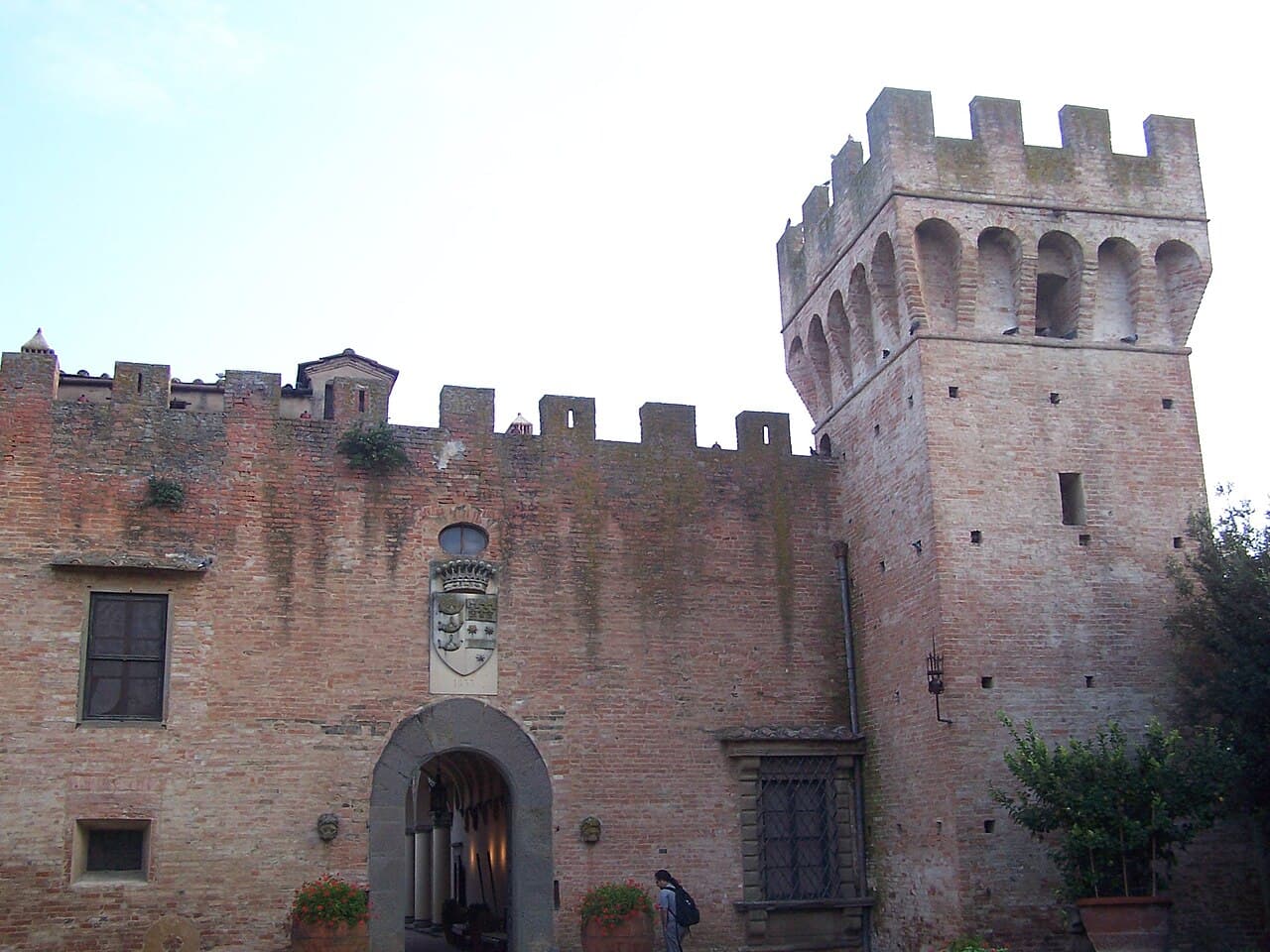
Castello di Oliveto
The Castello di Oliveto is a remarkable example of a fortified Renaissance country residence nestled near the town of Castelfiorentino in the heart of Tuscany, Italy. Established in 1424 by the influential Florentine Pucci family, this castle embodies the architectural and historical significance of the early Renaissance period in the region. Built as a stronghold and residence, it reflects the strategic and social ambitions of a wealthy noble family during a time of intense political rivalry between the city-states of Florence and Siena.
Historical context and significance
Constructed by Puccio Pucci, the castle served as both a defensive fortress and a symbol of aristocratic prestige. Its location overlooking the Elsa river valley provided a commanding view of the surrounding countryside, making it a valuable asset during the frequent conflicts that marked the 15th and 16th centuries. The castle's role extended beyond military purposes; it became a cultural and political hub, hosting notable figures such as Popes Leo X, Clement VII, and Paul III. These visits underscore the castle's importance within ecclesiastical and secular networks of power. Later, it welcomed Grand Duke Ferdinand III of Tuscany and King Victor Emmanuel III of Italy, linking the castle to broader Italian history and unification movements.
Architectural features and design
The Castello di Oliveto is a quintessential hill castle constructed primarily from red brick, a material typical of the Tuscan Renaissance. Its design follows a rectangular fortress layout, featuring high enclosing walls and four corner towers. Each tower is crowned with battlements, which served both defensive and observational functions, allowing defenders to monitor the landscape and repel attackers.
Fortifications and defensive elements
The castle is surrounded by moats and additional outer walls, enhancing its defensive capabilities. These layers of protection reflect the turbulent times during which the castle was built, when territorial disputes and sieges were common. A notable feature is the main gate, adorned with a marble coat of arms that proudly displays the Pucci family insignia, marking the entrance to the fortified complex.
Interior courtyard and religious spaces
Inside the walls lies a closed courtyard that includes a loggia supported by four arches, offering a sheltered area for gatherings and social activities. The presence of a chapel within the courtyard highlights the castle’s dual role as a place of residence and private worship, a common feature in noble estates of the period.
Cultural heritage and preservation
The castle has retained much of its original 15th-century furnishings, including period furniture and an impressive collection of trophy weapons that reflect its martial history. Portraits spanning from the 16th to 18th centuries decorate the interiors, providing a visual lineage of the families associated with the estate. This continuity of heritage adds to the castle’s value as a historical monument.
Innovative features
Among the castle’s sophisticated elements is an early rainwater collection system, demonstrating advanced environmental management designed to sustain the inhabitants during sieges or droughts. Additionally, an underground exit serves as a concealed escape route, emphasizing the strategic foresight in the castle’s defensive planning.
Modern usage and cultural impact
In the mid-19th century, the castle changed hands from the Pucci family to the Guicciardini family, another prominent Florentine lineage. This transition reflected broader social and political changes as Italy moved toward unification. Today, the castle functions as a working agricultural estate, producing wine and olive oil, maintaining its connection to the Tuscan landscape and economy.
The castle’s atmospheric setting and well-preserved architecture have also made it a popular filming location, notably featured in the third season of the television series "Medici". Here, it represented historical scenes such as the assault on the city of Ferrara, linking its physical presence to Italy’s rich Renaissance heritage and popular culture.
Architectural style and condition
The Renaissance architectural style of the Castello di Oliveto is evident in its balanced proportions, use of brickwork, and incorporation of defensive features typical of the period. Despite centuries of history, the castle remains well preserved, retaining its structural integrity and many original decorative elements. This preservation allows visitors to experience an authentic example of a fortified Renaissance estate in Tuscany.
Frequently asked questions (FAQ)
- How do I visit Castello di Oliveto?
- Castello di Oliveto is located near Castelfiorentino in Tuscany. Visitors should check local tourism websites or contact the estate directly for current visiting hours and tour availability, as it functions as a private agricultural estate.
- What is the historical significance of Castello di Oliveto?
- The castle was built in 1424 by the Pucci family and played a strategic role during conflicts between Florence and Siena. It hosted important figures including popes and Italian royalty, reflecting its political and cultural importance.
- Can I see original furnishings at Castello di Oliveto?
- Yes, the castle retains original 15th-century furnishings, including period furniture, weaponry, and portraits from the 16th to 18th centuries, offering a glimpse into its noble past.
- Why is Castello di Oliveto considered architecturally significant?
- Its well-preserved Renaissance architecture, fortified design with battlements, corner towers, and innovative features like a rainwater collection system make it a rare example of a fortified Renaissance estate in Tuscany.
- Is Castello di Oliveto accessible for events or filming?
- The castle has been used as a filming location, notably for the TV series Medici, and also hosts social gatherings, reflecting its adaptable use while preserving historical integrity.

Information
Website
Visit websiteSources & official resources
Verify the information above using these authoritative references.
Loading map...
Visitor reviews
No reviews yet. Been here? Write the first review and help other travelers!
Write the first reviewVisited this castle? Share your experience
Your review helps other travelers and adds first-hand knowledge to our encyclopedia.


