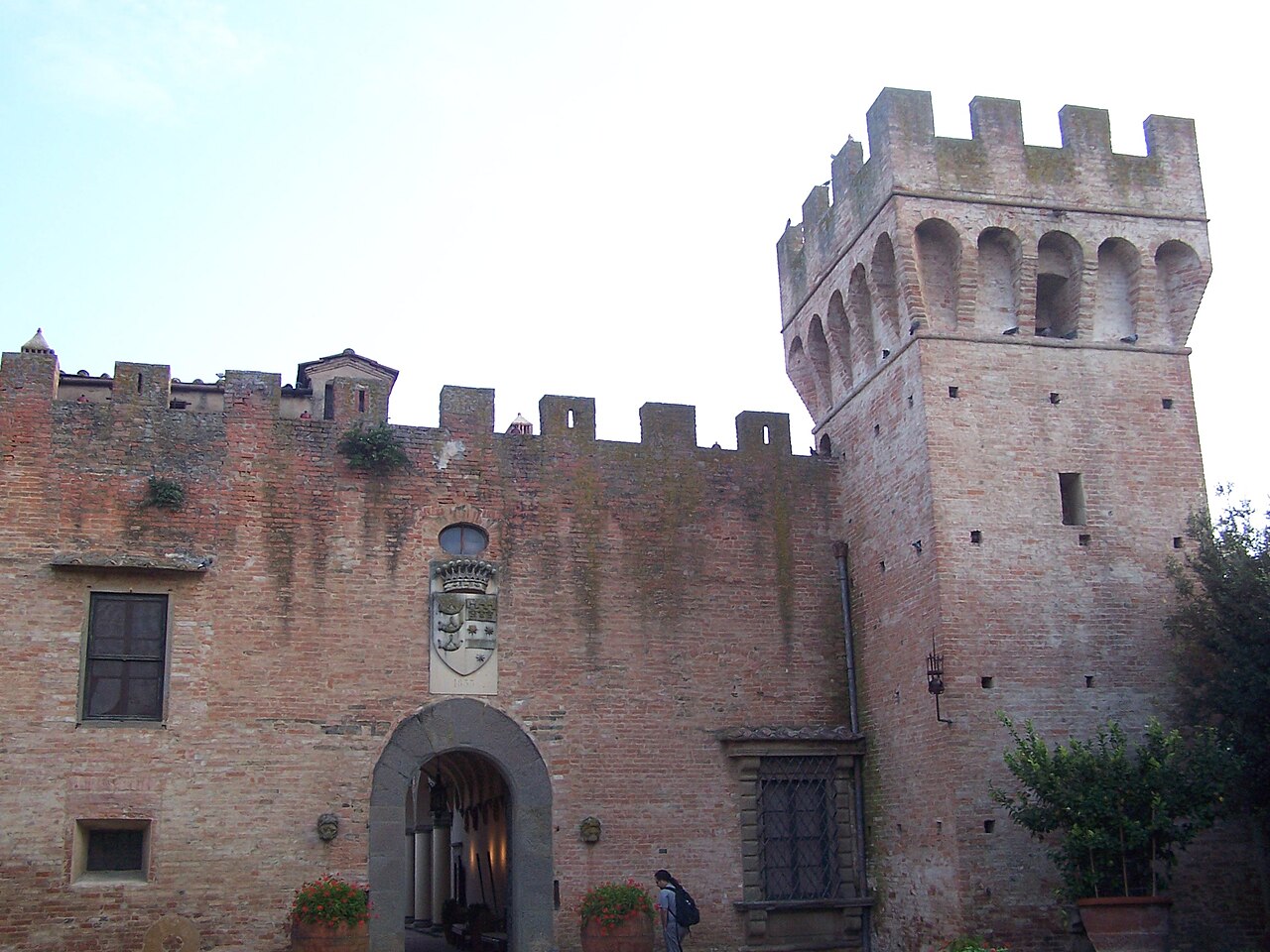
Castello di Montegufoni
The Castello di Montegufoni stands as a remarkable example of a hill castle with a rich history deeply intertwined with the noble families of Tuscany and the cultural evolution of Italy. Located near Montespertoli in the region of Tuscany, this castle traces its origins to the early medieval period, likely founded in the 10th or 11th century by the influential Ormanni family. Strategically positioned along the ancient Via Volterrana, the castle was a vital defensive and administrative site linking Florence and Rome, reflecting its importance in controlling regional trade and military routes.
Medieval origins and early history
The first documented events surrounding the Castello di Montegufoni highlight its turbulent medieval past. In 1135, the castle was subjected to a significant siege by Florentine forces aiming to dismantle it, resulting in extensive damage and a period of decline. However, the castle's strategic value ensured its recovery and transfer to the Acciaioli family in the 13th century. The Acciaioli, a family renowned for their banking prowess and political influence, transformed Montegufoni into a fortified complex. This included a central stronghold surrounded by seven smaller villas, collectively known as the "seven old villas of the ancestral castle". This development marked the castle's evolution from a purely military fortress to a more complex residential and defensive structure.
Rise of the acciaioli family and cultural significance
Notable figures and royal connections
The castle was the birthplace of Niccolò Acciaioli in 1310, a figure who rose to prominence as the Grand Seneschal of the Kingdom of Naples. Niccolò's influence extended beyond politics into the cultural sphere, as he was closely connected with the literary giants Boccaccio and Petrarch. The castle also hosted royal guests, including King Louis of Taranto in 1348, who found refuge here during his exile following conflicts with the Hungarian monarchy. The Banquet Hall, now called "the Theatre," served as the setting for royal dinners and important gatherings, overlooking the Courtyard of the Dukes, named after the Acciaioli dukes who resided there.
Architectural developments in the late medieval period
In 1386, Donato Acciaioli, who held titles including Duke of Athens and Gonfaloniere of Florence, commissioned the construction of the castle's prominent tower. This tower became a defining feature of Montegufoni's silhouette and symbolized the family's power and prestige. Despite Donato's banishment from Florence in 1396, the castle remained under Acciaioli ownership thanks to his brother, a cardinal, ensuring continuity of the family's legacy.
Renaissance transformations and artistic patronage
The 16th century brought significant architectural and cultural changes to the castle. Another Donato Acciaioli undertook restoration work in 1546, redesigning the tower to emulate the iconic Arnolfo Tower of Florence’s Palazzo Vecchio. This Renaissance influence blended military functionality with aesthetic refinement, reflecting the era's architectural trends. Additionally, the construction of an armory known as "La Galleria" established the castle as a center for artistic patronage within Florence's cultural landscape.
The castle's artistic heritage was further enriched in the early 20th century when Osbert Sitwell, an English writer and patron of the arts, acquired the property. He commissioned the futurist painter Gino Severini to create frescoes in 1921, including the vibrant "Sala delle Maschere" adorned with masks, harlequins, and symbolic motifs such as an owl. These artworks added a modern artistic layer to the castle's historic fabric.
Later history and modern adaptations
Throughout the 17th and 18th centuries, the castle remained a significant social hub for Florentine nobility. Visits by notable figures such as Grand Duke Cosimo II de’ Medici in 1612 underscored its status. Around 1650, major restorations unified the seven villas into the castle's present-day layout under Donato Acciaioli and his wife Anna Maria Altoviti.
The decline of the Acciaioli family led to the castle's sale to the Baracchi family, and later, in the 20th century, to the Sitwell family. During World War II, Montegufoni served a crucial role as a secure repository for valuable artworks by masters such as Ghirlandaio, Botticelli, and Giotto, protecting them from wartime threats.
Post-war, the castle continued as a cultural venue attracting artists from America and England. After Sir Osbert Sitwell's death in 1969, the estate changed hands again and was restored for use as a luxury holiday destination. Today, the castle is divided into several apartments and hosts events including ceremonies and conferences, blending its historic charm with contemporary functions.
Architectural features and the castle complex
Fortified complex and landscape
The Castello di Montegufoni is distinctive for its composition as a fortified complex comprising a central palace surrounded by seven smaller buildings enclosed within defensive walls. The "seven old villas of the ancestral castle" reflect the castle's evolution from a medieval fortress to a Renaissance residence. The complex is set amid terraced gardens featuring floral arrangements, potted lemon and fig trees, olive groves, and vineyards, highlighting the integration of natural beauty with defensive architecture.
The tower and armory
The castle's dominant architectural feature is the tower originally built in 1386 by Donato Acciaioli. Its 16th-century restoration gave it a Renaissance character inspired by the Arnolfo Tower of Florence's Palazzo Vecchio, combining military strength with artistic elegance. Adjacent to the tower, the armory known as "La Galleria" was established in the mid-16th century and served as a venue for artistic and social activities within the castle.
Interior spaces and artistic heritage
Important interiors include the Banquet Hall, now called "the Theatre," which overlooks the Courtyard of the Dukes. This space was central to the castle's social and political life during the Acciaioli era. The castle also houses significant 20th-century artworks, notably the frescoes by Gino Severini in the "Sala delle Maschere", which add a vibrant modernist touch to the historic interiors.
The Church of San Lorenzo, located within the castle grounds, contains important religious artworks such as a Rococo fresco by Giovanni Domenico Ferretti and a painted crucifix by Taddeo Gaddi. A 14th-century Madonna and Child painting from the workshop of Lippo di Benivieni, originally in the church, is now preserved in Montespertoli's Museo di Arte Sacra, underscoring the site's religious and artistic significance.
Below the first terrace lies a grotto with remnants of frescoes, indicating the presence of decorative art even in the castle's less formal areas. These features collectively illustrate the castle's layered history and its role as a center of both defense and culture.
Frequently asked questions (FAQ)
- How do I get to Castello di Montegufoni?
- Castello di Montegufoni is located in Montespertoli, Italy, approximately 30 kilometers southwest of Florence. The easiest way to reach the castle is by car, taking the A1 motorway and exiting at Florence Scandicci. Public transport options, including buses, are also available from Florence, but may require additional transfers.
- What is the historical significance of Castello di Montegufoni?
- Castello di Montegufoni dates back to the 12th century and has played a crucial role in the region's history as a fortified castle. It was originally built by the noble family of the Guidi and has witnessed numerous historical events over the centuries. Today, the castle stands as a testament to medieval architecture and offers insights into the past of Tuscany.
- When was Castello di Montegufoni last renovated?
- The castle underwent significant renovations in the early 2000s, aimed at preserving its historical features while improving visitor access. These renovations helped restore the castle's original charm and ensure its structural integrity for future generations. Ongoing maintenance is performed regularly to uphold its historical significance.
- Can I visit Castello di Montegufoni?
- Yes, Castello di Montegufoni is open to visitors, offering guided tours that explore its rich history and stunning architecture. Reservations are recommended, especially during peak tourist seasons, to ensure availability. Check the official website for specific tour times and any seasonal events.
- Why is Castello di Montegufoni a popular tourist destination?
- The castle is popular for its stunning architecture, picturesque setting, and rich historical background. Visitors are drawn to its beautifully preserved interiors and the breathtaking views of the Tuscan countryside. Additionally, the castle often hosts cultural events and wine tastings, enhancing the visitor experience.
- Is it possible to host an event at Castello di Montegufoni?
- Yes, Castello di Montegufoni offers facilities for hosting various events, including weddings, corporate retreats, and private gatherings. The castle's enchanting atmosphere and beautiful surroundings make it a unique venue for special occasions. For more information on event hosting, it's best to contact the castle directly.
- What are the opening hours for Castello di Montegufoni?
- Castello di Montegufoni typically opens to visitors from 10 AM to 6 PM, with extended hours during the summer months. It is advisable to check the castle's official website for any changes in hours, especially around holidays or special events. Guided tours may have specific time slots, so planning ahead is recommended.
- What are the ticket prices for visiting Castello di Montegufoni?
- Ticket prices for visiting Castello di Montegufoni vary depending on the type of tour chosen, with discounts available for children and groups. Generally, adult tickets range from €10 to €15, while children under 12 may enter for free. Special events or guided tours may have different pricing, so it's best to check in advance.
- What nearby attractions can I visit while at Castello di Montegufoni?
- While visiting Castello di Montegufoni, you can explore nearby attractions such as the charming town of Montespertoli, known for its wine production and quaint shops. Additionally, the picturesque vineyards of Chianti and other historical sites in the surrounding area make for excellent day trips. Don't miss the opportunity to enjoy local cuisine at nearby restaurants as well.
Information
Website
Visit websiteSources & official resources
Verify the information above using these authoritative references.
Loading map...
Visitor reviews
No reviews yet. Been here? Write the first review and help other travelers!
Write the first reviewVisited this castle? Share your experience
Your review helps other travelers and adds first-hand knowledge to our encyclopedia.