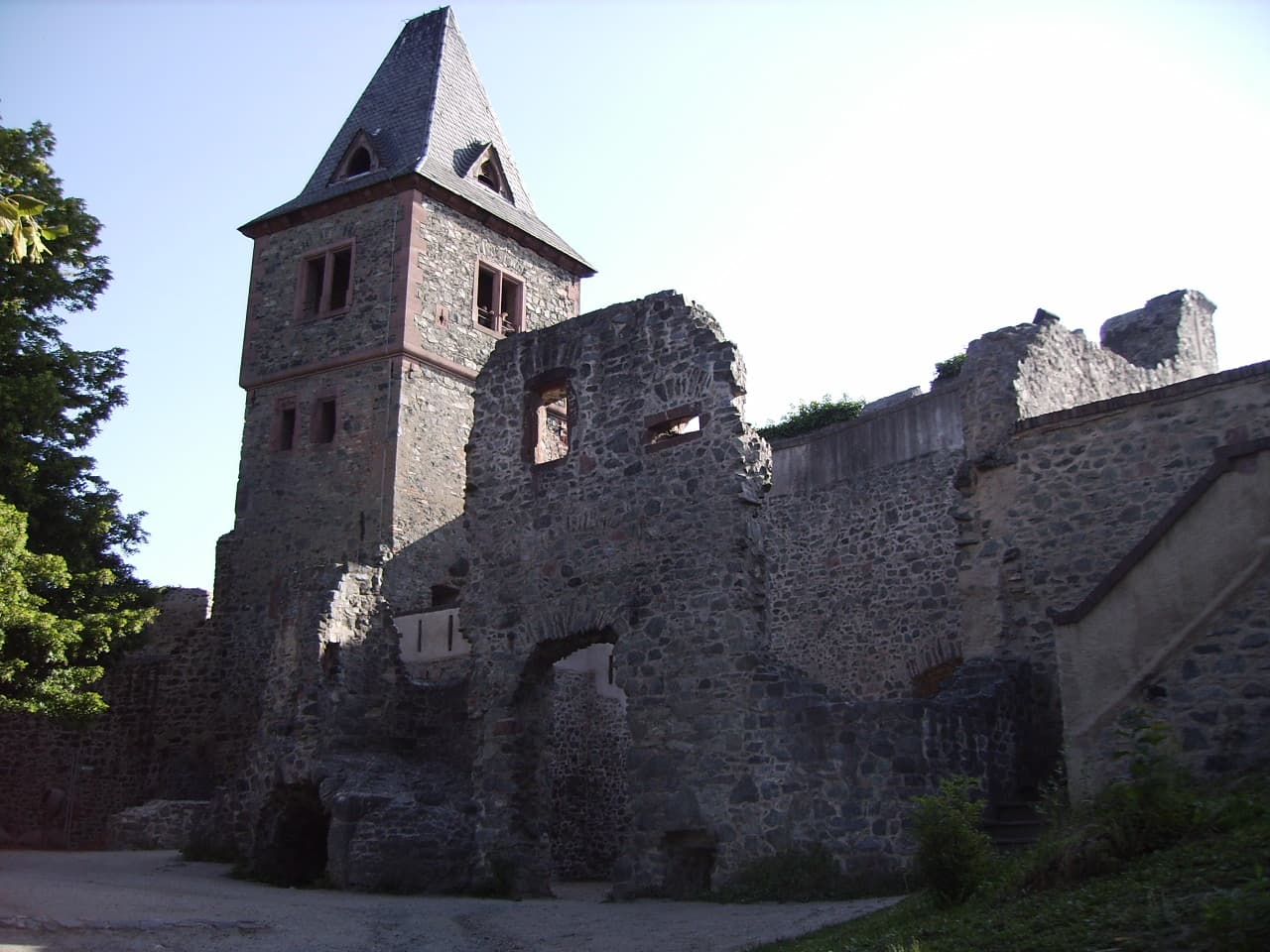
Frankenstein Castle
Frankenstein Castle stands prominently on a hilltop in the Odenwald region overlooking the city of Darmstadt in Hessen, Germany. This medieval fortress, dating back to the 13th century, is renowned not only for its strategic location and historical significance but also for its intriguing association with Gothic literature and alchemical lore. The castle is often linked to Mary Shelley's iconic 1818 novel, Frankenstein, as a possible inspiration, although this connection remains speculative.
Historical origins and medieval significance
The origins of Frankenstein Castle trace back to the early 12th century, with the first documented mention of the name "Frankenstein" appearing in 1146 concerning the nobleman Helenger of Frankenstein. However, archaeological and historical evidence suggests that a defensive tower existed on the site as early as circa 1100. This tower was initially under the control of the nearby Limburg Abbey, which was responsible for securing important trade routes to cities such as Speyer, Dürkheim, and Worms.
In 1205, the abbey entrusted the counts of Leiningen with the castle's defense, leading to the expansion of the tower into a full-fledged castle in the early 13th century. From 1204 to 1231, records mention knights Marquard, Friedrich, and Helenger von Frankenstein as administrators of the castle. The fortress functioned as a strategic military and administrative center throughout the High Medieval period.
Architectural features and modifications
The castle's architecture reflects typical High Medieval fortification styles, with robust curtain walls, a central keep, and defensive towers. While much of the original structure has suffered damage over the centuries, significant portions of the inner courtyard and lower walls remain authentic. These remnants include traces of the old drawbridge and defensive battlements characteristic of medieval military architecture.
In the 19th century, the castle underwent romanticized restoration efforts, which introduced architectural elements not present in the original medieval design. Notably, the high, peaked towers that define the castle's silhouette today were added around 1850 by architects inspired by the Romantic Neo-Gothic movement. These additions aimed to enhance the castle's dramatic appearance rather than reflect historical accuracy.
Notable historical events and ownership
Throughout its history, Frankenstein Castle experienced numerous changes in ownership and military significance. Around 1390, the castle became a joint heritage property, with Limburg Abbey pledging half of it to the Lords of Einselthum. By the early 15th century, shares of the castle were controlled by the counts of Nassau-Saarbrücken and Leiningen-Hardenburg.
The castle endured damage during regional conflicts in the late 15th and early 16th centuries, including struggles between Prince-elector Frederick I and Count Palatine Ludwig I of Zweibrücken. In 1512, the castle was conquered by the Count of Nassau under orders from Emperor Maximilian I. The German Peasants' War inflicted further destruction, rendering the castle uninhabitable by 1560, though it retained military importance due to its strategic location.
During the Thirty Years' War, the castle was captured by the Spanish General Ambrosio Spinola. Later, in the War of the Spanish Succession, it served as accommodation for French troops, who continued to use the castle chapel for mass as late as 1703. Ownership shifted again in 1706 when the Electoral Palatinate took possession of the Nassau-Saarbrücken share. Following the Palatinate's integration into Bavaria, the castle ruins were secured in the late 19th century and underwent further upgrades in the 20th century.
The enigmatic figure of johann conrad dippel
One of the most fascinating aspects of Frankenstein Castle is its association with Johann Conrad Dippel, born there in 1673. Dippel was a controversial alchemist and theologian known for his unconventional experiments. Rumors suggest that he conducted anatomical studies and alchemical experiments within the castle, possibly involving the dissection of human corpses. Local folklore even claims that Dippel created a living monster, animated by lightning, a tale that some speculate influenced Mary Shelley's creation of her novel's monster.
While these stories add to the castle's mystique, there is no concrete evidence to substantiate the more sensational claims. Nevertheless, Dippel's legacy as an eccentric scientist contributes to the castle's cultural and historical allure.
Modern history and cultural significance
In the 17th century, the castle served as barracks for retired soldiers, and after World War II, parts of it were used as an American Army base. This post-war usage partly explains the castle's popularity among visitors from the United States. Despite its fame, Frankenstein Castle has never been extensively commercialized as a tourist attraction, maintaining a relatively subdued atmosphere for most of the year.
Today, the castle is owned by the state of Rhineland-Palatinate and is open to the public with extended visiting hours. It hosts an annual Halloween festival on October 31st, which draws large crowds and celebrates the castle's eerie reputation. Restoration efforts in the late 20th century uncovered foundations of a previously unknown shield wall, enhancing our understanding of the castle's defensive capabilities.
Visitor experience and accessibility
Visitors to Frankenstein Castle can explore the authentic medieval sections, including the inner courtyard, remnants of the drawbridge, and the chapel used by troops in the early 18th century. The castle's hilltop location offers panoramic views of the surrounding Odenwald forest and the city of Darmstadt.
The castle is accessible by car, located approximately 30 kilometers south of Frankfurt, making it an ideal day trip destination. While the site retains a peaceful ambiance for most of the year, the Halloween festival transforms it into a vibrant cultural event featuring theatrical performances, themed tours, and festive activities.
Architectural and historical research
Ongoing archaeological work has provided valuable insights into the castle's construction phases and historical usage. The discovery of the shield wall foundations in the 1970s and 1980s has shed light on the castle's defensive design, illustrating the strategic importance placed on fortifications during the medieval period.
Scholars continue to study the castle's complex history of ownership, military engagements, and architectural evolution, contributing to a richer understanding of regional medieval fortifications in Germany.
Frequently asked questions (FAQ)
- How do I get to Frankenstein Castle?
- Frankenstein Castle is located near Darmstadt, Germany, and can be accessed by car or public transport. The nearest train station is in Darmstadt, and from there, you can take a bus or taxi to the castle. There are also marked hiking trails leading directly to the castle for those who enjoy a scenic walk.
- What is the historical significance of Frankenstein Castle?
- Frankenstein Castle dates back to the 13th century and is steeped in history, often associated with legends of ghosts and the tale of Frankenstein. It served as a strategic fortification and residence for the counts of Katzenelnbogen. Today, it stands as a testament to medieval architecture and offers insights into the region's past.
- When was Frankenstein Castle built?
- Construction of Frankenstein Castle began in the early 13th century, around 1250 AD. The castle has undergone various modifications and restorations throughout the centuries, reflecting different architectural styles and historical periods. Its enduring structure showcases the evolving defensive needs of the time.
- Can I take guided tours of Frankenstein Castle?
- Yes, guided tours are available at Frankenstein Castle, offering visitors an in-depth look at its history and architecture. These tours often include fascinating stories about the castle's legends and the surrounding area. It's recommended to check the schedule in advance, especially during peak tourist seasons.
- Why is Frankenstein Castle a popular tourist destination?
- Frankenstein Castle is popular for its rich history, stunning architecture, and breathtaking views of the surrounding landscape. The connection to the Frankenstein legend and its picturesque location make it a must-visit for tourists and locals alike. Additionally, the castle hosts various events and festivals throughout the year, enhancing its appeal.
- Is it possible to host events at Frankenstein Castle?
- Yes, Frankenstein Castle can host various events, including weddings, corporate gatherings, and private parties. The unique setting and historical ambiance provide a memorable backdrop for any occasion. Interested parties should contact the castle administration for details on availability and arrangements.
- What are the opening hours for Frankenstein Castle?
- Frankenstein Castle is generally open to visitors year-round, but the opening hours may vary seasonally. Typically, the castle is open from 10 AM to 6 PM during the warmer months and may close earlier in winter. It's advisable to check the official website for current hours before planning your visit.
- What are the ticket prices for visiting Frankenstein Castle?
- Ticket prices for Frankenstein Castle are reasonably priced, with discounts available for students and seniors. Children under a certain age may enter for free or at a reduced rate. Visitors can purchase tickets on-site or through the official website for convenience.
- What is the best time to visit Frankenstein Castle?
- The best time to visit Frankenstein Castle is during the spring and early autumn months when the weather is mild, and the surrounding nature is in full bloom. These seasons also tend to attract fewer tourists, allowing for a more peaceful experience. Special events and festivals are often held during summer, adding to the vibrant atmosphere.
- Are there any nearby attractions to explore when visiting Frankenstein Castle?
- Yes, there are several nearby attractions to explore, including the beautiful Odenwald forest and the charming town of Darmstadt. Visitors can also enjoy local hiking trails and other castles in the region. The area is rich in cultural and historical sites, making it perfect for a full day of exploration.
Photo gallery

Information
Website
Visit websiteSources & official resources
Verify the information above using these authoritative references.
Loading map...
Visitor reviews
No reviews yet. Been here? Write the first review and help other travelers!
Write the first reviewVisited this castle? Share your experience
Your review helps other travelers and adds first-hand knowledge to our encyclopedia.



