Fortress of the Immaculate Conception
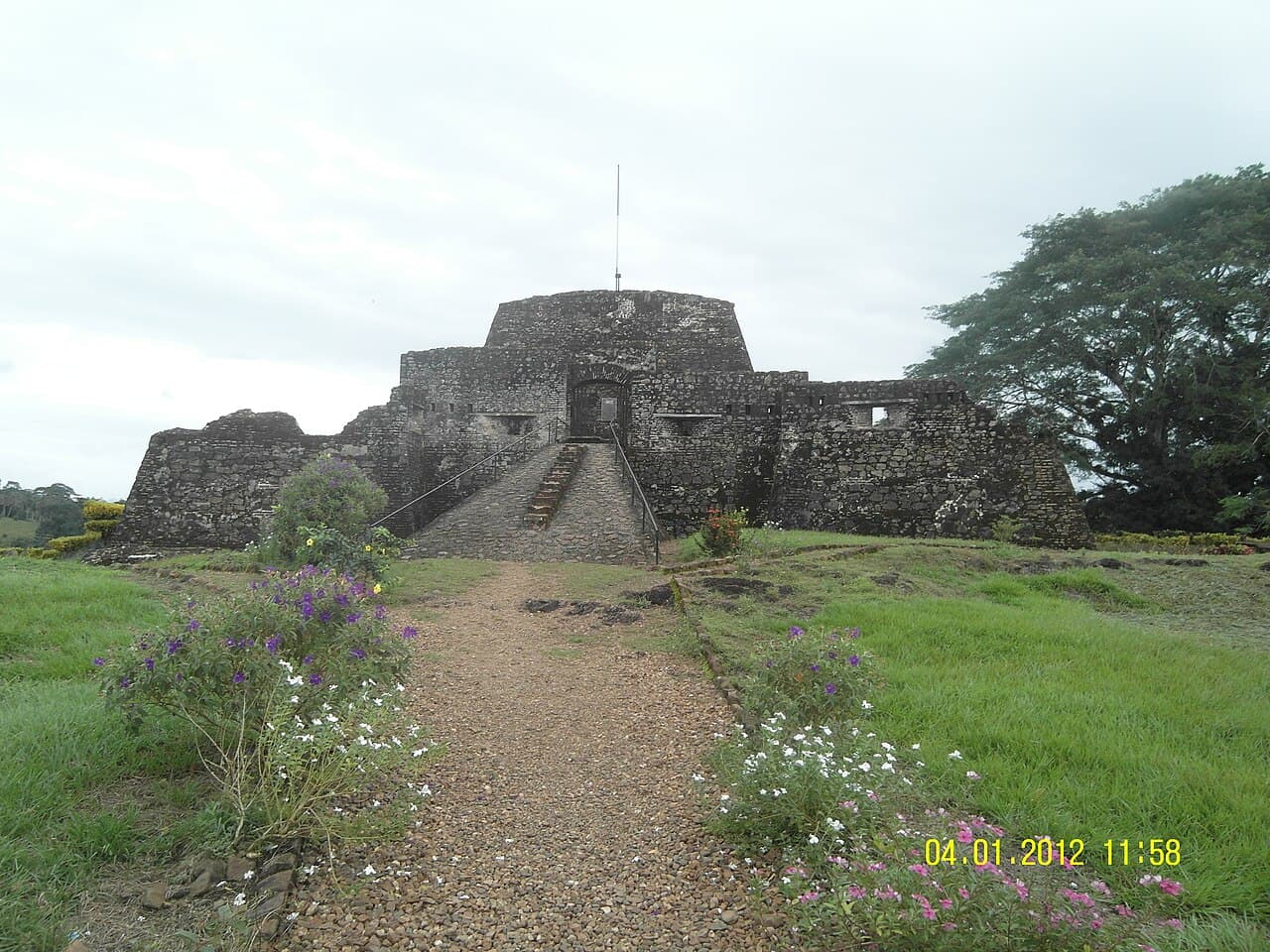
The Fortress of the Immaculate Conception (El Castillo de la Inmaculada Concepción) stands as a significant 17th-century bastioned fortress located on the southern bank of the San Juan River in the village of El Castillo, southern Nicaragua. This fortification was strategically positioned approximately 6 kilometers from the border with Costa Rica, near the Raudal del Diablo rapids, to control a critical point along the river that connects the Caribbean Sea to Lake Nicaragua. Its location was vital for protecting the inland city of Granada from pirate incursions during the colonial era.
Historical context and strategic importance
Constructed and completed in 1675, the fortress was part of a broader defensive network established by the Spanish colonial authorities within the Captaincy General of Guatemala. The primary purpose of these fortifications was to secure the San Juan River corridor, which was a key transit route for goods and people traveling between the Caribbean and the interior of Central America. The fortress played a critical role in thwarting frequent pirate attacks aimed at the prosperous city of Granada, which lay upstream on Lake Nicaragua.
The fortress maintained its strategic relevance well into the late 18th century, serving as a military and administrative center that controlled river access and safeguarded Spanish colonial interests in the region. Its presence helped to stabilize Spanish control over this contested frontier area during a period marked by frequent conflicts and challenges from rival European powers and privateers.
Architectural features and design
The Fortress of the Immaculate Conception is an exemplary representation of a bastioned fortress, a style that emerged during the Renaissance period to counter advances in artillery and siege warfare. The fortress exhibits characteristic features such as thick stone walls, angular bastions projecting from the corners, and a layout designed to maximize defensive coverage and eliminate blind spots.
The bastions allowed defenders to deliver overlapping fields of fire along the walls and surrounding approaches, making assaults costly and difficult. The fortress also included moats and drawbridges, enhancing its defensive capabilities. The construction materials primarily consisted of locally sourced stone and mortar, which contributed to the fortress's durability in the humid tropical climate.
Inside, the fortress housed garrison quarters, ammunition magazines, and command posts. The internal arrangement was functional, designed to support a permanent military presence capable of rapid response to threats. The fortress's position overlooking the rapids provided natural defensive advantages and controlled river navigation.
Notable historical events
The fortress is renowned for its role in the 1762 defense against British forces during the Seven Years' War. British troops, allied with local indigenous groups, launched an assault intending to seize control of the San Juan River and thereby threaten Spanish dominance in Central America. The fortress's garrison, led by Lieutenant Colonel José de Herrera y Sotomayor, successfully repelled the attack despite being outnumbered and facing difficult conditions.
This defense became a symbol of resilience and patriotism in Nicaraguan history. The event is commemorated locally and has contributed to the fortress's reputation as a national heritage site.
Cultural significance and preservation
Today, the Fortress of the Immaculate Conception is recognized as one of Nicaragua's most important colonial-era landmarks. It attracts historians, architects, and tourists interested in military history and colonial architecture. The fortress is included on a tentative list for UNESCO World Heritage Site designation, reflecting its outstanding cultural and historical value.
Efforts have been made to preserve the fortress's structural integrity and to maintain its historical authenticity. Restoration projects have focused on stabilizing the walls, conserving original materials, and interpreting the site for educational purposes. The fortress remains accessible to visitors, offering insights into the military engineering techniques of the Renaissance period and the colonial history of Central America.
Visiting the fortress
Visitors to the fortress can explore its bastions, courtyards, and defensive walls, gaining a sense of the challenges faced by its historic defenders. The site provides scenic views of the San Juan River and the surrounding tropical landscape, enhancing the visitor experience.
The nearby village of El Castillo offers additional cultural attractions and local hospitality. Guided tours often include detailed explanations of the fortress's construction, historical battles, and its role in regional geopolitics.
Frequently asked questions (FAQ)
- How do I get to the Fortress of the Immaculate Conception?
- The fortress is located in the village of El Castillo, accessible by boat along the San Juan River or by road from nearby towns. Visitors often travel via the river to experience the scenic route.
- What is the best time to visit the fortress?
- The best time to visit is during the dry season, from November to April, when weather conditions are more favorable for exploring the outdoor site and surrounding areas.
- Is the fortress open to the public?
- Yes, the fortress is open to visitors and offers guided tours that explain its historical significance and architectural features.
- Can I explore the inside of the fortress?
- Visitors can explore many parts of the fortress, including its bastions, courtyards, and defensive walls, though some areas may be restricted for preservation reasons.
- Why is the fortress historically important?
- The fortress played a crucial role in defending Spanish colonial interests against pirates and British forces, notably during the 1762 siege in the Seven Years' War.
Photo gallery

Information
Current owner
Nicaraguan government
Loading map...
Visitor reviews
No reviews yet. Been here? Write the first review and help other travelers!
Write the first reviewVisited this castle? Share your experience
Your review helps other travelers and adds first-hand knowledge to our encyclopedia.