Fortress of Our Lady of Pleasures of Pau Amarelo
Historical context and strategic importance
Built in the 18th century, the fortress played a critical role in the defense of the Brazilian coastline during a period marked by frequent conflicts between colonial powers. The Portuguese Empire sought to secure its territories against rival European nations and indigenous resistance. The fortress's location at Pau Amarelo was chosen for its strategic vantage point, overseeing maritime routes and serving as a deterrent against potential invaders and pirates.
This period in Brazilian history was characterized by the expansion of colonial settlements and the establishment of fortified structures to protect economic interests, especially in regions involved in sugarcane production and trade. The fortress contributed to safeguarding the surrounding area and maintaining Portuguese dominance in the region.
Architectural features and design
Bastioned fortress characteristics
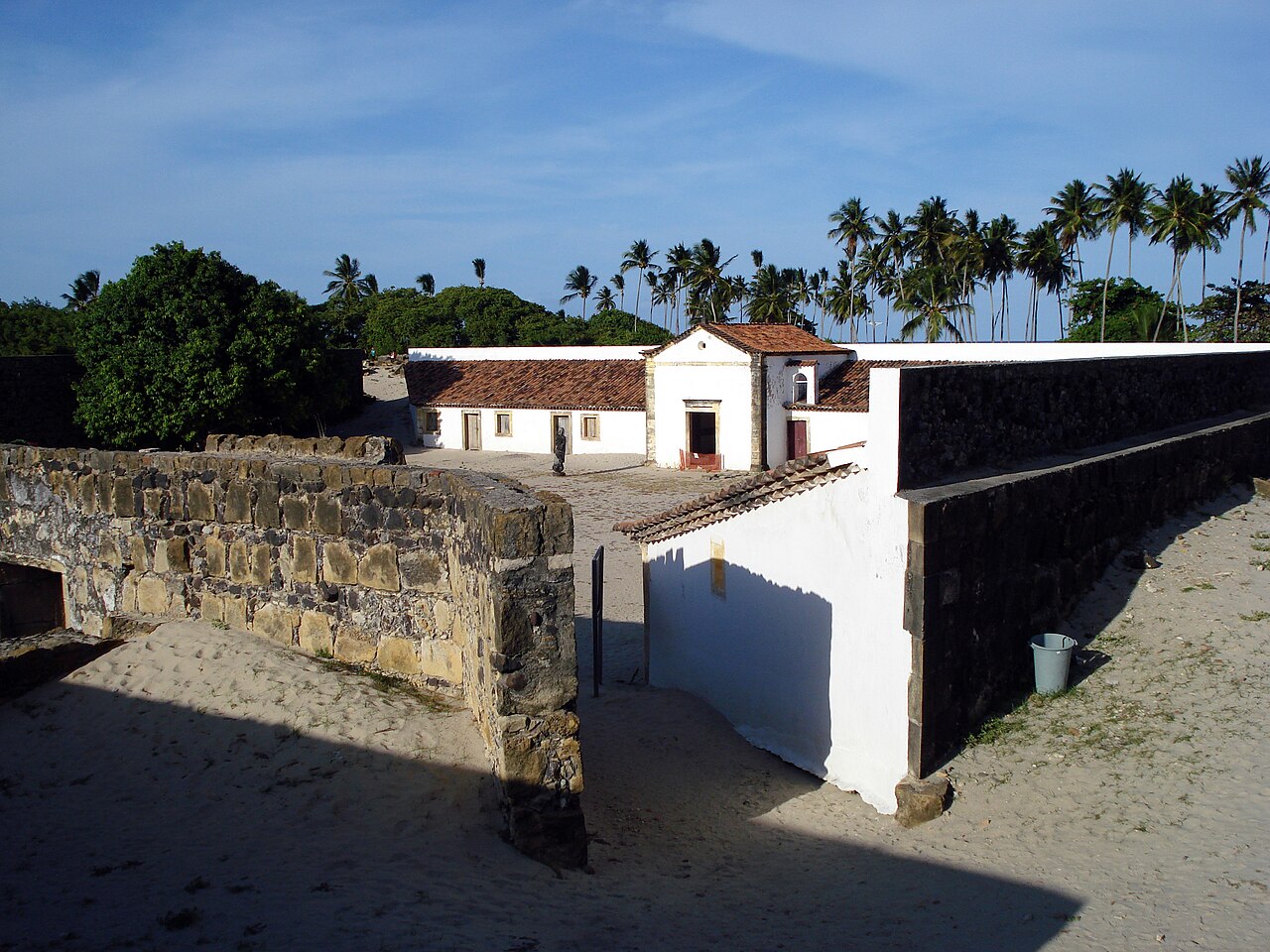
The fortress exemplifies the bastioned fortress typology, a style that emerged in the late Renaissance and became widespread in the 17th and 18th centuries. This architectural approach was designed to counter the effectiveness of cannon fire, featuring angled bastions that eliminate blind spots and allow defenders to cover all approaches with artillery.
The structure likely includes thick masonry walls, angular bastions at the corners, and a moat or ditch to impede attackers. The bastions would have been equipped with artillery placements and firing positions, enabling defenders to repel assaults effectively. The fortress's layout would have been planned to maximize defensive capabilities while accommodating the garrison and storage needs.
Materials and construction techniques
Constructed primarily from locally sourced stone and mortar, the fortress's robust walls were built to endure both the tropical climate and military engagements. The use of durable materials was essential for long-term defense and maintenance. The construction techniques reflect the engineering knowledge of the time, incorporating features such as thick walls to absorb cannon impacts and elevated platforms for artillery.
Role in colonial military history
Throughout its operational period, the fortress served as a key defensive installation within the Portuguese colonial military network in Brazil. It helped secure the coastline against threats from European rivals, pirates, and indigenous groups resisting colonization. The presence of such fortifications was crucial for maintaining control over trade routes and protecting valuable agricultural regions.
The fortress also functioned as a military garrison, housing soldiers and officers responsible for surveillance, defense, and communication with other forts and settlements. Its strategic position allowed for early warning of incoming threats and coordination of defensive measures along the coast.
Preservation and current status
Today, the fortress remains a valuable cultural and historical monument, representing Brazil's colonial military heritage. While the exact condition of the structure varies, bastioned fortresses of this era often face challenges related to weathering and urban development. Preservation efforts aim to maintain the fortress's integrity, allowing visitors and researchers to study its architecture and historical significance.
As a bastioned fortress from the post-Renaissance period, it provides insight into the evolution of military architecture and colonial defense strategies in South America. The site offers educational opportunities and serves as a reminder of the complex history of European colonization in Brazil.
Visiting information and cultural significance
While specific visitor details for the Fortress of Our Lady of Pleasures of Pau Amarelo may vary, such sites typically offer guided tours, informational signage, and access to key architectural features. Visitors can explore the bastions, walls, and interior spaces to gain a deeper understanding of the fortress's function and design.
The fortress holds cultural significance as a symbol of colonial history and military engineering. It contributes to the broader narrative of Brazil's development and the interactions between European powers and indigenous populations. Preservation and public engagement with the site help foster appreciation for this heritage.
Frequently asked questions (FAQ)
- What is the historical significance of the Fortress of Our Lady of Pleasures of Pau Amarelo?
- The fortress played a key role in 18th-century colonial defense, protecting Brazilian coastal territories from European rivals and pirates during the post-Renaissance period.
- What architectural style does the fortress represent?
- It exemplifies the bastioned fortress style, featuring angled bastions and thick masonry walls designed to withstand artillery attacks.
- Can visitors explore the fortress today?
- While specific visitor information is limited, bastioned fortresses like this often offer tours and educational opportunities highlighting their military and architectural history.
- Why was the fortress built at Pau Amarelo?
- Its location provided a strategic vantage point to oversee maritime routes and defend against naval threats along the Brazilian coast.
- When was the fortress constructed?
- The fortress was built in the 18th century during the post-Renaissance period, reflecting the era's military architectural advancements.
Photo gallery

Information
Loading map...
Visitor reviews
No reviews yet. Been here? Write the first review and help other travelers!
Write the first reviewVisited this castle? Share your experience
Your review helps other travelers and adds first-hand knowledge to our encyclopedia.