Fort Orange (Dutch Brazil) — Brazil castle

Fort Orange (Dutch Brazil)

Fort Orange (Dutch Brazil) on Itamaracá Island
Pernambuco, Brazil
Renaissance (15th–17th c.)

Fort Orange, also known as the Fort of Santa Cruz de Itamaracá, is a historic bastioned fortress situated on Itamaracá Island along the northern coast of the Brazilian state of Pernambuco. Constructed during the 17th century in the Renaissance period, this fortification played a significant role in the colonial conflicts between the Dutch and Portuguese in Brazil.

Strategic location and historical context

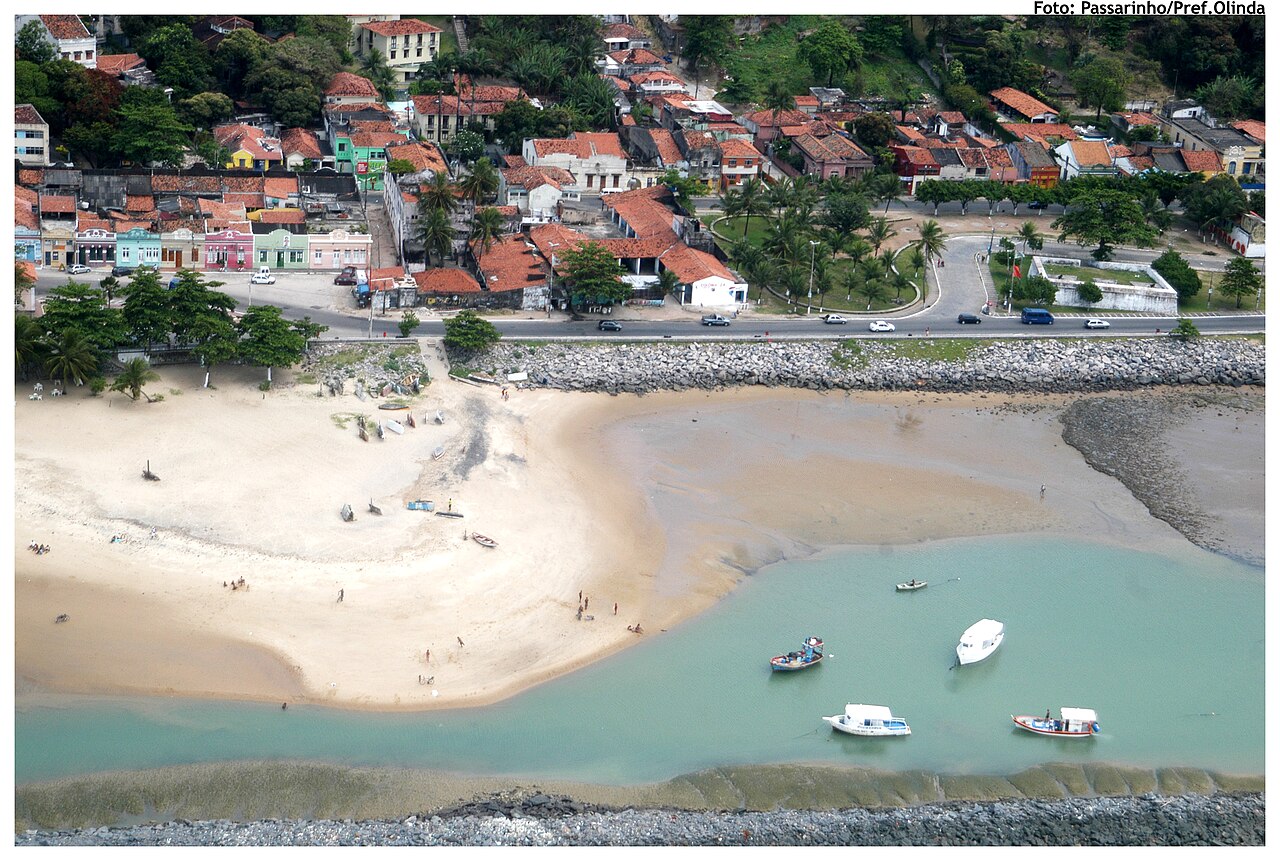
The fort occupies a strategic position on the coast, originally built on a small island in front of the southeastern tip of Itamaracá Island. This location allowed control over the southern channel of Santa Cruz, an important maritime route. During the second Dutch invasions of Brazil, the fort was a key military installation for the Dutch colonial administration, serving to dominate the surrounding waters and protect their territorial claims in the region.

Architectural features and design

Fort Orange is a classic example of a bastioned fortress, a style that emerged in the Renaissance period to adapt to artillery warfare. The fort's design includes angular bastions projecting from the main walls, which allowed defenders to cover adjacent walls with crossfire and eliminated blind spots. This architectural innovation was crucial for coastal defense against naval attacks.

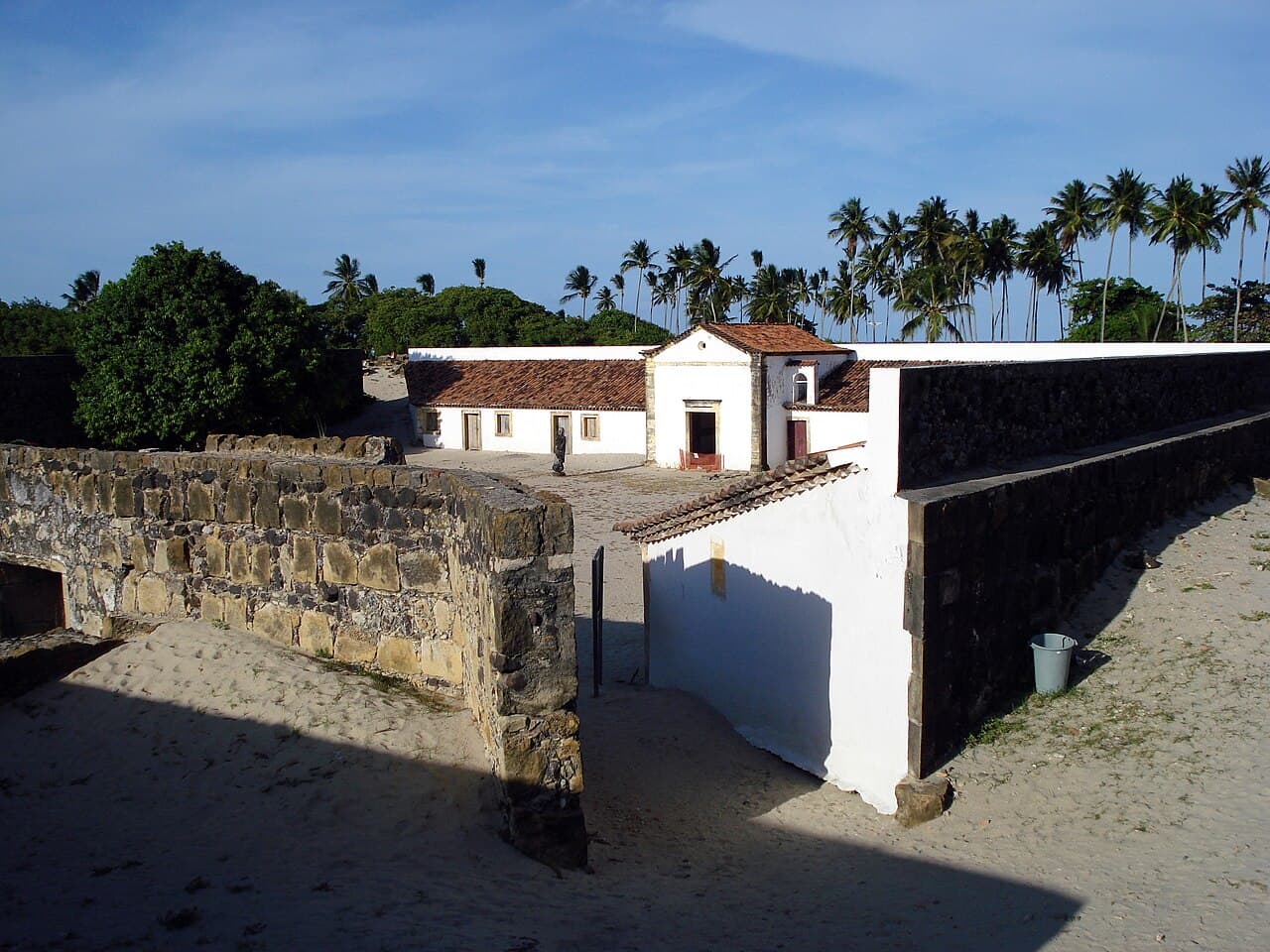
The fort's walls were constructed with robust masonry capable of withstanding cannon fire. Inside, the fortress contained barracks, storage facilities, and artillery platforms. The layout was compact yet functional, reflecting the military engineering principles of the time, emphasizing defense and control over the surrounding sea channels.

Role in Dutch Brazil and colonial conflicts

During the Dutch occupation of parts of northeastern Brazil, Fort Orange was one of several fortifications established to secure Dutch interests against Portuguese forces and indigenous resistance. The fort served as a base for Dutch military operations and as a deterrent to Portuguese naval incursions.

Its presence is tied to the broader history of Dutch Brazil (1630-1654), when the Dutch West India Company attempted to establish a foothold in the region. The fort witnessed several military engagements and was part of the network of defenses that supported Dutch colonial administration until the Portuguese reconquest.

Preservation and current status

Today, Fort Orange remains a significant cultural and historical monument on Itamaracá Island. While it has undergone various degrees of restoration, the fortress retains much of its original structure, allowing visitors to appreciate its Renaissance military architecture and understand its role in colonial history.

The site is accessible to the public and offers insights into the military strategies of the 17th century, as well as the complex colonial history of Brazil. Its preservation contributes to the understanding of European colonial fortifications in South America and their adaptation to local geographic and military conditions.

Visiting Fort Orange

Visitors to Fort Orange can explore the bastions, walls, and internal chambers, gaining a tangible sense of the fort's defensive capabilities. The surrounding landscape of Itamaracá Island adds to the experience, providing context to the fort's strategic maritime position.

Information panels and guided tours often highlight the fort's construction techniques, historical significance, and the events that unfolded during the Dutch-Portuguese conflicts. The site is an important destination for those interested in military history, colonial studies, and architectural heritage.

Frequently asked questions (FAQ)

When was Fort Orange built and by whom?
Fort Orange was constructed in the 17th century during the Dutch colonial period in Brazil, primarily by the Dutch West India Company to secure their territorial interests.
What is the architectural style of Fort Orange?
Fort Orange is designed as a bastioned fortress, a Renaissance military architectural style developed to withstand artillery attacks and provide overlapping fields of fire.
Where is Fort Orange located?
Fort Orange is located on Itamaracá Island on the northern coast of Pernambuco, Brazil, strategically positioned to control maritime access through the southern channel of Santa Cruz.
Can visitors explore Fort Orange today?
Yes, Fort Orange is accessible to the public and offers an opportunity to explore its bastions, walls, and internal chambers, with information on its historical and military significance.
What role did Fort Orange play in Dutch Brazil?
Fort Orange was a key defensive installation during the Dutch occupation of northeastern Brazil, serving as a base for military operations and protecting Dutch colonial interests against Portuguese forces.

Photo gallery

Fort Orange (Dutch Brazil)
Click to view

Photo by LeRoc LeRoc•CC BY-SA 4.0

1 photo • Click any image to view in full screen

Information

Bastioned Fortress

Loading map...

Visitor reviews

No reviews yet. Been here? Write the first review and help other travelers!

Write the first review

Visited this castle? Share your experience

Your review helps other travelers and adds first-hand knowledge to our encyclopedia.
Write a review

(5/5)

0/2000 characters

Your review will be visible after admin approval

Nearby castles

11.2 km
Fortress of Our Lady of Pleasures of Pau Amarelo — Brazil castle

Fortress of Our Lady of Pleasures of Pau Amarelo

, Brazil

The Fortress of Our Lady of Pleasures of Pau Amarelo is a significant example of 18th-century bastioned fortress architecture in Brazil, reflecting the military strategies and colonial ambitions of the post-Renaissance period. This fortress was constructed during a time when European powers fortified their overseas territories to protect against naval threats and ensure control over strategic coastal areas. Its design incorporates the characteristic elements of bastioned fortresses, which were developed to withstand artillery attacks and provide overlapping fields of fire. Historical context and strategic importance Built in the 18th century, the fortress played a critical role in the defense of the Brazilian coastline during a period marked by frequent conflicts between colonial powers. The Portuguese Empire sought to secure its territories against rival European nations and indigenous resistance. The fortress's location at Pau Amarelo was chosen for its strategic vantage point, overseeing maritime routes and serving as a deterrent against potential invaders and pirates. This period in Brazilian history was characterized by the expansion of colonial settlements and the establishment of fortified structures to protect economic interests, especially in regions involved in sugarcane production and trade. The fortress contributed to safeguarding the surrounding area and maintaining Portuguese dominance in the region. Architectural features and design Bastioned fortress characteristics The fortress exemplifies the bastioned fortress typology, a style that emerged in the late Renaissance and became widespread in the 17th and 18th centuries. This architectural approach was designed to counter the effectiveness of cannon fire, featuring angled bastions that eliminate blind spots and allow defenders to cover all approaches with artillery. The structure likely includes thick masonry walls, angular bastions at the corners, and a moat or ditch to impede attackers. The bastions would have been equipped with artillery placements and firing positions, enabling defenders to repel assaults effectively. The fortress's layout would have been planned to maximize defensive capabilities while accommodating the garrison and storage needs. Materials and construction techniques Constructed primarily from locally sourced stone and mortar, the fortress's robust walls were built to endure both the tropical climate and military engagements. The use of durable materials was essential for long-term defense and maintenance. The construction techniques reflect the engineering knowledge of the time, incorporating features such as thick walls to absorb cannon impacts and elevated platforms for artillery. Role in colonial military history Throughout its operational period, the fortress served as a key defensive installation within the Portuguese colonial military network in Brazil. It helped secure the coastline against threats from European rivals, pirates, and indigenous groups resisting colonization. The presence of such fortifications was crucial for maintaining control over trade routes and protecting valuable agricultural regions. The fortress also functioned as a military garrison, housing soldiers and officers responsible for surveillance, defense, and communication with other forts and settlements. Its strategic position allowed for early warning of incoming threats and coordination of defensive measures along the coast. Preservation and current status Today, the fortress remains a valuable cultural and historical monument, representing Brazil's colonial military heritage. While the exact condition of the structure varies, bastioned fortresses of this era often face challenges related to weathering and urban development. Preservation efforts aim to maintain the fortress's integrity, allowing visitors and researchers to study its architecture and historical significance. As a bastioned fortress from the post-Renaissance period, it provides insight into the evolution of military architecture and colonial defense strategies in South America. The site offers educational opportunities and serves as a reminder of the complex history of European colonization in Brazil. Visiting information and cultural significance While specific visitor details for the Fortress of Our Lady of Pleasures of Pau Amarelo may vary, such sites typically offer guided tours, informational signage, and access to key architectural features. Visitors can explore the bastions, walls, and interior spaces to gain a deeper understanding of the fortress's function and design. The fortress holds cultural significance as a symbol of colonial history and military engineering. It contributes to the broader narrative of Brazil's development and the interactions between European powers and indigenous populations. Preservation and public engagement with the site help foster appreciation for this heritage.

Post-Renaissance (17th–18th c.)
Details
22.8 km
Fort of Saint Francis — Brazil castle

Fort of Saint Francis

, Brazil

The Fort of Saint Francis is a notable example of a bastioned fortress located in Brazil, reflecting the strategic military architecture developed during the colonial period. This fortress was constructed to defend the coastline against naval threats and to secure the territory from foreign invasions and pirate attacks. Its design incorporates the characteristic angular bastions that allowed defenders to cover adjacent walls with crossfire, a hallmark of bastioned fortifications. Historical context and strategic importance Built during the colonial era, the Fort of Saint Francis served as a critical military installation for Portuguese colonial forces. The fortress's location along the Brazilian coast was chosen for its strategic vantage point, enabling control over maritime routes and protection of nearby settlements. Its construction aligns with the widespread adoption of bastioned fort designs in the 16th and 17th centuries, which were influenced by advances in artillery and siege warfare. Architectural features and design The fortress exemplifies the bastioned fortress style, characterized by its star-shaped layout with projecting bastions at the corners. These bastions provided overlapping fields of fire, minimizing blind spots and enhancing defensive capabilities. The walls are typically thick and angled to better deflect cannon fire. The fort likely included a moat or ditch surrounding the walls to hinder enemy approach, along with a main gate fortified with defensive structures such as a ravelin or drawbridge. Inside, the fort would have contained barracks, storage facilities for ammunition and supplies, and command quarters. The design reflects the practical needs of sustained defense and garrison life, with provisions for both military operations and daily living. Construction period and style While the exact construction date of the Fort of Saint Francis is not precisely documented, its architectural style and defensive features suggest it was built during the post-medieval period, likely between the 16th and 18th centuries. The fortress's design is consistent with the baroque military architectural principles that were prevalent in colonial fortifications, emphasizing robust, angular bastions and thick defensive walls. Current condition and cultural significance The Fort of Saint Francis remains a significant cultural and historical landmark in Brazil. Its preservation status varies, with some sections potentially well-preserved or restored to maintain structural integrity and historical authenticity. The fortress offers valuable insights into colonial military engineering and Brazil's coastal defense history. Today, the site may serve as a tourist attraction, educational resource, and symbol of Brazil's colonial past. Visitors can explore its architectural features, learn about the military strategies employed, and appreciate the fortress's role in shaping regional history. Visiting information and accessibility Details about public access, visiting hours, and ticket prices for the Fort of Saint Francis are not widely documented. Potential visitors are advised to check with local tourism offices or heritage organizations for the most current information. The site may offer guided tours or informational exhibits to enhance the visitor experience.

Post-Renaissance (17th–18th c.)
Details
27.2 km
Forte de São João Batista do Brum — Brazil castle

Forte de São João Batista do Brum

Recife, Brazil

Forte de São João Batista do Brum, commonly referred to as Forte do Brum, is a significant 17th-century bastioned fortress located in the city of Recife, in the state of Pernambuco, Brazil. This fort stands as a notable example of Renaissance military architecture adapted to the coastal defenses of colonial Brazil. Its strategic position on the coastline was integral for protecting Recife, an important port city, from naval invasions and pirate attacks during the colonial period.Historical context and constructionConstructed in the early 17th century, Forte de São João Batista do Brum was part of a broader network of fortifications established by the Portuguese Crown to secure its territories in the Americas. Recife was a focal point of military and commercial activity, necessitating robust defenses against Dutch incursions and other European powers vying for control in the region.The fort was designed following the principles of the Renaissance bastioned fortress style, which emphasized angular bastions projecting from the walls to provide overlapping fields of fire and eliminate blind spots. This design improved the fort's defensive capabilities against artillery, a significant advancement over medieval fortifications.Architectural features and layoutThe fortress features thick masonry walls constructed from local stone and lime mortar, designed to withstand cannon fire. Its layout includes several bastions positioned at the corners, connected by curtain walls forming a polygonal shape typical of bastioned forts. The bastions allowed defenders to cover adjacent walls and the surrounding approaches effectively.Inside the fort, there are remnants of casemates and gun emplacements that once housed cannons for coastal defense. The fort also contained facilities for the garrison, including barracks, storage rooms, and a chapel dedicated to Saint John the Baptist, reflecting the religious influences of the time.Defensive innovationsForte do Brum incorporated a moat and a as part of its defensive system, enhancing its protection against ground assaults. The fort's elevated position provided commanding views over the adjacent sea and land approaches, allowing early detection of enemy ships.Role in regional conflictsThroughout the 17th and 18th centuries, the fort played a crucial role in the defense of Recife against Dutch invasions and later conflicts involving other colonial powers. It was a key military installation during the Dutch-Portuguese War, contributing to the eventual Portuguese reconquest of Pernambuco.In addition to its military function, Forte de São João Batista do Brum served as a symbol of Portuguese authority and colonial presence in northeastern Brazil. Its preservation offers insight into the military strategies and colonial history of the region.Preservation and current statusToday, the fort is recognized as a well-preserved bastioned fortress and a cultural heritage site in Recife. Restoration efforts have maintained its structural integrity and historical features, allowing visitors to explore its ramparts, bastions, and internal chambers.The site is accessible to the public, offering educational tours that highlight the fort's architectural significance and historical role. Its location near Recife's historic center makes it a notable attraction for those interested in colonial military architecture and Brazilian history.Visitor informationForte de São João Batista do Brum is typically open to visitors during daytime hours, with guided tours available. The site provides interpretive signage and exhibits detailing the fort's construction, military use, and restoration.

Renaissance (15th–17th c.)
Details