Kale-i Bala Castle
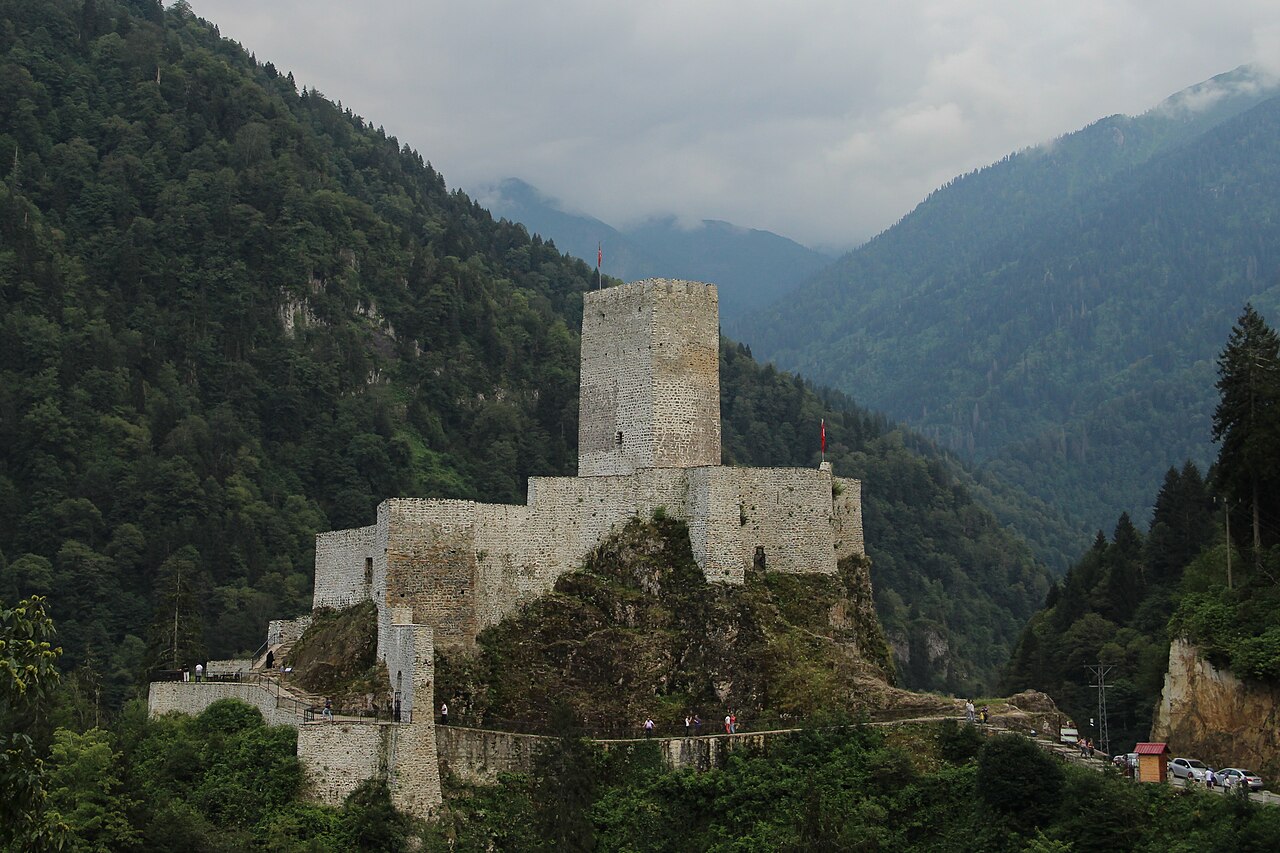
Kale-i Bala Castle, also historically known as Varoş Castle, is a late medieval fortress located in the hamlet of Yazlık Köyü in the province of Rize, Turkey. Perched on a rocky outcrop at an elevation of approximately 1,800 meters above sea level, it commands a strategic position overlooking the upper reaches of the Fırtına River canyon. This castle played a significant role in controlling the trade routes that passed through the mountainous terrain leading towards Erzurum.
The historical context and origins of Kale-i Bala Castle
The castle is believed to have been constructed in the late 14th or early 15th century, during a period when the region was nominally under the control of the Byzantine Empire. However, Byzantine authority was largely limited to the coastal areas, while the interior mountainous regions were effectively autonomous. These highlands were ruled by the Lord Arhakel of the Hemshin people, an ethnic group with Armenian roots who maintained a degree of independence from the Byzantines.
It was likely the Hemshin people who commissioned the construction of Kale-i Bala Castle along with the nearby Zil Castle. These fortifications served to protect and monitor the vital trade route running through the canyon, which connected the Black Sea coast to the interior and the city of Erzurum, a key commercial and military center.
Architectural features and strategic importance
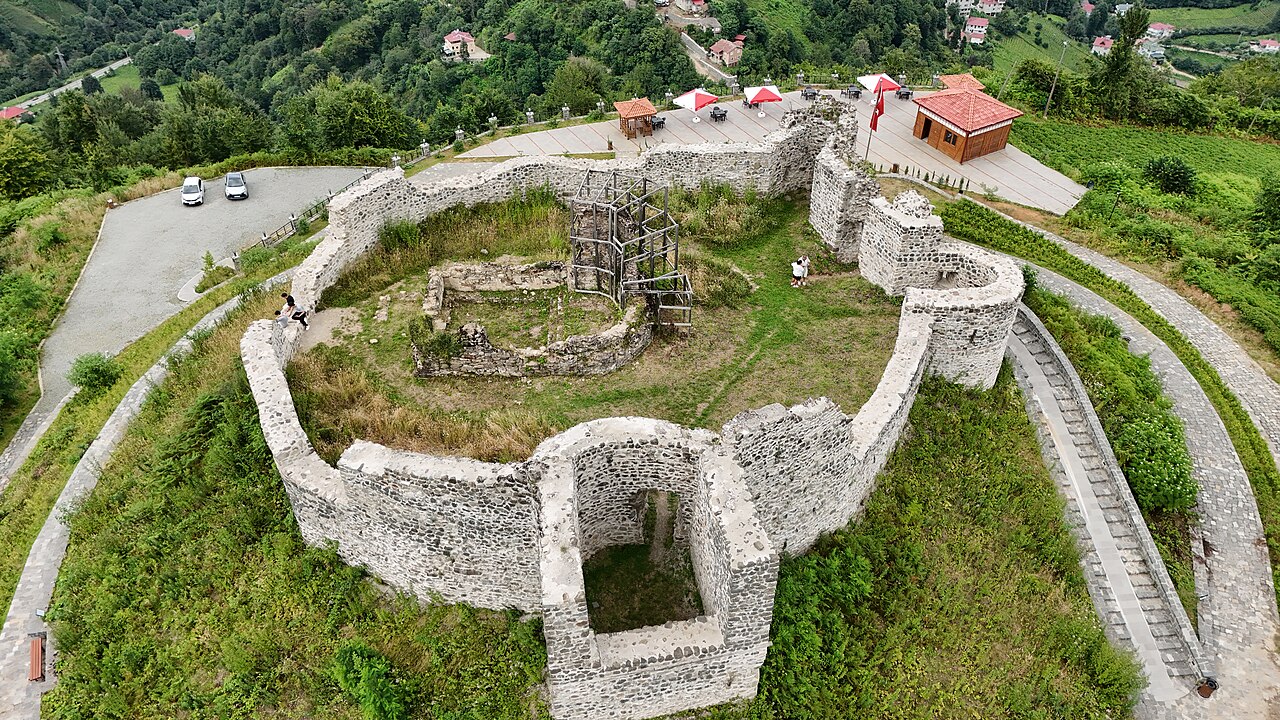
Kale-i Bala Castle is situated on a steep rocky promontory, which provided natural defensive advantages. The castle's design takes advantage of the rugged terrain to enhance its defensive capabilities. Although the ruins today are modest in scale, the castle originally included typical late medieval military architectural elements such as fortified walls, battlements, and possibly towers or lookout posts to oversee the canyon and the river below.
The castle's elevated position, often referred to as the "Upper Castle" (Yukarı Kale), contrasts with Zil Castle, known as the "Lower Castle" (Aşağı Kale), which is located further down the canyon. This complementary positioning allowed for control over different sections of the trade route and the surrounding region.
The Ottoman period and later use
In the late 15th century, the region encompassing Kale-i Bala Castle was incorporated into the expanding Ottoman Empire. The Ottomans recognized the strategic value of the castle and maintained a garrison there throughout the 16th century. Historical records indicate that between 25 and 40 Ottoman soldiers were stationed at Kale-i Bala, underscoring its continued military relevance during this period.
Over time, as the Ottoman Empire consolidated control and modernized its military infrastructure, the castle's defensive role diminished. However, it remained a part of the empire's network of fortifications in the Black Sea region for some time.
Visiting Kale-i Bala Castle and its surroundings
Today, Kale-i Bala Castle is freely accessible to visitors. While the castle ruins themselves are relatively small and less architecturally elaborate compared to other medieval fortresses, the site offers a unique glimpse into the region's medieval history and strategic geography.
The journey to the castle is an experience in itself, involving a winding drive through the dramatic Fırtına River canyon. Along the route, visitors can see the ruins of Zil Castle and several well-preserved medieval Ottoman single-arch stone bridges, which are remarkable examples of period engineering and craftsmanship.
The combination of natural beauty, historical architecture, and the rugged landscape makes a visit to Kale-i Bala Castle and its surroundings highly recommended for those interested in late medieval fortifications and the history of the Black Sea region.
Frequently asked questions (FAQ)
- How do I get to Kale-i Bala Castle?
- Kale-i Bala Castle is located in Yazlık Köyü, Rize Province, accessible by a winding road through the Fırtına River canyon. Visitors typically reach it by car, following the scenic route passing by Zil Castle and several Ottoman stone bridges.
- What is the historical significance of Kale-i Bala Castle?
- Kale-i Bala Castle was built in the late 14th or early 15th century by the Hemshin people to control trade routes through the Fırtına River canyon. It later became part of the Ottoman Empire's defensive network in the 16th century.
- Can I visit the castle ruins freely?
- Yes, the ruins of Kale-i Bala Castle are freely accessible to the public. While the structure is modest, the site offers a unique historical experience amid the dramatic canyon landscape.
- What architectural features does Kale-i Bala Castle have?
- The castle features typical late medieval defensive elements adapted to its rocky hilltop location, including fortified walls and battlements. Its position allowed for surveillance of the trade route and surrounding terrain.
- When was the castle incorporated into the Ottoman Empire?
- The region containing Kale-i Bala Castle was incorporated into the Ottoman Empire in the late 15th century, after which the castle was garrisoned by Ottoman soldiers during the 16th century.
Information
Address
Yazlık Köyü, Rize Province, Turkey
Loading map...
Visitor reviews
No reviews yet. Been here? Write the first review and help other travelers!
Write the first reviewVisited this castle? Share your experience
Your review helps other travelers and adds first-hand knowledge to our encyclopedia.