Fortifications of Xi'an
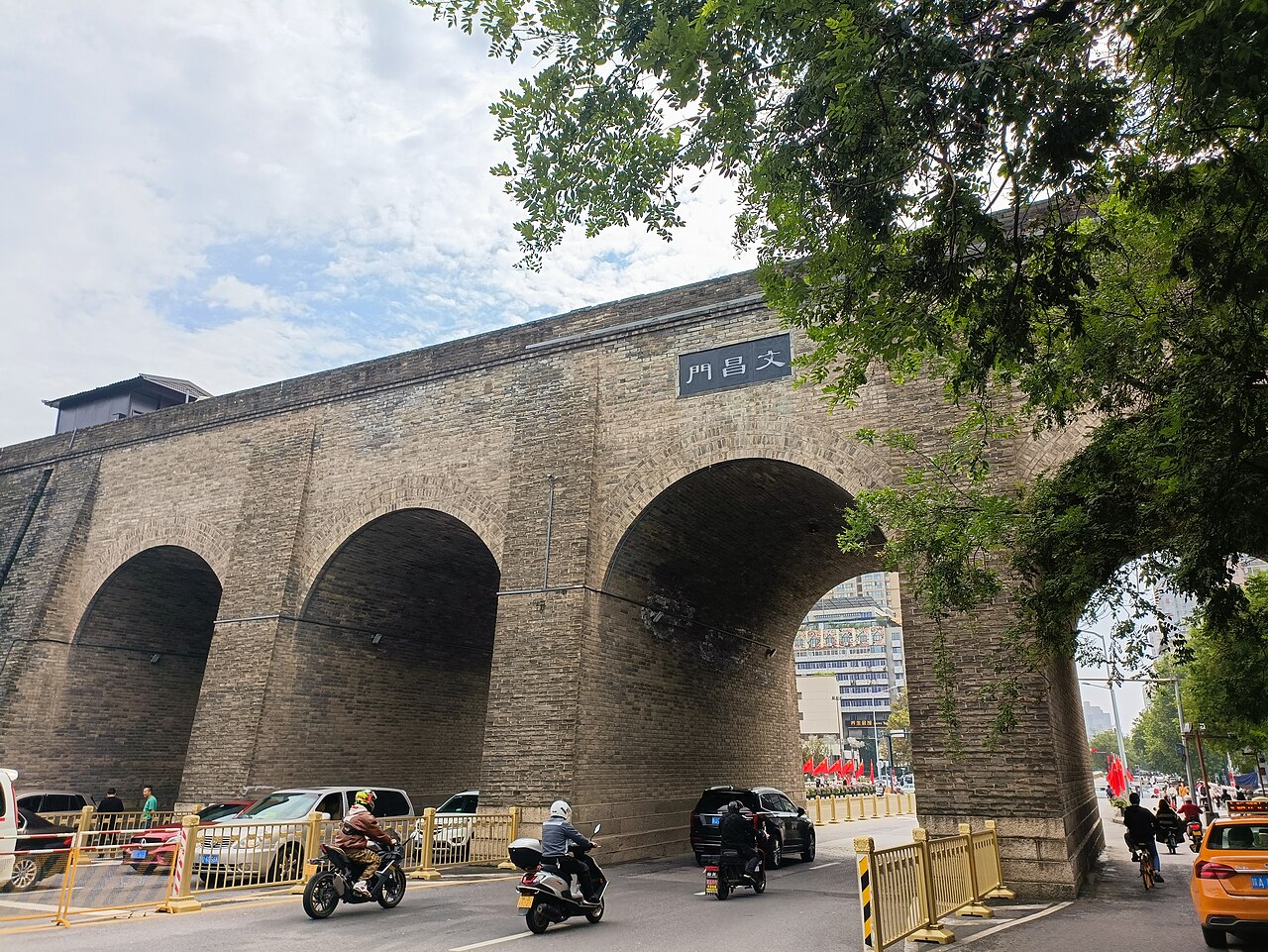
The Xi'an City Wall encloses an area of approximately 14 square kilometers (5.4 square miles), making it one of the largest ancient military defensive systems in China. It is a bastioned fortress type fortification, characterized by its massive stone and rammed earth construction, reinforced with brick facings, and punctuated by imposing watchtowers, gate towers, and battlements. The wall is rectangular in shape, stretching about 13.7 kilometers (8.5 miles) in circumference, with a width ranging from 12 to 14 meters (39 to 46 feet) and a height of about 12 meters (39 feet). Its formidable structure includes a wide moat surrounding the base, which further enhanced its defensive capabilities.
Historical context and construction
The construction of the Xi'an City Wall began in 1370 during the early Ming dynasty, specifically under the orders of the Hongwu Emperor, Zhu Yuanzhang. This period followed the overthrow of the Mongol-led Yuan dynasty and the establishment of the Ming dynasty, a time when securing the capital and major cities was a priority. Xi'an, historically known as Chang'an, had been a significant imperial city for centuries, serving as the capital for several dynasties. The wall was built on the foundations of earlier fortifications dating back to the Tang dynasty and even earlier periods, but the Ming construction greatly expanded and reinforced the defenses.
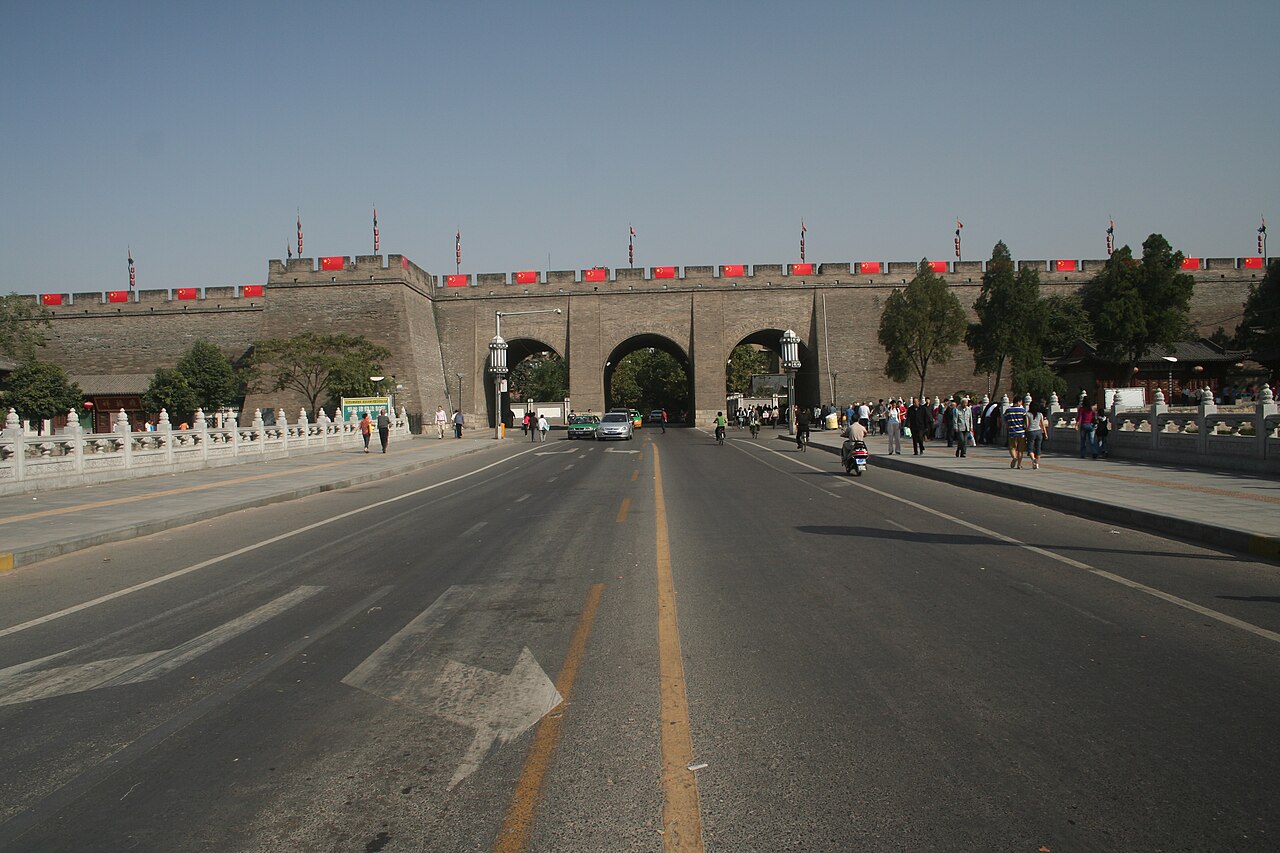
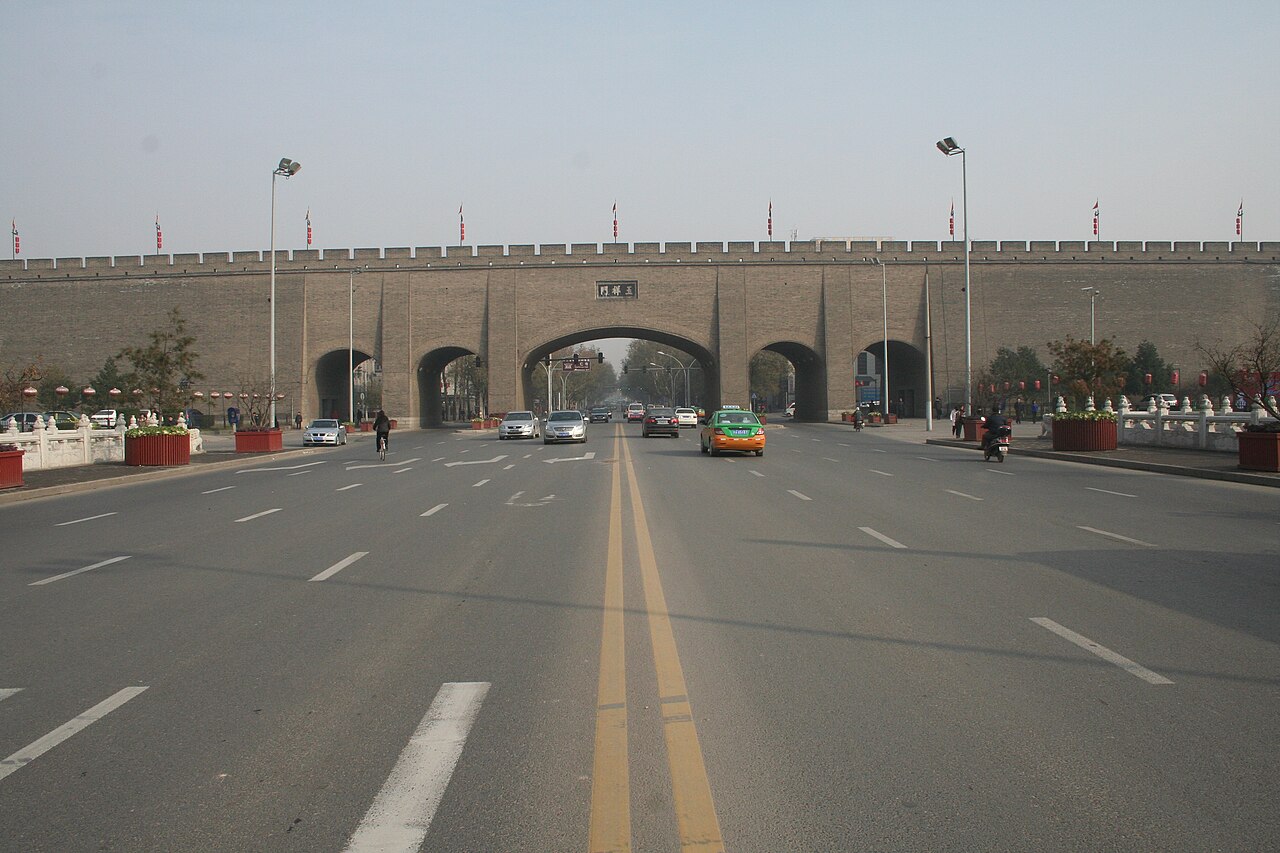
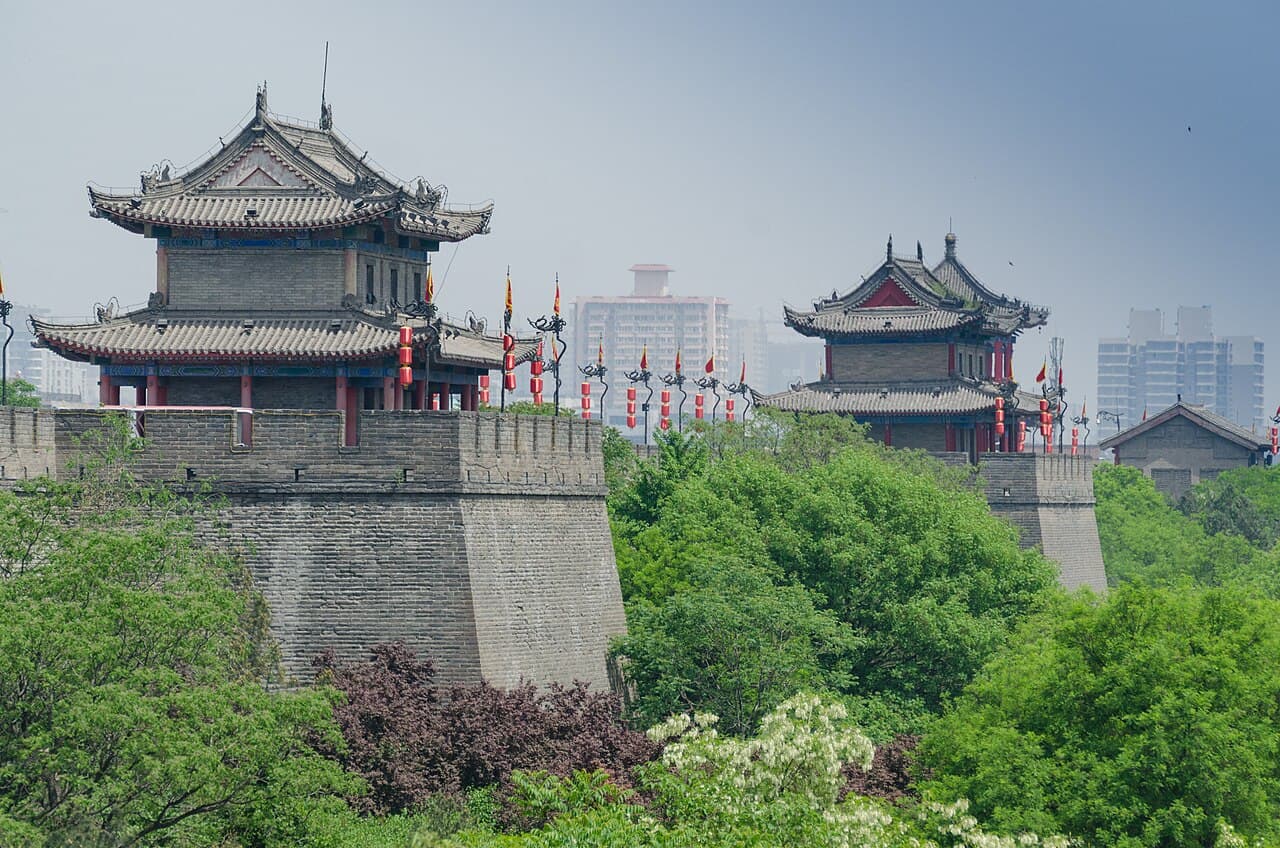
The wall was designed with a sophisticated defensive system that included corner bastions for archers and artillery, gatehouses with multiple defensive layers, and a parapet walk wide enough for soldiers to patrol and transport weapons. The main gates—such as the South Gate (Yongning Gate), East Gate (Changle Gate), West Gate (Anding Gate), and North Gate (Anyuan Gate)—were heavily fortified with imposing gate towers and barbicans.
Architectural features and military significance
The architecture of the Xi'an City Wall reflects the military engineering principles of the late medieval period in China. The wall's massive base is made of tamped earth, a traditional Chinese construction technique, which was then faced with bricks to resist erosion and attacks. The battlements are crenellated, allowing defenders to fire arrows and other projectiles while remaining protected. The top of the wall is broad enough to accommodate horses and troops, facilitating rapid movement during sieges.
The wall's moat was originally filled with water and served as a first line of defense, making direct assaults more difficult. The gate towers were multi-storied structures that housed soldiers and weapons, and their design included murder holes and arrow slits for active defense. The corner towers allowed defenders to cover the adjacent walls with crossfire, enhancing the fortification's effectiveness.
Restorations and preservation
Throughout its history, the Xi'an City Wall has undergone several significant restorations to maintain its structural integrity and historical appearance. The most notable reconstructions occurred in the late 16th century during the reign of the Wanli Emperor, in the late 18th century under the Qing dynasty, and in the modern era beginning in 1983. These efforts have preserved the wall as a cultural and historical monument, allowing visitors to experience a tangible link to China's imperial past.
Today, the wall is a major tourist attraction and cultural heritage site. It is listed on the tentative list of World Heritage Sites under the title "City Walls of the Ming and Qing Dynasties" and has been recognized by the State Administration of Cultural Heritage of the People's Republic of China since 2008. Since March 1961, it has been designated as a National Historical and Cultural Unit, highlighting its importance in China's cultural preservation.
Visitor experience and cultural significance
Visitors to the Xi'an City Wall can walk or cycle along the top of the wall, enjoying panoramic views of the city and the surrounding landscape. The wall's extensive length and well-preserved condition provide a unique opportunity to explore ancient military architecture firsthand. Several gates and towers are open to the public, featuring exhibitions on the history and construction of the fortifications.
The wall also serves as a venue for cultural events and festivals, connecting modern urban life with the city's rich historical heritage. Its preservation allows for ongoing study and appreciation of traditional Chinese fortification techniques and urban defense strategies.
Architectural legacy
The Xi'an City Wall is an outstanding example of Ming dynasty military architecture and urban planning. Its combination of massive earthen foundations, brick facings, and strategically placed defensive structures influenced the design of other city walls and fortifications across China. The wall exemplifies the transition from earlier medieval fortifications to more advanced bastioned fortresses capable of withstanding artillery attacks.
As one of the few surviving ancient city walls in China, it provides invaluable insight into the feudal society's defensive architecture and the historical development of Chinese urban centers. The wall's preservation and continued use as a cultural landmark underscore its enduring significance in Chinese history and architecture.
Frequently asked questions (FAQ)
- How do I get to the Fortifications of Xi'an?
- The Fortifications of Xi'an are easily accessible by public transport, including buses and the metro system. Taxis and rideshare services are also available, making it convenient to reach this historic site from anywhere in the city.
- What is the historical significance of the Fortifications of Xi'an?
- The Fortifications of Xi'an, originally built during the Ming dynasty, serve as a symbol of the city's rich history and strategic importance along the Silk Road. They were designed for defense against invasions and are an impressive example of ancient military architecture.
- When was the Fortifications of Xi'an constructed?
- Construction of the Fortifications of Xi'an began in 1370 and took several decades to complete. The walls were built using rammed earth and bricks, showcasing the engineering skills of the time.
- Can I walk along the top of the city walls?
- Yes, visitors can walk or bike along the top of the city walls, which provide stunning views of both the ancient city and the modern surroundings. It’s a popular activity that allows you to appreciate the scale and beauty of the fortifications.
- Why is it recommended to visit the Fortifications of Xi'an in the evening?
- Visiting the Fortifications of Xi'an in the evening offers a magical experience as the walls are beautifully illuminated. The cooler temperatures and vibrant night atmosphere make for a pleasant stroll, along with various cultural performances that may occur.
- Is it possible to visit nearby attractions after touring the Fortifications of Xi'an?
- Absolutely! The Fortifications are centrally located, allowing easy access to nearby attractions such as the Bell Tower, Drum Tower, and Muslim Quarter. Plan your visit to include these sites for a comprehensive experience of Xi'an's rich culture.
- What are the ticket prices for visiting the Fortifications of Xi'an?
- The ticket price for adults is typically around 54 CNY, while discounts may be available for students and seniors. Tickets can be purchased on-site, and it’s advisable to check for any updates on pricing before your visit.
- What are the opening hours for the Fortifications of Xi'an?
- The Fortifications of Xi'an are generally open from 8:00 AM to 10:00 PM, allowing ample time for visitors to explore. However, hours may vary seasonally, so it’s wise to confirm before your visit.
Photo gallery

Information
Loading map...
Visitor reviews
No reviews yet. Been here? Write the first review and help other travelers!
Write the first reviewVisited this castle? Share your experience
Your review helps other travelers and adds first-hand knowledge to our encyclopedia.