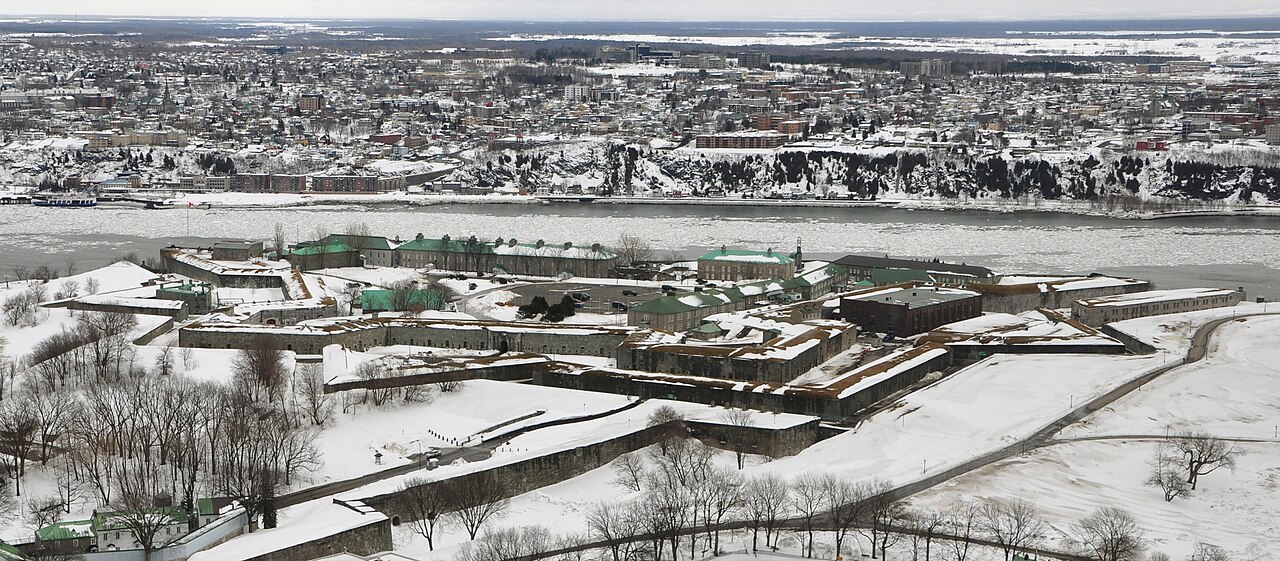
The fortifications of Québec City represent a unique and historically significant example of urban military architecture in North America. These ramparts are the only remaining fortified city walls north of Mexico on the continent, marking Québec City as a rare survivor of colonial defensive structures. They encircle the historic district of Old Quebec, a site recognized for its cultural and architectural heritage by its designation as a UNESCO World Heritage site in 1985.
Historical context and construction phases
Construction of the fortifications began in the early 17th century, with initial efforts dating back to around 1620 under French colonial rule. The walls and defenses were progressively expanded and reinforced over the next century and a half. The fortifications reflect the Renaissance period's military engineering principles, adapted to the North American context.
Following the British conquest of Québec City in 1759 during the Battle of the Plains of Abraham, the British undertook significant refortification efforts. They reinforced and modified the existing French-built walls to enhance the city's defenses against potential American and other European threats. This period marked the final major phase of construction and adaptation of the fortifications.
Architectural features and layout
The fortifications stretch primarily along the eastern edge of the Promontory of Quebec, enclosing most of the Old Quebec district. The defensive system includes a series of walls, bastions, gates, and ramparts designed to withstand artillery and infantry assaults.
Key architectural elements include the City Gate (Porte Saint-Jean), Port Saint-Louis, and the Citadel of Quebec, a star-shaped fortress that serves as a key military installation within the fortifications. The walls incorporate battlements and embrasures for cannons, along with moats and curtains to impede attackers.
Cultural significance and preservation
The fortifications are a symbol of Québec City's strategic importance in colonial North America and its role in the military conflicts between France and Britain. Their preservation allows visitors to experience a tangible connection to the city's past and its evolution over centuries.
Designated a National Historic Site of Canada in 1948, the fortifications continue to be maintained and protected. The walls and associated structures are accessible to the public, offering walking tours along the ramparts that provide panoramic views of the St. Lawrence River and the city.
Modern-day access and tourism
Today, the fortifications form a central attraction within Old Quebec, drawing tourists interested in history, architecture, and military heritage. The site is well integrated into the urban fabric, with interpretive signage and guided tours available to enhance visitor understanding.
Visitors can explore the Citadel, the city gates, and the walls themselves, witnessing the blend of French and British military architectural styles. The fortifications also serve as a venue for cultural events and ceremonies, linking past and present.
Frequently asked questions (FAQ)
- What is the historical significance of the Fortifications of Québec?
- The Fortifications of Québec are a UNESCO World Heritage Site and represent the only remaining fortified city walls in North America. Built in the 17th and 18th centuries, they played a crucial role in the defense of New France against British forces and are a testament to the military architecture of the time.
- When was the Fortifications of Québec constructed?
- The construction of the Fortifications of Québec began in 1693 and continued into the 18th century. The walls were built to protect the city from various invasions and were completed in their current form by the end of the 1700s.
- Can I walk along the Fortifications of Québec?
- Yes, visitors can walk along the walls of the Fortifications of Québec. There are several designated pathways that provide stunning views of the city and the St. Lawrence River, making it a popular activity for both tourists and locals.
- What are the opening hours for the Fortifications of Québec?
- The Fortifications of Québec are generally open year-round, but specific access may vary by season. During the summer months, the site is typically open from 9 AM to 6 PM, while winter hours may be shorter, so it's best to check the official website for the latest information.
- Is it possible to take guided tours of the Fortifications of Québec?
- Yes, guided tours of the Fortifications of Québec are available and highly recommended. These tours provide in-depth historical insights and are led by knowledgeable guides who share fascinating stories about the fort's past and its significance in Canadian history.
- What is the best time to visit the Fortifications of Québec?
- The best time to visit the Fortifications of Québec is during the late spring to early fall when the weather is pleasant and many events are held. However, visiting during winter can also be magical, with snow-covered landscapes offering a unique perspective on the historic site.
- Are there any nearby attractions to the Fortifications of Québec?
- Yes, there are several attractions near the Fortifications of Québec, including the Château Frontenac, the Plains of Abraham, and the Old Port marketplace. These sites complement your visit and offer a deeper understanding of Quebec City's rich history and culture.
- What are the ticket prices for visiting the Fortifications of Québec?
- Admission to walk the Fortifications of Québec is typically free, but certain guided tours may require tickets. It's advisable to check the official website for any fees associated with special events, guided tours, or access to specific areas of the fortifications.
- How do I get to the Fortifications of Québec?
- The Fortifications of Québec are easily accessible by foot, as they are located in the heart of Old Quebec City. Public transit options are also available, and several parking facilities are nearby for those who choose to drive.
Loading map...
Visitor reviews
No reviews yet. Been here? Write the first review and help other travelers!
Write the first reviewVisited this castle? Share your experience
Your review helps other travelers and adds first-hand knowledge to our encyclopedia.