Forte de Santa Maria
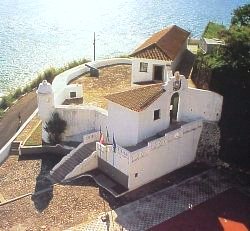
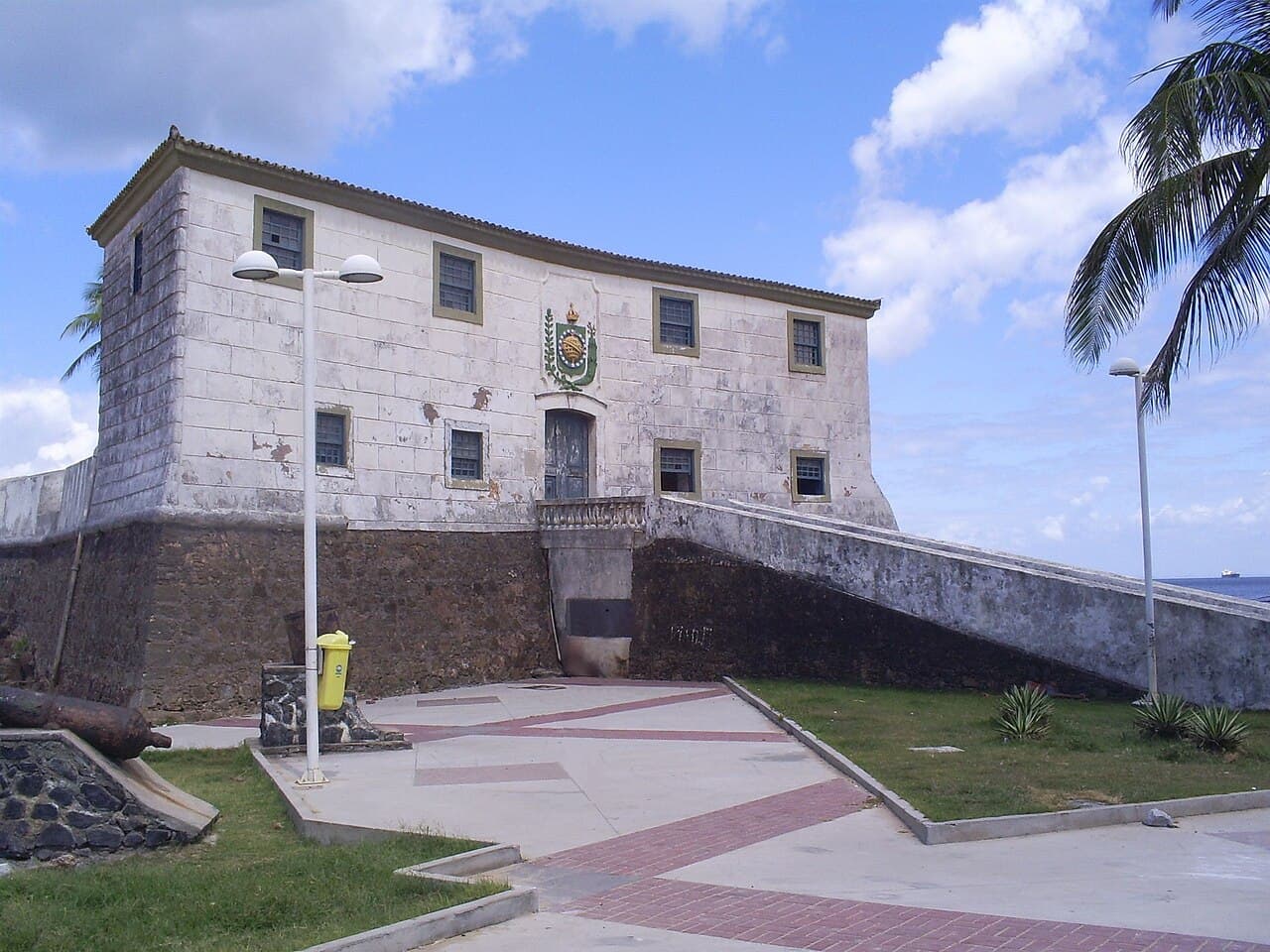
Forte de Santa Maria, also known as Fortim de Santa Maria, is a historically significant bastioned fortress located in Salvador, Bahia, Brazil. Constructed in the 17th century during the Renaissance period, this fortification was strategically designed to protect the city and its harbor from naval threats. The fort's heptagonal layout is a distinctive feature, reflecting the military architectural innovations of the time, emphasizing defense and strategic coverage.
The fort's broad stone curtain walls remain largely intact, showcasing the robust construction techniques employed by Portuguese colonial engineers. These walls were designed to withstand artillery attacks and provide a strong defensive perimeter. Access to the fort is via a narrow embankment, which would have served as a controlled entry point, enhancing its defensive capabilities.
Architectural features and design
The heptagonal shape of Forte de Santa Maria is unusual among colonial forts in Brazil, where star-shaped bastioned forts were more common. This shape allowed for overlapping fields of fire from its bastions, minimizing blind spots and maximizing defensive coverage. The fort's curtain walls are thick and built from local stone, demonstrating the use of durable materials to resist both natural erosion and military assault.
Within the fort's walls, remnants of internal structures such as barracks, storage rooms, and artillery placements can be discerned, although much of the interior has suffered from neglect. The fort's design reflects Renaissance military principles, which emphasized the use of angled bastions and geometric forms to deflect cannon fire and improve the defenders' ability to cover all approaches.
Historical context and significance
Constructed in the 17th century, Forte de Santa Maria was part of a broader network of fortifications built by the Portuguese to secure their colonial holdings in Brazil. Salvador was a crucial port city and the first capital of colonial Brazil, making its defense a priority. The fort played a role in protecting the city against attacks by rival European powers and pirates during a period marked by frequent maritime conflicts.
Its listing by the National Institute of Historic and Artistic Heritage (IPHAN) in 1938 recognized its cultural and historical importance. Despite this designation, the fort has suffered from a lack of maintenance and preservation efforts, leading to its current state of disrepair. It remains closed to the public, limiting opportunities for educational and cultural engagement.
Current condition and preservation challenges
Today, Forte de Santa Maria is in a state of disrepair, with significant deterioration of its walls and internal structures. The fort is not actively maintained by federal or state institutions, which has contributed to its gradual decline. Environmental factors such as humidity, salt air, and vegetation growth have accelerated the degradation.
Efforts to preserve the fort have been limited, and its closure to the public restricts awareness and advocacy for its restoration. The fort represents an important piece of Brazil's colonial military heritage, and its preservation is crucial for historical research and cultural tourism in Salvador.
Access and location
Forte de Santa Maria is situated in the city of Salvador, in the state of Bahia, Brazil. Its location near the coast was strategic for overseeing and defending the harbor. The fort is accessed by a narrow embankment, which historically controlled entry and enhanced its defensive position.
While it is currently closed to visitors, the fort's external walls can be viewed from surrounding areas, offering a glimpse into the colonial military architecture that once dominated the region. Its proximity to other historical sites in Salvador makes it a point of interest for those studying Brazil's colonial past.
Frequently asked questions (FAQ)
- What is the historical significance of Forte de Santa Maria?
- Forte de Santa Maria, built in the 17th century, played a crucial role in protecting the city of Salvador from maritime attacks. It is one of the oldest military structures in Brazil and symbolizes the colonial history of the region, showcasing the Portuguese influence in architecture and defense strategies.
- When was Forte de Santa Maria built?
- Forte de Santa Maria was constructed between 1614 and 1623. Its strategic location allows visitors to appreciate its role in the defense against pirates and foreign invasions during the colonial period.
- What are the opening hours for Forte de Santa Maria?
- Forte de Santa Maria is open to visitors daily from 9 AM to 5 PM. It is advisable to check for any special closure days or events that may affect visiting hours.
- Can I visit Forte de Santa Maria with children?
- Yes, Forte de Santa Maria is family-friendly and offers a great educational experience for children. The castle's historical significance and scenic views make it an enjoyable outing for visitors of all ages.
- Is it possible to take guided tours of Forte de Santa Maria?
- Yes, guided tours are available and highly recommended to enhance your understanding of the castle's history and architecture. Knowledgeable guides provide fascinating insights and stories that bring the fort to life.
- What are the ticket prices for visiting Forte de Santa Maria?
- Tickets for Forte de Santa Maria are reasonably priced, with discounts available for students and seniors. It's best to check the official website for the latest pricing and any special promotions.
- What is the best time to visit Forte de Santa Maria?
- The best time to visit Forte de Santa Maria is during the dry season, from September to March, when the weather is pleasant and ideal for exploring. Early mornings or late afternoons also provide a cooler atmosphere and beautiful lighting for photography.
- Are there any nearby attractions to visit after Forte de Santa Maria?
- Yes, after visiting Forte de Santa Maria, you can explore the nearby Pelourinho, known for its vibrant culture and colonial architecture. Other attractions include the São Francisco Church and the Mercado Modelo, which are within walking distance.
- How do I get to Forte de Santa Maria?
- Forte de Santa Maria is easily accessible by public transport, taxi, or rideshare services in Salvador. It is located near the waterfront, making it a convenient stop for those exploring the historic center of the city.
Photo gallery

Photo by André Koehne•Public domain
Information
Loading map...
Visitor reviews
No reviews yet. Been here? Write the first review and help other travelers!
Write the first reviewVisited this castle? Share your experience
Your review helps other travelers and adds first-hand knowledge to our encyclopedia.