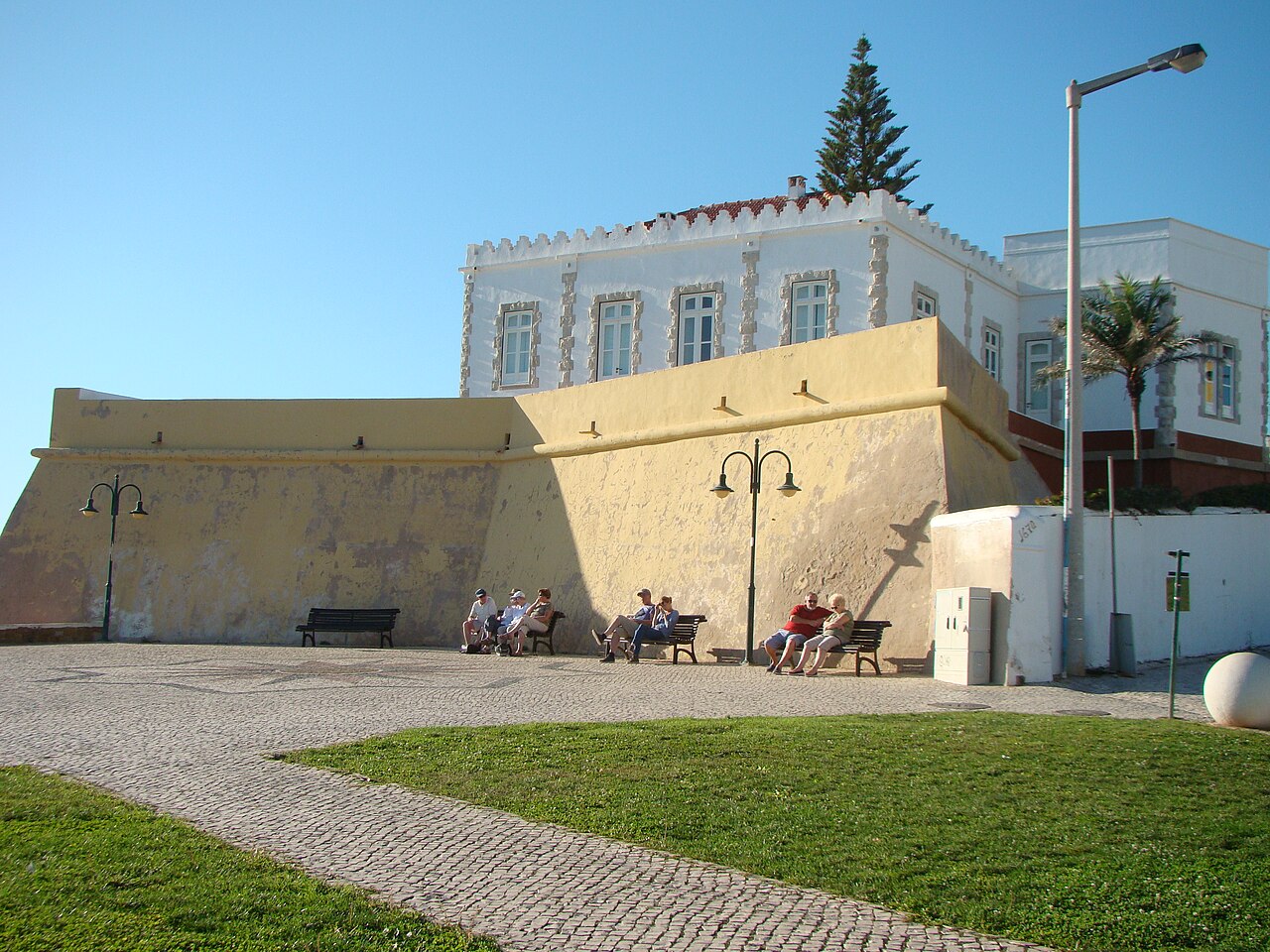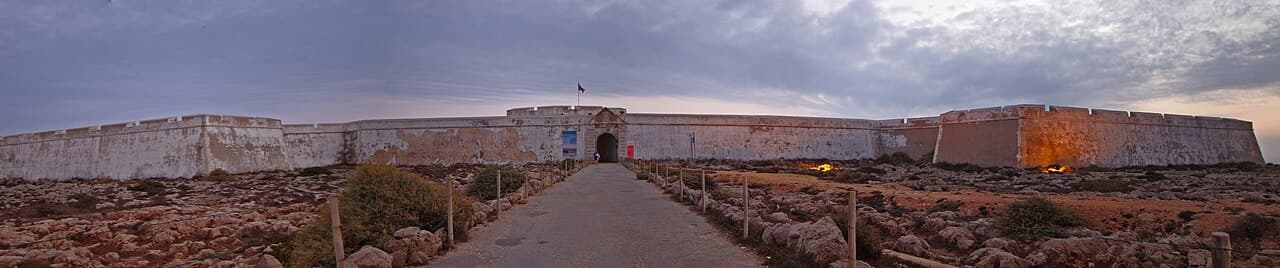
Fortaleza de Sagres — Portugal castle

Fortaleza de Sagres

Fortress of sagres
Vila do Bispo, Portugal
Late Medieval (14th–15th c.)
Partially Restored

The Fortress of Sagres, also known as the Castle of Sagres or Fort of Sagres (Portuguese: Fortaleza de Sagres), is a prominent bastioned fortress situated near the Sagres freguesia in the municipality of Vila do Bispo, within the Algarve region of Portugal. This fortress holds a significant place in Portuguese maritime history due to its association with Infante Henry the Navigator, who ordered its construction in the 15th century. It was strategically positioned on a cliff overlooking the Atlantic Ocean, serving as a crucial defense point and a center for navigation and exploration during the Age of Discoveries.

Historical background and significance

The fortress was originally constructed in the early 15th century under the direction of Henry the Navigator, a key figure in the early Portuguese explorations. Its primary purpose was to protect the southwestern coast of Portugal and to serve as a base for maritime expeditions that helped Portugal establish its dominance in oceanic navigation and overseas discoveries. The site was chosen for its commanding views and strategic location near the southwestern tip of Europe.

Throughout its history, the fortress witnessed various military engagements and modifications. It suffered heavy damage during the 1755 Lisbon earthquake, which devastated much of the region. The subsequent rebuilding efforts in the late 18th century involved significant remodeling, adapting the fortress to newer defensive needs and architectural styles of that period.

Architectural features and renovations

The fortress is characterized by its bastioned design, a military architectural style developed to withstand artillery attacks, featuring angled bastions that allowed defenders to cover all approaches with cannon fire. The walls are robust and thick, built to endure both natural and human threats.

Inside the fortress stands the Church of Nossa Senhora da Graça, also commissioned by Henry the Navigator. This church is notable for its simple yet dignified design, reflecting the religious and cultural values of the time.

The fortress underwent major renovations during the 20th century, particularly in the 1960s and 1990s, aimed at preserving its structure and enhancing its historical value for visitors. Further restoration work was carried out in 2010 to maintain the integrity of the site and improve visitor facilities.

Cultural and touristic importance

Today, the Fortress of Sagres is one of the most visited monuments in the Algarve region, attracting tourists interested in Portuguese history, maritime exploration, and military architecture. Its connection to Henry the Navigator and the Age of Discoveries makes it a symbol of Portugal's maritime heritage.

The fortress offers panoramic views of the Atlantic Ocean and the rugged coastline, adding to its appeal as a cultural and scenic destination. Its preservation and accessibility allow visitors to explore the historical layers of Portuguese naval power and the early steps of European global exploration.

Location and accessibility

Located near the town of Sagres in the Algarve region, the fortress is accessible by road and is a popular stop for travelers exploring southern Portugal. The site provides educational information and guided tours to enhance the visitor experience.

Its position on a cliff offers not only strategic military advantage but also breathtaking natural scenery, making it a favored spot for both history enthusiasts and nature lovers.

Frequently asked questions (FAQ)

How do I get to Fortaleza de Sagres?
Fortaleza de Sagres is located in Vila do Bispo, Portugal, and can be easily accessed by car or public transport. If driving, follow the signs from the town center, and ample parking is available nearby for visitors.
What is the historical significance of Fortaleza de Sagres?
Fortaleza de Sagres is a 15th-century fortress that played a crucial role in the Age of Discoveries, serving as a naval base for Portuguese explorers. It is believed to have been the site where Henry the Navigator established a school for navigation, making it a key location in maritime history.
When was Fortaleza de Sagres built?
The construction of Fortaleza de Sagres began in the 15th century, with significant developments occurring during the reign of King John II. The fortress was completed in the late 16th century, showcasing the architectural style of the period.
Can I take guided tours of Fortaleza de Sagres?
Yes, guided tours are available at Fortaleza de Sagres, providing visitors with in-depth knowledge about its history and architecture. You can also explore the site independently with informative signage available throughout the grounds.
Why is Fortaleza de Sagres a popular tourist destination?
Fortaleza de Sagres is a popular destination due to its stunning coastal views, rich history, and unique architectural features. The dramatic cliffs and historical significance attract both history enthusiasts and nature lovers alike.
Is it possible to visit Fortaleza de Sagres year-round?
Yes, Fortaleza de Sagres is open to visitors year-round, although hours may vary by season. It is advisable to check the official website for the most current opening hours and any seasonal closures.
What are the ticket prices for visiting Fortaleza de Sagres?
The entry fee for Fortaleza de Sagres is generally modest, with discounts available for students and seniors. Children under a certain age may enter for free, making it an affordable outing for families.
What is the best time to visit Fortaleza de Sagres?
The best time to visit Fortaleza de Sagres is during the spring and fall months when the weather is mild, and the tourist crowds are smaller. Summer can be quite busy, so visiting early in the morning or later in the evening can enhance your experience.
Are there nearby attractions to explore after visiting Fortaleza de Sagres?
Yes, there are several nearby attractions, including the beautiful beaches of Sagres and the picturesque village of Vila do Bispo. Additionally, the Cape St. Vincent, known for its stunning cliffs and lighthouse, is just a short drive away.

Photo gallery

Fortaleza de Sagres
Click to view

Photo by Lacobrigo•CC BY-SA 3.0

1 photo • Click any image to view in full screen

Information

Bastioned Fortress

Loading map...

Visitor reviews

No reviews yet. Been here? Write the first review and help other travelers!

Write the first review

Visited this castle? Share your experience

Your review helps other travelers and adds first-hand knowledge to our encyclopedia.
Write a review

(5/5)

0/2000 characters

Your review will be visible after admin approval

Nearby castles

4.2 km
Fort of Santo António de Belixe — Portugal castle

Fort of Santo António de Belixe

Vila do Bispo, Portugal

The Fort of Santo António de Belixe, also known as the Fortress of Beliche (Fortaleza de Belixe), is a prominent bastioned fortress situated on the dramatic cliffs of Cape St. Vincent in the parish of Sagres, within the municipality of Vila do Bispo, in the Faro District of Portugal. This fortification occupies a strategic position overlooking the Atlantic Ocean, historically serving as a critical defensive point protecting the southwestern coast of the Iberian Peninsula.The exact origins of the fort are somewhat unclear, but it is documented to have existed by the 16th century. The structure as it stands today was largely developed during the 17th century, reflecting the Renaissance military architectural principles that were prevalent during that period. Its design incorporates characteristic elements of the bastioned fortress style, which was developed to counter the increasing effectiveness of artillery in siege warfare.Strategic location and historical contextThe fort's location on Cape St. Vincent made it a vital military installation for controlling maritime traffic along the southwestern coast of Portugal and guarding against potential naval incursions from hostile powers. The cape itself has been a significant landmark for navigation since ancient times, and the fort helped secure this critical maritime route.During the Renaissance period, Portugal was a major maritime power, and coastal defenses like the Fort of Santo António de Belixe were essential to protect the country’s interests and its extensive overseas territories. The fort was part of a broader network of fortifications established along the Portuguese coast to provide early warning and defense against pirates, privateers, and enemy fleets.Architectural features and designThe fort exemplifies the bastioned fortress design, characterized by angular bastions projecting outward from the main walls. These bastions allowed defenders to cover adjacent walls with overlapping fields of fire, minimizing blind spots and enhancing the fort's defensive capabilities against artillery and infantry assaults.The walls of the fort are constructed with robust stone masonry, designed to absorb and deflect cannon fire. The fortress includes several bastions, curtain walls, and a central courtyard, typical of 17th-century military architecture. The entrance is fortified and often accessed via a drawbridge or a narrow passage to impede attackers.Defensive elementsKey defensive components include thick ramparts, embrasures for cannons, and strategically placed watchtowers that provide extensive views of the surrounding sea and coastline. The layout facilitates the deployment of artillery to cover all approaches, making it difficult for enemy ships to approach undetected or unchallenged.Interior structuresWithin the fort, there are remnants of barracks, storage rooms for ammunition and supplies, and command quarters. These internal buildings supported the garrison stationed at the fort and were designed to sustain prolonged sieges if necessary.The fort through timeOver the centuries, the Fort of Santo António de Belixe underwent various modifications and repairs to adapt to evolving military technologies and threats. Despite its age, the fort remains a well-preserved example of Renaissance bastioned military architecture in Portugal.In modern times, the fort has lost its military function but stands as a cultural and historical monument. It attracts visitors interested in military history, architecture, and the breathtaking natural scenery of Cape St. Vincent. Its position on the cliffs offers panoramic views of the Atlantic Ocean and the rugged coastline, making it a popular destination for tourists and photographers.Visiting the fortThe Fort of Santo António de Belixe is accessible to the public, allowing visitors to explore its ramparts, bastions, and interior spaces. The site provides educational information about its history and architectural significance, enhancing the visitor experience.Nearby attractions include the Sagres Fortress and the Cape St. Vincent lighthouse, both of which contribute to the area's rich historical and maritime heritage.

Renaissance (15th–17th c.)
Details
21.5 km
Castle of Senhora da Luz — Portugal castle

Castle of Senhora da Luz

, Portugal

Fort Nossa Senhora da Luz, also known as the Castle of Senhora da Luz, is a prominent 17th-century Renaissance hill castle located in the civil parish of Luz, within the municipality of Lagos in the Algarve region of Portugal. This fortification is classified as a Property of Public Interest (Imóvel de Interesse Público), reflecting its cultural and historical significance in Portuguese heritage. Historical context and strategic importance The castle was constructed during the 17th century, a period marked by military tensions and the need for coastal defense in Portugal. Its primary purpose was to protect the Algarve coastline, particularly the important maritime routes and the nearby town of Lagos, which was a key port during the Age of Discoveries. The fortification was part of a broader network of defensive structures built to guard against pirate attacks and potential invasions by foreign powers. Architectural features and design The Castle of Senhora da Luz exemplifies Renaissance military architecture with its robust construction and strategic layout. Positioned on a hill, the castle commands a commanding view of the surrounding landscape and the Atlantic Ocean, enabling early detection of approaching ships. Its design includes thick stone walls, bastions, and artillery placements that were typical of the period's fortifications. Fortifications and layout The castle's layout is characterized by a compact, irregular polygonal plan adapted to the topography of the hill. It features bastioned walls designed to withstand cannon fire and provide overlapping fields of fire. The fort includes a main gate fortified with defensive elements such as a drawbridge or heavy wooden doors, although specific details about these features vary with historical records. Interior structures Inside the fort, there were facilities to support the garrison, including barracks, storage rooms for munitions, and cisterns for water supply. The design reflects the practical needs of a military installation intended for sustained defense rather than residential comfort. Cultural significance and preservation As a Property of Public Interest, the Castle of Senhora da Luz holds an important place in the cultural memory of the Algarve region. It represents the historical efforts to secure Portugal's coastline during a turbulent era. Preservation efforts have aimed to maintain the structural integrity of the fort while allowing public access to this heritage site. Current condition and accessibility The castle is generally well preserved, with many of its defensive walls and bastions intact. It is accessible to visitors who wish to explore its historical features and enjoy panoramic views of the Algarve coast. Interpretive signage and guided tours may be available to enhance the visitor experience. The castle in the broader context of Portuguese fortifications The Castle of Senhora da Luz is one of several coastal fortifications built during the Renaissance period in Portugal. These forts collectively illustrate the evolution of military architecture in response to advancements in artillery and maritime threats. The castle's strategic location and design reflect the broader defensive strategies employed by the Portuguese crown to protect its valuable coastal territories.

Renaissance (15th–17th c.)
Details
27.1 km

Fort da Ponta da Bandeira

Lagos, Portugal

Fort da Ponta da Bandeira, also known locally as Forte da Ponta da Bandeira, is a prominent 17th-century Renaissance coastal fortress located in the historic city of Lagos in the Algarve region of Portugal. This fortification was constructed as a direct response to the increasing threat of Moorish and European pirate attacks along the Algarvian coast during the late 1600s. The town of Lagos, an important maritime hub, was particularly vulnerable because its medieval walls were set back from the shoreline, leaving the harbor and beach exposed to enemy incursions. Historical context and construction The fort was commissioned under the governance of the Count of Sarzedos, the Governor of the Algarve, to provide immediate coastal defense. Construction began between 1679 and 1683 and was completed in 1690. This period falls within the broader Renaissance era of military architecture in Portugal, characterized by the adaptation of fortifications to withstand artillery attacks and to control strategic maritime access points. Architectural features and design Fort da Ponta da Bandeira is designed as a square fortification featuring circular guard towers at each of its four corners. This layout provided overlapping fields of fire and enhanced defensive capabilities against attackers approaching from sea or land. The fort is surrounded by a small moat that separates it from the adjacent harbor area, with a reconstructed drawbridge serving as the main entrance, emphasizing its defensive purpose. Inside, the fort encloses a courtyard that provides access to various internal structures, including an 18th-century chapel adorned with traditional azulejos—the distinctive Portuguese ceramic tiles known for their blue and white patterns. This chapel reflects the integration of religious spaces within military complexes, serving the spiritual needs of the garrison stationed at the fort. A ramp leads up from the courtyard to the cannon platform on the roof, which served as the primary artillery position. From this elevated platform, defenders could operate cannons to protect the harbor entrance and surrounding coastline. The guard towers are also accessible from the platform, allowing sentries to maintain vigilance over the sea and land approaches. Strategic importance and military role The fort played a crucial role in securing the harbor of Lagos against pirate raids and potential naval invasions during the late 17th and early 18th centuries. Its location on the beach next to the harbor allowed it to control maritime traffic and provide a first line of defense before any hostile forces could reach the town's inner medieval walls. This strategic positioning made it an essential component of the coastal defense system in the Algarve. Current condition and visitor experience Today, Fort da Ponta da Bandeira is well preserved and remains an important cultural and historical landmark in Lagos. Visitors can freely access the courtyard and cannon platform during daytime hours, offering panoramic views of the harbor and the Atlantic Ocean. The fort also houses a small museum that provides insights into its history and the broader maritime heritage of the region. The fort's elegant military architecture, combined with its scenic location, makes it a popular destination for tourists exploring Lagos. Directly opposite the fort stands the historic city gate, creating a picturesque setting that highlights the town's rich defensive heritage. Architectural significance and cultural heritage Fort da Ponta da Bandeira exemplifies Renaissance military architecture adapted to coastal defense needs. Its compact, geometric design with corner towers and moat reflects the evolution of fortifications in response to advances in artillery technology. The use of azulejos in the chapel adds an artistic dimension that connects the fort to Portugal's broader cultural traditions. As a preserved example of a coastal fortress from the late 17th century, the fort contributes to understanding Portugal's maritime defense strategies during a period of intense naval competition and piracy. It remains a tangible link to the historical challenges faced by coastal communities in the Algarve and their responses through architectural innovation.

Renaissance (15th–17th c.)
Details