Fort da Ponta da Bandeira
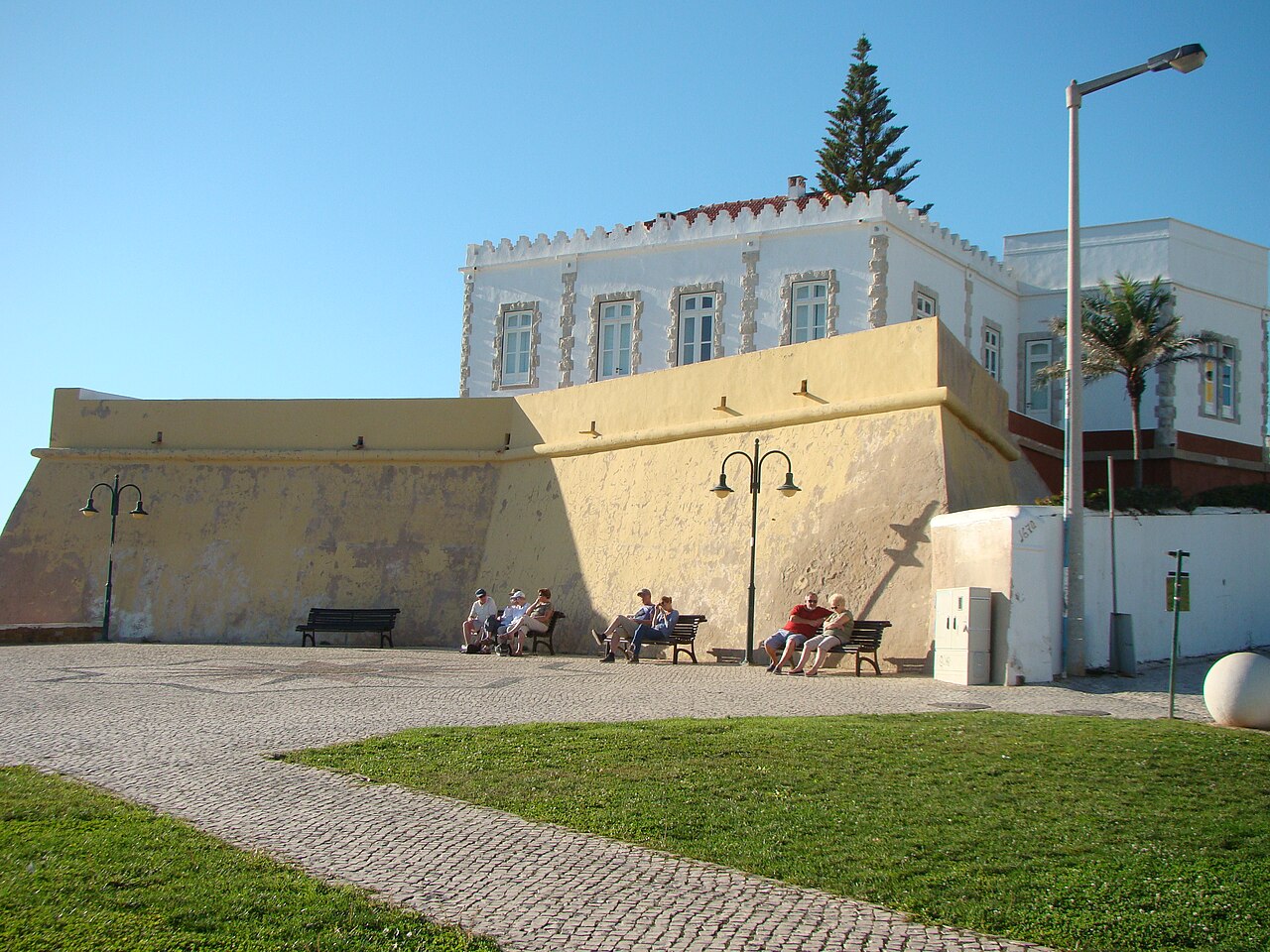
Fort da Ponta da Bandeira, also known locally as Forte da Ponta da Bandeira, is a prominent 17th-century Renaissance coastal fortress located in the historic city of Lagos in the Algarve region of Portugal. This fortification was constructed as a direct response to the increasing threat of Moorish and European pirate attacks along the Algarvian coast during the late 1600s. The town of Lagos, an important maritime hub, was particularly vulnerable because its medieval walls were set back from the shoreline, leaving the harbor and beach exposed to enemy incursions.
Historical context and construction
The fort was commissioned under the governance of the Count of Sarzedos, the Governor of the Algarve, to provide immediate coastal defense. Construction began between 1679 and 1683 and was completed in 1690. This period falls within the broader Renaissance era of military architecture in Portugal, characterized by the adaptation of fortifications to withstand artillery attacks and to control strategic maritime access points.
Architectural features and design
Fort da Ponta da Bandeira is designed as a square fortification featuring circular guard towers at each of its four corners. This layout provided overlapping fields of fire and enhanced defensive capabilities against attackers approaching from sea or land. The fort is surrounded by a small moat that separates it from the adjacent harbor area, with a reconstructed drawbridge serving as the main entrance, emphasizing its defensive purpose.
Inside, the fort encloses a courtyard that provides access to various internal structures, including an 18th-century chapel adorned with traditional azulejos—the distinctive Portuguese ceramic tiles known for their blue and white patterns. This chapel reflects the integration of religious spaces within military complexes, serving the spiritual needs of the garrison stationed at the fort.
A ramp leads up from the courtyard to the cannon platform on the roof, which served as the primary artillery position. From this elevated platform, defenders could operate cannons to protect the harbor entrance and surrounding coastline. The guard towers are also accessible from the platform, allowing sentries to maintain vigilance over the sea and land approaches.
Strategic importance and military role
The fort played a crucial role in securing the harbor of Lagos against pirate raids and potential naval invasions during the late 17th and early 18th centuries. Its location on the beach next to the harbor allowed it to control maritime traffic and provide a first line of defense before any hostile forces could reach the town's inner medieval walls. This strategic positioning made it an essential component of the coastal defense system in the Algarve.
Current condition and visitor experience
Today, Fort da Ponta da Bandeira is well preserved and remains an important cultural and historical landmark in Lagos. Visitors can freely access the courtyard and cannon platform during daytime hours, offering panoramic views of the harbor and the Atlantic Ocean. The fort also houses a small museum that provides insights into its history and the broader maritime heritage of the region.
The fort's elegant military architecture, combined with its scenic location, makes it a popular destination for tourists exploring Lagos. Directly opposite the fort stands the historic city gate, creating a picturesque setting that highlights the town's rich defensive heritage.
Architectural significance and cultural heritage
Fort da Ponta da Bandeira exemplifies Renaissance military architecture adapted to coastal defense needs. Its compact, geometric design with corner towers and moat reflects the evolution of fortifications in response to advances in artillery technology. The use of azulejos in the chapel adds an artistic dimension that connects the fort to Portugal's broader cultural traditions.
As a preserved example of a coastal fortress from the late 17th century, the fort contributes to understanding Portugal's maritime defense strategies during a period of intense naval competition and piracy. It remains a tangible link to the historical challenges faced by coastal communities in the Algarve and their responses through architectural innovation.
Frequently asked questions (FAQ)
- How do I visit Fort da Ponta da Bandeira?
- Fort da Ponta da Bandeira is open daily from 9:00 to 18:00. Visitors can explore the courtyard and cannon platform freely during these hours. Tickets cost €3 for adults and €1.5 for children.
- What is the historical significance of Fort da Ponta da Bandeira?
- The fort was built in the late 17th century to protect Lagos from pirate attacks. It served as a key coastal defense point controlling access to the harbor and safeguarding the town.
- Can I access the chapel inside the fort?
- Yes, the fort contains an 18th-century chapel decorated with traditional Portuguese azulejos. Visitors may enter the chapel as part of the museum experience inside the fort.
- Is Fort da Ponta da Bandeira suitable for families?
- Yes, the fort is family-friendly with accessible outdoor areas like the courtyard and cannon platform. The museum offers educational information about the fort's history and maritime defense.
- What architectural style is Fort da Ponta da Bandeira built in?
- The fort is an example of Renaissance military architecture, featuring a square layout with circular corner towers and a moat for defense.
Information
Opening hours
9:00-18:00, daily
Ticket prices
€3 adult, €1.5 child
Current owner
Municipality of Lagos
Address
Cais de Solaria, Lagos, Portugal
Loading map...
Visitor reviews
No reviews yet. Been here? Write the first review and help other travelers!
Write the first reviewVisited this castle? Share your experience
Your review helps other travelers and adds first-hand knowledge to our encyclopedia.