Fort Wint
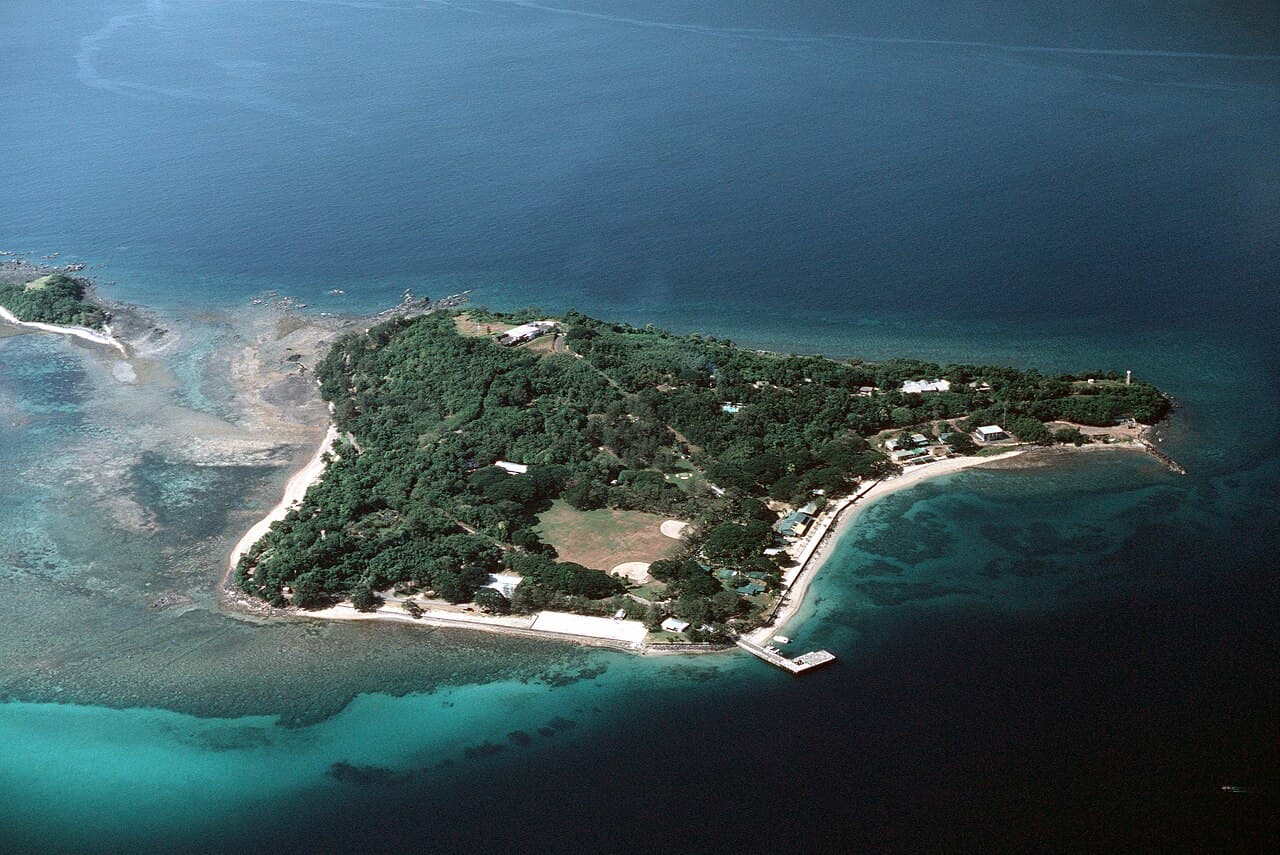
Fort Wint is a bastioned fortress located on Grande Island at the entrance to Subic Bay, approximately 35 miles (56 km) north of Manila Bay in the Philippines. Constructed between 1907 and 1920 by the Philippine Department of the United States Army, it was part of a strategic network of harbor defenses designed to protect the vital naval and commercial ports of Manila and Subic Bays. The fort's establishment followed the recommendations of the Taft Board, which assessed the coastal defense needs of the Philippines during the early 20th century, prior to the limitations imposed by the Washington Naval Treaty of 1922.
Strategic location and historical context
Fort Wint occupies a commanding position on Grande Island, controlling access to Subic Bay, a deep natural harbor that played a crucial role in naval operations and maritime commerce. The fort was named in honor of Brigadier General Theodore J. Wint, a distinguished U.S. Army officer. Its construction was part of a broader American effort to fortify key points in the Philippines following the Spanish-American War and the subsequent Philippine-American War, as the United States established its presence in the Pacific.
Architectural design and military features
As a bastioned fortress, Fort Wint was designed with angular bastions projecting outward from the main walls, enabling defenders to cover adjacent walls with overlapping fields of fire. This design helped eliminate blind spots and strengthened the fort's defensive capabilities against naval assault. The fort included coastal artillery batteries equipped with large-caliber guns intended to engage enemy ships attempting to enter Subic Bay.
The fort's layout incorporated gun emplacements, magazines for ammunition storage, observation posts, and support facilities for the garrison. The coastal artillery units stationed here, including a battery of the 60th Coast Artillery (Anti-Aircraft), were trained in accordance with the National Defense Act of 1935, which emphasized coastal and anti-aircraft defense capabilities.
Role during World War II and subsequent history
During World War II, Fort Wint was part of the defensive network protecting the Philippines from Japanese invasion. Its artillery batteries engaged enemy forces during the early stages of the war. However, like many coastal fortifications of the era, the fort eventually fell under Japanese control during their occupation of the Philippines.
After the war, the fort's military significance declined with advances in naval and aerial warfare technology. The site has since become a historical landmark, representing early 20th-century coastal defense architecture and the military history of the Philippines under American administration.
Current condition and accessibility
Today, Fort Wint remains a partially preserved military site. While some structures have deteriorated due to exposure to the elements and lack of continuous maintenance, key features such as the bastions and gun emplacements are still visible. The fort is accessible to visitors interested in military history, coastal defense architecture, and Philippine-American heritage.
Legacy and cultural significance
Fort Wint stands as a testament to the early 20th-century military engineering and the strategic importance of the Philippines in Pacific defense planning. Its construction reflects the transition from 19th-century fortification styles to modern coastal artillery systems. The fort also embodies the historical ties between the Philippines and the United States during a complex period of colonial and military history.
Frequently asked questions (FAQ)
- What is the historical significance of Fort Wint?
- Fort Wint was built between 1907 and 1920 as part of the coastal defenses protecting Manila and Subic Bays during American administration of the Philippines. It played a key role in guarding Subic Bay, a vital naval harbor.
- Can I visit Fort Wint today?
- Yes, Fort Wint is partially preserved and accessible to visitors interested in military history and coastal fortifications. However, facilities may be limited, so checking local access conditions beforehand is advisable.
- What architectural features characterize Fort Wint?
- Fort Wint is a bastioned fortress featuring angular bastions for overlapping fields of fire, coastal artillery batteries, gun emplacements, magazines, and observation posts typical of early 20th-century coastal defenses.
- When was Fort Wint constructed?
- Construction of Fort Wint took place between 1907 and 1920, following recommendations from the Taft Board to strengthen harbor defenses before the Washington Naval Treaty.
- Why was Fort Wint named after Brigadier General Theodore J. Wint?
- The fort was named in honor of Brigadier General Theodore J. Wint, a notable U.S. Army officer, reflecting the American military presence and influence in the Philippines during the early 20th century.
Photo gallery

Photo by PH2 R. MANARY•Public domain
Information
Loading map...
Visitor reviews
No reviews yet. Been here? Write the first review and help other travelers!
Write the first reviewVisited this castle? Share your experience
Your review helps other travelers and adds first-hand knowledge to our encyclopedia.