Fort Wayne, Detroit
Fort Wayne is a significant 19th-century bastioned fortress located in the Delray neighborhood of Detroit, Michigan, positioned strategically on the Detroit River near the Ontario shore. This historic military installation occupies a site where the river is less than half a mile wide, highlighting its importance in controlling access and defending the waterway during periods of military tension in the 19th and early 20th centuries.
Historical context and construction
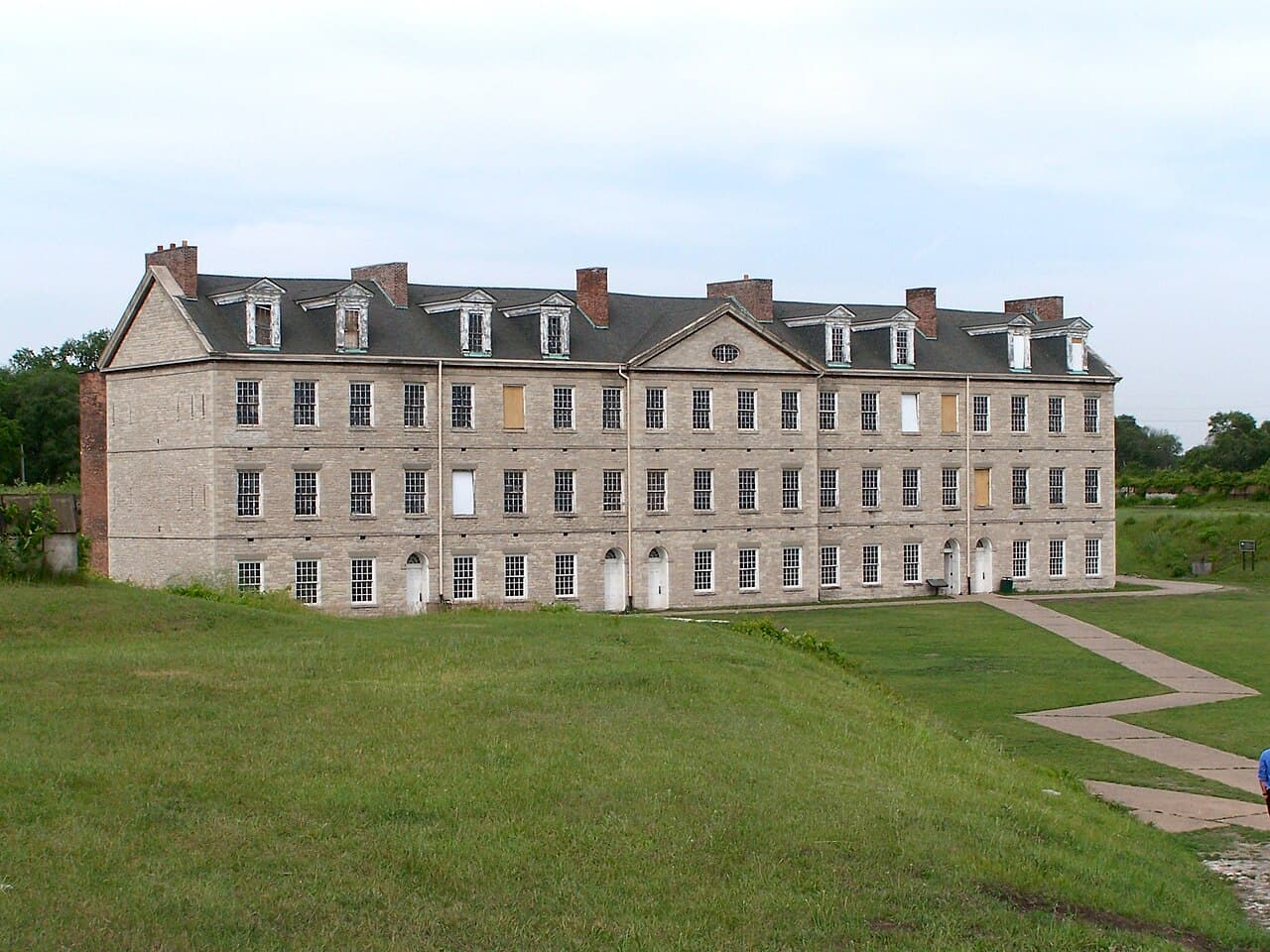
The construction of Fort Wayne began in the mid-19th century, with the original fortification dating back to 1845. It was built primarily from limestone, a durable material that ensured the longevity of its defensive structures. The fort was part of a broader network of coastal and river defenses established by the United States to protect key waterways and urban centers. Its design reflects the military engineering principles of the time, emphasizing strong bastions and thick walls to withstand artillery attacks.
In 1863, the fort underwent significant renovations, including the addition of a brick exterior facing. This upgrade was likely a response to advances in artillery technology and the evolving needs of military defense during the American Civil War era. The renovations helped to reinforce the fort's defensive capabilities and extend its operational relevance.
Architectural features and layout
The core of Fort Wayne consists of the original limestone barracks constructed in 1848, which remain standing today alongside later brick additions. These barracks were designed to house soldiers stationed at the fort and include living quarters, mess halls, and storage facilities. The fort's layout also includes a series of bastions, which are projecting parts of the fortification designed to allow defensive fire in multiple directions, eliminating blind spots and enhancing protection.
Beyond the main fort structure, the grounds contain several auxiliary buildings that supported the fort's operations. These include officers' quarters, a recreation building, a theater, a commissary, a guard house, a garage, and stables. These structures illustrate the self-sufficient nature of the fort as a military community, providing facilities for daily life and entertainment for its occupants.
Some buildings once present on the site, such as a large warehouse and the post fire station, were demolished in 1976, while the two-story hospital was removed in 2007. Despite these losses, much of the fort's historic fabric remains intact, offering valuable insight into 19th-century military architecture and life.
Size and current use
Originally, Fort Wayne encompassed approximately 96 acres (39 hectares). Since the 1970s, about 83 acres (34 hectares) of the site, including the original fort and several buildings, have been managed by the city of Detroit. This area is preserved as a historic site and serves as a public park and cultural venue, hosting various events and educational programs that highlight the fort's history and significance.
The remaining portion of the original fort grounds is operated by the U.S. Army Corps of Engineers as a boatyard, continuing the site's longstanding connection to river and maritime activities.
Heritage designations and preservation
Fort Wayne has been recognized for its historical and architectural importance through several official designations. It was named a Michigan State Historic Site in 1958, acknowledging its significance within the state's heritage. In 1971, it was listed on the National Register of Historic Places, a federal program that protects sites of national historical value.
More recently, in 2016, Fort Wayne was designated as a City of Detroit Historic Neighborhood District, further affirming its role as a cultural landmark within the urban fabric of Detroit. These designations have helped to secure funding and support for the preservation and adaptive reuse of the fort's structures.
Architectural style and military significance
Fort Wayne exemplifies the characteristics of a bastioned fortress, a style that emerged in response to the development of gunpowder artillery. Its design incorporates angled bastions that allowed defenders to cover all approaches with overlapping fields of fire, a critical feature for fortifications constructed during the 19th century.
The use of limestone and later brick materials reflects both the availability of local resources and the evolving military engineering practices aimed at improving durability and resistance to bombardment. The fort's location on the Detroit River was strategically chosen to protect the waterway and the city from potential naval threats.
Visiting Fort Wayne today
Today, Fort Wayne is accessible to the public and serves as a historic park and cultural site. Visitors can explore the preserved barracks, walk along the fort's walls, and view the various auxiliary buildings that remain. The site hosts educational tours, reenactments, and community events that provide insight into its military past and architectural significance.
The fort's proximity to the Detroit River offers scenic views and opportunities for recreational activities. Its preservation as a historic site allows visitors to connect with an important chapter of American military history and appreciate the architectural ingenuity of 19th-century fortifications.
Frequently asked questions (FAQ)
- What is the historical significance of Fort Wayne in Detroit?
- Fort Wayne was built in the mid-19th century to protect the Detroit River and the city from naval threats. It played a key role in regional defense during the American Civil War and later military periods.
- Can I visit Fort Wayne year-round?
- Fort Wayne is open to the public year-round as a historic site and park. Visitors can explore the fort's structures and grounds, attend events, and participate in guided tours.
- What architectural style characterizes Fort Wayne?
- Fort Wayne is designed as a bastioned fortress, featuring angled bastions and thick limestone and brick walls typical of 19th-century military fortifications.
- Are there guided tours available at Fort Wayne?
- Yes, the site offers guided tours that provide detailed historical and architectural information about the fort and its significance.
- Is Fort Wayne accessible for visitors with disabilities?
- The site has made efforts to improve accessibility, including paved paths and ramps, but some historic areas may have limited access due to preservation constraints.
Photo gallery

Information
Current owner
City of Detroit and U.S. Army Corps of Engineers
Loading map...
Visitor reviews
No reviews yet. Been here? Write the first review and help other travelers!
Write the first reviewVisited this castle? Share your experience
Your review helps other travelers and adds first-hand knowledge to our encyclopedia.