Fort Warren
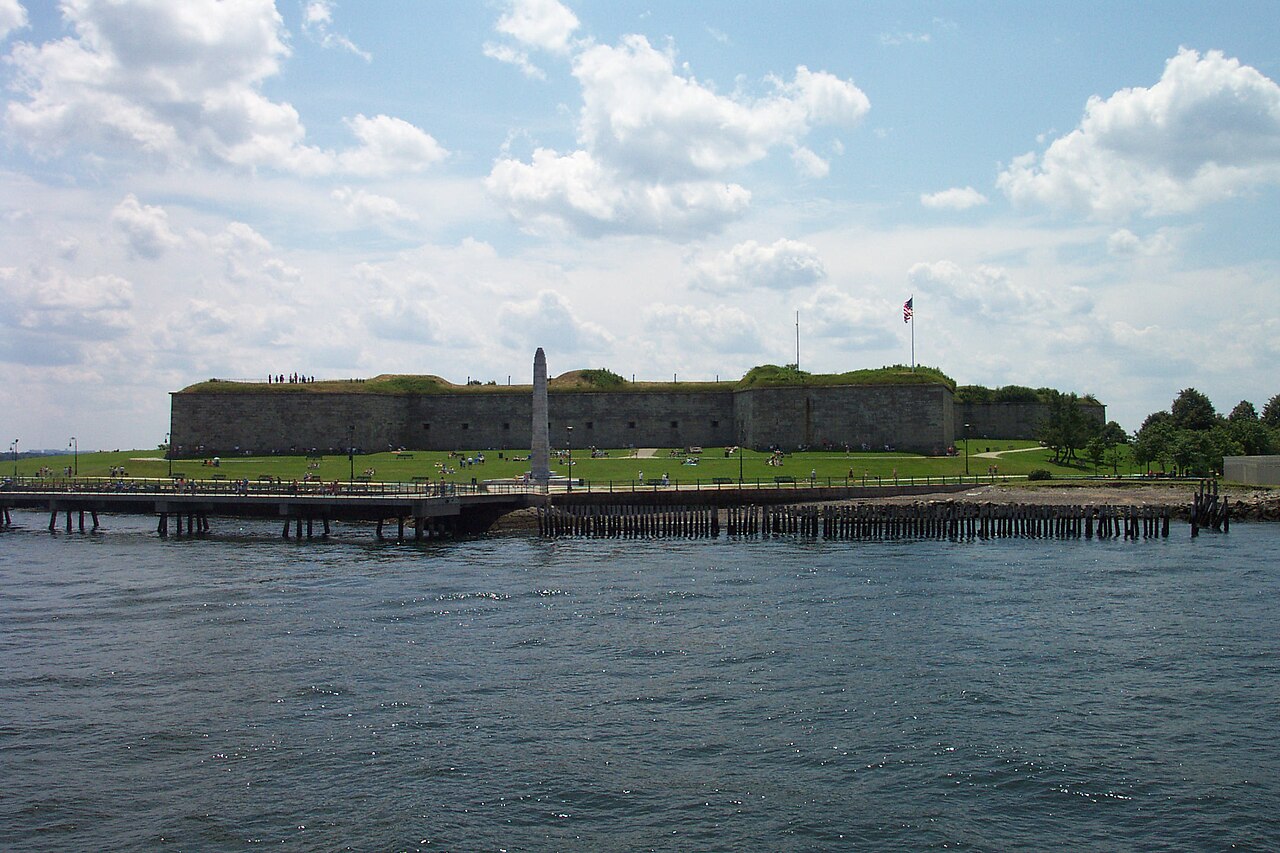
Fort Warren is a historic bastioned fortress located on Georges Island at the entrance to Boston Harbor, Massachusetts. Spanning 28 acres, this fortification was constructed primarily of stone and granite, showcasing the military engineering techniques of the 19th century. Named after Dr. Joseph Warren, a Revolutionary War hero who played a pivotal role in early American history by dispatching Paul Revere on his famous ride and who died at the Battle of Bunker Hill, the fort carries significant historical weight.
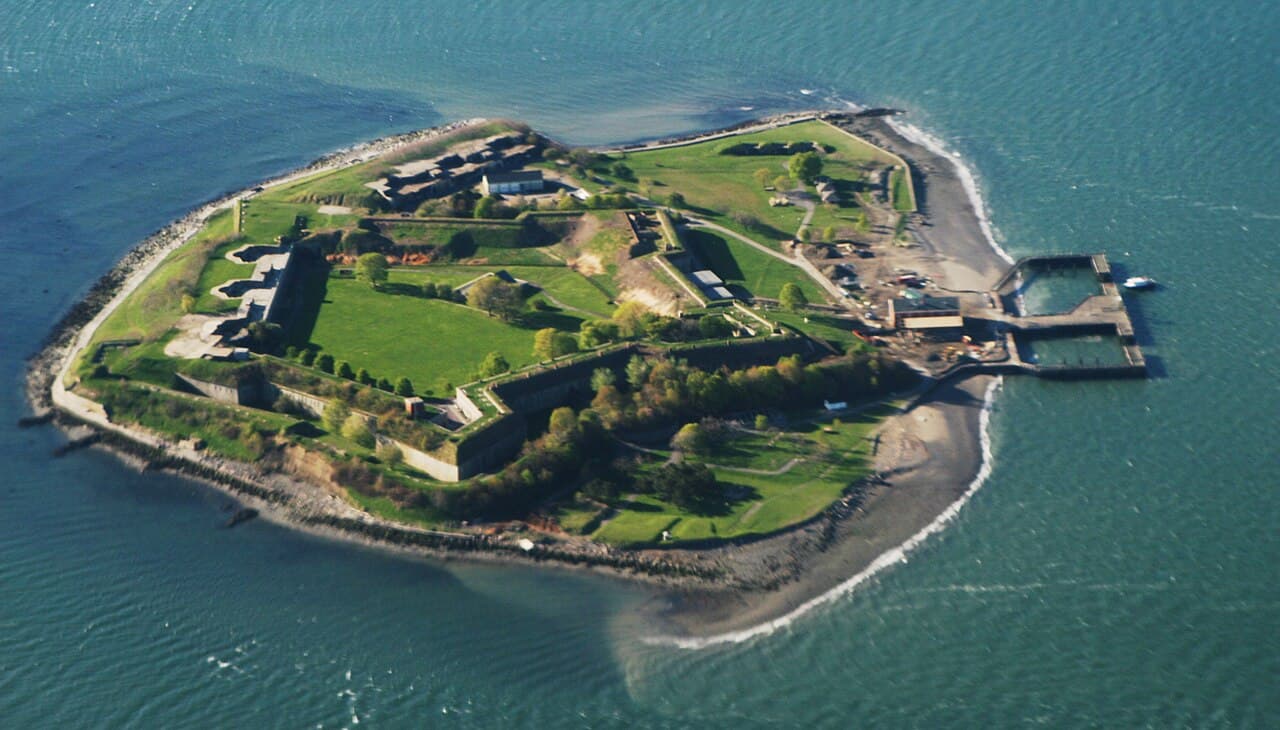
The current Fort Warren was built between 1833 and 1861, replacing an earlier fortification originally named Fort Warren in 1808, which was renamed Fort Winthrop in 1833. Designed as a pentagonal bastion fort, it features five bastions that allowed defenders to cover all approaches with overlapping fields of fire, a classic design element of coastal defense forts of the period. The fort's robust walls were constructed to withstand bombardment and protect the harbor from naval attack.
Architectural design and construction
The fort’s architecture is a notable example of mid-19th-century military engineering. Its bastioned layout provided comprehensive defensive coverage, with thick granite walls and a moat surrounding the structure for added protection. The use of granite was deliberate for its durability against artillery fire. The pentagonal shape optimized defensive capabilities, allowing cannon placements on the bastions to cover adjacent walls and the surrounding waters.
Construction began in 1833 and continued for nearly three decades, concluding shortly after the outbreak of the American Civil War. The fort’s design reflects advancements in coastal fortification techniques developed during the pre-Civil War era, making it a masterpiece of coastal engineering.
Historical significance and military use
Fort Warren played a critical role in the defense of Boston Harbor from the Civil War through World War II. During the Civil War, it served not only as a military stronghold but also as a prison for Confederate officers and government officials. Among its notable prisoners was Alexander H. Stephens, the Vice President of the Confederate States. The fort’s secure design made it suitable for holding high-profile captives.
After the Civil War, Fort Warren remained an active military installation through the Spanish–American War and World War I. It was reactivated during World War II to continue its role in harbor defense. The fort was permanently decommissioned in 1947, marking the end of over a century of military service.
Preservation and current status
Today, Fort Warren is preserved as a historic site and is open to the public as a tourist attraction. It was designated a National Historic Landmark in 1970 in recognition of its architectural significance and its role in American military history. Visitors can explore the fort’s bastions, walls, and interior spaces, gaining insight into 19th and 20th-century coastal defense strategies.
The fort’s location on Georges Island offers scenic views of Boston Harbor and serves as a reminder of the strategic importance of coastal fortifications in American history. Its well-preserved condition allows visitors to appreciate the craftsmanship and strategic design that characterized pre-Civil War military architecture.
Fort warren’s role in american military architecture
As a bastioned fortress, Fort Warren exemplifies the evolution of American coastal defense systems in the 19th century. Its construction incorporated lessons learned from earlier fortifications and adapted European bastion designs to the American context. The fort’s pentagonal shape and robust granite walls reflect a period when fixed coastal defenses were crucial to national security.
The fort’s longevity and continuous use through multiple conflicts highlight its adaptability and strategic value. It stands as a significant example of military engineering that bridged the gap between early 19th-century masonry forts and the more modern coastal defenses that emerged in the 20th century.
Frequently asked questions (FAQ)
- How do I visit Fort Warren?
- Fort Warren is accessible by ferry from Boston during the warmer months. Visitors should check the ferry schedule and plan their trip accordingly, as access is limited to guided tours and specific visiting hours.
- What is the historical significance of Fort Warren?
- Fort Warren served as a key coastal defense fortification from the Civil War through World War II and was used as a prison for Confederate officers during the Civil War.
- When was Fort Warren built?
- Construction of Fort Warren began in 1833 and was completed in 1861, shortly after the outbreak of the American Civil War.
- Can I explore the interior of Fort Warren?
- Yes, visitors can explore many parts of Fort Warren, including its bastions, walls, and interior chambers, often as part of guided tours that explain its history and architecture.
- Why is Fort Warren called a bastioned fortress?
- Fort Warren is called a bastioned fortress because of its pentagonal design with projecting bastions that allowed defenders to cover all approaches with overlapping fields of fire, a common feature in coastal defense forts.
Photo gallery

Information
Address
Georges Island, Boston Harbor
Loading map...
Visitor reviews
No reviews yet. Been here? Write the first review and help other travelers!
Write the first reviewVisited this castle? Share your experience
Your review helps other travelers and adds first-hand knowledge to our encyclopedia.