Fort Waerdenburgh
Fort Waerdenburgh stands as a notable example of 17th-century bastioned fortress architecture in Brazil, reflecting the Renaissance period's military design principles. Constructed during a time when European powers were expanding their colonial reach, this fortress was strategically built to defend key territories and trade routes against rival nations and indigenous resistance.
Historical context and significance
During the 17th century, Brazil was a contested territory among European colonial powers, primarily the Portuguese and the Dutch. Fort Waerdenburgh was established as part of the Dutch efforts to consolidate their presence in northeastern Brazil. The fortress played a crucial role in the military campaigns and territorial disputes of the era, serving both as a defensive stronghold and a base for operations.
The fort's construction reflects the broader geopolitical dynamics of the time, where control over coastal regions and river mouths was vital for securing economic and strategic advantages. Its position allowed for surveillance and control of maritime traffic, protecting valuable resources and settlements inland.
Architectural features of fort waerdenburgh
Bastioned design and layout
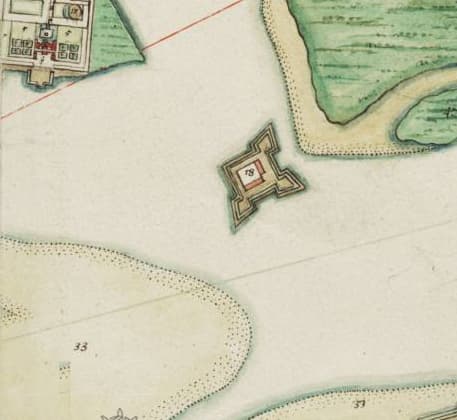
Fort Waerdenburgh exemplifies the bastioned fortress style, characterized by angular bastions projecting from the main walls. This design allowed defenders to cover adjacent walls with crossfire, eliminating blind spots and enhancing the fort's defensive capabilities against artillery and infantry assaults.
The fortress's walls are constructed from robust masonry, designed to absorb and deflect cannon fire. The bastions are positioned to maximize coverage of the surrounding terrain, including approaches by land and sea. The layout typically includes a central courtyard, surrounded by barracks, storage facilities, and command quarters.
Defensive structures and armaments
The fort was equipped with artillery placements on the bastions, enabling it to engage enemy ships and troops before they could mount an effective attack. Defensive features likely included a moat or ditch, drawbridges, and reinforced gates to control access.
Within the walls, there would have been powder magazines, armories, and provisions storage to sustain the garrison during sieges. The design also incorporated living quarters for soldiers and officers, as well as facilities for command and communication.
Renaissance military architecture influences
The design of Fort Waerdenburgh reflects the influence of Renaissance military architecture, which emphasized geometric precision, symmetry, and the integration of artillery in fortifications. This period saw the transition from medieval castles to modern forts capable of withstanding cannon fire and supporting heavy artillery.
The bastioned layout was a response to the evolving nature of warfare, providing overlapping fields of fire and minimizing vulnerable points. The fortress's construction techniques and materials were advanced for the time, incorporating lessons learned from European conflicts.
Current status and preservation
While detailed information on the current condition of Fort Waerdenburgh is limited, bastioned fortresses from this period in Brazil often face challenges related to preservation due to environmental factors and urban development pressures. Efforts to maintain such historical sites are important for cultural heritage and education.
Visitors to similar forts in Brazil can observe the enduring features of Renaissance military engineering and gain insight into the colonial history of the region.
Visiting fort waerdenburgh
Information about public access, visiting hours, and guided tours at Fort Waerdenburgh is scarce. Prospective visitors should seek local resources or heritage organizations for up-to-date details. Visiting such a site offers a unique opportunity to explore the military architecture and colonial history of 17th-century Brazil.
Frequently asked questions (FAQ)
- What is the historical significance of Fort Waerdenburgh?
- Fort Waerdenburgh was a key 17th-century bastioned fortress used by the Dutch during their colonial presence in Brazil, playing a strategic role in territorial defense and control.
- What architectural style does Fort Waerdenburgh represent?
- The fortress exemplifies Renaissance military architecture with its bastioned design, geometric layout, and artillery-focused defenses.
- Can visitors tour Fort Waerdenburgh?
- Public access information is limited; visitors should check with local heritage organizations for current visiting options and hours.
- What defensive features are characteristic of Fort Waerdenburgh?
- The fortress features angular bastions for crossfire coverage, robust masonry walls, artillery placements, and likely moats or ditches for added protection.
- When was Fort Waerdenburgh built?
- Fort Waerdenburgh was constructed in the 17th century during the period of Dutch colonial expansion in Brazil.
Photo gallery

Photo by Unknown authorUnknown author•Public domain
Information
Loading map...
Visitor reviews
No reviews yet. Been here? Write the first review and help other travelers!
Write the first reviewVisited this castle? Share your experience
Your review helps other travelers and adds first-hand knowledge to our encyclopedia.