Fort Vijfhuizen
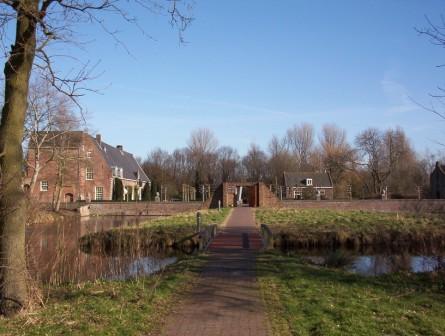
Fort Vijfhuizen is an important component of the Defense Line of Amsterdam (Dutch: Stelling van Amsterdam), a UNESCO World Heritage Site comprising forty-two forts forming a ring of defense around the city. Situated in the town of Vijfhuizen along the ringvaart canal that encircles the Haarlemmermeer polder, the fort occupies a strategic position on a raised artificial hill surrounded by a moat. Its construction dates back to 1889-1890, when it was built using sand excavated during the creation of a new sluice-gate complex in IJmuiden.
Architectural design and military function
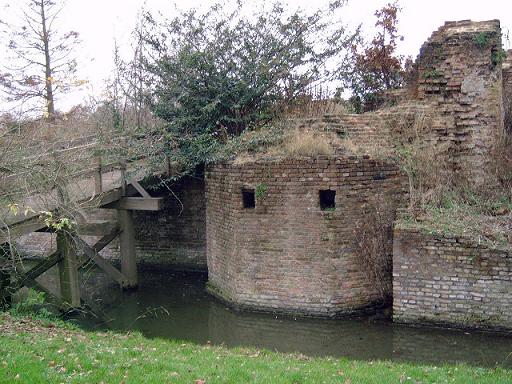
Designed as a bastioned fortress, Fort Vijfhuizen exemplifies late 19th-century Dutch military engineering. The fortress features characteristic bastions—angular projections from the main walls—that allowed defenders to cover adjacent walls with gunfire, minimizing blind spots. The fort's moat enhanced its defensive capabilities by creating a water barrier against attackers. The elevated position on an artificial hill improved visibility over the surrounding polder and the ringvaart, enabling early detection of enemy movements.
The fort was part of a larger defensive network intended to protect Amsterdam by controlling water levels and flooding the surrounding lands if necessary. This strategy, known as waterline defense, made the fort a critical element in the region's military infrastructure.
Historical events and significance
During its active military use, Fort Vijfhuizen served primarily as a defensive stronghold within the ring of forts around Amsterdam. A notable event in its history occurred on 3 May 1943, when an American Ventura bomber crashed into the fort's moat, marking a dramatic moment during World War II. While the fort never saw direct combat, its presence contributed to the deterrence of enemy advances into the Dutch heartland.
Transformation into a cultural and artistic venue
In recent decades, Fort Vijfhuizen has been repurposed from a military installation into a vibrant center for contemporary art and cultural experimentation. The site is maintained by the charitable foundation Kunstfort Vijfhuizen, which leases space for twelve artist studios and operates a restaurant within the historic structure.
The fort's unique architectural and historical setting provides a distinctive backdrop for artistic projects that explore themes of military heritage, ecology, and future scenarios. Exhibitions hosted at Kunstfort Vijfhuizen have included solo shows such as Rachel de Joode's Flat Nature / Surface Bodies (2017) and Daan Roosegaarde's temporary light monument Levenslicht (2020). Group exhibitions have engaged with ecological philosophy and art history, featuring works by influential figures like Joseph Beuys in The Prophecy of Bees (2016).
More recent programming includes The Hero, the Villain, and the Truth (2024) by Folkert de Jong and the installation Elite Exodus by Christoph and Sebastian Mügge, presented in Shame of the Shuffled Cards (2025). These exhibitions critically examine social themes such as privilege, protection, and survival ethics, using the fort's military past as a conceptual framework.
Surrounding landscape and related fortifications
Fort Vijfhuizen is surrounded by water and green space, with its moat and hilltop location preserved to maintain historical authenticity. South of the main fort lies the first fore position, which has been integrated into a golf course, illustrating adaptive reuse of military land. Further south along the ringvaart is Fort Cruquius, another fortification that forms part of the Defense Line and is located near the Cruquius Museum.
The fort remains accessible to the public during designated opening hours, allowing visitors to explore both its historical architecture and contemporary art exhibitions. Its combination of military heritage and cultural innovation makes Fort Vijfhuizen a unique destination in the Netherlands.
Frequently asked questions (FAQ)
- How do I visit Fort Vijfhuizen and what can I expect?
- Fort Vijfhuizen is open to visitors during its designated opening hours. Visitors can explore the historic bastioned fortress and enjoy contemporary art exhibitions hosted by Kunstfort Vijfhuizen. Check the official website for current opening times and event schedules.
- What is the historical significance of Fort Vijfhuizen?
- Fort Vijfhuizen is part of the Defense Line of Amsterdam, a UNESCO World Heritage Site. Built in 1889-1890, it served as a military stronghold designed to protect Amsterdam through waterline defense strategies.
- Can I see contemporary art at Fort Vijfhuizen?
- Yes, the fort hosts a contemporary art program featuring solo and group exhibitions. Artists use the unique military architecture as a backdrop to explore themes of ecology, heritage, and social issues.
- Is Fort Vijfhuizen accessible for people with mobility issues?
- Accessibility may be limited due to the historic nature of the fort's architecture and terrain. Visitors with mobility concerns should contact Kunstfort Vijfhuizen in advance to inquire about accommodations.
- Are there other forts near Fort Vijfhuizen worth visiting?
- Nearby forts include Fort Cruquius, located south along the ringvaart canal. Fort Cruquius is also part of the Defense Line of Amsterdam and features the Cruquius Museum.
Photo gallery
Information
Current owner
Kunstfort Vijfhuizen (charitable foundation)
Loading map...
Visitor reviews
No reviews yet. Been here? Write the first review and help other travelers!
Write the first reviewVisited this castle? Share your experience
Your review helps other travelers and adds first-hand knowledge to our encyclopedia.