Fort Sokolnického
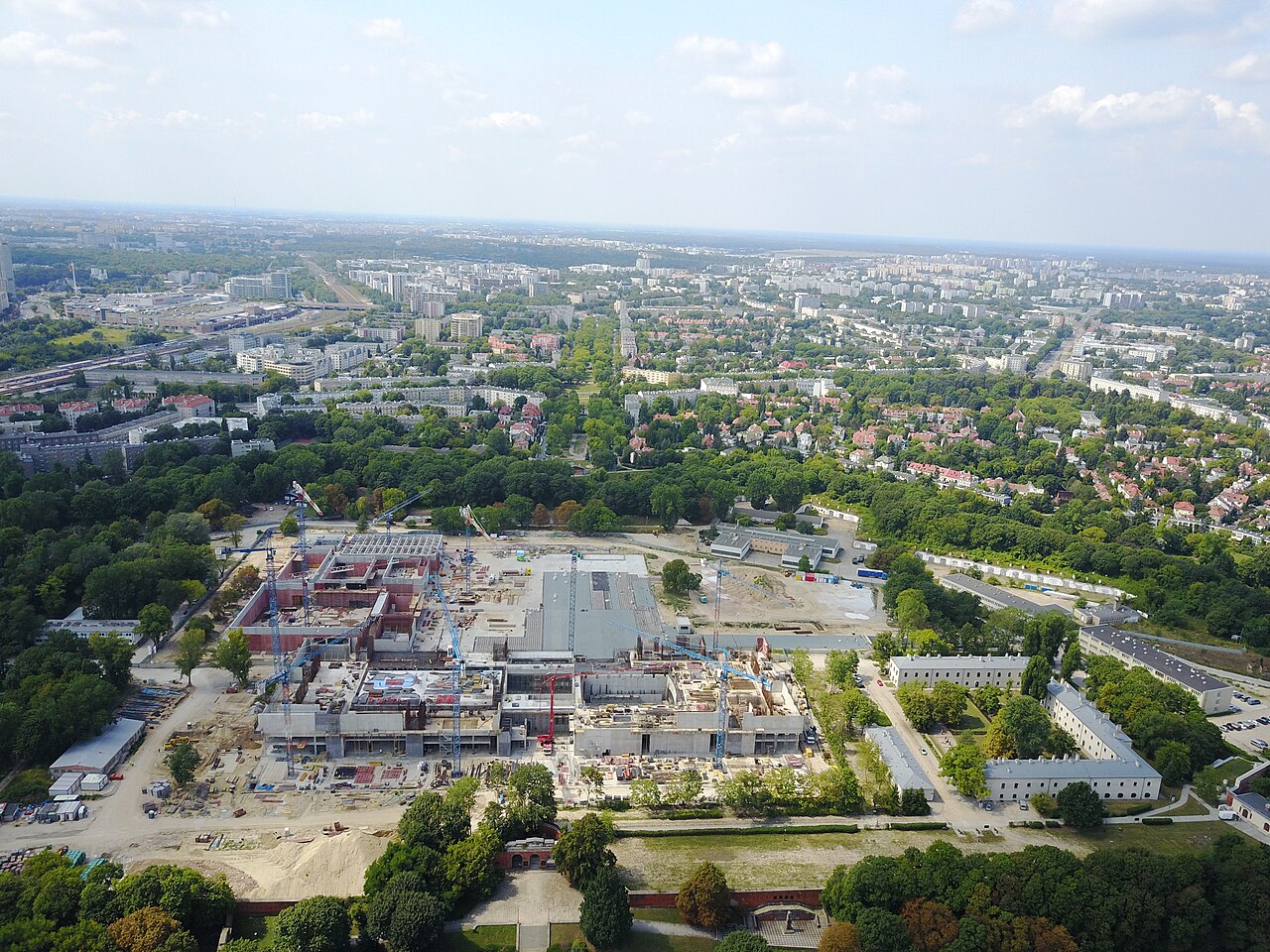
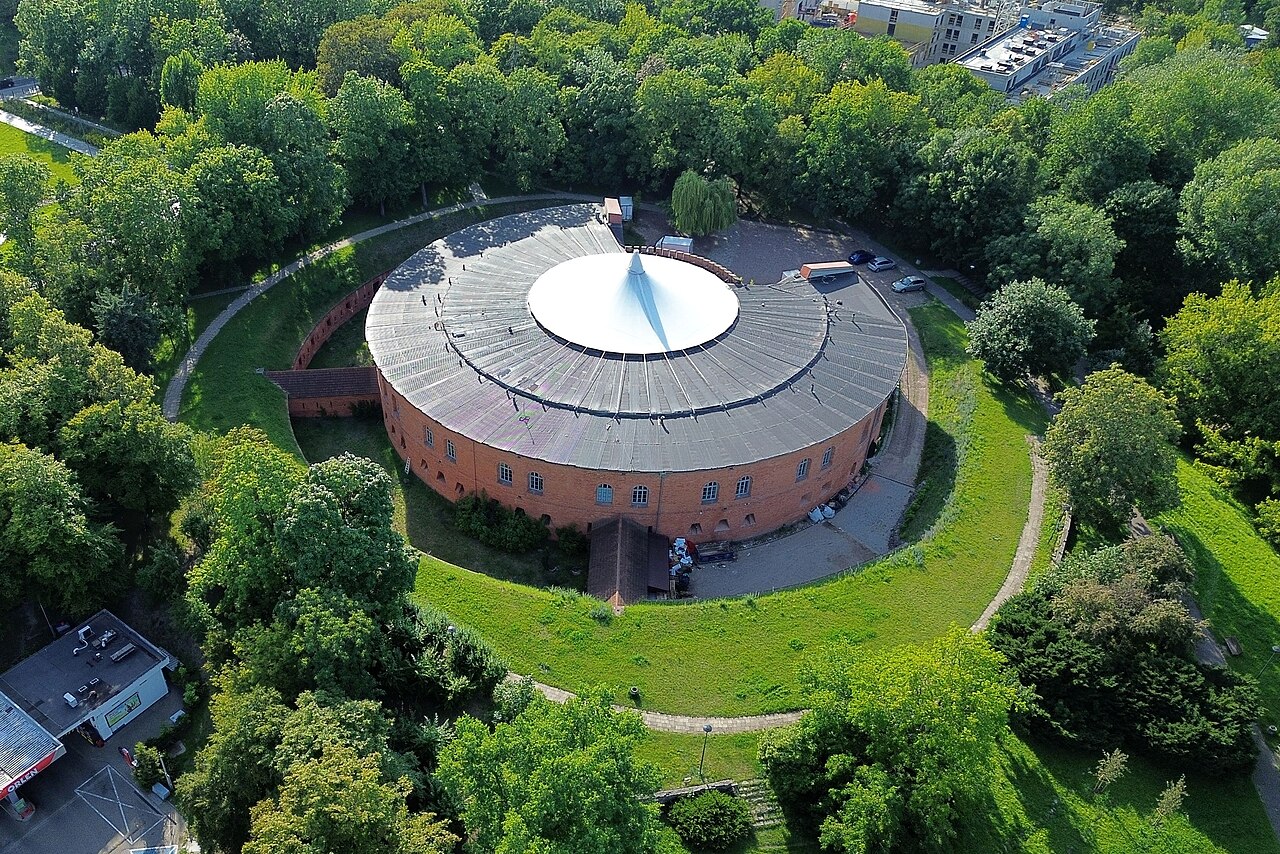
Fort Sokolnickiego is a notable example of a bastioned fortress located in Poland. As a military fortification, it reflects the strategic architectural developments that emerged in Europe from the Renaissance period onward, designed primarily to withstand artillery sieges and provide strong defensive capabilities.
Historical context and significance
Fort Sokolnickiego was constructed during a period when bastioned fortifications became essential for military defense. Such forts were developed to counter the increasing power of cannon fire and to provide overlapping fields of fire through angled bastions. This design allowed defenders to cover adjacent walls and eliminate blind spots, a significant advancement over earlier medieval castle designs.
While the exact construction date and original builder of Fort Sokolnickiego are not well documented, the style and typology place it within the post-medieval military architectural tradition that spread across Europe from the 16th century onward. Poland, with its strategic location and turbulent history, saw numerous fortifications built or modernized to protect key cities and borders.
Architectural features of Fort Sokolnickiego
The fortress is characterized by angular bastions projecting from the curtain walls, creating a star-shaped layout typical of bastioned fortresses. These bastions were designed to allow defenders to fire along the walls (flanking fire) and cover all approaches to the fortress effectively.
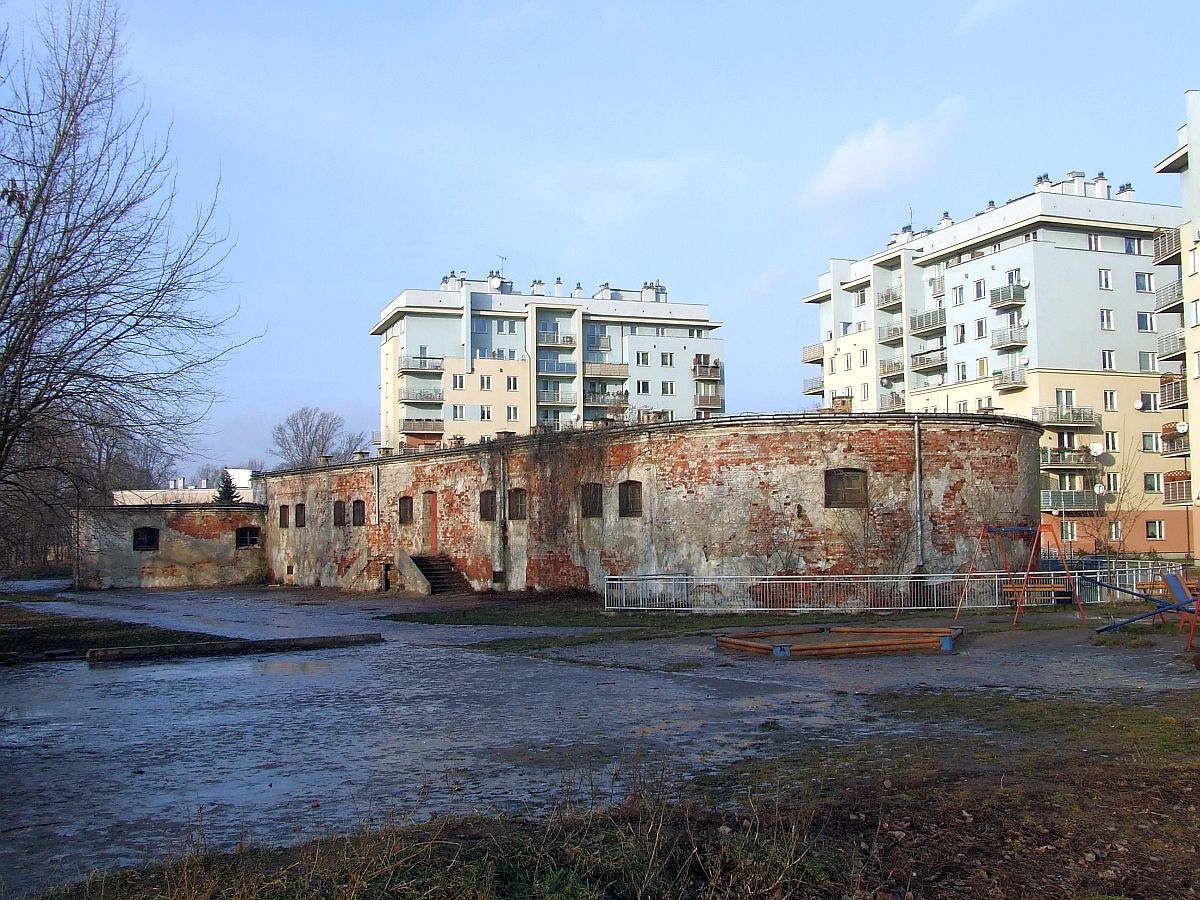
The walls of Fort Sokolnickiego are robust and thick, constructed to absorb and deflect cannonballs. The use of earthen ramparts behind stone or brick facades was common in such forts to better withstand artillery bombardment.
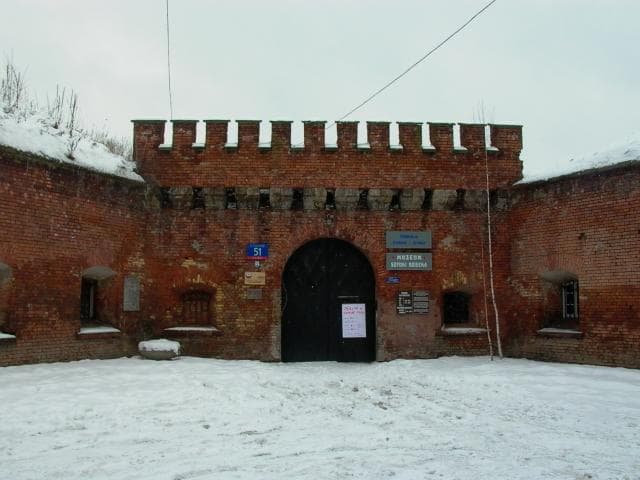
Additional defensive elements likely include a dry moat or ditch surrounding the fortress, which would hinder enemy advances and mining attempts. The entrance would have been heavily fortified, possibly with a gatehouse and drawbridge or other means of controlled access.
Military function and strategic importance
Fort Sokolnickiego served as a defensive stronghold to protect important routes or settlements in Poland. Bastioned fortresses like this were often part of larger defensive networks, controlling key terrain and serving as bases for troops and artillery.
The design of Fort Sokolnickiego reflects the military engineering principles of the time, emphasizing defense in depth, overlapping fields of fire, and resilience against siege warfare. Its construction would have required skilled engineers and laborers familiar with contemporary fortification techniques.
Current condition and preservation
Details on the current condition of Fort Sokolnickiego are limited, but bastioned fortresses often survive as well-preserved or partially preserved ruins due to their solid construction. Preservation efforts, if any, would focus on maintaining structural integrity and preventing further decay.
Such fortresses today are valuable cultural heritage sites, offering insights into military history and architectural innovation. They often attract historians, architects, and tourists interested in the evolution of fortification design.
Visiting Fort Sokolnickiego
Information about public access, visiting hours, and ticket prices for Fort Sokolnickiego is not readily available. Visitors interested in exploring bastioned fortresses in Poland should check local tourism resources or heritage organizations for updated details.
Frequently asked questions (FAQ)
- What is the architectural style of Fort Sokolnickiego?
- Fort Sokolnickiego is a bastioned fortress, a style developed during the post-medieval period to improve defense against artillery with angular bastions and thick walls.
- When was Fort Sokolnickiego likely built?
- While the exact date is unknown, Fort Sokolnickiego was probably constructed in the post-Renaissance period, reflecting military architectural trends from the 16th century onward.
- Can I visit Fort Sokolnickiego?
- Current information about public access and visiting hours for Fort Sokolnickiego is limited. Visitors should consult local tourism sources for the latest details.
- Why were bastioned fortresses like Fort Sokolnickiego important?
- Bastioned fortresses provided enhanced defense against cannon fire through angled bastions that allowed overlapping fields of fire, protecting the fortress walls more effectively than earlier designs.
Photo gallery

Photo by No machine-readable author provided. Klemens~commonswiki assumed (based on copyright claims).•CC BY-SA 2.5
Information
Loading map...
Visitor reviews
No reviews yet. Been here? Write the first review and help other travelers!
Write the first reviewVisited this castle? Share your experience
Your review helps other travelers and adds first-hand knowledge to our encyclopedia.