Fort Sint Michiel
Fort Sint Michiel is a historic coastal fortress located in the Boka Sami neighborhood of the seaside village of St. Michiel, west of Willemstad on the Caribbean island of Curaçao. Constructed around 1701, this fortification played a significant role in the defense of the island's valuable bays during the post-Renaissance period, particularly guarding the entrance to St. Michiel Bay.
The fort was one of two primary batteries strategically positioned to protect the bay. While Fort Sint Michiel guarded one side, another battery was situated on the northern side of the bay's entrance, together forming a defensive crossfire to deter enemy ships. Although the exact fate of this northern battery remains uncertain, no visible remains or recent documentation confirm its survival.
Construction and architectural features
Fort Sint Michiel exhibits characteristics typical of early 18th-century military architecture adapted to Caribbean coastal defense. The fort's design focused on artillery placement, with a series of cannon emplacements overlooking the bay to maximize firing range and control of naval access. The walls were built robustly to withstand cannon fire, featuring thick masonry and bastioned angles to cover multiple firing directions.
Behind the fort, on a hilltop, the Dutch military constructed Fort op den Berg in the late 18th century to augment the island's defenses. This smaller fortification was equipped with several cannons and provided additional oversight of the bay area. However, like the northern battery, Fort op den Berg's remains are not visible today and are not referenced in modern surveys or maps.
Historical military engagements
Fort Sint Michiel's military significance is highlighted by its involvement in several notable conflicts during the 18th and early 19th centuries. In February 1713, the fort was indirectly involved in repelling the French buccaneer Jacques Cassard, who anchored in nearby St. Kruis Bay and launched an assault on the island. Although Dutch troops initially failed to drive Cassard's men ashore, they retreated to Willemstad, disabling Fort Sint Michiel's cannons to prevent their use by the enemy. Cassard eventually accepted a ransom and departed.
Throughout the mid-18th century, the fort fell into neglect, reflecting a period of relative peace and shifting military priorities. However, by the end of the century, Fort Sint Michiel's artillery once again played a protective role, offering refuge to Dutch and American ships evading pirate attacks.
Early 19th-century conflicts
By 1800, the fort's armament consisted of 12 cannons, including eight-pounders, twelve-pounders, and eighteen-pounders, with some unmounted pieces. At this time, the island's military command considered Fort Sint Michiel more strategically important than Fort Piscadera, prompting the construction of Fort op den Berg to reinforce the area's defenses.
On August 29, 1800, Fort Sint Michiel successfully repelled an English warship pursuing a French privateer, inflicting significant damage that forced the ship to retreat. Shortly after, on September 4, 1800, French forces captured the fort but abandoned it on September 23. Dutch troops reoccupied the fort until the British took control of Curaçao on October 15, 1800.
Following the Treaty of Amiens in 1802, the island was returned to Dutch control, and Fort Sint Michiel was repaired and garrisoned. However, the British seized the island again in 1807, only to withdraw permanently after the Anglo-Dutch Treaty of 1814 and the subsequent restoration of Dutch sovereignty in 1816. After this period, the fort's military importance declined.
Later use and current condition
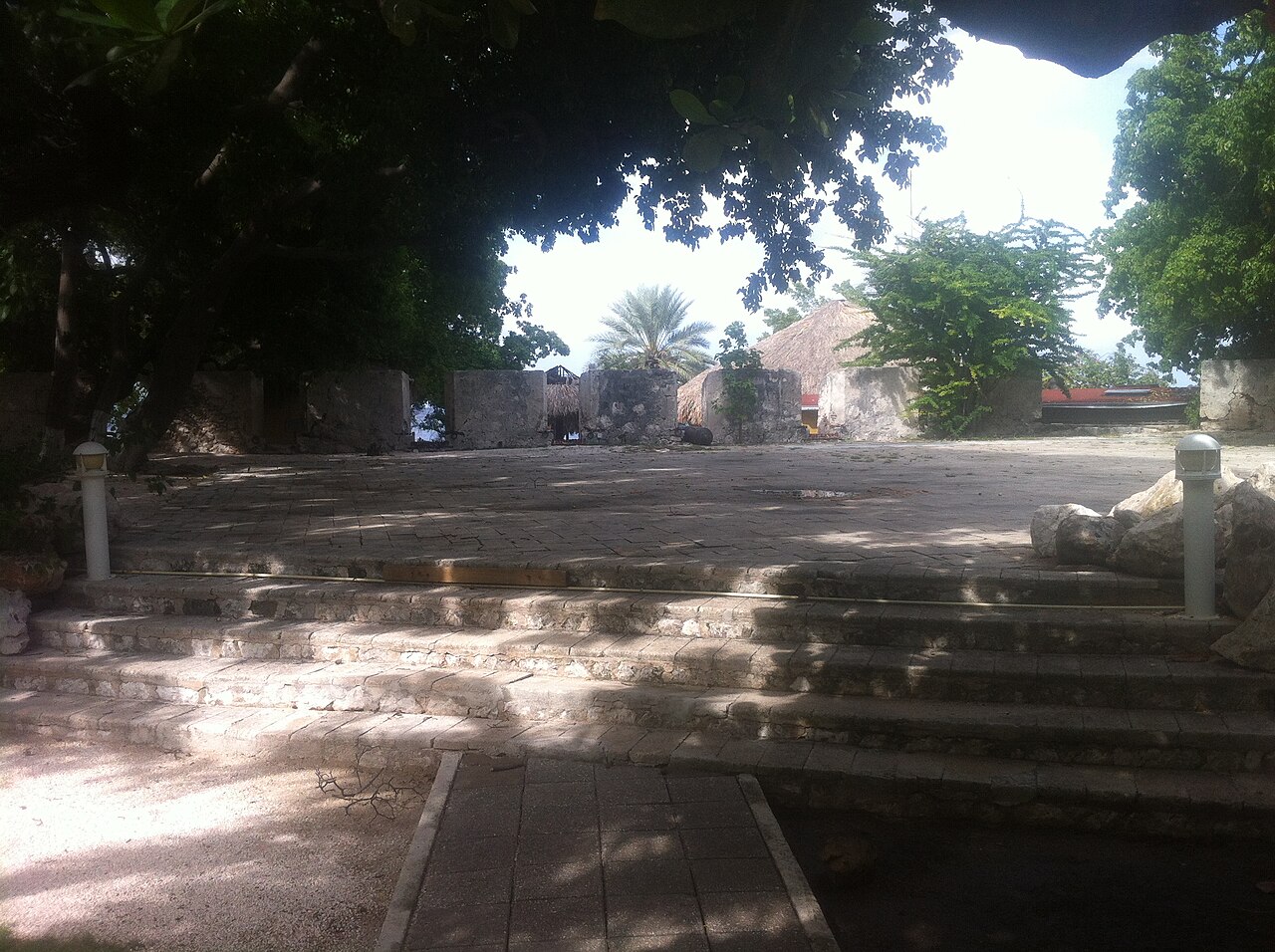
Today, Fort Sint Michiel remains a freely accessible historic site. While some parts of the fort have been repurposed informally by locals, including use as a simple bar and for community events, the fort's walls and structures still convey its defensive past. During visits, observers have noted that portions of the fort walls have been painted, reflecting contemporary local activities rather than preservation efforts.
Despite its somewhat neglected state, Fort Sint Michiel holds cultural and historical significance as a reminder of Curaçao's colonial military history and the island's strategic importance in Caribbean maritime conflicts. The absence of visible remains of the associated northern battery and Fort op den Berg adds an element of mystery to the site's full historical narrative.
Architectural and historical significance in the Caribbean context
Fort Sint Michiel exemplifies the typical coastal defense structures erected by European colonial powers in the Caribbean during the post-Renaissance era. Its construction reflects the strategic necessity of controlling key harbors and bays to protect trade routes and colonial possessions from piracy and rival nations.
The fort's artillery configuration and its role in multiple conflicts illustrate the evolving military tactics of the time, including the use of fortified batteries to dominate maritime approaches. The fort's history of changing hands between Dutch, French, and British forces underscores the geopolitical tensions in the Caribbean throughout the 18th and early 19th centuries.
As a surviving example of Dutch colonial military architecture in the Caribbean, Fort Sint Michiel contributes to the broader understanding of European fortification methods adapted to tropical island environments. Its preservation, even in a partially restored and repurposed state, offers valuable insights into the challenges of coastal defense and colonial administration in this region.
Visitor information and accessibility
Fort Sint Michiel is open to the public without an entrance fee, allowing visitors to explore the site freely. While the fort does not have formal visitor facilities or guided tours, its location near Willemstad and accessibility make it a point of interest for those studying colonial history or seeking to experience Curaçao's heritage firsthand.
Visitors should be aware that the site may be used for local events or informal gatherings, and parts of the fort may show signs of community use. There are no established opening hours, and visitors are encouraged to respect the site's historical significance during their visit.
Frequently asked questions (FAQ)
- How do I visit Fort Sint Michiel?
- Fort Sint Michiel is freely accessible to the public without an entrance fee. Visitors can explore the site at any time, but there are no formal visitor facilities or guided tours available.
- What is the historical significance of Fort Sint Michiel?
- Fort Sint Michiel played a key role in the defense of Curaçao during the post-Renaissance period, particularly in conflicts involving Dutch, French, and British forces in the Caribbean.
- When was Fort Sint Michiel built?
- Fort Sint Michiel was probably constructed around 1701 as part of the island's coastal defense system.
- Can I see other forts near Fort Sint Michiel?
- The northern battery and Fort op den Berg once complemented Fort Sint Michiel but no visible remains of these forts exist today, and they are not mentioned in recent publications or maps.
- Is Fort Sint Michiel well preserved?
- The fort is partially preserved, with some walls intact but also showing signs of informal use by locals. It is not fully restored but remains an important historical site.
Information
Address
Canoaweg, Curaçao
Loading map...
Visitor reviews
No reviews yet. Been here? Write the first review and help other travelers!
Write the first reviewVisited this castle? Share your experience
Your review helps other travelers and adds first-hand knowledge to our encyclopedia.