Fort Piscadera
Fort Piscadera is a historic bastioned fortress situated at the entrance of Piscadera Bay, to the west of Willemstad on the Caribbean island of Curaçao. This fortification played a strategic role in the defense of the bay and the nearby city throughout the 18th and early 19th centuries, reflecting the military architectural practices of its time.
Early construction and design
The initial fortification at Fort Piscadera was likely constructed between 1701 and 1704 under the direction of Governor Van Beek. However, like many colonial military structures of the period, it suffered from neglect and lack of maintenance, which led to its deterioration in the early years after construction.
In 1714, Governor Van Collen proposed a reconstruction plan to the West Indian Company to strengthen the fort's defenses. Although the proposal was accepted, the rebuilding process was delayed. When finally completed, the fort featured a rectangular star-shaped design, characteristic of bastioned fortifications intended to provide overlapping fields of fire and reduce blind spots.
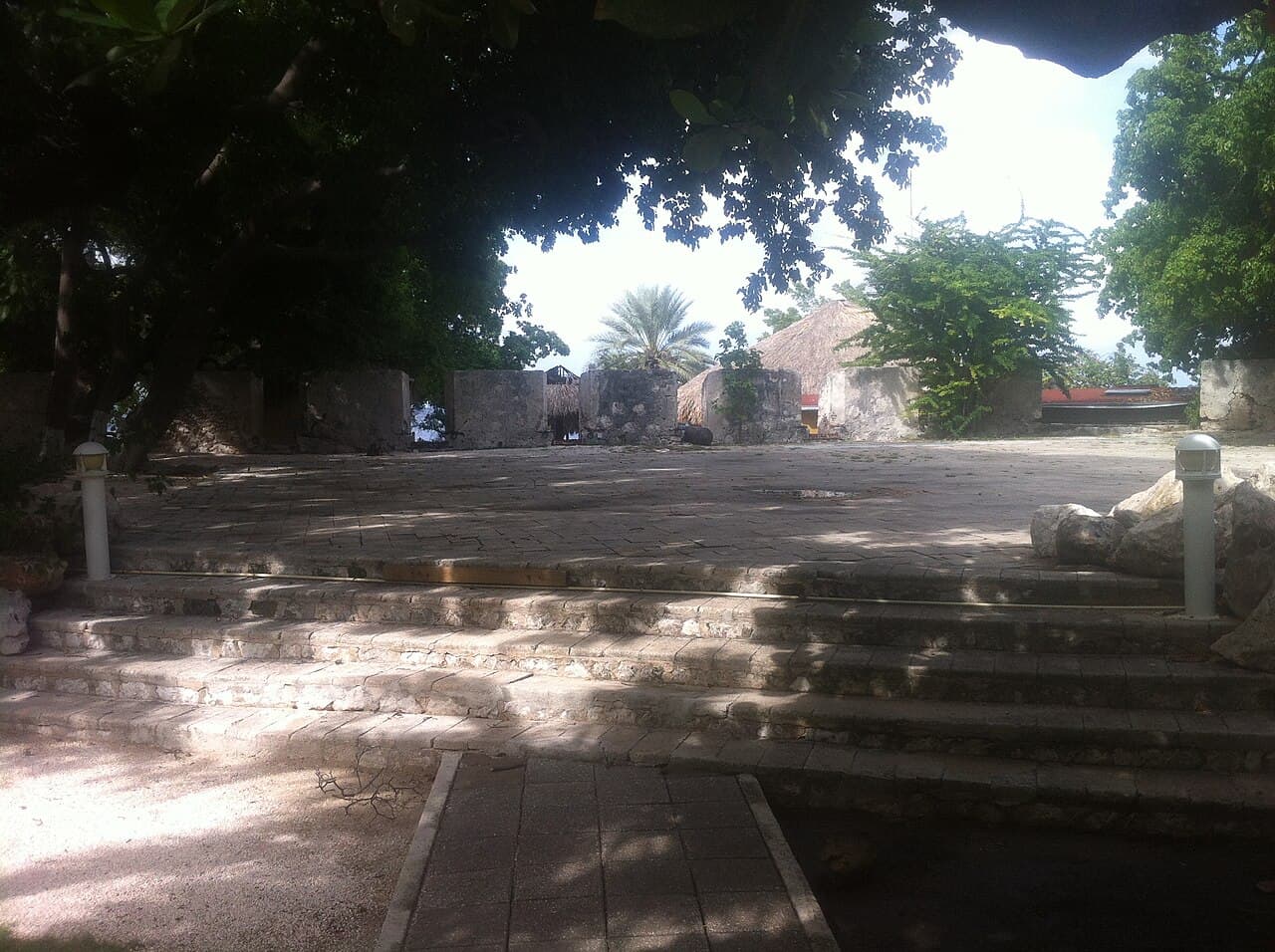
The fort was equipped with approximately 6 to 8 small-caliber cannons, positioned primarily to defend against naval threats entering Piscadera Bay. The remains visible today correspond to this rebuilt structure.
Military engagements and modifications
In 1800, during a period of conflict involving French forces, Fort Piscadera's strategic importance was tested. French troops had captured the nearby Fort Sint Michiel and were advancing overland toward Willemstad, passing close to Fort Piscadera. However, the fort's defenses were oriented towards the sea, and the landward side was vulnerable.
The Dutch command ordered the garrison to dismantle the cannons to prevent their capture and to withdraw by water to Willemstad. Unfortunately, the rapid advance of the French meant the garrison could not disable the cannons in time. The French then used these captured artillery pieces to bombard Willemstad, highlighting a critical defensive oversight.
Following the French withdrawal, the fort was repaired under the supervision of Captain Gravenhorst during the governorship of Lauffer. The armament was increased to 14 cannons, including 6 eight-pounders, 4 twelve-pounders, and 4 eighteen-pounders, enhancing its firepower significantly.
In January 1804, an English force led by Captain William Bligh, famed for the Bounty mutiny, landed at Fort Piscadera. The fort was defended by only 13 soldiers and 14 cannons but lacked ammunition, forcing the defenders to retreat to Willemstad without engaging in a prolonged fight.
Decline and restoration
After returning to Dutch control, Fort Piscadera was largely neglected again. By 1819, it had fallen into a state of decay and became overgrown with vegetation, obscuring its remains from view.
In the 1950s, efforts were made to restore the fort, preserving its historical fabric and making it accessible to visitors. Despite its small size and relatively modest remains, Fort Piscadera offers insight into colonial military architecture and the defensive strategies employed in the Caribbean during the 18th century.
Current status and visitor information
Today, Fort Piscadera is located within the grounds of a hotel complex. While it was once freely accessible to the public, recent changes mean that only hotel guests can visit the site. The fort's remains include sections of the bastioned walls and cannon placements, which provide a tangible connection to its military past.
Although the fort itself is small and offers limited structural remains, the surrounding area is known for its attractive beach and coastal scenery, making it a popular spot for visitors interested in both history and leisure.
Architectural features and significance
Fort Piscadera exemplifies the bastioned fortress design, which became prominent in the early modern period for its defensive advantages against artillery. The star-shaped layout allowed defenders to cover all approaches with overlapping fields of fire, minimizing blind spots and making assaults more difficult.
The fort's armament evolved over time, reflecting changes in military technology and threats. The presence of various cannon calibers indicates a layered defense strategy, capable of engaging enemy ships at different ranges and intensities.
Its location guarding Piscadera Bay was strategically significant, as control of the bay meant protection of maritime access to Willemstad, a key port in the Dutch Caribbean.
Frequently asked questions (FAQ)
- How do I visit Fort Piscadera today?
- Fort Piscadera is located within a hotel property in Willemstad, Curaçao. Currently, access to the fort is restricted to hotel guests only, so visitors must stay at the hotel to explore the site.
- What is the historical significance of Fort Piscadera?
- Fort Piscadera served as a coastal defense bastioned fortress guarding Piscadera Bay and Willemstad from naval and land attacks during the 18th and early 19th centuries, reflecting colonial military architecture.
- When was Fort Piscadera originally built?
- The first fortification at Fort Piscadera was likely constructed between 1701 and 1704 under Governor Van Beek, with significant rebuilding completed after 1714.
- Can I see cannon remains at Fort Piscadera?
- Yes, visitors can observe the remains of cannon placements and bastioned walls at Fort Piscadera, which illustrate its historic defensive role, although the fort is relatively small and partially restored.
- Why was Fort Piscadera vulnerable to land attacks?
- The fort's defenses were primarily oriented toward the sea, leaving the land side unprotected, which allowed French troops in 1800 to bypass it during their advance on Willemstad.
Photo gallery

Information
Loading map...
Visitor reviews
No reviews yet. Been here? Write the first review and help other travelers!
Write the first reviewVisited this castle? Share your experience
Your review helps other travelers and adds first-hand knowledge to our encyclopedia.