Rif Fort
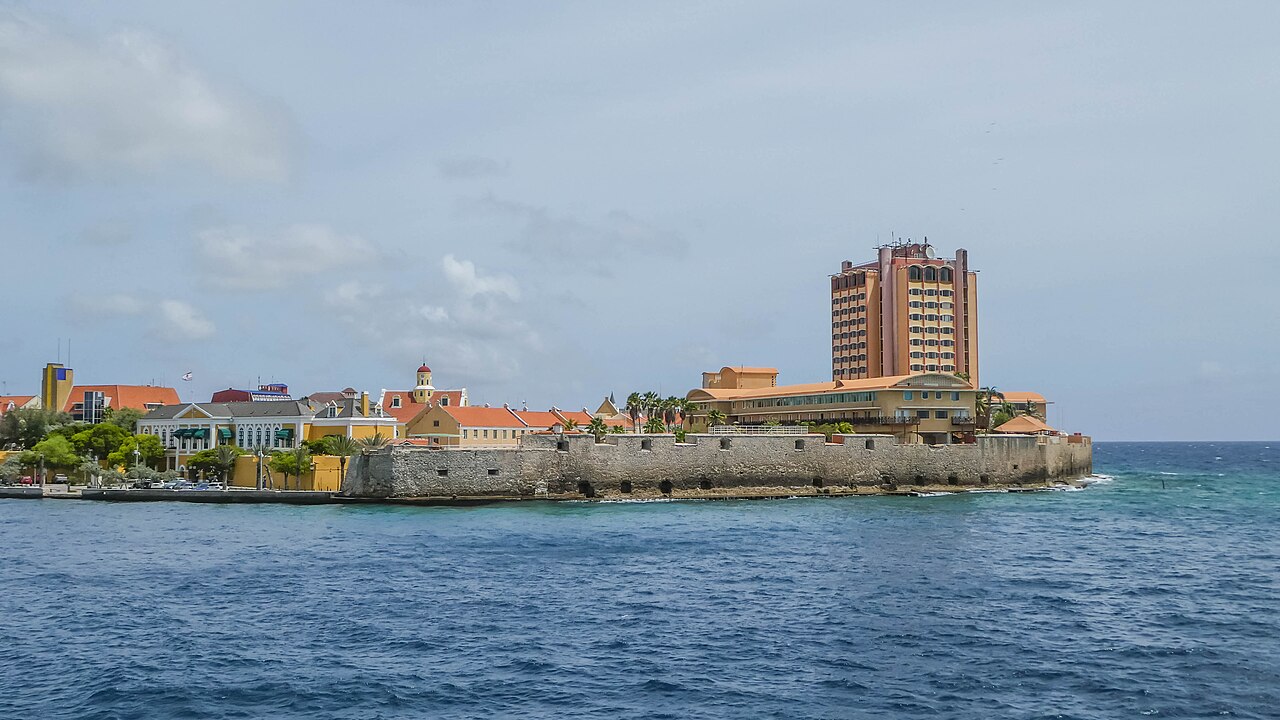
The Rif Fort is a historic bastioned fortress strategically located at the entrance of St. Anna Bay in the western Otrabanda neighborhood of Willemstad, on the Caribbean island of Curaçao in the Dutch Antilles. Its name, sometimes spelled as Riffort, translates to Reef Fort, reflecting its coastal defensive role.
During the early 19th century, the fortifications on Curaçao were largely neglected. Recognizing the need for improved defenses, King William I of the Netherlands commissioned a restoration plan in 1824, appointing Lieutenant-General Krayenhoff to oversee the project. Under his direction, the Rif Fort and the Water Fort on the opposite shore of the bay were constructed between 1828 and 1829. The fort was carefully positioned between the bay entrance, the coastline, and the former Rif Water to guard the harbor and the outer part of the Otrabanda district.
Architectural design and defensive features
The Rif Fort was designed as a bastioned fortress, a style characterized by angular bastions that allowed defenders to cover all approaches with cannon fire, eliminating blind spots. When completed, the fort was bombproof and equipped with 56 cannons, providing formidable firepower to control access to the bay. The fortress included barracks to house soldiers, a powder magazine for ammunition storage, and a water tank to supply the garrison.
One notable feature was a small bombproof dome located in front of the fort. This structure housed the chain mechanism used to seal off the harbor entrance, a critical defensive element to prevent enemy ships from entering St. Anna Bay.
Historical context and military use
Constructed during the modern period in 1828, the Rif Fort represented a significant upgrade to Curaçao's coastal defenses amid geopolitical tensions in the Caribbean. Its position at the bay entrance allowed it to protect Willemstad's harbor, which was vital for trade and naval operations.
Although the exact date when the fort lost its military function is unclear, by the early 20th century, its military importance had diminished. During this period, the grounds were repurposed for civilian use, including housing a water company. In 1942, during World War II, the fort was briefly rearmed with two 37 mm machine guns, indicating a temporary revival of its defensive role.
Later, the Rif Fort served various governmental functions, including accommodating a police station, reflecting its continued importance as a civic landmark.
Current use and cultural significance
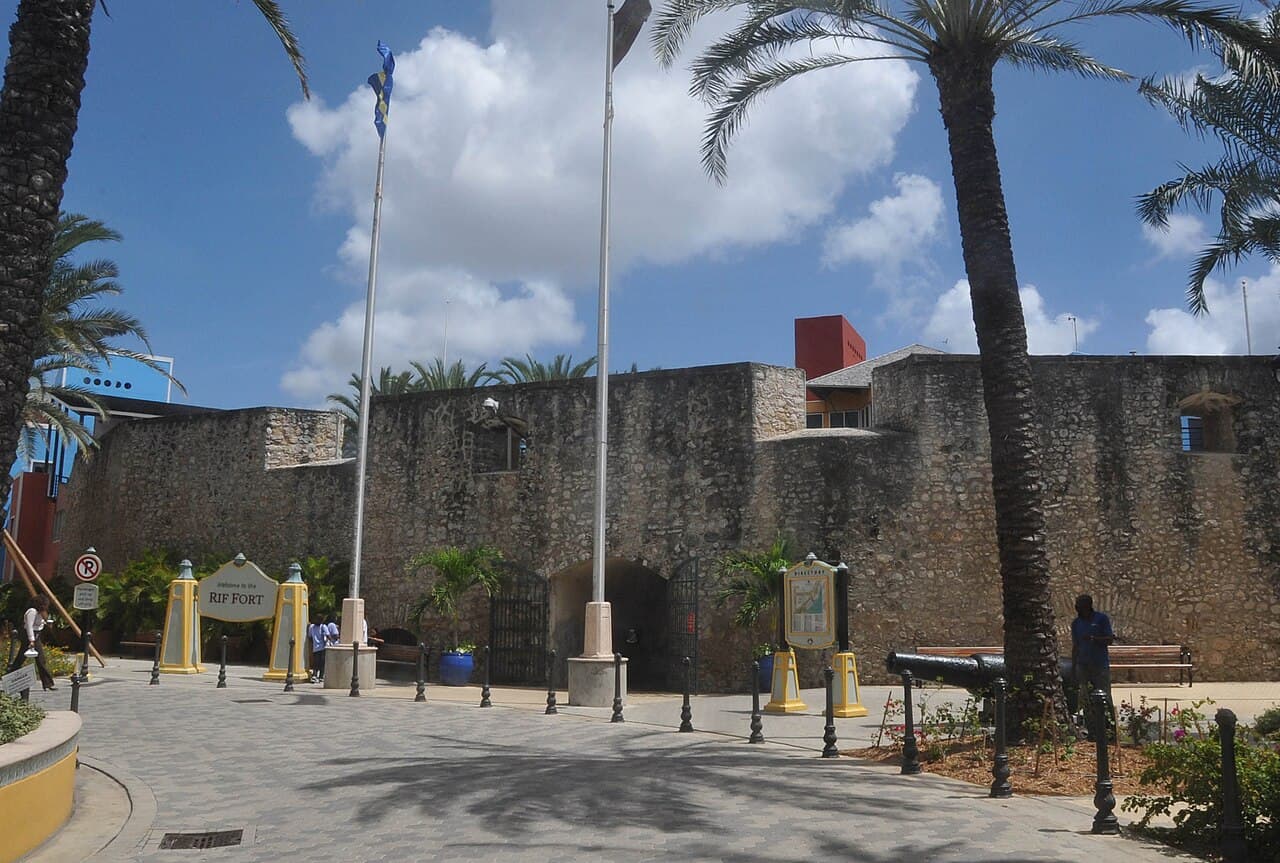
Today, the Rif Fort is freely accessible to the public and has been transformed into a vibrant touristic shopping mall. Its robust bastioned walls and historic architecture provide a unique setting for shops, restaurants, and cultural events, making it a popular destination for visitors and locals alike.
The fort's preservation as a well-preserved bastioned fortress offers insight into 19th-century military architecture and the colonial history of Curaçao. Its location at the entrance to St. Anna Bay continues to symbolize the island's maritime heritage and strategic importance in the Caribbean region.
Architectural elements and layout
The fortress is characterized by its angular bastions that enabled crossfire defense, thick stone walls designed to withstand bombardment, and a compact layout that maximized defensive coverage. The internal courtyard once served as a muster area and facilitated movement between the barracks, powder magazine, and other service buildings.
The presence of a water tank within the fort was essential for sustaining the garrison during sieges or blockades. The fort's design reflects military engineering principles of the early 19th century, adapted to the tropical Caribbean environment.
The chain defense system
The bombproof dome in front of the fort housed a heavy chain that could be stretched across the harbor entrance to physically block enemy vessels. This mechanism was a common defensive feature in coastal fortifications, providing an additional layer of protection beyond artillery fire.
Visiting rif fort
Visitors to the Rif Fort can explore its historic walls and enjoy the lively atmosphere of the shopping mall housed within. The site offers a glimpse into Curaçao's colonial past while serving as a contemporary social and commercial hub. Its accessibility and central location in Willemstad make it an essential stop for those interested in history, architecture, and Caribbean culture.
Frequently asked questions (FAQ)
- How do I visit Rif Fort in Curaçao?
- Rif Fort is freely accessible to the public and located in the Otrabanda neighborhood of Willemstad. Visitors can explore the historic fortifications and enjoy the shopping mall and dining options available on site.
- What is the historical significance of Rif Fort?
- Rif Fort was built in 1828 as a bastioned fortress to protect the entrance to St. Anna Bay in Willemstad. It played a key role in Curaçao's coastal defense during the 19th century and reflects Dutch colonial military architecture.
- When was Rif Fort constructed?
- Rif Fort was constructed between 1828 and 1829 under the direction of Lieutenant-General Krayenhoff, following a restoration plan commissioned by King William I of the Netherlands.
- Can I see the original cannons at Rif Fort?
- While the fort was originally armed with 56 cannons, most have been removed. However, some artillery pieces and historical displays may be present within the shopping mall complex for visitors to view.
- Is Rif Fort suitable for families and tourists?
- Yes, Rif Fort is a popular tourist destination with shopping, dining, and cultural events, making it suitable for families and visitors interested in history and local culture.
Photo gallery

Information
Address
Gouverneur van Slobbeweg, Curaçao
Loading map...
Visitor reviews
No reviews yet. Been here? Write the first review and help other travelers!
Write the first reviewVisited this castle? Share your experience
Your review helps other travelers and adds first-hand knowledge to our encyclopedia.