Fort San Miguel
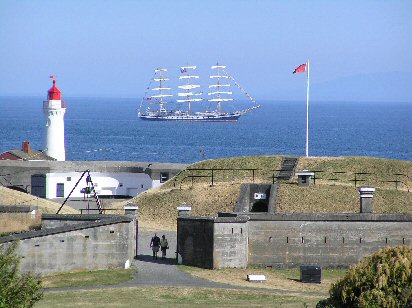
Fort San Miguel is a historic Spanish fortification located at Yuquot (formerly known as Friendly Cove) on Nootka Island, situated just west of north-central Vancouver Island in Canada. This fort played a significant role in the colonial history of the Pacific Northwest as it served to protect the Spanish settlement of Santa Cruz de Nuca, which was the first European colony established in what is now British Columbia.
Historical context and significance
Constructed in the 18th century during the post-Renaissance period, Fort San Miguel was part of Spain's efforts to assert sovereignty over the Pacific Northwest amid increasing competition from British and Russian explorers and traders. The fortification was established following the 1789 Nootka Crisis, a dispute between Spain and Britain over territorial claims and trade rights in the region. The presence of Fort San Miguel underscored Spain's strategic intentions to maintain a foothold in the area, particularly to protect the valuable fur trade and maritime routes.
Architecture and fortification features
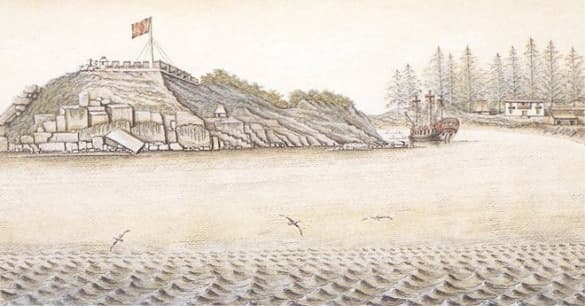
The fort was built as a coastal fortress designed to defend the Spanish settlement and its harbor. While much of the original structure has not survived, historical accounts and archaeological evidence indicate that Fort San Miguel featured typical elements of 18th-century Spanish military architecture. These included wooden palisades, defensive bastions, and a strategic placement overlooking the harbor to monitor naval activity and potential threats.
The fort's location at Yuquot allowed it to control access to Friendly Cove, a natural harbor that was critical for resupply and trade. The fortification likely included gun emplacements and lookout posts to guard against incursions by rival European powers and Indigenous groups.
Santa Cruz de Nuca: the first colony in British Columbia
Santa Cruz de Nuca was established as the Spanish colonial settlement adjacent to Fort San Miguel. It served as the administrative and military center for Spain's claims in the region. The settlement included living quarters, supply depots, and facilities to support the naval presence.
Although the colony was relatively short-lived, it marked the beginning of European settlement in what would become British Columbia. The interactions between Spanish colonists and the Indigenous Nuu-chah-nulth people were complex, involving trade, alliances, and occasional conflicts.
Archaeological remains and preservation
Today, Fort San Miguel exists primarily as archaeological ruins. Excavations and studies have uncovered remnants of the fort's foundations and artifacts that provide insight into the daily life and military operations of the Spanish colony. The site is of considerable historical and cultural importance, reflecting early European colonial ambitions and Indigenous relations on the Pacific coast.
Preservation efforts focus on protecting the ruins and interpreting the site for visitors and scholars interested in the colonial history of the Pacific Northwest.
Visiting Fort San Miguel
Fort San Miguel is accessible to visitors interested in Canadian and Spanish colonial history. The site offers a glimpse into the 18th-century Spanish military presence in North America and the early European colonization of British Columbia. Interpretive signage and guided tours help contextualize the fort's role and the broader historical events surrounding its establishment.
Frequently asked questions (FAQ)
- When was Fort San Miguel built and by whom?
- Fort San Miguel was built in the 18th century by Spanish colonial forces to protect their settlement at Santa Cruz de Nuca on Nootka Island.
- What was the purpose of Fort San Miguel?
- The fort served as a military stronghold to defend the Spanish colony and assert Spain's territorial claims in the Pacific Northwest during the late 1700s.
- Can visitors explore the ruins of Fort San Miguel?
- Yes, visitors can explore the archaeological ruins of Fort San Miguel, which include remnants of the fort's foundations and interpretive displays about its history.
- What is the historical significance of Santa Cruz de Nuca?
- Santa Cruz de Nuca was the first European colony in British Columbia, established by Spain adjacent to Fort San Miguel, marking early European settlement in the region.
- How accessible is Fort San Miguel for tourists?
- Fort San Miguel is accessible by boat to Yuquot on Nootka Island, and the site features informational signage to guide visitors through the historical context.
Photo gallery

Photo by Sigismund Bacstrum, ca. 1750-1805•Public domain
Information
Current owner
Canadian government
Loading map...
Visitor reviews
No reviews yet. Been here? Write the first review and help other travelers!
Write the first reviewVisited this castle? Share your experience
Your review helps other travelers and adds first-hand knowledge to our encyclopedia.