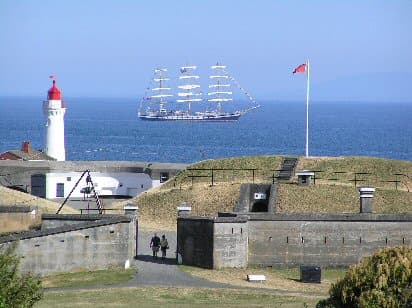
Fort Rodd Hill National Historic Site
Fort Rodd Hill National Historic Site is a significant example of a 19th-century bastioned fortress built to protect the strategic naval facilities at Esquimalt Harbour in Colwood, British Columbia, Canada. Constructed in the 1890s by the Royal Marine Artillery, the fort was designed as a coastal artillery defense installation to safeguard the nearby Esquimalt Naval Base, a critical Royal Canadian Navy base on the Pacific coast.
Historical context and strategic importance
The establishment of Fort Rodd Hill was part of a broader effort in the late 19th century to modernize Canada's coastal defenses amid growing concerns over naval threats in the Pacific region. The fort was named after Captain John Rodd, a Royal Navy officer who surveyed the Esquimalt area in the 19th century. Its location on a promontory overlooking the harbour allowed for commanding views and effective control of naval traffic entering the bay.
Fort Rodd Hill was constructed during the Modern period of military architecture, reflecting advances in artillery technology and fortification design. The fort’s role was to provide a formidable defense against potential enemy ships, particularly during periods of tension such as the First and Second World Wars.
Architectural features and layout
The fort is classified as a bastioned fortress, a style characterized by angular bastions projecting from the main walls to allow defensive fire in multiple directions and reduce blind spots. Fort Rodd Hill includes three main gun batteries strategically positioned to cover different approaches to Esquimalt Harbour.
These batteries were equipped with large coastal artillery guns, including disappearing guns that could be retracted behind protective parapets for reloading, enhancing their survivability against enemy fire. The fortifications also include underground magazines, observation posts, and support buildings such as barracks and ammunition stores, all designed to sustain prolonged defense operations.
Gun batteries and armaments
The three gun batteries at Fort Rodd Hill were arranged to provide overlapping fields of fire. This setup allowed the fort’s gunners to engage enemy vessels at varying distances and angles, maximizing defensive coverage. The artillery pieces were primarily breech-loading rifled guns, a significant technological advancement at the time, offering greater range and accuracy compared to earlier muzzle-loading weapons.
Operational history and military use
Fort Rodd Hill remained an active military installation from its completion in the 1890s until 1956. During this period, it was operated by the Royal Canadian Artillery, serving as a key component of Canada's Pacific coastal defense network.
The fort was particularly important during both World Wars, when the threat of naval attack was a serious concern. Although it never saw combat, its presence contributed to the security of the Esquimalt Naval Base and the surrounding region.
After World War II, advances in military technology and changes in defense strategy rendered traditional coastal artillery less relevant, leading to the fort's decommissioning in the mid-20th century.
Relationship with Fisgard Lighthouse National Historic Site
Adjacent to Fort Rodd Hill is the Fisgard Lighthouse National Historic Site, the first lighthouse on Canada's west coast, established in 1860. The proximity of these two historic sites highlights the combined importance of navigation and defense in the maritime history of British Columbia.
Both sites are managed by Parks Canada, which preserves their historical integrity and provides educational programs and public access. Visitors can explore the fort’s well-preserved gun batteries, underground tunnels, and lookout points, alongside the iconic lighthouse, gaining insights into coastal defense and maritime navigation of the 19th and early 20th centuries.
Preservation and public access
Today, Fort Rodd Hill is classified as a well-preserved historic site. Its structures remain largely intact, allowing visitors to experience the scale and complexity of a coastal artillery fortification firsthand.
The site offers interpretive trails, guided tours, and exhibits that explain the fort’s construction, armaments, and role in Canadian military history. The combination of natural beauty and historical significance makes Fort Rodd Hill a notable destination for those interested in military architecture and Canadian heritage.
Frequently asked questions (FAQ)
- What is Fort Rodd Hill National Historic Site?
- Fort Rodd Hill National Historic Site is a coastal artillery fort built between 1895 and 1900, located in Colwood, Canada. It played a crucial role in the defense of British Columbia during the First and Second World Wars. Today, it serves as a museum that showcases military history and offers visitors a glimpse into Canada's past.
- When was Fort Rodd Hill constructed?
- Construction of Fort Rodd Hill began in 1895 and was completed in 1900. The fort was designed to protect the entrance to Esquimalt Harbour and was strategically important during both World Wars. Its historical significance is preserved through its architecture and the stories of its past.
- What are the opening hours for Fort Rodd Hill?
- Fort Rodd Hill is typically open from 10 AM to 5 PM daily during the summer months, while winter hours may vary. It is advisable to check the official website or contact the site directly for the most up-to-date information on seasonal hours. Planning your visit around these times ensures you can explore all the exhibits and grounds.
- Can I access Fort Rodd Hill with a wheelchair?
- Yes, Fort Rodd Hill is accessible for visitors with mobility challenges. The site has pathways and facilities designed to accommodate wheelchairs, allowing everyone to enjoy the historic setting and learn about its significance. However, it is always recommended to check specific accessibility details before your visit.
- What is the best time to visit Fort Rodd Hill?
- The best time to visit Fort Rodd Hill is during the summer months from June to August when the weather is typically warm and sunny. This period also features special events and guided tours that enhance the visitor experience. However, spring and fall can provide a quieter atmosphere with fewer crowds.
- Is there an admission fee for Fort Rodd Hill?
- Yes, there is an admission fee to visit Fort Rodd Hill National Historic Site. Ticket prices vary based on age and whether you are a resident or a visitor. It is advisable to check the official website for detailed pricing information and any available discounts.
- What nearby attractions can I explore while visiting Fort Rodd Hill?
- While visiting Fort Rodd Hill, you can also explore the nearby Esquimalt Lagoon, a beautiful natural area known for birdwatching and scenic views. Additionally, the Royal BC Museum is located in Victoria, just a short drive away, offering further insights into the region's history and culture. These attractions make for a well-rounded day trip.
Photo gallery

Information
Loading map...
Visitor reviews
No reviews yet. Been here? Write the first review and help other travelers!
Write the first reviewVisited this castle? Share your experience
Your review helps other travelers and adds first-hand knowledge to our encyclopedia.


