Craigdarroch Castle

Craigdarroch castle: victoria's victorian bonanza mansion
Victoria, British Columbia, Canada
Post-Renaissance (17th–18th c.)
Well Preserved

Craigdarroch Castle stands as a magnificent example of Victorian-era architecture and industrial wealth on Vancouver Island, Canada. Built between 1887 and 1890, this grand mansion was commissioned by Robert Dunsmuir, a Scottish immigrant who rose to prominence and immense wealth through his coal mining empire. The castle sits prominently on a hill overlooking the city of Victoria, British Columbia, symbolizing the power and success of one of Western Canada's most influential industrialists.

Architectural grandeur and design

The castle is a quintessential Victorian bonanza mansion, a style characterized by its elaborate detailing and opulence, reflecting the prosperity of the industrial age. The structure is built primarily from sandstone and features four floors of intricately crafted stained glass windows, ornate woodwork, and richly decorated interiors. Its design incorporates elements of the romantic revival styles popular in the late 19th century, with a complex roofline, towers, and turrets adding to its imposing silhouette.

Interior features and craftsmanship

Inside, visitors encounter a wealth of Victorian craftsmanship, including hand-carved wood paneling, decorative ceilings, and period furnishings that have been preserved to showcase the lifestyle of the Dunsmuir family. The castle's rooms are arranged to emphasize both grandeur and comfort, with spacious parlors, a grand staircase, and numerous bedrooms and service areas. The use of natural light through the stained glass enhances the atmosphere, highlighting the castle's artistic and architectural details.

Historical context and significance

Robert Dunsmuir was a pivotal figure in the development of British Columbia's coal industry, and his wealth allowed him to build this imposing residence as a statement of his success. Although he passed away in 1889 before the castle's completion, his wife Joan Dunsmuir lived there until her death in 1908, maintaining the estate as a family home.

The castle not only reflects the personal history of the Dunsmuir family but also embodies the broader economic and social changes occurring during the late 19th century in Canada. It stands as a testament to the era's industrial boom and the rise of wealthy entrepreneurs who shaped the region's development.

Current use and visitor experience

Today, Craigdarroch Castle operates as a historic house museum, open to the public for tours that offer insight into Victorian life and the legacy of the Dunsmuir family. The castle's well-preserved interiors and extensive collections of period furnishings provide an immersive experience for visitors interested in history, architecture, and culture.

In addition to public tours, the castle is a sought-after venue for private events and weddings, offering a unique and elegant setting that highlights its historic charm and architectural beauty. Its location on Joan Crescent in Victoria makes it accessible to tourists and locals alike.

Architectural classification and preservation

Craigdarroch Castle is classified as a hill castle due to its elevated position overlooking Victoria. It was constructed during the post-medieval Victorian period and exhibits a blend of styles typical of the era, including elements of romantic neo-gothic architecture. The castle is well preserved, maintaining much of its original structure and decorative features, which allows it to serve as a valuable cultural and architectural landmark.

Frequently asked questions (FAQ)

What is Craigdarroch Castle known for?
Craigdarroch Castle is known for its stunning Victorian architecture and rich history. Built in the late 19th century, it served as the home of coal baron Robert Dunsmuir and showcases exquisite woodwork, stained glass, and intricate craftsmanship that reflect the wealth of its era.
When was Craigdarroch Castle built?
Craigdarroch Castle was constructed between 1887 and 1890. It was completed as a family residence for the Dunsmuir family and has since become a significant historical site, attracting visitors from around the world.
What are the opening hours for Craigdarroch Castle?
Craigdarroch Castle is typically open to visitors daily from 10 AM to 4:30 PM, with extended hours during the summer months. It is advisable to check the official website for any holiday hours or special events that may affect visiting times.
Can I take photographs inside the castle?
Yes, visitors are allowed to take photographs inside Craigdarroch Castle, but flash photography and tripods are not permitted to preserve the integrity of the artifacts. Be sure to capture the stunning interiors and breathtaking views from the castle's towers.
Is it possible to rent Craigdarroch Castle for special events?
Yes, Craigdarroch Castle offers rental options for private events, including weddings and corporate gatherings. It is a unique venue that provides a historical backdrop for memorable occasions, but it's best to contact the castle for specific details and availability.
What are the ticket prices for visiting Craigdarroch Castle?
Tickets to Craigdarroch Castle typically cost around $14 for adults, with discounted rates available for seniors, students, and children. Family passes and special group rates may also be offered, so it's a good idea to check the website for the latest pricing information.
When is the best time to visit Craigdarroch Castle?
The best time to visit Craigdarroch Castle is during the spring and fall months when the weather is mild, and crowds are generally smaller. Summer offers vibrant gardens and extended hours, making it popular, but visiting in the off-peak seasons can provide a more intimate experience.
How accessible is Craigdarroch Castle for visitors with disabilities?
Craigdarroch Castle strives to be accessible to all visitors, offering wheelchair access to the main floor and a limited number of wheelchairs for use. However, due to the castle's historic architecture, some areas may have stairs and limited access, so it's recommended to check in advance for specific accessibility needs.
What nearby attractions are worth visiting after Craigdarroch Castle?
After visiting Craigdarroch Castle, you can explore the beautiful Beacon Hill Park, which is just a short drive away. Additionally, the Royal BC Museum and the Inner Harbour are popular attractions that offer a glimpse into Victoria's cultural and natural history.

Information

Hill Castle

Address

1050 Joan Crescent, Victoria, BC V8S 3L5

Loading map...

Visitor reviews

No reviews yet. Been here? Write the first review and help other travelers!

Write the first review

Visited this castle? Share your experience

Your review helps other travelers and adds first-hand knowledge to our encyclopedia.
Write a review

(5/5)

0/2000 characters

Your review will be visible after admin approval

Nearby castles

7.9 km
Fort Rodd Hill National Historic Site — Canada castle

Fort Rodd Hill National Historic Site

Colwood, Canada

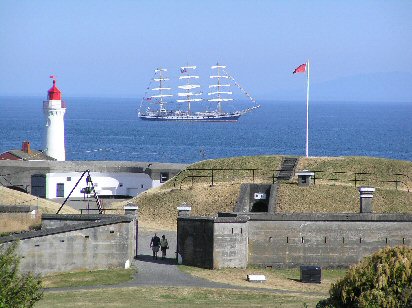
Fort Rodd Hill National Historic Site is a significant example of a 19th-century bastioned fortress built to protect the strategic naval facilities at Esquimalt Harbour in Colwood, British Columbia, Canada. Constructed in the 1890s by the Royal Marine Artillery, the fort was designed as a coastal artillery defense installation to safeguard the nearby Esquimalt Naval Base, a critical Royal Canadian Navy base on the Pacific coast. Historical context and strategic importance The establishment of Fort Rodd Hill was part of a broader effort in the late 19th century to modernize Canada's coastal defenses amid growing concerns over naval threats in the Pacific region. The fort was named after Captain John Rodd, a Royal Navy officer who surveyed the Esquimalt area in the 19th century. Its location on a promontory overlooking the harbour allowed for commanding views and effective control of naval traffic entering the bay. Fort Rodd Hill was constructed during the Modern period of military architecture, reflecting advances in artillery technology and fortification design. The fort’s role was to provide a formidable defense against potential enemy ships, particularly during periods of tension such as the First and Second World Wars. Architectural features and layout The fort is classified as a bastioned fortress, a style characterized by angular bastions projecting from the main walls to allow defensive fire in multiple directions and reduce blind spots. Fort Rodd Hill includes three main gun batteries strategically positioned to cover different approaches to Esquimalt Harbour. These batteries were equipped with large coastal artillery guns, including disappearing guns that could be retracted behind protective parapets for reloading, enhancing their survivability against enemy fire. The fortifications also include underground magazines, observation posts, and support buildings such as barracks and ammunition stores, all designed to sustain prolonged defense operations. Gun batteries and armaments The three gun batteries at Fort Rodd Hill were arranged to provide overlapping fields of fire. This setup allowed the fort’s gunners to engage enemy vessels at varying distances and angles, maximizing defensive coverage. The artillery pieces were primarily breech-loading rifled guns, a significant technological advancement at the time, offering greater range and accuracy compared to earlier muzzle-loading weapons. Operational history and military use Fort Rodd Hill remained an active military installation from its completion in the 1890s until 1956. During this period, it was operated by the Royal Canadian Artillery, serving as a key component of Canada's Pacific coastal defense network. The fort was particularly important during both World Wars, when the threat of naval attack was a serious concern. Although it never saw combat, its presence contributed to the security of the Esquimalt Naval Base and the surrounding region. After World War II, advances in military technology and changes in defense strategy rendered traditional coastal artillery less relevant, leading to the fort's decommissioning in the mid-20th century. Relationship with Fisgard Lighthouse National Historic Site Adjacent to Fort Rodd Hill is the Fisgard Lighthouse National Historic Site, the first lighthouse on Canada's west coast, established in 1860. The proximity of these two historic sites highlights the combined importance of navigation and defense in the maritime history of British Columbia. Both sites are managed by Parks Canada, which preserves their historical integrity and provides educational programs and public access. Visitors can explore the fort’s well-preserved gun batteries, underground tunnels, and lookout points, alongside the iconic lighthouse, gaining insights into coastal defense and maritime navigation of the 19th and early 20th centuries. Preservation and public access Today, Fort Rodd Hill is classified as a well-preserved historic site. Its structures remain largely intact, allowing visitors to experience the scale and complexity of a coastal artillery fortification firsthand. The site offers interpretive trails, guided tours, and exhibits that explain the fort’s construction, armaments, and role in Canadian military history. The combination of natural beauty and historical significance makes Fort Rodd Hill a notable destination for those interested in military architecture and Canadian heritage.

Modern (19th–20th c.)
Details
9.6 km

Hatley Castle

Victoria, Canada

Hatley Castle, located near Victoria in British Columbia, Canada, is a striking example of early 20th-century Scottish Baronial architecture. Completed in 1910, the castle was commissioned by the prominent coal magnate and Lieutenant Governor of British Columbia, James Dunsmuir, and designed by the renowned Canadian architect Samuel Maclure. Set within the expansive Hatley Park National Historic Site, the estate encompasses beautifully maintained formal gardens including Japanese, Italian, and rose gardens, as well as thousands of acres of protected forest crisscrossed by walking paths. Architectural design and construction The design of Hatley Castle reflects the Scottish Baronial style, a choice influenced by Dunsmuir's Scottish heritage, distinguishing it from the more common Tudor Revival style popular in North America at the time. The mansion features characteristic elements such as turrets, battlements, steeply pitched roofs, and ornate stonework. The 40-room mansion was constructed over two years, from 1908 to 1910, showcasing Maclure's mastery in blending historic European architectural motifs with the natural landscape of Vancouver Island. Exterior features The castle's exterior is marked by its stone façade and robust battlemented parapets, giving it a fortress-like appearance despite its residential function. Its grounds include extensive terraces and formal gardens that enhance the estate's grandeur and offer panoramic views of the nearby Olympic Mountains across the water. Interior layout The interior of Hatley Castle originally included grand reception rooms, a large dining hall, a library, and multiple bedrooms and servant quarters. The layout was designed to accommodate both the Dunsmuir family and their extensive household staff, reflecting the social norms and lifestyle of British Columbia's elite in the early 1900s. Historical significance and uses After its completion, Hatley Castle served as the private residence of the Dunsmuir family until the economic hardships of the Great Depression forced its sale. In 1940, the Canadian government acquired the estate with the intention of using it as a refuge for the British Royal Family during World War II. This plan was ultimately abandoned, but the castle's military significance was established shortly thereafter. Royal Roads Military College From 1948 until 1995, Hatley Castle was the centerpiece of the Royal Roads Military College, a naval officer training institution. During this period, parts of the castle were adapted to serve as dormitories, classrooms, and administrative offices for cadets and staff. The military college preserved much of the castle's historic fabric while adapting it to modern educational needs. Transition to Royal Roads University Following the closure of the military college in 1995, the estate was transformed into Royal Roads University, a public degree-granting institution specializing in professional and applied education. The castle now functions as the university's administrative center and remains a symbol of the institution's heritage and commitment to innovation. Gardens and landscape The Hatley Park National Historic Site surrounding the castle is renowned for its diverse and meticulously maintained gardens. Visitors can explore the Japanese Garden, designed with traditional elements such as koi ponds and stone lanterns; the Italian Garden, featuring symmetrical layouts and classical statues; and extensive rose gardens that bloom seasonally. The park's trails wind through ancient protected forests, offering a natural retreat and opportunities for wildlife observation. Public access and events Hatley Castle and its gardens are open to the public daily from 10:00 to 16:00. The site includes a museum and a gift shop, enriching visitors' experience with cultural and historical insights. The castle and estate are also popular venues for weddings and special events, providing an elegant and historic backdrop just 20 minutes from downtown Victoria. Visitor experience Guests can enjoy guided tours of the castle's interior and grounds, learning about its architectural features, historical roles, and the Dunsmuir family's legacy. The estate's combination of natural beauty and architectural grandeur makes it a unique destination for history enthusiasts, students, and tourists alike. Hatley Castle in popular culture Hatley Castle has appeared in numerous films and television productions, often standing in for grand European castles or fictional institutions. Its distinctive architecture and scenic location have made it a favored filming location, further enhancing its cultural significance beyond British Columbia.

Post-Renaissance (17th–18th c.)
Details
54.1 km

Manresa Castle

Port Townsend, United States Minor Outlying Islands

Manresa Castle, perched atop a scenic hill in Port Townsend, Washington, is a captivating historic site renowned for its late 19th-century architecture and its reputation as one of the most haunted locations in the Pacific Northwest. Built in the late 1800s, this castle-like mansion combines the grandeur of a Victorian-era estate with the mystique of ghostly legends that have fascinated visitors and paranormal enthusiasts alike for over a century. Architectural design and historical significance The castle was originally constructed as a private residence, embodying the eclectic architectural tastes of the Victorian period. Its design features hallmark elements such as turrets, steeply pitched roofs, and ornate woodwork that reflect the era's fascination with romantic historicism and grandeur. Although often referred to as a castle, Manresa Castle is more accurately described as a large Victorian mansion with castle-like features, rather than a medieval fortress. The building’s elevated position atop a hill provides commanding views of the surrounding area, which historically afforded both aesthetic pleasure and strategic advantage. The location was chosen not only for its beauty but also for its prominence, making the residence a local landmark. Haunted reputation and paranormal tales Manresa Castle’s notoriety largely stems from its haunted reputation. Numerous reports over the decades describe ghostly apparitions, unexplained footsteps, and mysterious cold spots that have been experienced by guests and staff. These phenomena contribute to the castle’s allure as a destination for those interested in the supernatural. Visitors have recounted encounters with flickering lights, doors opening and closing on their own, and whispers in empty corridors. Some legends suggest that the spirits of former inhabitants or tragic figures from the castle’s past remain bound to the property, creating an atmosphere thick with mystery and intrigue. Cultural impact and visitor experience Today, Manresa Castle operates as a bed and breakfast, welcoming guests who seek to immerse themselves in its historic ambiance and paranormal lore. Staying overnight offers a unique opportunity to experience the castle’s eerie atmosphere firsthand. The blend of Victorian elegance and ghost stories creates a compelling narrative that enriches the visitor experience. Besides its supernatural appeal, the castle is valued for its architectural beauty and historical context within Port Townsend, a town known for its rich maritime history and well-preserved Victorian buildings. Manresa Castle contributes to this heritage, attracting tourists who appreciate both history and the thrill of ghost hunting. Preservation and current status Maintaining the structural integrity of a historic building like Manresa Castle requires ongoing preservation efforts. The castle remains well preserved, allowing visitors to appreciate its original Victorian features and architectural details. Its status as a functioning bed and breakfast ensures that it remains an active part of the community and a living monument to the region’s past. Efforts to preserve the castle’s unique character while accommodating modern amenities have been carefully balanced, ensuring that the historic charm is not compromised. This balance enhances its appeal as a destination that honors both history and contemporary hospitality. Exploring port townsend and nearby attractions Port Townsend itself is a vibrant historic seaport with numerous attractions, including museums, galleries, and festivals celebrating its maritime heritage. Visitors to Manresa Castle often explore the town’s Victorian architecture, waterfront parks, and cultural events, making for a well-rounded travel experience. The castle’s location provides easy access to natural beauty spots such as the Olympic National Park and the Puget Sound coastline, offering opportunities for outdoor recreation alongside historical exploration.

Post-Renaissance (17th–18th c.)
Details
