Fort Saint-Frédéric
Fort Saint-Frédéric was a significant French bastioned fortress constructed in the early 18th century on the western shore of Lake Champlain, in what is now Crown Point, New York. Its primary purpose was to secure the region against British colonial expansion and to control the vital waterway that connected the Canadian territories with the British colonies to the south. Construction began in 1734, under French colonial authorities aiming to establish a strong military presence in the contested borderlands between New France and the British colonies.
Strategic location and military role
The fort's position on Lake Champlain was of immense strategic importance. The lake served as a major corridor for movement of troops and supplies during the colonial conflicts between France and Britain. Fort Saint-Frédéric was situated at a narrow point on the lake, allowing the French to monitor and control naval traffic effectively. This location was critical in maintaining French influence over the region and preventing British incursions into New France.
Architectural design and features
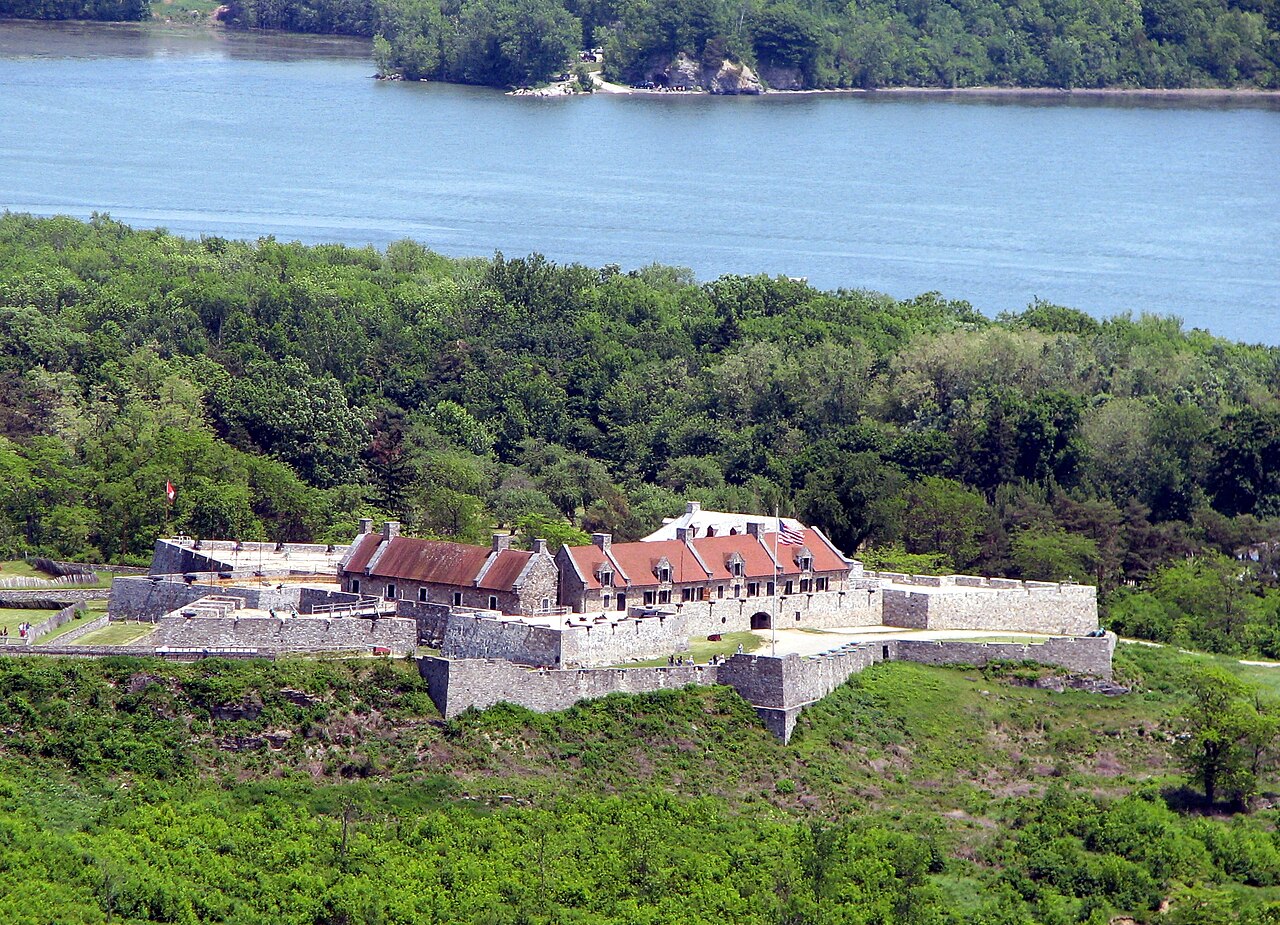
Fort Saint-Frédéric exemplified the bastioned fortress style typical of the post-Renaissance military architecture influenced by the principles of Sébastien Le Prestre de Vauban, the famous French military engineer. The fort featured thick stone walls arranged in a square with four bastions at each corner. These bastions allowed defenders to cover all approaches with overlapping fields of fire, a key advancement in fortification design that enhanced defensive capabilities against artillery and infantry assaults.
The walls were constructed of limestone, quarried locally, and were several feet thick to withstand cannon fire. Inside, the fort included barracks, powder magazines, officers' quarters, and storage facilities. The layout was compact but efficient, designed to house a garrison capable of defending the position against a sizeable attacking force.
Historical context and military engagements
Despite its formidable design, Fort Saint-Frédéric was never directly attacked during its operational period. However, it played a crucial role during the French and Indian War (1754–1763), serving as a base for French military operations in the region. The fort's presence deterred British advances along Lake Champlain for many years.
In 1759, facing the approach of a large British army commanded by General Jeffery Amherst, the French garrison destroyed the fort to prevent its capture. This scorched earth tactic was common in colonial warfare to deny the enemy strategic assets.
Legacy and preservation
Following the destruction of Fort Saint-Frédéric, the British constructed the much larger Fort Crown Point adjacent to the ruins. Fort Crown Point was an extensive earthen fortress and became the largest such fortification in the American colonies. It too never saw major combat but was captured by American forces early in the American Revolutionary War.
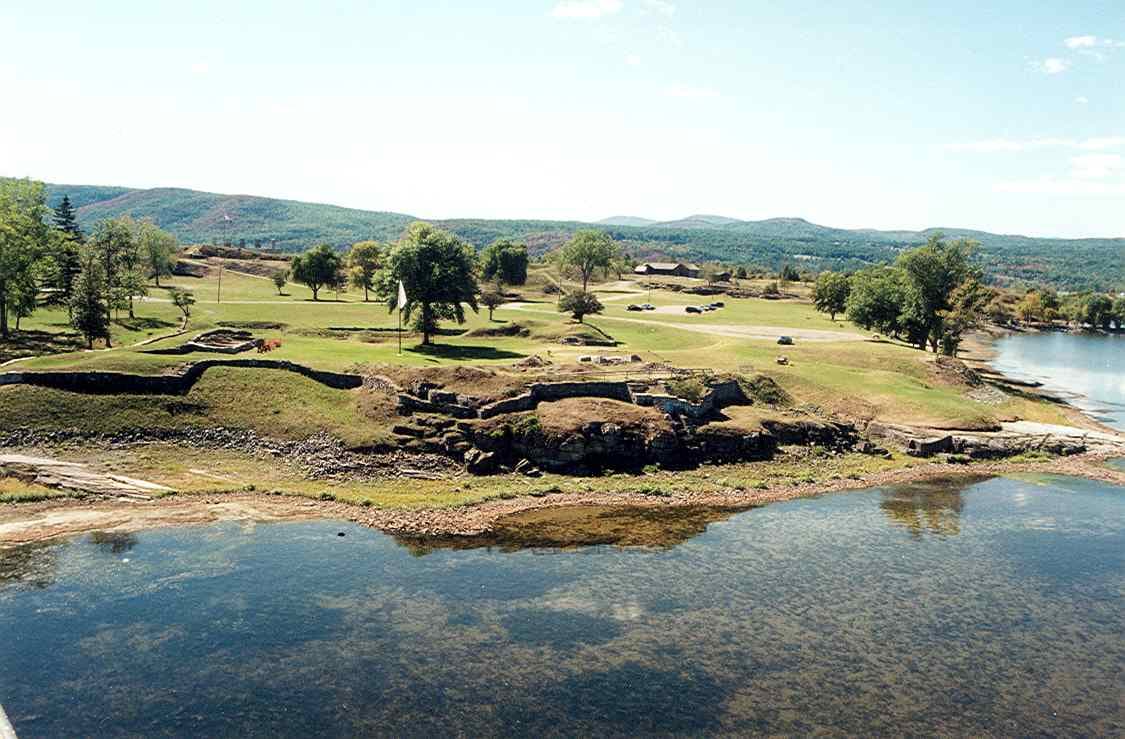
Today, the ruins of Fort Saint-Frédéric and Fort Crown Point are preserved within the Crown Point State Historic Site, established in 1910. Both sites have been recognized as National Historic Landmarks, reflecting their importance in early American and colonial military history. Visitors can explore the remains of the stone walls and bastions of Fort Saint-Frédéric, gaining insight into the military architecture and colonial conflicts of the 18th century.
Architectural significance in colonial america
Fort Saint-Frédéric stands as an early example of European bastioned fortification design adapted to the North American frontier. Its construction demonstrated the French commitment to securing their territorial claims through advanced military engineering. The fort's design influenced subsequent fortifications in the region, including British-built Fort Crown Point.
The use of stone masonry and bastions reflected the transition from medieval castle designs to modern military fortresses capable of withstanding artillery bombardment. This architectural evolution was critical in the colonial context, where control of waterways and strategic points was essential for empire building.
Visiting fort saint-frédéric today
Visitors to the Crown Point State Historic Site can explore the ruins of Fort Saint-Frédéric alongside Fort Crown Point. Interpretive signage and guided tours provide historical context about the fort's construction, military role, and eventual destruction. The site offers panoramic views of Lake Champlain and the surrounding landscape, illustrating why this location was so strategically chosen.
The ruins are accessible year-round, with facilities for visitors including walking trails and picnic areas. The site is managed by the New York State Office of Parks, Recreation and Historic Preservation, ensuring its preservation for future generations.
Frequently asked questions (FAQ)
- What is the historical significance of Fort Saint-Frédéric?
- Fort Saint-Frédéric was a key French bastioned fortress built in the 18th century to control Lake Champlain and prevent British expansion during colonial conflicts.
- Can I visit the ruins of Fort Saint-Frédéric today?
- Yes, the ruins are part of the Crown Point State Historic Site in New York and are open to the public year-round with interpretive signage and walking trails.
- When was Fort Saint-Frédéric built?
- Construction of Fort Saint-Frédéric began in 1734 and it was operational throughout much of the mid-18th century until its destruction in 1759.
- Why was Fort Saint-Frédéric destroyed?
- The French destroyed Fort Saint-Frédéric in 1759 to prevent its capture by a large British army advancing under General Jeffery Amherst during the French and Indian War.
- What architectural style does Fort Saint-Frédéric represent?
- Fort Saint-Frédéric is an example of a bastioned fortress reflecting post-Renaissance military architecture influenced by Vauban's principles.
Photo gallery

Photo by petersent•Public domain
Information
Current owner
New York State Office of Parks, Recreation and Historic Preservation
Loading map...
Visitor reviews
No reviews yet. Been here? Write the first review and help other travelers!
Write the first reviewVisited this castle? Share your experience
Your review helps other travelers and adds first-hand knowledge to our encyclopedia.