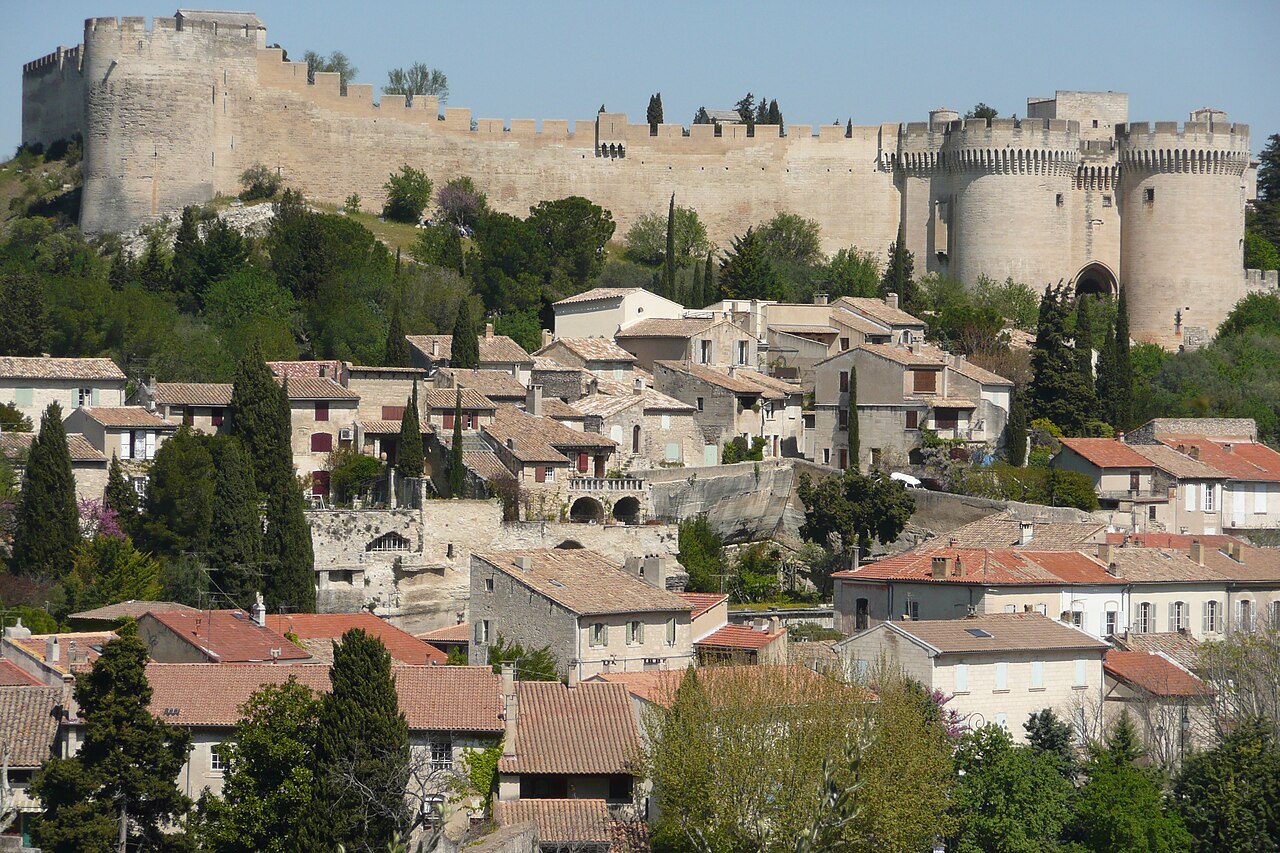
Fort Saint-Andre
Fort Saint-André stands prominently on Mount Andaon in Villeneuve-les-Avignon, France, as a striking example of late medieval military architecture. Constructed primarily in the 14th century, this hill castle was strategically positioned to oversee the Rhone River and the nearby town of Avignon, then part of the Papal States. Its imposing presence was a deliberate demonstration of the Kingdom of France's power during a period of intense political and territorial rivalry in southern France.
Historical context and strategic importance
The origins of Fort Saint-André are deeply intertwined with the complex political landscape of the early 13th and 14th centuries. Following the Albigensian Crusade, the treaty of Meaux-Paris (1229) granted the French crown lands west of the Rhone, including a shared interest in Avignon. In 1290, King Philip IV of France ceded his claim to Avignon to Charles II of Naples, Count of Provence, reflecting the tangled dynastic politics of the era.
At this time, the Benedictine Abbey of Saint-André occupied the rocky outcrop of Mount Andaon, a site of great strategic value due to its elevation and proximity to Avignon across the river. The abbey, founded at the end of the 10th century, controlled extensive properties including over 200 churches across southern France. To secure the right bank of the Rhone and counterbalance Avignon's influence, Philip IV negotiated a paréage treaty in 1292 with the abbey, allowing the crown to build a fortress adjacent to the abbey and a castle by the river.
By the early 14th century, fortifications such as the Tour Philippe-le-Bel near the western end of the Pont Saint-Bénézet were established. The fortress itself was constructed in several phases throughout the first half of the 14th century, although exact dates remain uncertain due to incomplete records. Documents mention a châtelain (castle governor) in 1314 and 1344, and a guard in 1318, indicating ongoing military presence. A carved crest above the entrance dated 1367 suggests modifications to the gateway during that period.
Architectural features and fortifications
Fort Saint-André is a classic example of a hill castle designed to exploit natural topography for defense. The rocky outcrop rises approximately 50 meters above the Rhone floodplain, with steep northern and eastern slopes providing natural barriers. The fortress's curtain walls enclosed the abbey complex, integrating religious and military functions.
The castle's layout includes a series of curtain walls, towers, and defensive structures typical of the late medieval period. The entrance arch, bearing the abbey's crest, was a significant architectural feature added or renovated in the mid-14th century. The fortress was equipped with a permanent garrison, underscoring its role as a defensive stronghold and symbol of royal authority.
Its visibility from Avignon across the Rhone was intentional, serving as a constant reminder of the French crown's territorial claims and military strength in the region. The fortress's commanding position allowed control over river traffic and the surrounding lands, vital for both defense and asserting dominance.
Later history and military significance
While the initial construction and primary historical significance of Fort Saint-André relate to the 14th century, the site has a layered history reflecting broader regional conflicts and military developments. The fortress remained under royal control up to the French Revolution, witnessing various phases of occupation and use.
Its strategic location continued to be relevant in subsequent centuries, although detailed records of later modifications at this particular site are limited. The fort's enduring presence through tumultuous periods, including the Hundred Years' War and beyond, highlights its sustained military importance.
Cultural heritage and preservation
Today, Fort Saint-André is recognized for its historical and architectural significance. It stands as a well-preserved example of medieval fortification in southern France, attracting visitors interested in the region's rich history and the interplay of religious and royal power.
The castle's preservation allows insight into medieval defensive architecture, including the integration of abbey and fortress, and the use of natural terrain for military advantage. It also serves as a cultural landmark reflecting the complex history of the Rhone valley during the Middle Ages.
Visitors can explore the remains of the fortress walls, towers, and the abbey precinct, gaining a deeper understanding of the castle's role in the geopolitical struggles between the French crown and the Papal States.
Frequently asked questions (FAQ)
- What is the historical significance of Fort Saint-Andre?
- Fort Saint-Andre, built in the 14th century, played a crucial role in the defense of Avignon during the time of the Papacy. It is a remarkable example of military architecture and reflects the strategic importance of the region in medieval France.
- When was Fort Saint-Andre constructed?
- Construction of Fort Saint-Andre began in 1363 under the order of Pope Urban V and was completed in 1375. This fortress was designed to protect the papal residence in Avignon from potential attacks.
- What are the opening hours for visiting Fort Saint-Andre?
- Fort Saint-Andre is typically open to visitors from 10 AM to 6 PM during the peak season, with reduced hours in the off-season. It is recommended to check the official website for any changes in hours due to special events or maintenance.
- Can I purchase tickets online for Fort Saint-Andre?
- Yes, you can purchase tickets online through the official Fort Saint-Andre website, which is highly recommended to avoid long queues. There are also ticket options available at the entrance for those who prefer to buy them on-site.
- Is Fort Saint-Andre accessible to people with disabilities?
- Fort Saint-Andre is working towards improving accessibility for all visitors. While some areas may pose challenges due to the castle's historic nature, there are designated paths and facilities to assist visitors with mobility impairments.
- What is the best time to visit Fort Saint-Andre?
- The best time to visit Fort Saint-Andre is during the spring and fall months, when the weather is mild and the tourist crowds are smaller. Visiting in the morning or late afternoon can also offer a more peaceful experience.
- Are there any nearby attractions to explore when visiting Fort Saint-Andre?
- Yes, visitors can explore the charming town of Villeneuve-les-Avignon, which features other historical sites such as the Chartreuse du Val de Benediction and the beautiful gardens of the Abbey Saint-André. The proximity to Avignon also allows for easy access to the Palais des Papes and the famous Pont Saint-Bénézet.
Information
Website
Visit websiteSources & official resources
Verify the information above using these authoritative references.
Loading map...
Visitor reviews
No reviews yet. Been here? Write the first review and help other travelers!
Write the first reviewVisited this castle? Share your experience
Your review helps other travelers and adds first-hand knowledge to our encyclopedia.