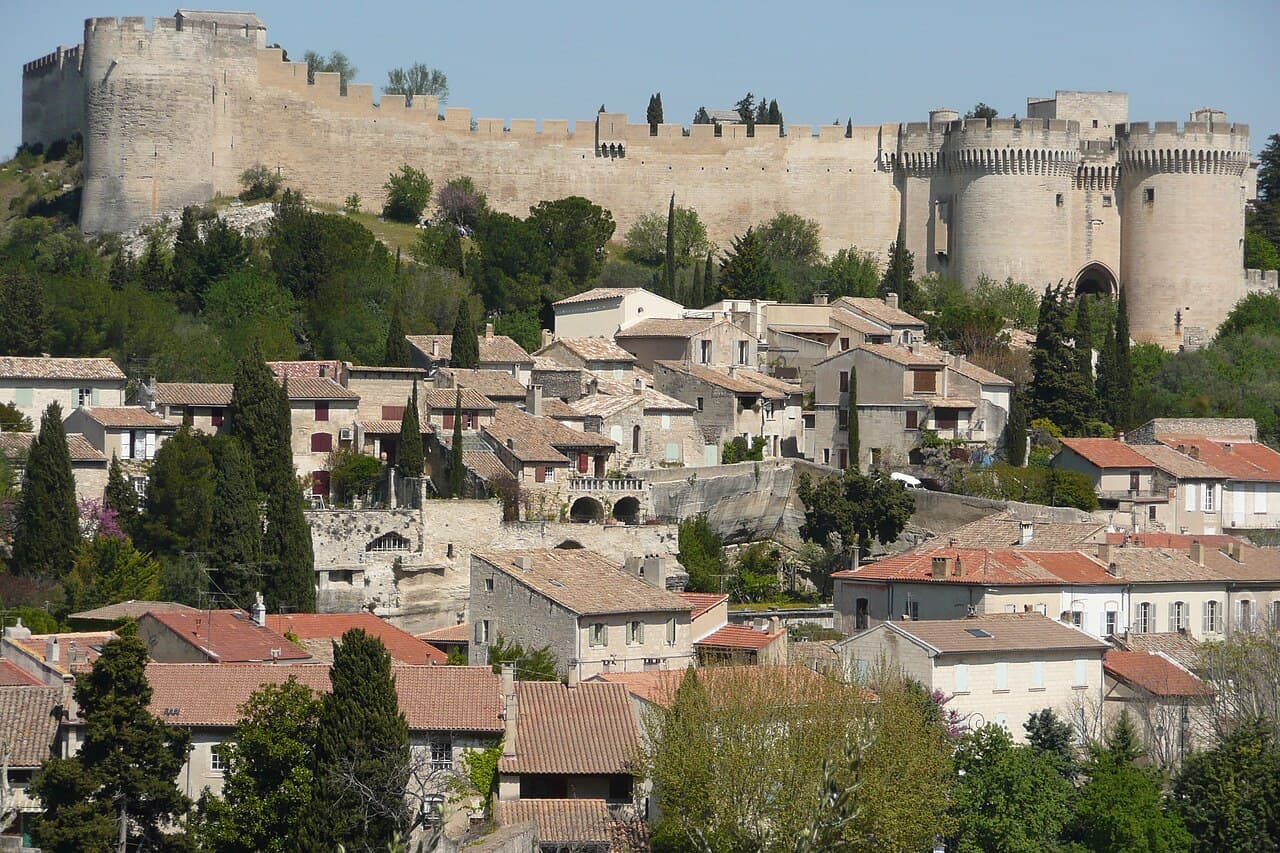
Fort Saint-André - Avignon
Fort Saint-André stands as a monumental example of medieval military architecture in the region of Occitanie, France. Built in the 14th century, this imposing fortress was strategically positioned on Mount Andaon overlooking the Rhone River, serving as a royal stronghold to assert French sovereignty against the neighboring territories of the Holy Roman Empire and the Papal lands of Avignon. Its history is deeply intertwined with the political tensions of the late Middle Ages and the complex relationship between the French crown and the Papacy.
The origins and strategic importance of Fort Saint-André
The origins of Fort Saint-André are rooted in the geopolitical maneuvers of Philip IV of France, also known as Philip the Fair, who in 1290 orchestrated a territorial exchange involving Maine and Anjou to secure a share in the seigniory of Avignon. Recognizing the critical importance of controlling the border marked by the Rhone River, Philip the Fair initiated the foundation of the fortified town of Villeneuve-lès-Avignon. The founding act, signed in 1292 with the abbot of the Benedictine Abbey of Saint-André, laid the groundwork for fortifications designed to protect access to the vital bridge of Avignon.
Between 1300 and 1307, the construction of the Philippe le Bel tower on the left bank of the Rhone was completed, marking the first phase of fortification efforts in the area. This tower was a key defensive and symbolic structure, asserting royal authority at a critical crossing point.
Construction and architectural evolution under John II the Good
The major fortification of Mount Andaon itself was undertaken during the reign of John II the Good in the mid-14th century. This phase was crucial in establishing a formidable fortress to counterbalance the influence of the Avignon Papacy and the Holy Roman Empire. The fortification was also intended to protect the Benedictine Abbey of Saint-André, a religious site dating back to the 10th century, as well as the adjacent village of Saint-André, which had been established on the mount since the same period.
The fort and the surrounding defensive walls were constructed in stages throughout the second half of the 14th century. The design reflects the military architectural advancements of the period, including thick curtain walls, high towers, and robust gatehouses to withstand siege warfare. The fortress was designed not only as a military installation but also as a symbol of royal power and presence on the frontier.
Jean de Loubières and the completion of the fortress
The final phase of construction was overseen by Jean de Loubières, also known as Jean du Louvre, who was the architect responsible for the Palace of the Popes in Avignon. Under the orders of Charles V, Jean de Loubières completed the fortifications, integrating contemporary defensive features and ensuring the fortress met the strategic demands of the time. His work solidified Fort Saint-André's status as a key military and administrative center.
Architectural features and layout
Fort Saint-André is characterized by its massive curtain walls punctuated by multiple towers, including the prominent Philippe le Bel tower. The fortress is surrounded by a deep moat that enhances its defensive capabilities. The layout includes a large courtyard enclosed by walls, with various chambers, halls, and defensive positions arranged to maximize control over the surrounding landscape.
The fort's position on Mount Andaon provides commanding views of the Rhone River and the city of Avignon, making it a formidable obstacle for any military force attempting to cross the river or challenge French authority in the region.
Historical role and later use
Throughout its history, Fort Saint-André served as a garrison and defensive bastion for the French crown. It played a significant role in the power dynamics between France and the Papal States during the Avignon Papacy period. The fortress remained in continuous military use until the French Revolution, when many such feudal strongholds were decommissioned or repurposed.
Today, Fort Saint-André is a well-preserved example of medieval military architecture and a cultural heritage site. It attracts visitors interested in the history of the region, medieval fortifications, and the complex political history of southern France during the Middle Ages.
Visiting Fort Saint-André
Visitors to Fort Saint-André can explore its extensive walls, towers, and courtyards, gaining insight into the medieval military engineering and the historical context of its construction. The site offers panoramic views over Avignon and the Rhone, making it a popular destination for tourists and history enthusiasts alike.
Frequently asked questions (FAQ)
- What is the historical significance of Fort Saint-André?
- Fort Saint-André is a remarkable fortress built in the 14th century, strategically located to oversee the Rhône River and the city of Avignon. It played a key role in the defense of the region during the Hundred Years' War and has served various military purposes throughout its history, making it an important landmark in French heritage.
- When was Fort Saint-André constructed?
- Construction of Fort Saint-André began in 1360 under the orders of Pope Urban V. It was completed in 1375 and has since undergone various renovations, reflecting the architectural styles of different periods.
- Can I visit Fort Saint-André?
- Yes, Fort Saint-André is open to visitors and offers a unique opportunity to explore its historic architecture and stunning views of Avignon. Be sure to check the official website for any specific visitor guidelines or restrictions before planning your visit.
- What are the opening hours for Fort Saint-André?
- The opening hours for Fort Saint-André may vary seasonally, but it typically opens daily from 10 AM to 6 PM. It is advisable to confirm the current hours on their official site, especially around holidays.
- Is it possible to access Fort Saint-André with mobility challenges?
- Fort Saint-André has made efforts to improve accessibility for visitors with mobility challenges, though some areas may still pose difficulties due to the fortress's historical structure. It's recommended to contact the site in advance to discuss specific needs and available accommodations.
- What is the best time to visit Fort Saint-André?
- The best time to visit Fort Saint-André is during the spring (April to June) and early fall (September to October) when the weather is mild and pleasant. These months also tend to be less crowded, allowing for a more leisurely exploration of the site.
- Can I purchase tickets in advance for Fort Saint-André?
- Yes, tickets for Fort Saint-André can be purchased in advance online, which is recommended to avoid long queues at the entrance. This ensures a smoother experience and allows you to plan your visit more effectively.
- Are there any nearby attractions to Fort Saint-André?
- Yes, Fort Saint-André is located near several attractions, including the historic Palais des Papes and the charming streets of Villeneuve-lès-Avignon. Visitors can easily explore these sites in a day, making it a perfect addition to your itinerary.
Photo gallery

Information
Loading map...
Visitor reviews
No reviews yet. Been here? Write the first review and help other travelers!
Write the first reviewVisited this castle? Share your experience
Your review helps other travelers and adds first-hand knowledge to our encyclopedia.



