Fort Robinson
Fort Robinson stands as a significant historic military site located in the Pine Ridge region of northwest Nebraska, approximately 2 miles west of Crawford along U.S. Route 20. Originally established as a U.S. Army fort, it now forms a central part of Fort Robinson State Park, a sprawling 22,000-acre public recreation and historic preservation area. The fort's strategic location and extensive grounds have made it a key landmark in the region's military and cultural history.
Historical significance and designation
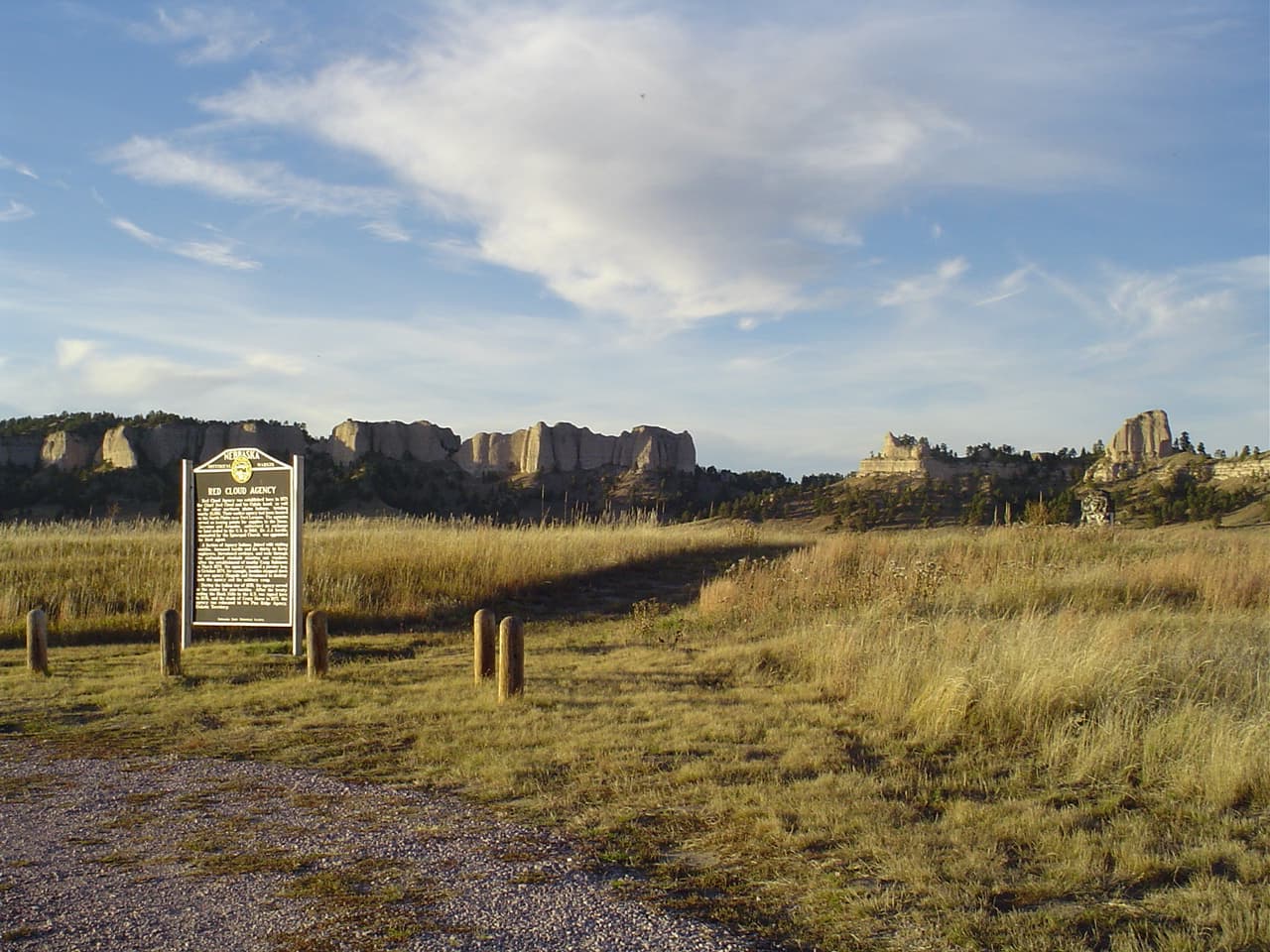
The fort was officially declared a National Historic Landmark in 1960, recognizing its importance in American military history and its role in the interactions between the U.S. government and Native American tribes. Fort Robinson is included within the Fort Robinson and Red Cloud Agency historic district, which encompasses several related sites, including the second Red Cloud Agency located about 1.5 miles to the east, the Camp Canby site, and the 1886 Percy Homestead. This historic district preserves a broad narrative of the area's military, Native American, and pioneer history.
Architectural and structural features
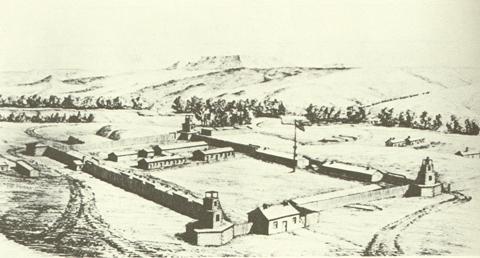
Fort Robinson is classified as a bastioned fortress, a type of fortification characterized by angular bastions projecting outward from the curtain walls, allowing defensive fire in multiple directions. This architectural style was well-suited for the fort's military function in the late 19th and early 20th centuries. The fort's layout includes numerous barracks, officers' quarters, parade grounds, and various support buildings arranged to support a self-sustaining military installation.
The fort's buildings exhibit typical military construction methods of the period, with robust masonry and woodwork designed to withstand both environmental conditions and potential attacks. The extensive grounds also include remnants of defensive earthworks and artillery placements that reflect the fort's preparedness for conflict.
Role in military history and Native American relations
Fort Robinson played a pivotal role during the Indian Wars, serving as a key military post in the U.S. Army's efforts to control and manage Native American populations in the region. It was involved in events surrounding the Lakota Sioux and other tribes, including the aftermath of the Red Cloud Agency's relocation. The fort also became notable for the tragic 1879 Cheyenne Outbreak, when several Native American prisoners attempted a desperate escape from captivity.
Throughout its active years, Fort Robinson was a hub for military operations, training, and logistics, adapting to changing defense needs through the late 19th century and into the early 20th century. Its history is intertwined with the broader narrative of westward expansion, Native American displacement, and U.S. military strategy.
Preservation and current use
Today, Fort Robinson is managed primarily by the Nebraska Game and Parks Commission, with some historic buildings operated by the Nebraska State Historical Society and the University of Nebraska–Lincoln. The site functions as both a public recreational area and a historic preservation site, offering visitors a chance to explore its extensive grounds, historic structures, and interpretive exhibits.
The park provides opportunities for camping, hiking, horseback riding, and historical tours, making it a multifaceted destination for both outdoor enthusiasts and history buffs. The preservation efforts ensure that Fort Robinson's military architecture and cultural heritage remain accessible and informative for future generations.
Visitor information and significance
Fort Robinson's designation as a National Historic Landmark and its inclusion in a larger historic district emphasize its importance as a cultural and historical resource. Visitors can learn about the fort's architectural features, military history, and its role in Native American relations through guided tours and educational programs.
The site's extensive acreage and well-preserved structures provide a tangible connection to the late 19th and early 20th centuries, illustrating the complexities of frontier military life and the broader American historical context. Fort Robinson remains a vital link to understanding the military and cultural dynamics of the American West.
Frequently asked questions (FAQ)
- What is the historical significance of Fort Robinson?
- Fort Robinson was a key U.S. Army post during the Indian Wars and is a National Historic Landmark, reflecting its role in military and Native American history.
- Can I visit Fort Robinson State Park year-round?
- Yes, Fort Robinson State Park is open year-round with various recreational and historical activities available to visitors throughout the seasons.
- What architectural style characterizes Fort Robinson?
- Fort Robinson is classified as a bastioned fortress, featuring angular bastions designed for defensive military purposes typical of late 19th-century forts.
- Are there guided tours available at Fort Robinson?
- Guided tours are offered by the Nebraska State Historical Society and other organizations, providing detailed insights into the fort's history and architecture.
- Is Fort Robinson accessible for outdoor activities?
- Yes, the state park offers hiking, horseback riding, camping, and other outdoor activities alongside its historical attractions.
Photo gallery

Information
Address
U.S. Route 20, 2 miles west of Crawford, Pine Ridge, Nebraska
Loading map...
Visitor reviews
No reviews yet. Been here? Write the first review and help other travelers!
Write the first reviewVisited this castle? Share your experience
Your review helps other travelers and adds first-hand knowledge to our encyclopedia.