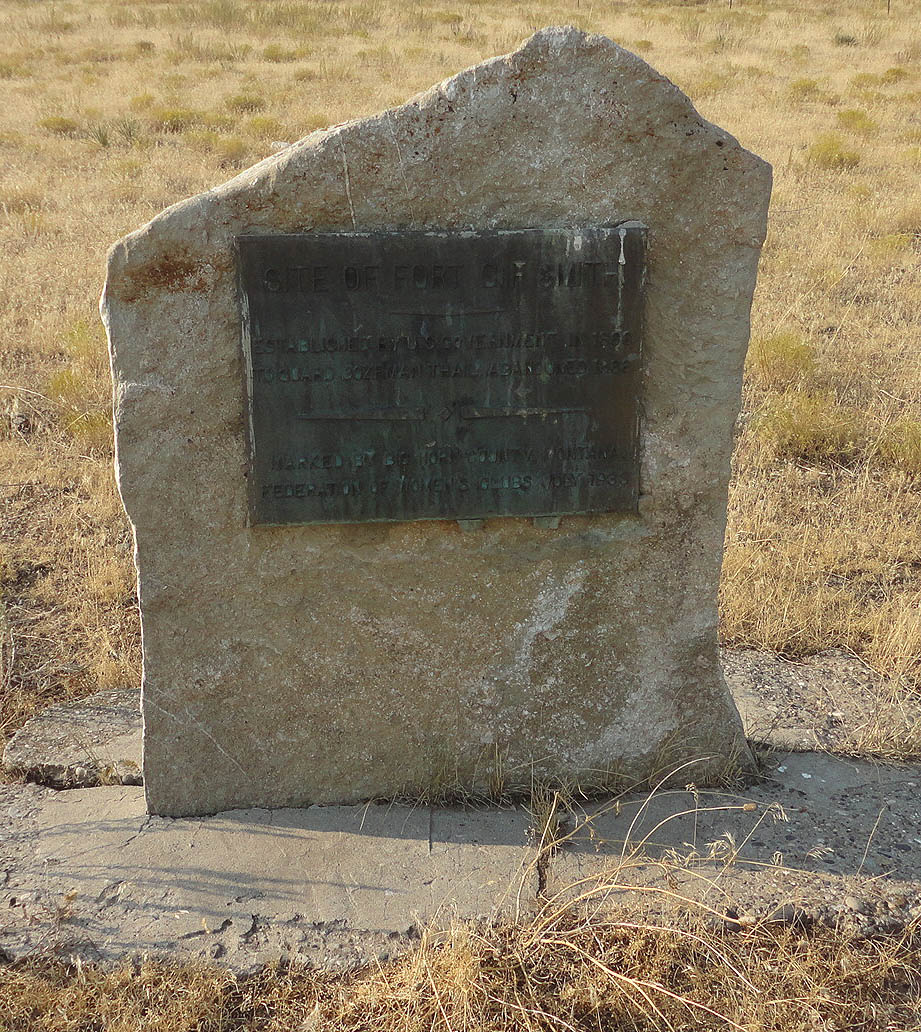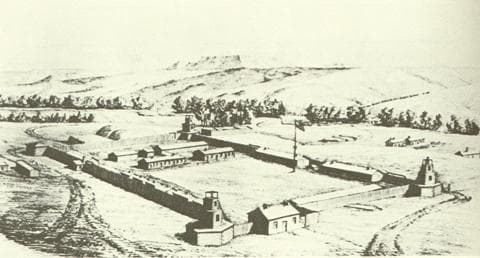
Fort Reno — United States of America castle

Fort Reno

Fort Reno: 19th-century bastioned fortress in Wyoming
Modern (19th–20th c.)
Archaeological Site

Fort Reno, also known historically as Fort Connor or Old Fort Reno, was established on August 15, 1865, by the United States Army in what was then the Dakota Territory, now present-day Johnson County, Wyoming. This wooden fortification was constructed during the 19th century with the primary purpose of protecting travelers and settlers moving along the Bozeman Trail from attacks by Native American tribes resisting encroachment on their lands.

Historical context and strategic importance

The establishment of Fort Reno was part of a broader military effort to secure the Bozeman Trail, a critical route connecting the Oregon Trail to the Montana gold fields. The trail cut through territories inhabited by the Lakota Sioux and other tribes, who opposed the influx of settlers and miners. Fort Reno served as a defensive bastion, providing a military presence designed to deter attacks and safeguard the increasing flow of migration through the region.

The fort was named in honor of General Jesse L. Reno, a Union officer who died during the American Civil War. Its strategic location northeast of what is now Sussex, Wyoming, allowed it to oversee a significant stretch of the trail and the surrounding plains.

Architecture and fortifications

Fort Reno was constructed primarily of wood, typical of many frontier forts of the period, reflecting the need for rapid construction using locally available materials. As a bastioned fortress, it featured defensive works designed to provide overlapping fields of fire and protection against hostile forces. The fort included parade grounds, wooden palisades, and at key points to strengthen its defensive capability.

The bastioned design allowed defenders to cover the walls from multiple angles, a military architectural feature that enhanced the fort's resilience against siege or attack. However, unlike stone castles or forts, the wooden construction made Fort Reno vulnerable to fire and decay over time.

Operational history and military role

Throughout its operational years, Fort Reno played a crucial role in the military campaigns during the American Indian Wars. It functioned as a base for troops conducting patrols and escorts along the Bozeman Trail, helping to secure the passage for settlers and miners.

The fort's presence was part of a contentious and often violent period in U.S. history, marked by conflict between the expanding United States and Native American tribes defending their homelands. Fort Reno was eventually abandoned as military priorities shifted and the region became more settled.

Current status and preservation

Today, Fort Reno no longer stands as a functioning military installation. The original wooden structures have long since disappeared, leaving behind the parade ground and surrounding area, which has largely reverted to natural prairie sod. The site is located approximately 12 miles (19 km) northeast of Sussex, Wyoming.

Recognizing its historical significance, the site of Fort Reno was listed on the National Register of Historic Places on March 28, 1970. Visitors to the site can find a large stone monument and several interpretive signs that provide information about the fort's history and role in the region. Access is available via a gravel road, making it a point of interest for history enthusiasts and those exploring Wyoming's frontier heritage.

Visiting Fort Reno

While there are no standing buildings, the site offers a tangible connection to the military and pioneer history of the American West. The interpretive signs and monument help visitors understand the fort's layout and significance. The natural prairie setting also provides insight into the environment faced by soldiers and travelers in the 19th century.

Frequently asked questions (FAQ)

When was Fort Reno established and for what purpose?
Fort Reno was established on August 15, 1865, by the United States Army to protect travelers on the Bozeman Trail from Native American tribes.
What type of fortification was Fort Reno?
Fort Reno was a bastioned fortress constructed primarily of wood, designed with defensive bastions to provide overlapping fields of fire.
Where is Fort Reno located?
Fort Reno is located approximately 12 miles northeast of Sussex, Wyoming, in Johnson County.
What remains of Fort Reno can visitors see today?
Today, visitors can see the parade ground, a large stone monument, and interpretive signs at the site, which has returned to natural prairie sod.
Is Fort Reno accessible to the public?
Yes, the site is accessible by a gravel road and is open for visitors interested in American frontier history.

Photo gallery

Fort Reno
Click to view

Public domain

1 photo • Click any image to view in full screen

Information

Bastioned Fortress

Loading map...

Visitor reviews

No reviews yet. Been here? Write the first review and help other travelers!

Write the first review

Visited this castle? Share your experience

Your review helps other travelers and adds first-hand knowledge to our encyclopedia.
Write a review

(5/5)

0/2000 characters

Your review will be visible after admin approval

Nearby castles

91.2 km
Fort Phil Kearny — United States of America castle

Fort Phil Kearny

, United States of America

Fort Phil Kearny was a significant military outpost established by the United States Army in the late 1860s during the period of westward expansion and conflicts with Native American tribes. Located in present-day northeastern Wyoming along the historic Bozeman Trail, the fort played a crucial role in protecting settlers and travelers moving through the region. Construction and design The construction of Fort Phil Kearny began on July 13, 1866, under the supervision of Colonel Henry B. Carrington, who commanded the 2nd Battalion, 18th Infantry, and was the Mountain District commander. The fort was built by Companies A, C, E, and H of the battalion. As a 19th-century bastioned fortress, its design incorporated defensive features typical of military forts of the era, including earthen walls and bastions intended to provide overlapping fields of fire against potential attackers. Strategic importance and military role Fort Phil Kearny was strategically positioned to guard the Bozeman Trail, a key route connecting the Oregon Trail to the gold fields of Montana. This location made it a focal point in the conflicts known as Red Cloud's War (1866–1868), where Native American tribes, particularly the Lakota Sioux, Northern Cheyenne, and Arapaho, resisted the incursion of settlers and soldiers into their hunting grounds. Red cloud's war and sieges The fort endured several attacks and sieges during Red Cloud's War. Notably, the Fetterman Fight in December 1866 was a significant defeat for the U.S. Army, where Captain William J. Fetterman and his men were ambushed and killed by Native American forces. The fort's defenses and garrison were tested repeatedly during this period, highlighting the challenges of frontier military campaigns. Architecture and layout While primarily a military installation rather than a traditional castle, Fort Phil Kearny featured key architectural elements designed for defense and sustainability. These included thick wooden palisades, earthworks, bastions for artillery placement, and internal buildings such as barracks, officer quarters, a hospital, and storage facilities. The layout was compact to facilitate defense and communication within the fort. Legacy and preservation Fort Phil Kearny was abandoned by the U.S. Army following the Treaty of Fort Laramie in 1868, which ended Red Cloud's War and led to the closure of forts along the Bozeman Trail. Today, the site is preserved as a historic landmark and archaeological site, providing insight into the turbulent period of American westward expansion and military history. Visitors can explore the remnants of the fort's earthworks and learn about its role in the Indian Wars through interpretive displays and guided tours. Cultural significance The fort represents a critical chapter in the history of the American frontier, illustrating the military strategies used to control key transportation routes and the resistance of Native American tribes to U.S. expansion. It serves as a reminder of the complex and often violent interactions that shaped the development of the western United States. Visiting fort phil kearny Fort Phil Kearny is accessible to the public as a state historic site. Visitors can walk the grounds, view reconstructed features, and participate in educational programs. The site is open seasonally, with specific hours varying, and typically offers free or low-cost admission to encourage public engagement with this important historical location.

Modern (19th–20th c.)
Details
206.3 km

Guernsey State Park Castle

Guernsey, United States of America

Guernsey State Park Castle is a distinctive stone structure located within the scenic Guernsey State Park in Wyoming. Constructed during the 1930s by the Civilian Conservation Corps (CCC), this castle-like building serves as a testament to the New Deal era's efforts to provide employment and develop public recreational infrastructure during the Great Depression. The castle is renowned for its impressive rustic stone masonry, which showcases the craftsmanship and architectural style typical of CCC projects. One of its most notable features is the giant stone fireplace that dominates the interior, providing a cozy focal point for visitors. The building also includes winding stone steps leading to an observation area that offers spectacular panoramic views of the park's natural landscape, including the nearby Guernsey Reservoir. Historical background and CCC involvement The Civilian Conservation Corps was a federal work relief program that operated from 1933 to 1942, aimed at providing jobs for young men and improving the nation's public lands. Guernsey State Park Castle was one of several structures built by the CCC in this area, contributing to the park's designation as a registered national historic landmark. The CCC workers used locally quarried stone and traditional building techniques to create a structure that harmonizes with the natural environment. Architectural features and design The castle's design reflects the rustic architectural style favored by the CCC, which emphasized the use of native materials and craftsmanship to blend buildings into their natural surroundings. The thick stone walls provide durability and insulation, while the large fireplace serves both functional and aesthetic purposes. The winding steps inside the castle lead visitors to an elevated observation platform, enhancing the experience of the park's scenic vistas. Observation area and views The observation area atop the castle offers visitors sweeping views of the surrounding parkland, including the Guernsey Reservoir, hiking trails, and the rolling Wyoming landscape. This vantage point is particularly popular for photography, bird watching, and appreciating the park's natural beauty. Recreational opportunities and visitor experience Guernsey State Park is a favored destination for outdoor enthusiasts, offering activities such as hiking, boating, fishing, and camping. The castle serves as a unique historical and architectural attraction within the park, providing educational value and a place for visitors to rest and enjoy the scenery. Interpretive signage near the castle explains its history and the role of the CCC in developing the park. Visitor information The park and castle are accessible year-round, with facilities maintained by Wyoming state park services. Visitors can contact the park at 307-836-2334 for information on hours, events, and amenities. The address for Guernsey State Park is 2187 Lakeside Shore Dr, Guernsey, WY 82214. Overall, Guernsey State Park Castle stands as a remarkable example of New Deal-era craftsmanship and conservation efforts, combining historical significance with natural beauty to offer a memorable visitor experience in Wyoming.

Post-Renaissance (17th–18th c.)
Details
210.8 km
Fort C. F. Smith — United States of America castle

Fort C. F. Smith

, United States of America

Fort C. F. Smith was a strategic bastioned fortress established by the United States Army in the southern part of the Montana Territory on August 12, 1866. It was constructed during the turbulent period of the 19th century amid Red Cloud's War, a conflict arising from tensions between the U.S. government and the Oglala Lakota (Sioux) over control of the Powder River country and the protection of the Bozeman Trail. The trail, a key route to the Montana gold fields, was viewed by the Sioux as a violation of the 1851 Treaty of Fort Laramie, which had guaranteed their territorial rights. Historical context and military purpose Fort C. F. Smith was one of five forts ordered by Colonel Henry B. Carrington to secure the Bozeman Trail against Native American attacks. The fort's establishment was a direct response to increasing hostilities and aimed to assert U.S. control over the contested region. Its location in the Powder River country was strategically chosen for defense and supply line protection. Architectural design and fortifications The fort exemplified typical bastioned fortress design principles of the 19th century, incorporating angled bastions projecting from the main walls to provide overlapping fields of fire and eliminate blind spots. This design enhanced defensive capabilities against potential sieges and raids. The fort's layout included earthworks and timber palisades, with bastions positioned at key corners. Inside, the fort housed barracks, officer quarters, storage facilities, and artillery placements to support its garrison. Construction materials and techniques Built primarily from locally sourced timber and earth, the fort's walls were reinforced with packed earthworks to absorb artillery fire. The bastions were constructed to allow defenders to cover all approaches with musketry and cannon fire. The use of earth and timber was typical of frontier military architecture, balancing defensive needs with the availability of materials. Operational history and abandonment Despite its robust design, Fort C. F. Smith was operational for only two years. The fort was a focal point during Red Cloud's War, witnessing frequent skirmishes and attacks. The conflict ended with the 1868 Treaty of Fort Laramie, which forced the U.S. Army to abandon the Bozeman Trail forts, including Fort C. F. Smith. Following the withdrawal, the fort was deliberately burned by the returning Sioux under the leadership of Red Cloud as a symbolic act of reclaiming their territory. Legacy and archaeological significance Today, Fort C. F. Smith remains an archaeological site of historical importance, offering insights into 19th-century frontier military architecture and the complex interactions between the U.S. government and Native American tribes. Excavations have revealed the fort's layout and construction methods, contributing to a better understanding of the military strategies employed during this period of American westward expansion. Preservation efforts Although no standing structures remain, preservation efforts focus on protecting the site from erosion and development. Interpretive signage and markers help visitors appreciate the fort's role in the broader context of the Indian Wars and U.S. territorial expansion. Visiting Fort C. F. Smith The site is accessible to the public, though it lacks extensive visitor facilities. Those interested in military history and Native American heritage find the location significant. Visitors are encouraged to respect the site's cultural importance and natural surroundings.

Modern (19th–20th c.)
Details