Fort Prinzenstein
Fort Prinzenstein (Danish: Fort Prinsensten) is a bastioned fortress located in Keta, Ghana, notable for its pivotal role in the Atlantic slave trade and European colonial commerce along the West African coast. Constructed in 1784 by Danish traders, this fort stands as a significant monument east of the Volta River, marking one of the few European-built forts in this region. It was strategically established following the Sagbadre War against the Anlo Ewe people to secure Danish trading interests and to defend against rival colonial powers.
Historical context and construction
The fort's construction was commissioned by the Danish West India and Guinea Company during the post-Renaissance period, reflecting the European powers' expansion and competition for control over the lucrative trade routes along the African coast. The majority of the building materials, particularly the stone, were transported from Accra, demonstrating the logistical efforts involved in erecting such a stronghold far from Denmark. Fort Prinzenstein is one of four major forts built by the Danes in the region, each serving as a hub for trade and military defense.
Architectural features and layout
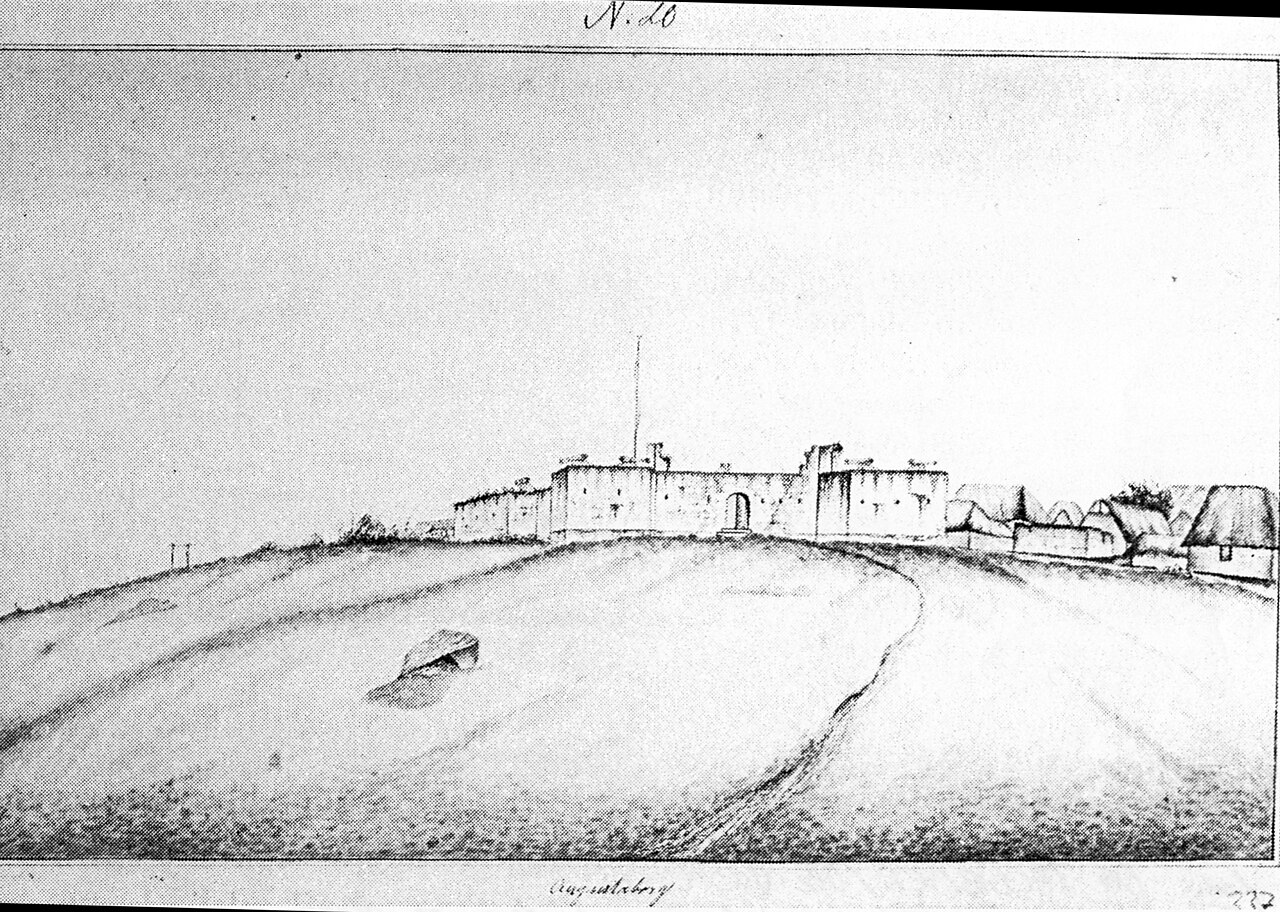
As a bastioned fortress, Fort Prinzenstein incorporates angled bastions designed to provide overlapping fields of fire, a defensive innovation characteristic of European military architecture in the 17th and 18th centuries. The fort's robust walls and bastions were constructed to withstand attacks and to control the surrounding area effectively. The layout includes battlements, gun ports, and a central courtyard that facilitated both military operations and commercial activities.
Defensive structures
The bastions are positioned at the corners of the fort, allowing defenders to cover all approaches. Thick stone walls rise to a height sufficient to repel assaults, while the design minimizes blind spots. The fort's location on the coast provided a vantage point for monitoring maritime traffic and deterring hostile incursions.
Internal facilities
Inside the fortress, there were quarters for soldiers and traders, storage rooms for goods such as gold, ivory, muskets, textiles, and cowrie shells, and holding areas for enslaved people before shipment. These facilities reflect the dual military and commercial functions of the fort during its active period.
Role in the Atlantic slave trade and commerce
Fort Prinzenstein played a significant role in the transatlantic slave trade, serving as a key point where enslaved Africans were held before being transported to the Americas. The fort's strategic position allowed Danish traders to control and regulate the flow of enslaved people and goods. In addition to the slave trade, the fort was a center for exchanging local products like gold and ivory for European goods such as muskets, brandy, iron rods, and textiles.
Trade dynamics
The fort functioned as an open port until 1962, when the Tema Harbour began operations to the west, marking the end of Keta's prominence as a trading hub. The trade at Fort Prinzenstein was part of a complex network involving African intermediaries, European traders, and American markets, reflecting the interconnected nature of global commerce during this era.
Cultural and heritage significance
Today, Fort Prinzenstein is recognized as a UNESCO World Heritage Site along with several other castles and forts in Ghana. This designation underscores its importance as a historical testimony to the Atlantic slave trade and European colonial ambitions in West Africa. The fort's preservation allows for ongoing education about the impact of the slave trade and the architectural legacy of European fortifications in Africa.
Current condition and conservation efforts
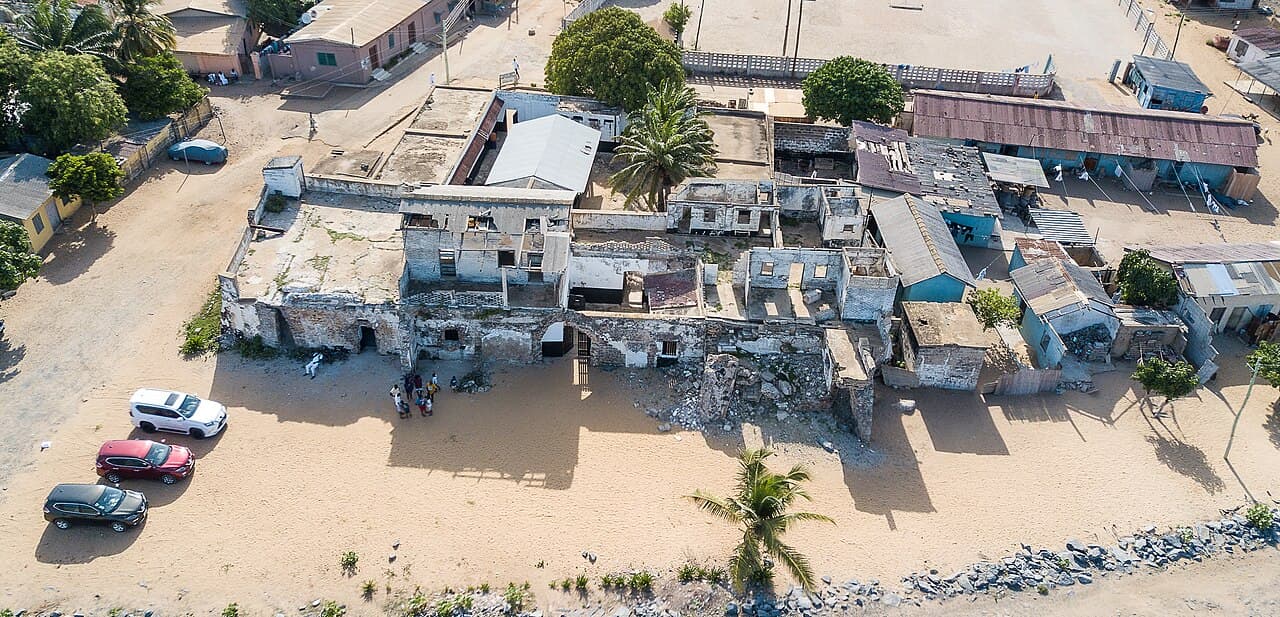
The fort is partially preserved, with restoration efforts aimed at maintaining its structural integrity and historical features. It remains a site of memory and reflection, attracting visitors interested in the history of the slave trade and colonial architecture. Interpretive displays and guided tours help contextualize the fort's role in global history.
Geographical and strategic importance
Situated on the coast of the Gulf of Guinea, Fort Prinzenstein's location was chosen for its strategic advantage in controlling maritime routes and local trade networks. Its position east of the Volta River made it a critical outpost for the Danes, enabling them to exert influence in a region dominated by competing European powers such as the British and the Dutch.
Relations with local communities
The fort's history is intertwined with that of the Anlo Ewe people, with whom the Danes engaged in conflict during the Sagbadre War. The fort's presence affected local power dynamics, trade, and social structures, reflecting the complex interactions between European colonizers and African societies.
Frequently asked questions (FAQ)
- What is the historical significance of Fort Prinzenstein?
- Fort Prinzenstein, built by the Danish in the 18th century, served as a key trading post during the transatlantic slave trade. It stands as a testament to the colonial history of Ghana and the complex interactions between European powers and African nations. The fort is now a symbol of Ghana's resilience and historical memory.
- When was Fort Prinzenstein constructed?
- Construction of Fort Prinzenstein began in 1784 and was completed in 1788. It was one of the last forts built by the Danish in West Africa and played a vital role in trade and military activities during its operational years.
- Can I visit Fort Prinzenstein?
- Yes, Fort Prinzenstein is open to visitors looking to explore its rich history and architecture. Guided tours are available, providing insights into the fort's past and its role in the region's history.
- What are the opening hours for Fort Prinzenstein?
- Fort Prinzenstein is typically open from 9 AM to 5 PM, Monday through Saturday. It is advisable to check for any changes in hours or specific days when visiting, especially during public holidays.
- Is it possible to access Fort Prinzenstein by public transportation?
- Yes, Fort Prinzenstein is accessible by public transportation, including buses and taxis from nearby towns. Visitors can inquire locally for the best routes and transport options to reach the fort.
- What is the best time to visit Fort Prinzenstein?
- The best time to visit Fort Prinzenstein is during the dry season, which runs from November to March. This period offers pleasant weather, making it ideal for exploring outdoor historical sites and enjoying the scenic views.
- Are there any nearby attractions to Fort Prinzenstein?
- Yes, there are several nearby attractions, including the beautiful beaches of the Gold Coast and other historic forts such as Fort Amsterdam and Cape Coast Castle. Visitors can easily create a day itinerary that includes these significant historical sites.
- What are the ticket prices for entering Fort Prinzenstein?
- Ticket prices for Fort Prinzenstein are generally affordable, with discounts available for students and groups. Prices can vary, so it’s best to check the official website or inquire at the entrance for the most current information.
- How do I get a guided tour of Fort Prinzenstein?
- Guided tours of Fort Prinzenstein can be arranged upon arrival or booked in advance through local tour operators. These tours provide a deeper understanding of the fort's history and architecture, enhancing your visit.
Photo gallery

Information
Loading map...
Visitor reviews
No reviews yet. Been here? Write the first review and help other travelers!
Write the first reviewVisited this castle? Share your experience
Your review helps other travelers and adds first-hand knowledge to our encyclopedia.