Fort Augustaborg
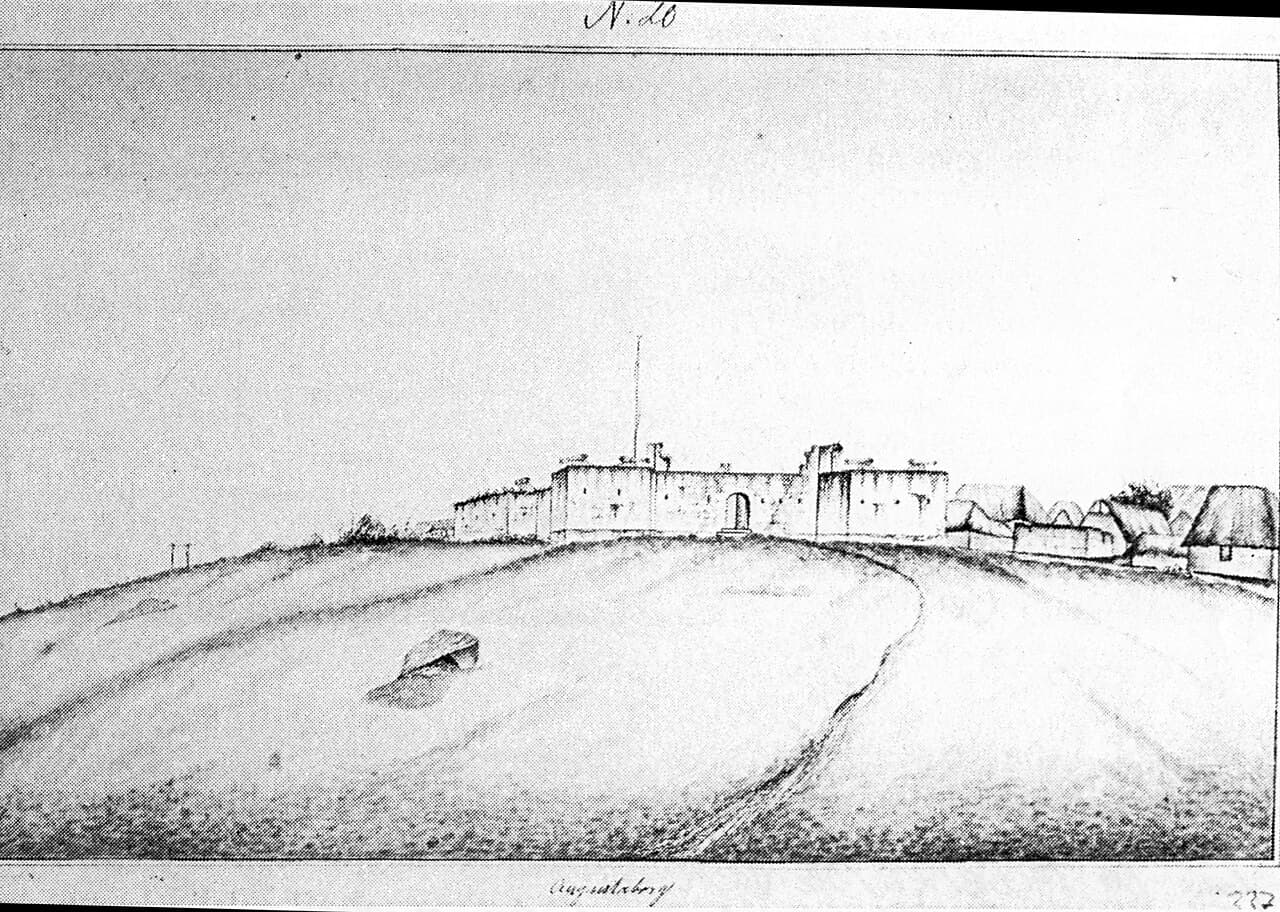
Fort Augustaborg is a historic Danish bastioned fortress located on the eastern part of the Gold Coast in present-day Ghana. Constructed in the 18th century, this fort was situated approximately 15 kilometers east of Fort Christiansborg, near the modern town of Teshie. It played a significant role in the European colonial presence and trade activities along the West African coast during the post-Renaissance period.
Historical context and construction
The establishment of Fort Augustaborg occurred during a period when several European powers, including Denmark, were competing for control over trade routes and resources in West Africa. The fort was built as part of Denmark's efforts to secure its interests in the lucrative trade of gold, ivory, and slaves. It was designed as a bastioned fortress, a style characterized by angled defensive walls and projecting bastions to provide overlapping fields of fire against attackers, reflecting military architectural advances of the time.
The exact date of construction is generally placed in the 18th century, aligning with Denmark's expansion of its colonial fortifications on the Gold Coast. The fort's strategic location near the coast allowed it to serve as both a trading post and a military stronghold to protect Danish commercial interests and settlements in the region.
Architectural features and design
Fort Augustaborg exemplifies the bastioned fortress typology, which was prevalent among European colonial powers in the 17th and 18th centuries. The design includes thick defensive walls, angular bastions at the corners for improved defense coverage, and a layout intended to withstand both land and sea attacks. The fort's walls were typically constructed from local stone and mortar, adapted to the coastal environment.
Inside the fort, there would have been facilities such as warehouses for goods, living quarters for soldiers and traders, and offices for administrative functions. The bastions allowed for the placement of cannons to defend against naval threats, while the fort's positioning near the shoreline enabled control over maritime traffic.
Role in regional trade and colonial history
During its operational period, Fort Augustaborg was a key node in the network of European forts along the Gold Coast, facilitating trade in gold, ivory, and enslaved people. The fort's presence reinforced Danish influence in the area, although Denmark was a smaller colonial power compared to Britain and the Netherlands.
Over time, the fort changed hands as colonial powers negotiated and exchanged territories. The Danish eventually sold their forts on the Gold Coast to the British in the mid-19th century, marking the end of Denmark's direct control. Fort Augustaborg's history is thus intertwined with the broader narrative of European colonization, trade competition, and the transatlantic slave trade.
Current condition and cultural significance
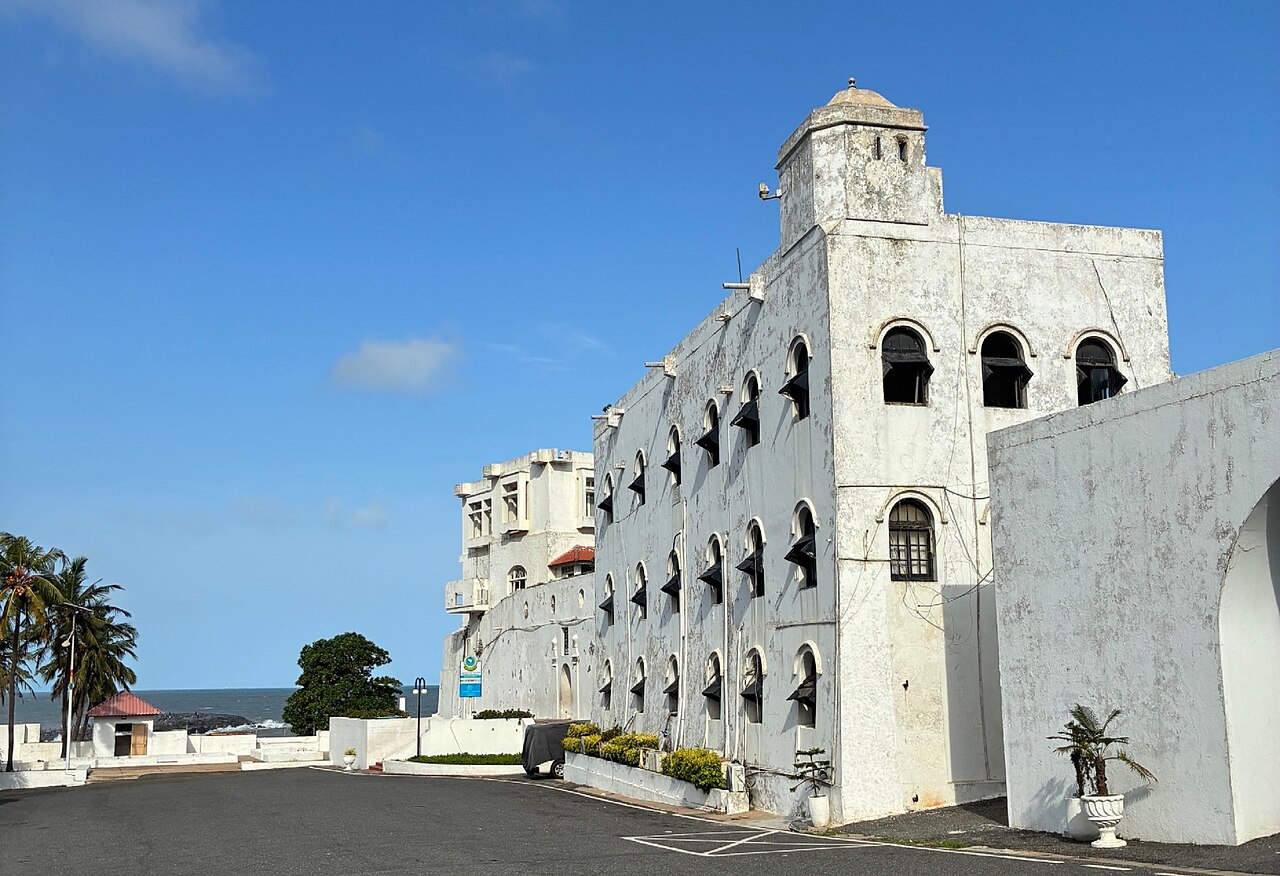
Today, Fort Augustaborg stands as a partially preserved relic of the colonial past, with some of its walls and bastions still visible. The fort is an important cultural heritage site that offers insights into the military architecture and colonial history of the Gold Coast region.
Its location near Teshie makes it accessible to visitors interested in Ghana's colonial history and the legacy of European forts along the coast. Preservation efforts have been undertaken to maintain the site, although it does not enjoy the same level of restoration as some other forts in Ghana.
Visiting Fort Augustaborg
Visitors to Fort Augustaborg can explore the remains of the bastioned fortress and learn about Denmark's role in the colonial history of Ghana. The site provides a tangible connection to the complex history of trade, colonization, and cultural exchange on the West African coast.
While facilities may be limited compared to larger tourist sites, the fort's historical significance and coastal setting offer a unique experience for those interested in military architecture and African-European history.
Nearby attractions
Fort Augustaborg is located close to other historical forts and castles on the Gold Coast, such as Fort Christiansborg and Osu Castle, which visitors often include in their itinerary to gain a comprehensive understanding of the region's colonial past.
Frequently asked questions (FAQ)
- What is the historical significance of Fort Augustaborg?
- Fort Augustaborg was a Danish bastioned fortress built in the 18th century to secure trade interests on the Gold Coast, playing a role in the regional colonial and slave trade history.
- Can I visit Fort Augustaborg today?
- Yes, Fort Augustaborg is partially preserved and accessible to visitors interested in Ghana's colonial history and military architecture.
- Where is Fort Augustaborg located?
- The fort is located near the town of Teshie on the eastern Gold Coast of present-day Ghana, about 15 kilometers east of Fort Christiansborg.
- What architectural features define Fort Augustaborg?
- It is characterized as a bastioned fortress with thick defensive walls and angular bastions designed for overlapping fields of fire against attackers.
- Are there other historic forts near Fort Augustaborg?
- Yes, nearby forts include Fort Christiansborg and Osu Castle, which are also significant colonial sites on the Gold Coast.
Photo gallery

Photo by Unknown authorUnknown author•Public domain
Information
Loading map...
Visitor reviews
No reviews yet. Been here? Write the first review and help other travelers!
Write the first reviewVisited this castle? Share your experience
Your review helps other travelers and adds first-hand knowledge to our encyclopedia.