Fort Amsterdam (Curaçao) — Curaçao castle

Fort Amsterdam (Curaçao)

Fort Amsterdam, Willemstad, Curaçao
Willemstad, Curaçao
Renaissance (15th–17th c.)
Well Preserved

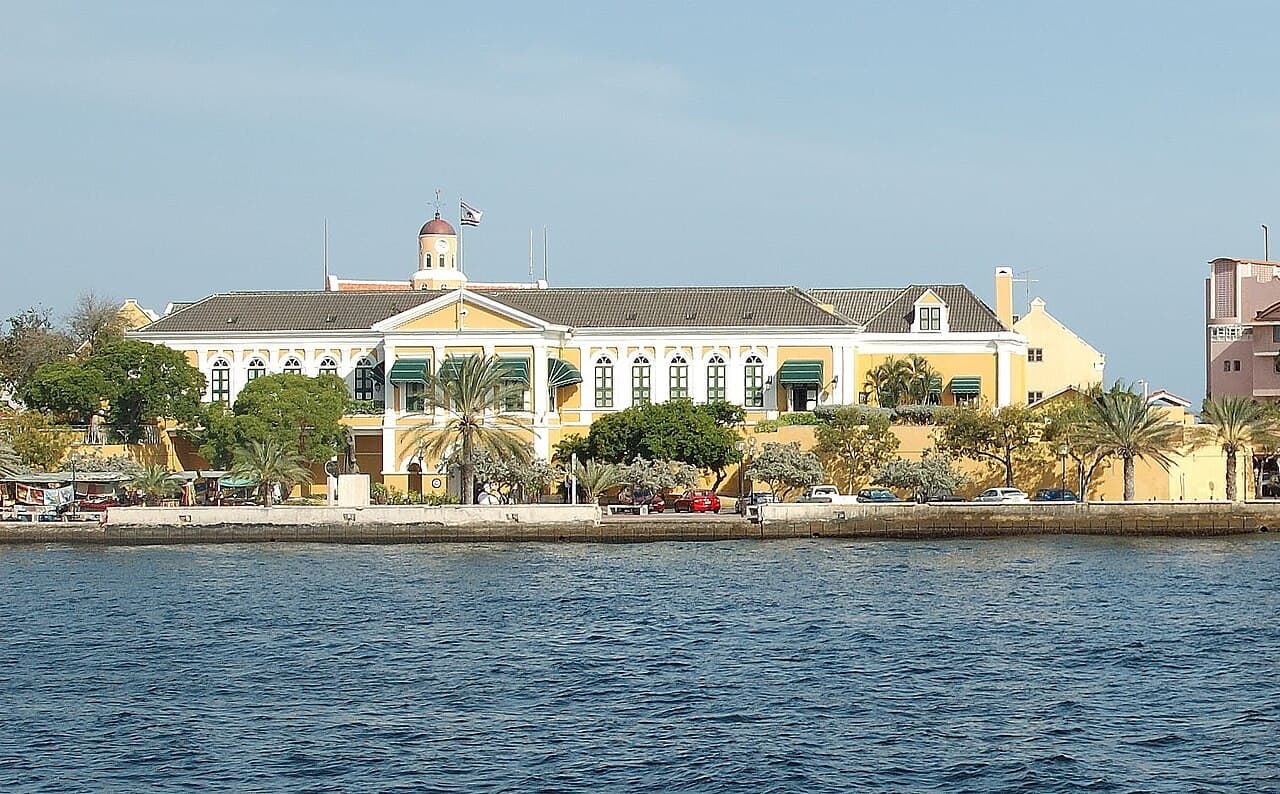
Fort Amsterdam is a prominent bastioned fortress located in Willemstad, the capital city of Curaçao. Constructed in 1634 by the Dutch West India Company (WIC), it was strategically designed both as a military stronghold and as the administrative headquarters for the company on the island. The fort's name honors the Amsterdam chamber of the WIC, reflecting its Dutch colonial heritage and importance in the regional defense network.

Historical context and strategic importance

Built during the Renaissance period in the early 17th century, Fort Amsterdam was part of the Dutch efforts to secure their interests in the Caribbean amid competing European powers. The fort was the principal defensive structure among a system of eight forts scattered across Curaçao, intended to protect the island from Spanish attacks and other threats. Its location in Willemstad was critical, overseeing the harbor and providing control over maritime access.

Architectural features and design

Fort Amsterdam exemplifies the bastioned fortress style, which was prevalent in military architecture during the Renaissance. This design incorporates angled bastions projecting from the main walls, allowing defenders to cover adjacent walls with overlapping fields of fire and eliminating blind spots. The fort's thick stone walls and robust bastions were constructed to withstand cannon fire and sieges.

The layout includes a central courtyard surrounded by barracks, storage facilities, and administrative buildings. The fort's main gate is a fortified entrance that once featured heavy wooden doors and iron portcullises. Within the fort, there are remnants of cannons and defensive artillery placements that highlight its military function.

Adaptations and modifications

Over the centuries, Fort Amsterdam has undergone various modifications to suit changing military technologies and administrative needs. Despite these changes, much of the original Renaissance-era structure remains intact, preserving its historical and architectural integrity.

Role in governance and modern use

Besides its military role, Fort Amsterdam served as the administrative center for the Dutch West India Company, managing colonial affairs and trade operations. Today, it functions as the seat of the government and the official residence of the governor of Curaçao. This continuous use underscores the fort's enduring significance in the island's political and cultural landscape.

Preservation and public access

The fort is well preserved and maintained as a heritage site. Visitors can explore parts of the fort, including the courtyard and some of the historic buildings, which offer insights into the island's colonial past and military architecture. The fort's location in the historic district of Willemstad also places it near other cultural landmarks and colorful Dutch colonial buildings.

Legacy and cultural significance

Fort Amsterdam stands as a symbol of Curaçao's colonial history and Dutch maritime power in the Caribbean. It represents the architectural and military innovations of the Renaissance period and serves as a tangible link to the island's strategic importance in global trade and colonial competition during the 17th century.

The fort's continued governmental use and preservation efforts highlight its role as a living monument, bridging the past with contemporary Curaçaoan identity.

Frequently asked questions (FAQ)

What is the historical significance of Fort Amsterdam?
Fort Amsterdam is a key historical site in Curaçao, built in the 17th century by the Dutch West India Company. It served as a military fortification and played a crucial role in protecting the island from various invasions, making it an important landmark in the Caribbean's colonial history.
When was Fort Amsterdam constructed?
Construction of Fort Amsterdam began in 1634 and was completed in 1635. It was strategically built to safeguard the harbor of Willemstad and has since been a witness to the island's evolving history over the centuries.
What are the opening hours of Fort Amsterdam?
Fort Amsterdam is typically open to visitors from 9:00 AM to 5:00 PM daily. However, it is advisable to check the official website or local listings for any changes in hours, especially during holidays or special events.
Can I take a guided tour of Fort Amsterdam?
Yes, guided tours of Fort Amsterdam are available and provide an in-depth look at its history and architecture. These tours often include knowledgeable guides who share fascinating stories and insights about the fort and its significance in Curaçao's past.
Is it possible to visit Fort Amsterdam for free?
Yes, visiting Fort Amsterdam is free of charge, making it accessible to everyone interested in exploring its historical significance. However, donations are appreciated to help maintain the site and support educational programs.
What is the best time to visit Fort Amsterdam?
The best time to visit Fort Amsterdam is during the dry season, which runs from January to April. This period offers pleasant weather ideal for exploring the fort and enjoying the surrounding views without the interruptions of rain.
Are there any nearby attractions to Fort Amsterdam?
Yes, Fort Amsterdam is located near several attractions, including the floating market and the historic district of Willemstad, which is a UNESCO World Heritage Site. Visitors can easily explore these sites on foot, enhancing their experience of the island's rich culture and history.
How do I get to Fort Amsterdam?
Fort Amsterdam is conveniently located in the capital city of Willemstad, making it easily accessible by car or public transport. Visitors can also enjoy a scenic walk along the waterfront to reach the fort, taking in the vibrant atmosphere of the city.
What architectural features can I see at Fort Amsterdam?
Fort Amsterdam showcases classic 17th-century military architecture, including its impressive stone walls and bastions. The fort's design reflects the military needs of the time, with strategic vantage points that offer stunning views of the surrounding waters.

Photo gallery

Fort Amsterdam (Curaçao)
Click to view

Photo by Niels Karsdorp, Dh3201•CC BY-SA 3.0

1 photo • Click any image to view in full screen

Information

Bastioned Fortress

Loading map...

Visitor reviews

No reviews yet. Been here? Write the first review and help other travelers!

Write the first review

Visited this castle? Share your experience

Your review helps other travelers and adds first-hand knowledge to our encyclopedia.
Write a review

(5/5)

0/2000 characters

Your review will be visible after admin approval

Nearby castles

0.2 km
Waterfort — Curaçao castle

Waterfort

, Curaçao

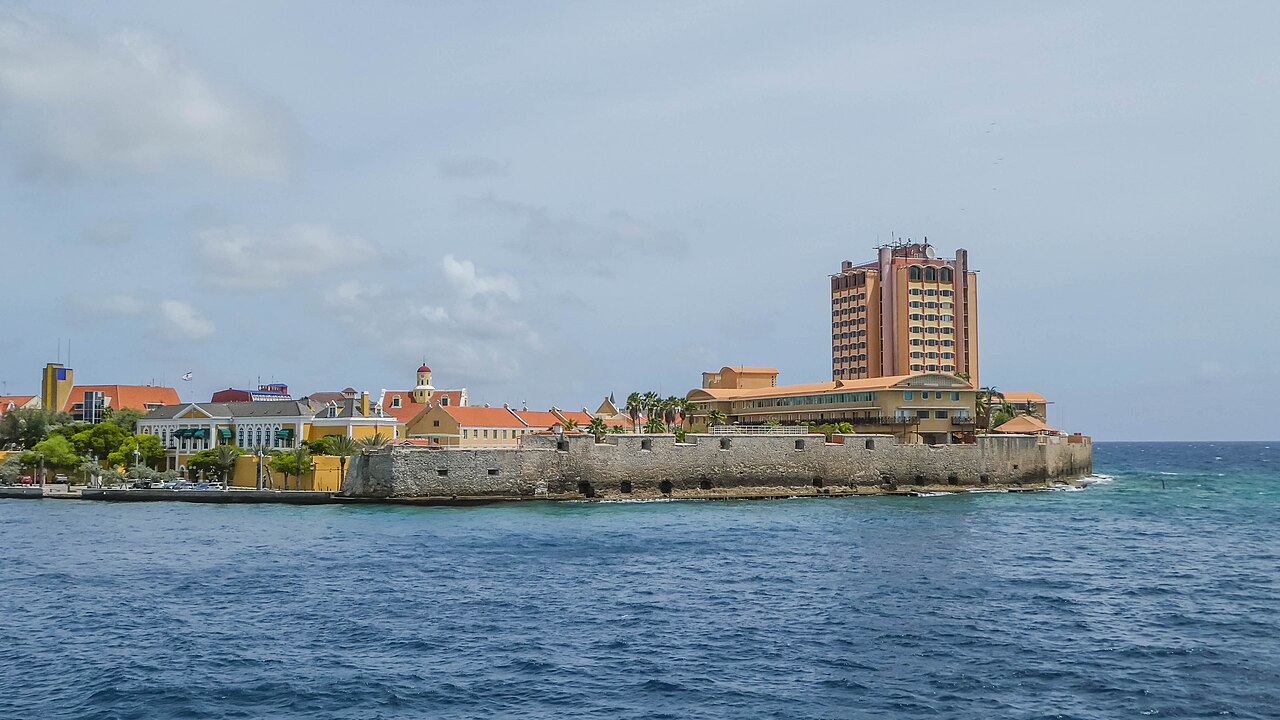
Waterfort is a historic bastioned fortress situated on the eastern side of the Sint Anna Bay in Willemstad, Curaçao. Constructed in 1827, the fort was designed to provide strategic defense for the harbor and the city against potential naval attacks. Its location at the entrance of the bay allowed it to control maritime access and protect the vital port facilities that were central to Willemstad's economic and military importance. Strategic importance and construction The fort's construction in the early 19th century reflects the military engineering trends of the period, characterized by bastioned fortifications designed to withstand artillery assaults. Its walls and bastions were arranged to provide overlapping fields of fire, a common feature in coastal fortresses aimed at repelling enemy ships and preventing incursions into the harbor. The fort's robust design included thick masonry walls and artillery placements that could cover the bay's entrance effectively. Military use and historical role After its completion, Waterfort served as a critical military installation for the defense of Willemstad. In 1858, the fort was garrisoned by marines, emphasizing its ongoing role in local defense. The presence of marines at the fort helped maintain security in the region during a period of colonial competition and regional instability. During World War II, the fort was reactivated as part of the island's defense system. Its strategic position made it a valuable asset for monitoring and protecting the busy harbor during a time of global conflict, when the Caribbean was an important zone for Allied naval operations and shipping routes. Post-military transformation Following the departure of the marines in 1955, who relocated to Marinebasis Parera, the fort underwent a significant change in function. The site was repurposed for civilian use, and the Plaza Hotel Curaçao, a luxury hotel, was developed within the fort's historic walls. This transformation illustrates a common trend of adaptive reuse of military structures, preserving the architectural heritage while giving the site a new role in tourism and hospitality. Architectural features Waterfort retains key elements typical of bastioned fortresses from the early 19th century. Its layout includes angular bastions designed to eliminate blind spots and provide defensive coverage in multiple directions. The fort's thick walls, artillery platforms, and strategic positioning on the waterfront highlight its original purpose as a coastal defense installation. While the conversion to a hotel altered some interior spaces, the external fortifications remain prominent and well-preserved, offering visitors a glimpse into the island's colonial military architecture. Visiting Waterfort today Today, the former military fort serves as a unique setting for the Plaza Hotel Curaçao, blending historic architecture with modern amenities. Visitors to Willemstad can appreciate the fort's imposing presence and its role in the island's history, even as it functions as a luxury accommodation. The site offers scenic views of the Sint Anna Bay and the harbor, connecting guests with Curaçao's maritime heritage.

Modern (19th–20th c.)
Details
0.3 km
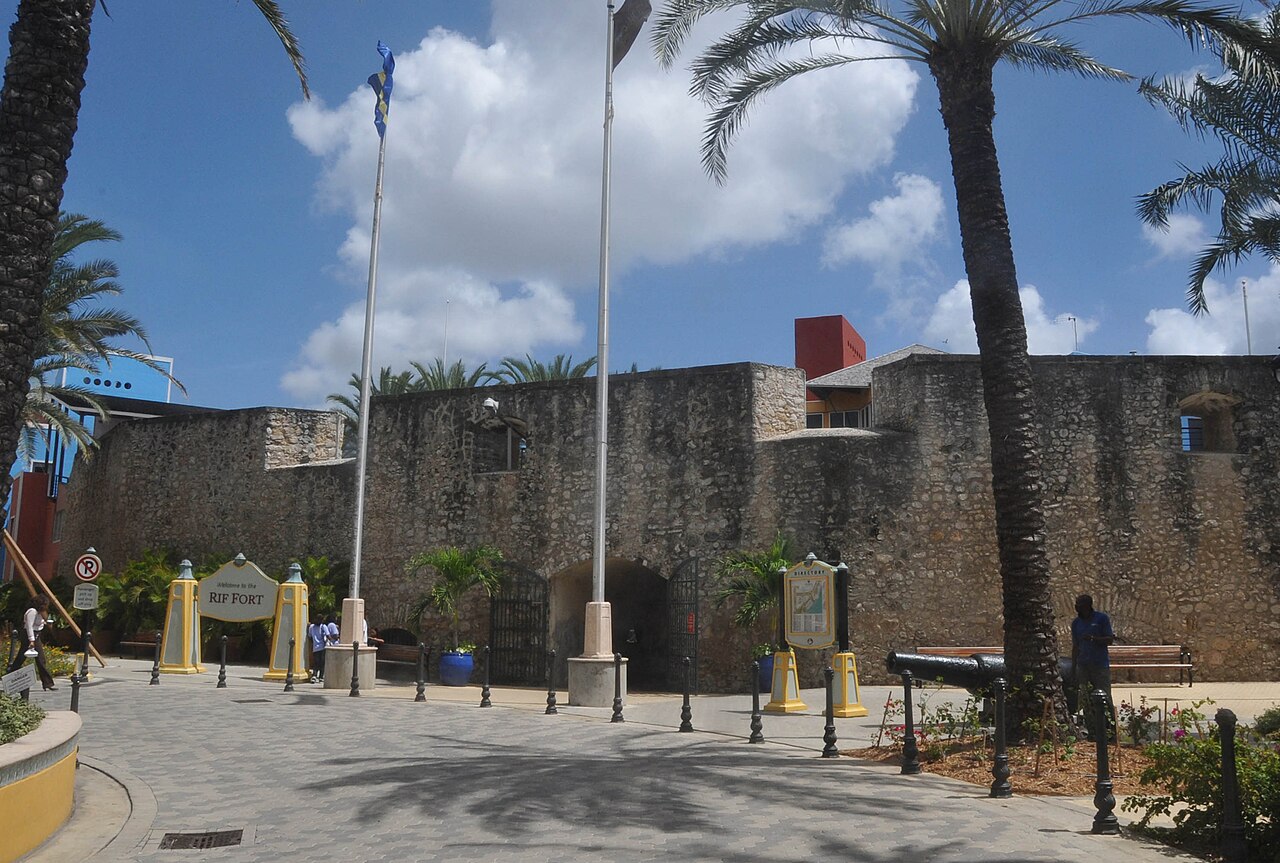
Rif Fort — Curaçao castle

Rif Fort

Willemstad, Curaçao

The Rif Fort is a historic bastioned fortress strategically located at the entrance of St. Anna Bay in the western Otrabanda neighborhood of Willemstad, on the Caribbean island of Curaçao in the Dutch Antilles. Its name, sometimes spelled as Riffort, translates to Reef Fort, reflecting its coastal defensive role. During the early 19th century, the fortifications on Curaçao were largely neglected. Recognizing the need for improved defenses, King William I of the Netherlands commissioned a restoration plan in 1824, appointing Lieutenant-General Krayenhoff to oversee the project. Under his direction, the Rif Fort and the Water Fort on the opposite shore of the bay were constructed between 1828 and 1829. The fort was carefully positioned between the bay entrance, the coastline, and the former Rif Water to guard the harbor and the outer part of the Otrabanda district. Architectural design and defensive features The Rif Fort was designed as a bastioned fortress, a style characterized by angular bastions that allowed defenders to cover all approaches with cannon fire, eliminating blind spots. When completed, the fort was bombproof and equipped with 56 cannons, providing formidable firepower to control access to the bay. The fortress included barracks to house soldiers, a powder magazine for ammunition storage, and a water tank to supply the garrison. One notable feature was a small bombproof dome located in front of the fort. This structure housed the chain mechanism used to seal off the harbor entrance, a critical defensive element to prevent enemy ships from entering St. Anna Bay. Historical context and military use Constructed during the modern period in 1828, the Rif Fort represented a significant upgrade to Curaçao's coastal defenses amid geopolitical tensions in the Caribbean. Its position at the bay entrance allowed it to protect Willemstad's harbor, which was vital for trade and naval operations. Although the exact date when the fort lost its military function is unclear, by the early 20th century, its military importance had diminished. During this period, the grounds were repurposed for civilian use, including housing a water company. In 1942, during World War II, the fort was briefly rearmed with two 37 mm machine guns, indicating a temporary revival of its defensive role. Later, the Rif Fort served various governmental functions, including accommodating a police station, reflecting its continued importance as a civic landmark. Current use and cultural significance Today, the Rif Fort is freely accessible to the public and has been transformed into a vibrant touristic shopping mall. Its robust bastioned walls and historic architecture provide a unique setting for shops, restaurants, and cultural events, making it a popular destination for visitors and locals alike. The fort's preservation as a well-preserved bastioned fortress offers insight into 19th-century military architecture and the colonial history of Curaçao. Its location at the entrance to St. Anna Bay continues to symbolize the island's maritime heritage and strategic importance in the Caribbean region. Architectural elements and layout The fortress is characterized by its angular bastions that enabled crossfire defense, thick stone walls designed to withstand bombardment, and a compact layout that maximized defensive coverage. The internal courtyard once served as a muster area and facilitated movement between the barracks, powder magazine, and other service buildings. The presence of a water tank within the fort was essential for sustaining the garrison during sieges or blockades. The fort's design reflects military engineering principles of the early 19th century, adapted to the tropical Caribbean environment. The chain defense system The bombproof dome in front of the fort housed a heavy chain that could be stretched across the harbor entrance to physically block enemy vessels. This mechanism was a common defensive feature in coastal fortifications, providing an additional layer of protection beyond artillery fire. Visiting rif fort Visitors to the Rif Fort can explore its historic walls and enjoy the lively atmosphere of the shopping mall housed within. The site offers a glimpse into Curaçao's colonial past while serving as a contemporary social and commercial hub. Its accessibility and central location in Willemstad make it an essential stop for those interested in history, architecture, and Caribbean culture.

Modern (19th–20th c.)
Details
1.4 km
Fort Nassau — Curaçao castle

Fort Nassau

Willemstad, Curaçao

Fort Nassau stands prominently on a 68-meter-high hill overlooking the city of Willemstad and its harbor on the Caribbean island of Curaçao. This bastioned fortress was constructed in 1797 during the post-Renaissance period as a strategic military installation to protect the vital harbor and town from naval threats. Originally named Fort Republiek in honor of the newly established Batavian Republic in the Netherlands, the fort was built by the Military Committee of the Curaçao Council on the site known as Sablica Hill. Architectural design and military features The fort exemplifies the bastioned fortress design common in the late 18th century, featuring angled bastions that allowed defenders to cover all approaches with cannon fire. It was originally armed with a formidable array of artillery, including eight iron eighteen-pounder cannons, six iron eight-pounder cannons, and nine metal mortars. These weapons were strategically placed to defend the harbor entrance and the town of Willemstad from enemy ships and potential land assaults. Constructed at a cost of 60,000 guilders, the funding was sourced from the citizens of Willemstad, reflecting the community's investment in their own defense. The fort's elevated position on Sablica Hill provided a commanding vantage point over the St. Anna Bay, enabling early detection of approaching vessels and a strong defensive posture. Historical significance and military engagements Fort Nassau played a critical role during a turbulent period marked by colonial conflicts involving the Dutch, British, French, and Americans. In September 1800, the fort faced a potential threat from 16 French ships anchored in the bay, which led to the arrival and assistance of two American warships, the USS Patapsco and the USS Merrimack. This cooperation was short-lived as the island soon fell under British control. Following the Treaty of Amiens in 1802, Curaçao was returned to Dutch control, only to be contested again during renewed hostilities with the British. In 1804, despite Fort Nassau's defenses, the town of Willemstad suffered bombardment from British forces led by Captain William Bligh, famed for the Mutiny on the Bounty, who operated from the nearby captured Fort Waakzaamheid. The fort's artillery was first fired in combat in 1807 against an attacking British naval squadron commanded by the HMS Arethusa. However, the British ultimately captured Curaçao, renaming the fort Fort George after King George III. After the Treaty of Paris in 1816, Curaçao was returned to Dutch sovereignty. The fort was renamed Fort Orange-Nassau, though it remained popularly known as Fort Nassau. Its military importance declined, transitioning to a lookout post and control tower, with its cannons fired only for ceremonial purposes. The decline of military use and modern adaptation The last recorded cannon firing occurred on August 3, 1823, when a false alarm involving French warships prompted a warning shot by the fort's commander. This incident marked the end of Fort Nassau's active military role. Over time, the fort's strategic function diminished, and it was repurposed for non-military uses. Today, Fort Nassau houses a restaurant and a harbor radar installation, serving as a cultural and historical landmark. Visitors can freely explore the site, enjoying panoramic views of Willemstad and the Caribbean Sea from its elevated position. The fort's well-preserved bastions and walls offer insight into late 18th-century military architecture and the complex colonial history of Curaçao. Location and cultural significance Situated on Fort Nassauweg in Willemstad, the fort is a prominent feature of the city's skyline. Its location on a high hill next to St. Anna Bay made it a key defensive point protecting the harbor, which was crucial for trade and naval operations in the Caribbean. The fort's history reflects the shifting control of Curaçao among European powers and the strategic importance of the island in colonial geopolitics. Since 1959, the fort has been adapted for hospitality purposes, allowing visitors to experience its historic ambiance alongside modern amenities. Its transformation from a military fortress to a public venue illustrates the evolving relationship between heritage preservation and contemporary use.

Post-Renaissance (17th–18th c.)
Details