Fort Pannerden
Fort Pannerden is a historically significant water fortress located southeast of the village of Doornenburg in the province of Gelderland, Netherlands. Constructed between 1869 and 1872, this fort was a crucial component of the New Dutch Waterline, a defensive system designed to protect the Dutch heartland by using controlled flooding to halt enemy advances.
The fort occupies a strategic position on a narrow strip of land between the river Waal, the main distributary of the Rhine, and the 18th century Pannerden Canal. This location allowed it to control river traffic and prevent enemy forces from advancing along the Waal towards the core defensive lines. Additionally, the fort's role included guarding the Pannerden Canal, which was vital for supplying water to the inundation zones that formed the backbone of the New Dutch Waterline's defensive strategy.
Construction and architectural evolution
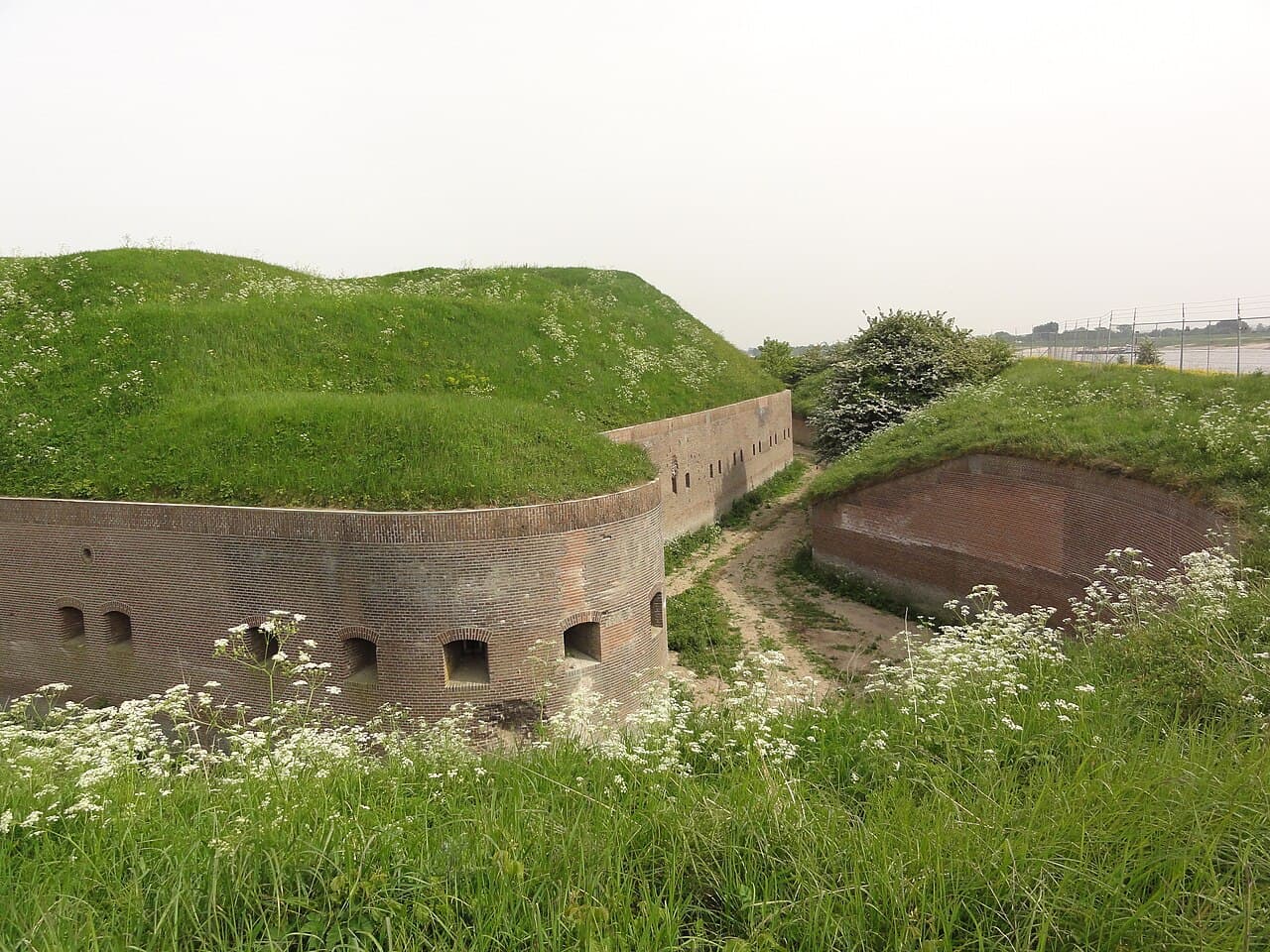
Originally, Fort Pannerden was built entirely of brick and mortar, featuring a single main battery facing the river Waal. Between 1885 and 1895, the fort underwent significant upgrades to enhance its defensive capabilities. The main battery was rebuilt using armored plating and reinforced with concrete, reflecting advances in military technology and artillery power during the late 19th century. Two additional armored batteries were added, and the roof of the fort was strengthened with concrete to withstand bombardment.
The fort's design reflects the military engineering principles of the post-Renaissance period, focusing on protection against artillery and control of key waterways. Its robust construction and strategic placement made it a formidable obstacle to any potential invaders aiming to penetrate the New Dutch Waterline.
Military role and historical significance
World war i
During World War I, the fort was mobilized as part of the Netherlands' general defensive preparations, although the country maintained a policy of neutrality and the fort saw no direct combat. One notable incident occurred near the war's end when the fort's garrison detected a German zeppelin using searchlights. The zeppelin, found to be equipped with espionage cameras, was shot down, marking a rare moment of active defense by the fort.
World war ii
On the eve of World War II, Fort Pannerden was again manned, this time by an infantry company. Several concrete bunkers were constructed around the fort, and its artillery was updated to meet modern standards. However, during the German invasion of the Netherlands in May 1940, the fort was bypassed by German forces who stayed out of range of its fixed guns. Isolated and cut off from the main Dutch forces, the fort was surrounded the following day. Under threat of an air raid and artillery bombardment, the fort's commander surrendered, ending its active military role.
Post-war decline and restoration
Following World War II, Fort Pannerden was largely abandoned and suffered from neglect. It was stripped of valuable materials and used as a quarry and ammunition dump. In 1952, an air defense platform was installed atop the fort, which remained in use until 1964. The fort itself was officially decommissioned in 1959.
After decades of disuse, the fort was occupied by squatters around the year 2000. Despite legal efforts to evict them, the squatters resisted until a large-scale police and military operation in 2006 removed them. However, a subsequent reoccupation led to a negotiated agreement where the squatters became temporary caretakers without residential rights. The fort was finally vacated by the caretakers in 2008, allowing for a comprehensive restoration that concluded in 2011.
Visiting fort pannerden today
Today, Fort Pannerden is open to the public and offers visitors a fascinating glimpse into Dutch military history and engineering. The fort's preserved structures, including its armored batteries, concrete reinforcements, and surrounding bunkers, illustrate the evolution of fortress design from the late 19th to mid-20th centuries.
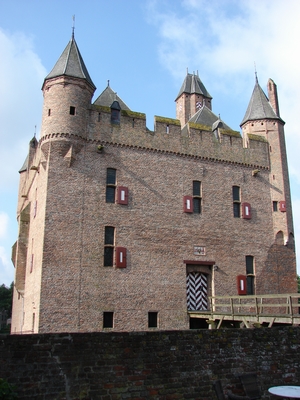
Visitors can explore the fort's extensive defensive works and learn about its role in the New Dutch Waterline, one of the most innovative water-based defense systems in European history. The nearby Doornenburg Castle, a well-preserved medieval castle, provides an additional historic attraction in the vicinity, enriching the cultural experience of the region.
Architectural features and military engineering
The fort's architecture is characterized by its robust brick masonry combined with later concrete reinforcements and armored plating. The main battery, rebuilt in the late 19th century, features thick armor designed to withstand artillery fire. The addition of two armored batteries expanded the fort's coverage and firepower.
The roof's concrete reinforcement was a significant innovation for its time, providing enhanced protection against aerial bombardments and artillery shells. The surrounding concrete bunkers built before World War II further strengthened the fort's defensive perimeter, reflecting the adaptation of the fortress to modern warfare.
Strategically, the fort was designed not only to repel direct attacks but also to control critical waterways, ensuring the effectiveness of the New Dutch Waterline's inundation strategy. This integration of natural and engineered defenses exemplifies Dutch ingenuity in military architecture.
Cultural and heritage importance
Fort Pannerden stands as a monument to the Netherlands' innovative approach to national defense through water management and military engineering. Its preservation and restoration have allowed it to serve as an educational site, highlighting the intersection of geography, technology, and history.
The fort's turbulent post-war history, including its occupation by squatters and eventual restoration, adds a layer of social history to its military significance. Today, it is a valued cultural heritage site managed for public engagement and historical education.
Visitors interested in military history, architecture, and Dutch cultural heritage will find Fort Pannerden a compelling destination, offering insights into the challenges and solutions of defending a low-lying country against modern warfare threats.
Frequently asked questions (FAQ)
- What is the historical significance of Fort Pannerden?
- Fort Pannerden is a 19th-century fortress that played a crucial role in the defense of the Netherlands during various conflicts. It was part of the New Dutch Water Line and served as a strategic point to control water levels and troop movements. Today, it stands as a testament to military architecture and engineering from that era.
- When was Fort Pannerden built?
- Construction of Fort Pannerden began in 1869 and was completed in 1871. It was designed to protect the city of Arnhem and the surrounding areas from potential invasions. The fortification reflects the military strategies of the time and showcases the evolution of defensive structures.
- What are the opening hours for Fort Pannerden?
- Fort Pannerden is open to visitors from Tuesday to Sunday, typically from 10 AM to 5 PM. It is advisable to check the official website for any seasonal changes in hours or special events that may affect accessibility. Guided tours are often available during the opening hours for a more in-depth experience.
- Can I visit Fort Pannerden with children?
- Yes, Fort Pannerden is a family-friendly destination that welcomes visitors of all ages. There are various activities and educational programs designed to engage children and families while exploring the fort's history. Be sure to check for any special children’s events during your visit.
- Is it possible to access Fort Pannerden using public transportation?
- Yes, Fort Pannerden can be reached via public transportation. There are bus services that connect Doornenburg with nearby cities, making it convenient for visitors to access the fort. Additionally, it is a short walk from the nearest bus stop to the fort entrance.
- What is the best time to visit Fort Pannerden?
- The best time to visit Fort Pannerden is during the spring and early autumn months when the weather is mild and outdoor activities can be enjoyed. Additionally, these seasons often feature special events and guided tours that enhance the visitor experience. Summer can also be pleasant, but it may be busier with tourists.
- How much does it cost to enter Fort Pannerden?
- Ticket prices for Fort Pannerden are typically around €5 for adults, with discounts available for children and groups. Admission fees help maintain the fort and support educational programs. It’s a good idea to check the official website for any updates on ticket pricing and special promotions.
- What nearby attractions should I visit while at Fort Pannerden?
- While visiting Fort Pannerden, you can explore nearby attractions such as the picturesque village of Doornenburg and the beautiful nature reserves along the Rhine River. Additionally, the city of Arnhem, known for its historical significance and vibrant cultural scene, is just a short drive away. These sites complement your visit to the fort and provide a fuller experience of the region.

Information
Website
Visit websiteSources & official resources
Verify the information above using these authoritative references.
Loading map...
Visitor reviews
No reviews yet. Been here? Write the first review and help other travelers!
Write the first reviewVisited this castle? Share your experience
Your review helps other travelers and adds first-hand knowledge to our encyclopedia.