Fort Ossenmarkt
Fort Ossenmarkt, also known locally as Fort aan de Ossenmarkt, is a historic military fortification situated in the town of Weesp, within the province of North Holland in the Netherlands. Constructed in 1861, this small tower fort played a strategic role in the defense system surrounding Amsterdam, later becoming an integral part of the Defense Line of Amsterdam after 1901.
Historical context and strategic importance
The mid-19th century was a period marked by significant military modernization in the Netherlands. Fort Ossenmarkt was built during this era as part of a broader network of fortifications designed to protect key urban centers and transportation routes. Its location in Weesp, near the important waterways and roads, made it a valuable defensive position to control access to Amsterdam from the east.
Originally, Fort Ossenmarkt was incorporated into the Weesp Fortress, a cluster of fortifications that formed a defensive ring. This ring was later absorbed into the larger Defense Line of Amsterdam (Stelling van Amsterdam), a UNESCO World Heritage site, which was constructed to safeguard the capital city through a system of forts, inundations, and military infrastructure.
Architectural features and modifications
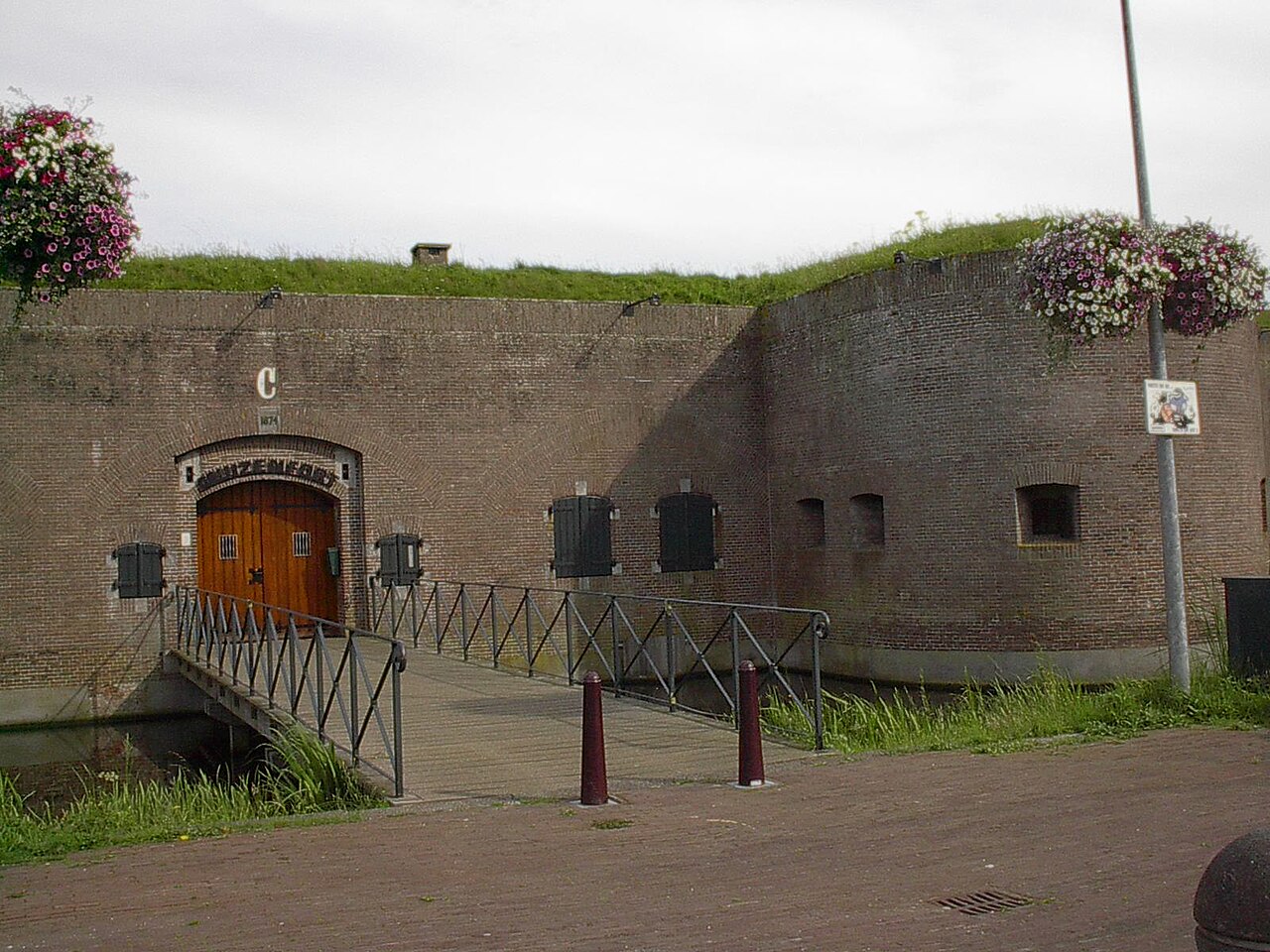
Fort Ossenmarkt is classified as a tower fort, characterized by its compact design and vertical emphasis. The fort's original structure includes thick masonry walls and a moat, typical of 19th-century fortifications aiming to resist artillery fire and infantry assault.
In 1876, the fort underwent significant modifications with the addition of an earthen glacis on its eastern side. This glacis, a sloped embankment of earth, was designed to absorb and deflect enemy artillery fire, enhancing the fort's defensive capabilities. The glacis partially filled the moat on that side, altering the fort’s immediate landscape and defensive perimeter.
Post-military uses and restoration
Following its military service, Fort Ossenmarkt's function evolved considerably. In the late 1940s, it was repurposed as a mushroom farm, reflecting a common post-war trend of adapting obsolete military structures for agricultural or industrial use. This use continued into the 1950s, after which the fort ceased to have any military role.
Subsequently, the fort served as a practice location for the local fire brigade, providing a practical training ground for emergency responders. This adaptive reuse helped preserve the structure through continued functional engagement.
In 1976, the fort was acquired by the local government, marking the beginning of its conservation as a heritage site. During the 1980s, restoration efforts focused on removing the earthen glacis added in the 19th century, reinstating the fort's original appearance and moat configuration. These restorations aimed to preserve the fort's historical integrity and architectural character.
Current status and cultural significance
Today, Fort Ossenmarkt is well preserved and serves primarily cultural and commercial purposes. While it is not open for regular public tours, the fort is accessible during special events and open days, offering visitors a glimpse into its military past and architectural features.
The fort's adaptation to modern uses while maintaining its historical fabric exemplifies the challenges and successes of preserving 19th-century military architecture in urban settings. Its inclusion in the broader context of the Defense Line of Amsterdam underlines its importance as part of the Netherlands' national heritage.
Architectural details and layout
The fort's compact footprint is dominated by a central tower-like structure surrounded by defensive walls and a moat. The masonry construction features robust walls designed to withstand artillery bombardment. The moat, originally filled with water, added an extra layer of defense by hindering direct assaults on the walls.
Inside, the fort contained barracks, storage rooms, and defensive positions such as gun emplacements. The design reflects the military engineering principles of the mid-19th century, balancing compactness with effective defense.
Defensive elements
- Moat: A water-filled ditch surrounding the fort, providing protection against infantry and siege equipment.
- Glacis: The earthen slope added in 1876 to deflect artillery fire, later removed during restoration.
- Thick masonry walls: Built to absorb and resist cannon fire.
- Gun emplacements: Positions for artillery pieces to defend against attackers.
Architectural style and period
Fort Ossenmarkt's architecture corresponds to the modern period of fortification design, reflecting advancements in military technology and artillery during the mid-19th century. Its style is utilitarian, focused on function rather than ornamental design, typical of 19th-century military architecture in the Netherlands.
Visiting Fort Ossenmarkt
Visitors interested in military history and 19th-century fortifications can explore Fort Ossenmarkt during occasional open days and cultural events. The fort's interior, restored to reflect its historical state, offers insight into the living and defensive conditions of the period.
Its location at Ossenmarkt 44 in Weesp makes it accessible from Amsterdam and surrounding areas. While regular public access is limited, the fort's presence enriches the cultural landscape of Weesp and the Defense Line of Amsterdam.
Frequently asked questions (FAQ)
- How do I get to Fort Ossenmarkt?
- Fort Ossenmarkt is easily accessible by public transport, with regular train and bus services connecting Weesp to major cities like Amsterdam. If you prefer to drive, there are parking facilities available nearby. Be sure to check local traffic conditions for the best route.
- What is the historical significance of Fort Ossenmarkt?
- Fort Ossenmarkt, built in the 19th century, was part of the Stelling van Amsterdam, a UNESCO World Heritage site designed to protect the city from invasion. Its strategic location and robust construction showcase the military architecture of the time. The fort played a crucial role in the defense systems of the Netherlands during various conflicts.
- When was Fort Ossenmarkt built?
- Construction of Fort Ossenmarkt began in 1880 and was completed in 1885. It was established as part of a larger defensive ring around Amsterdam, reflecting the military needs of the era. Over the years, it has undergone various modifications to adapt to changing military tactics.
- Can I take a guided tour of Fort Ossenmarkt?
- Yes, guided tours are available at Fort Ossenmarkt, providing visitors with in-depth insights into its history and architecture. It is recommended to book in advance, especially during peak tourist seasons, to ensure availability. Tour guides are knowledgeable and passionate about the fort's significance.
- Why is Fort Ossenmarkt considered an architectural gem?
- Fort Ossenmarkt is noted for its unique design that combines functionality with aesthetic appeal, featuring robust earthworks and a well-preserved structure. The fort's architecture exemplifies the military engineering techniques of the late 19th century. Its historic walls and fortifications offer a glimpse into the past and are a favorite among architecture enthusiasts.
- Is it possible to visit Fort Ossenmarkt year-round?
- Yes, Fort Ossenmarkt is open for visitors throughout the year, but it's important to check the specific opening hours as they may vary by season. The fort may also have limited access during certain holidays or maintenance periods. Always verify the schedule before planning your visit.
- What are the ticket prices for visiting Fort Ossenmarkt?
- Admission to Fort Ossenmarkt is generally affordable, with discounts available for students and seniors. Prices may vary based on the type of tour or special events, so it’s best to check the official website for the most current information. Group rates are also offered for educational trips.
- When is the best time to visit Fort Ossenmarkt?
- The best time to visit Fort Ossenmarkt is during the spring and early autumn when the weather is mild, and the surrounding landscapes are beautiful. Summer can be busy with tourists, while winter may have limited access due to weather conditions. Special events often take place in spring and autumn, enhancing your visit.
- Are there any nearby attractions to Fort Ossenmarkt?
- Yes, the area surrounding Fort Ossenmarkt offers several attractions, including the historic town of Weesp with its charming canals and buildings. Additionally, visitors can explore other forts and historical sites within the Stelling van Amsterdam. Local cafes and shops provide a delightful experience after your visit to the fort.
Information
Address
Ossenmarkt 44, Netherlands
Loading map...
Visitor reviews
No reviews yet. Been here? Write the first review and help other travelers!
Write the first reviewVisited this castle? Share your experience
Your review helps other travelers and adds first-hand knowledge to our encyclopedia.