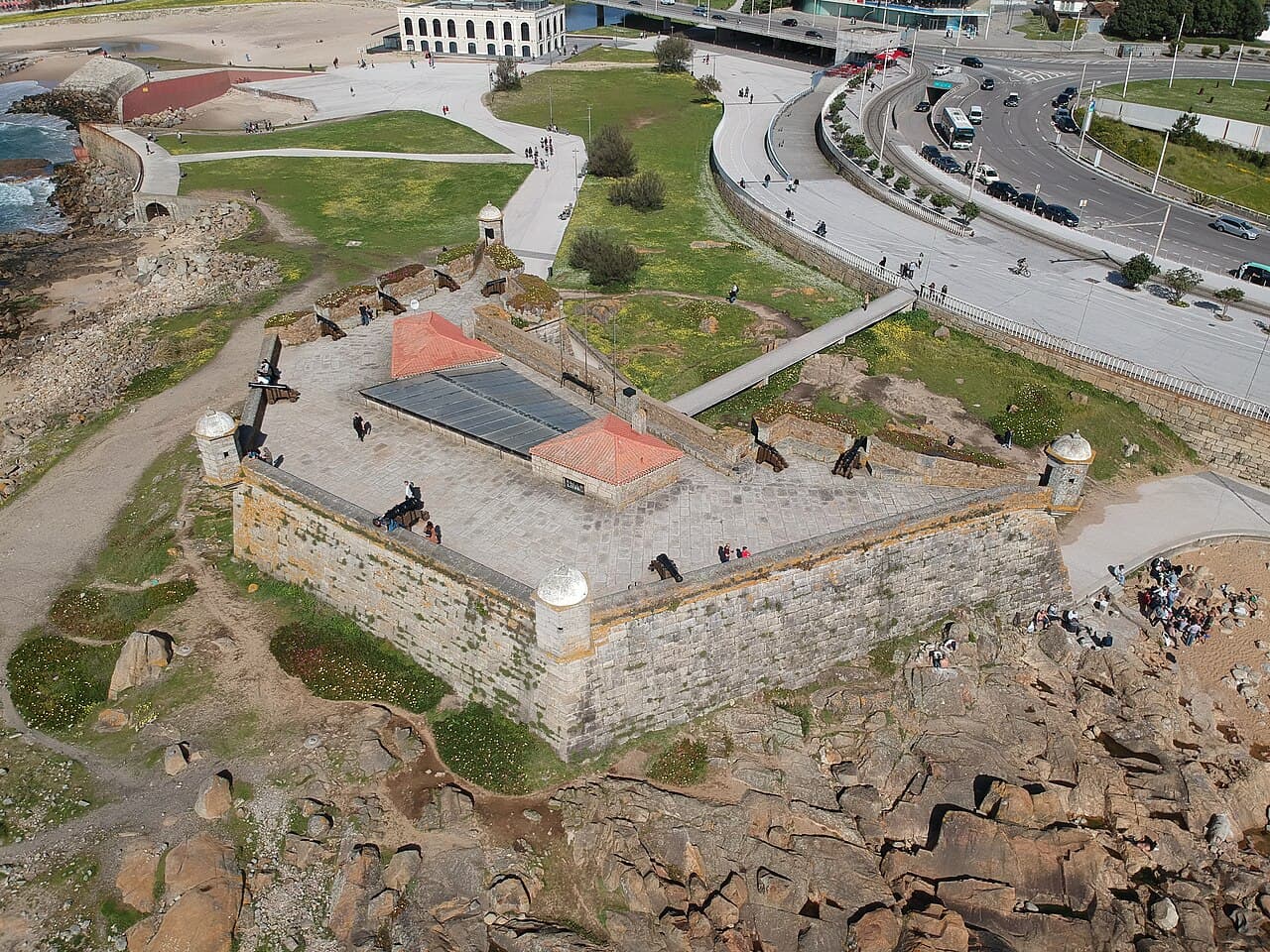
Fort of São Francisco do Queijo
The Fort of São Francisco Xavier, widely known as the Castelo do Queijo or Cheese Castle, is a prominent 17th-century bastioned fortress located on the rocky coastline of the civil parish of Nevogilde in Porto, Portugal. This coastal fortification was strategically built to protect the city and its harbor from maritime threats during the Renaissance period, showcasing the military architectural advancements of the time.
Historical background and strategic importance
Constructed in the 17th century, the fort played a crucial role in the defense system of Porto, guarding the Atlantic approaches to the city. Its location on a rocky outcrop allowed it to oversee and control the nearby maritime routes, which were vital for trade and military movements. The fort's name, São Francisco Xavier, honors the Jesuit missionary Saint Francis Xavier, reflecting the religious influences intertwined with military endeavors of the era.
Throughout its history, the fort underwent various modifications to adapt to evolving military technologies and threats. It was part of a network of coastal defenses designed to repel invasions and pirate attacks, which were common concerns for Portuguese coastal cities during the early modern period.
Architectural features and design
The Fort of São Francisco do Queijo is an example of bastioned fortress architecture, a style that emerged during the Renaissance to counter the destructive power of artillery. Its design incorporates angular bastions that provide overlapping fields of fire, eliminating blind spots and enhancing defensive capabilities.
The fortress is built primarily of local stone, blending with the rocky coastline. Its walls are thick and sloped to better deflect cannonballs. The fort includes a main gate, defensive walls, bastions at the corners, and internal quarters for soldiers and command. The layout reflects the influence of Italian military engineering principles, which were widely adopted across Europe during the Renaissance.
One of the fort’s distinctive features is its integration with the natural landscape, using the rocky promontory as part of its defensive system. The sea itself acts as a natural moat on several sides, complicating any assault from the water.
Interior and facilities
Inside the fortress, there are remains of barracks, storage rooms, and artillery platforms. These spaces were essential for housing troops, storing munitions, and mounting cannons to defend against naval attacks. The fort’s compact size and efficient use of space reflect its role as a coastal sentinel rather than a large garrison.
Preservation and current status
Today, the Fort of São Francisco do Queijo is well preserved and serves as a cultural landmark in Porto. It attracts visitors interested in military history, architecture, and scenic views of the Atlantic Ocean. The fort’s accessibility allows tourists to explore its bastions and walls, offering insight into Portugal’s coastal defenses during the Renaissance.
Efforts have been made to maintain the structure and prevent deterioration caused by the harsh marine environment. The fort remains a symbol of Porto’s historical resilience and maritime heritage.
Visiting information and cultural significance
The fort is open to the public, providing an educational experience about Portugal’s military past and Renaissance fortification techniques. Its location near the city of Porto makes it a convenient destination for travelers exploring northern Portugal.
Besides its defensive role, the Castelo do Queijo has become a cultural icon, often featured in local art and literature. Its nickname, "Cheese Castle," derives from the shape of the rocky outcrop on which it stands, resembling a block of cheese.
Frequently asked questions (FAQ)
- What is the historical significance of the Fort of São Francisco do Queijo?
- The Fort of São Francisco do Queijo, also known as Castelo do Queijo, was built in the 17th century to protect the city of Porto from maritime invasions. Its strategic location on the coast allowed it to serve as a key defensive structure during various conflicts, reflecting the military architecture of the time.
- When was the Fort of São Francisco do Queijo constructed?
- Construction of the Fort of São Francisco do Queijo began in 1660 and was completed in 1685. It was designed to bolster the defenses of Porto against potential attacks from the sea, showcasing the military engineering of the era.
- What are the opening hours for visiting the Fort of São Francisco do Queijo?
- The Fort of São Francisco do Queijo is typically open to visitors from 10:00 AM to 6:00 PM, with extended hours during the summer months. It's advisable to check the official website or local listings for any changes to hours, especially on holidays.
- Can I visit the Fort of São Francisco do Queijo with children?
- Yes, the Fort of São Francisco do Queijo is family-friendly and offers plenty of space for children to explore. The historic site also provides educational insights that can be enjoyable for all ages.
- Is it possible to access the Fort of São Francisco do Queijo using public transportation?
- Yes, public transportation options are available to reach the Fort of São Francisco do Queijo. Visitors can take the metro to the Casa da Música station and then catch a bus or take a leisurely walk along the scenic waterfront.
- What are the ticket prices for the Fort of São Francisco do Queijo?
- Admission to the Fort of São Francisco do Queijo is generally affordable, with tickets priced around €3 for adults. Discounts may be available for children, seniors, and groups, making it an accessible attraction for everyone.
- When is the best time to visit the Fort of São Francisco do Queijo?
- The best time to visit the Fort of São Francisco do Queijo is during the spring and early fall when the weather is mild and pleasant. Visiting during these seasons allows you to enjoy the beautiful coastal views and avoid the peak summer crowds.
- What nearby attractions can I visit after the Fort of São Francisco do Queijo?
- After visiting the Fort of São Francisco do Queijo, you can explore the stunning Parque da Cidade, which is just a short walk away. Other nearby attractions include the Serralves Museum and the beautiful beaches of Matosinhos, perfect for a full day of sightseeing.
Photo gallery

Information
Loading map...
Visitor reviews
No reviews yet. Been here? Write the first review and help other travelers!
Write the first reviewVisited this castle? Share your experience
Your review helps other travelers and adds first-hand knowledge to our encyclopedia.



