Fort Nieuw-Amsterdam
Fort Nieuw-Amsterdam is a prominent bastioned fortress located in Suriname, strategically positioned at the confluence of the Suriname and Commewijne rivers. Constructed between 1734 and 1747, this 18th-century fortification played a crucial role in the defense and control of the colony during the post-Renaissance period.
Historical context and strategic importance
The fort was built by the Dutch colonial authorities to replace earlier wooden fortifications that were vulnerable to attacks. Its location at the river confluence allowed it to control access to the interior of Suriname via the waterways, which were vital for trade, transportation, and military movement. The design reflects the military architectural principles of the time, emphasizing strong defensive capabilities against naval and land assaults.
Architectural design and features
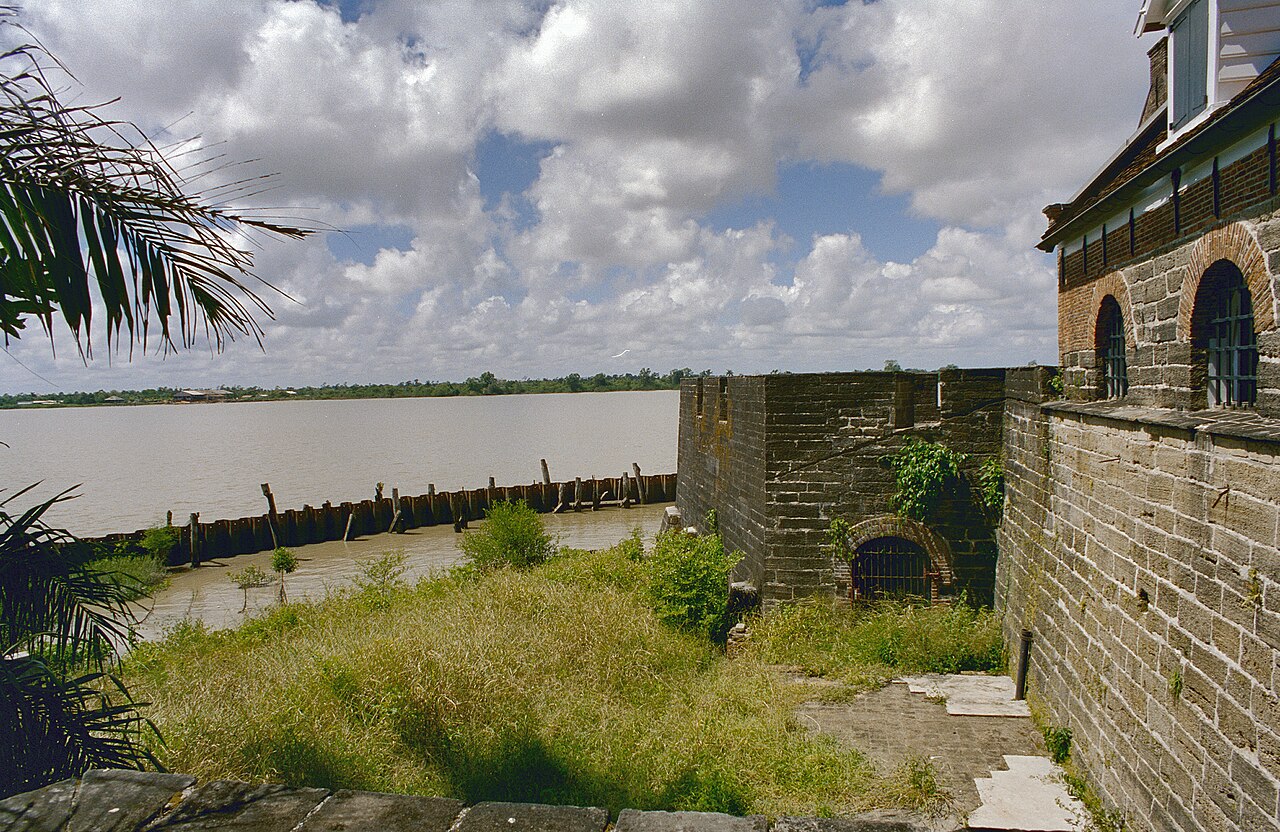
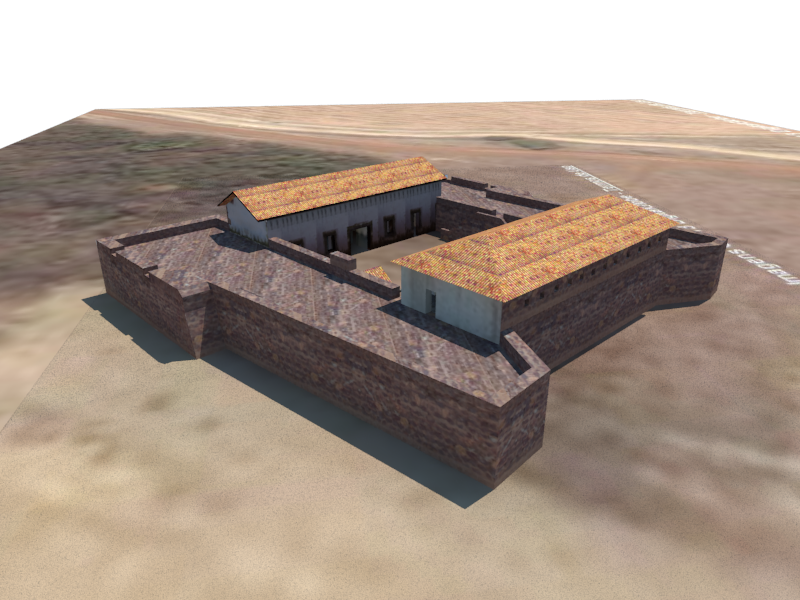
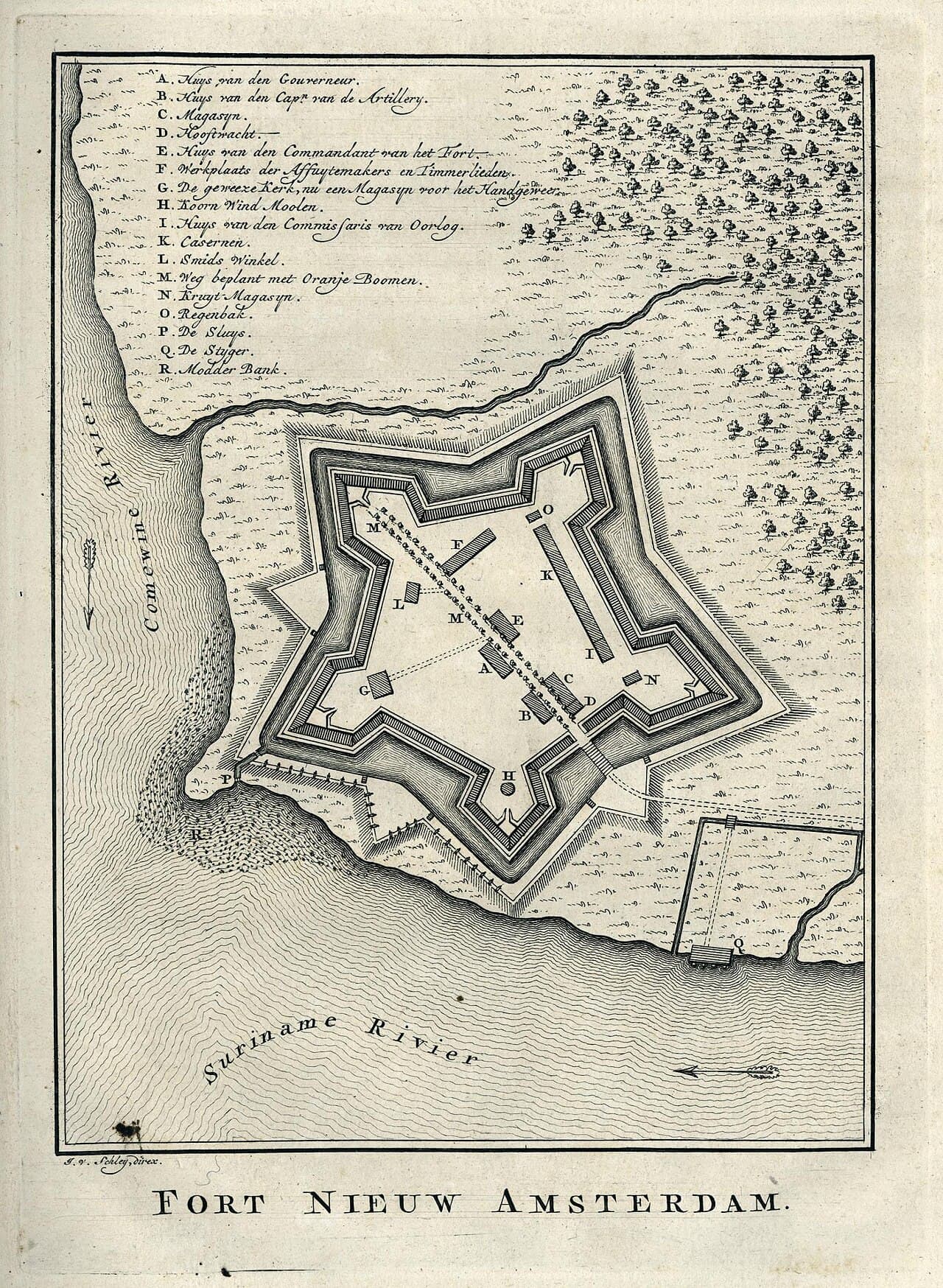
Fort Nieuw-Amsterdam is a classic example of a bastioned fortress, characterized by its star-shaped layout designed to maximize defensive firepower and eliminate blind spots. The fortress features thick earthen ramparts reinforced with brick and stone, and angular bastions at each corner allowing defenders to cover adjacent walls with overlapping fields of fire.
The fort includes a moat surrounding the outer walls, enhancing its defensive perimeter against infantry assaults. The main gate is fortified and was historically protected by a drawbridge, adding to the security of the entrance. Inside, the fort housed barracks, officers' quarters, ammunition storage, and command buildings, arranged around a central courtyard.
Defensive structures
The bastions are equipped with embrasures for mounting cannons, allowing the fort to repel attackers from multiple angles. The walls are low and thick, designed to absorb and deflect cannonballs rather than high and thin like medieval castles. This design reflects the evolution of military technology and fortification techniques during the post-Renaissance era.
Role in colonial history
Throughout its active use, Fort Nieuw-Amsterdam served as a critical military outpost for the Dutch colonial administration. It protected the colony from potential invasions by European rivals and indigenous groups. The fort also functioned as a center for controlling the surrounding plantations and trade routes, which were essential to the colony's economy.
During various conflicts in the 18th and 19th centuries, the fort remained a symbol of Dutch colonial power in Suriname. Although it never faced a major siege, its presence was a deterrent against hostile forces and pirates.
Preservation and current status
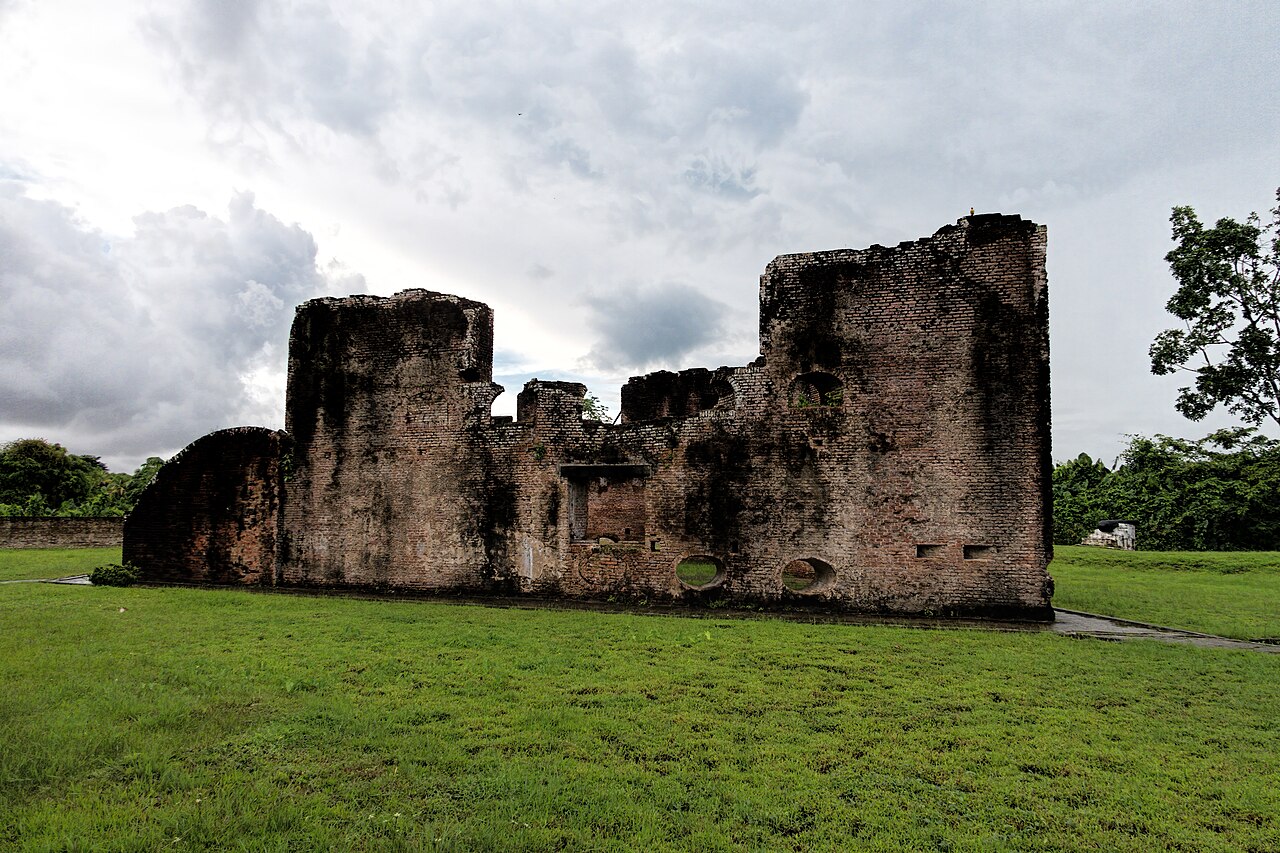
Today, Fort Nieuw-Amsterdam is well preserved and serves as a significant cultural heritage site. It operates as an open-air museum open to the public, offering visitors insight into colonial military architecture and Suriname's history. The museum includes exhibits on the fort's construction, military use, and the broader historical context of the region.
Visitors can explore the ramparts, bastions, and internal buildings, gaining a tangible sense of 18th-century fortification design. The site also hosts cultural events and educational programs, helping to maintain public interest and awareness of Suriname's colonial past.
Photo gallery

Photo by Jakob van der Schley•Public domain
Information
Loading map...
Visitor reviews
No reviews yet. Been here? Write the first review and help other travelers!
Write the first reviewVisited this castle? Share your experience
Your review helps other travelers and adds first-hand knowledge to our encyclopedia.