Fort Nez Percés
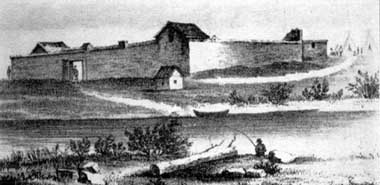
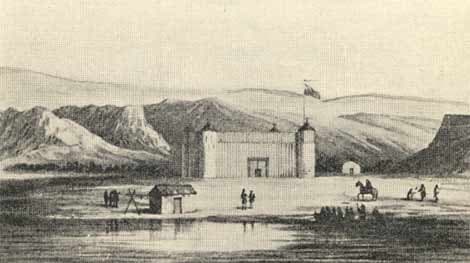
Fort Nez Percés, also known as Fort Nez Percé and later referred to as (Old) Fort Walla Walla, was a significant bastioned fortress and fur trading post located on the Columbia River in what is now Wallula, Washington. Established in 1818 by the North West Company, it played a crucial role in the fur trade during the early 19th century before coming under the control of the Hudson's Bay Company in 1821. The fort remained operational until its closure in 1857.
Historical context and foundation
The fort was named after the Nez Perce people, although it was situated within the traditional territory of the Walla Walla tribe. The establishment of Fort Nez Percés was part of the broader competition between fur trading companies in the Pacific Northwest, particularly after the 1818 Treaty between the United States and Britain which allowed joint occupation of the Oregon Territory.
The North West Company constructed the fort as a strategic trading post to facilitate fur trading with local Indigenous peoples and to assert presence in the region. After the merger of the North West Company with the Hudson's Bay Company in 1821, the fort became a key hub in the Hudson's Bay Company's extensive fur trade network.
Architectural design and fortifications
Fort Nez Percés was designed as a bastioned fortress, a style characterized by angular walls and projecting bastions that allowed defenders to cover all approaches with gunfire. This design was typical of military forts in the 18th and 19th centuries, providing enhanced defense against potential attacks.
The fort's layout included wooden palisades reinforced with bastions at the corners, which housed artillery pieces. Inside the walls were trading posts, storage buildings, officer quarters, and living quarters for employees and their families. The location on the Columbia River provided strategic access for transportation and trade.
Role in the fur trade and regional influence
Throughout its operation, Fort Nez Percés served as a major center for trading furs with Indigenous groups, including the Walla Walla, Nez Perce, and other tribes. The fort facilitated the exchange of European goods for pelts, which were then transported to markets in Europe and eastern North America.
The fort also functioned as a base for exploration and expansion of the fur trade into the interior Pacific Northwest. Its presence helped establish British influence in the region during a period of contested territorial claims between Britain and the United States.
Decline and closure
By the mid-19th century, changes in political control following the Oregon Treaty of 1846, which established the U.S.-Canada border at the 49th parallel, diminished the strategic importance of Fort Nez Percés. The decline of the fur trade and increasing American settlement in the area led to its eventual closure in 1857.
Today, the site of Fort Nez Percés is recognized for its historical significance in the early development of the Pacific Northwest and the fur trade era.
Legacy and historical significance
Fort Nez Percés represents an important chapter in the history of European-Indigenous relations and economic development in the Pacific Northwest. Its bastioned fortress design reflects the military and commercial priorities of the fur trading companies during the 19th century. The fort's history offers insight into the complex interactions between Indigenous peoples and European traders, as well as the geopolitical dynamics of the region during a period of territorial negotiation and expansion.
Frequently asked questions (FAQ)
- When was Fort Nez Percés established and by whom?
- Fort Nez Percés was established in 1818 by the North West Company as a fur trading post on the Columbia River.
- What architectural style characterizes Fort Nez Percés?
- Fort Nez Percés was designed as a bastioned fortress with angular walls and projecting bastions for defense.
- Why is Fort Nez Percés historically significant?
- The fort played a key role in the fur trade and British influence in the Pacific Northwest during the 19th century.
- Is Fort Nez Percés open to visitors today?
- The site of Fort Nez Percés is a historical ruin and may be visited, but it does not operate as a formal museum or tourist attraction.
- What led to the closure of Fort Nez Percés?
- The decline of the fur trade and changes in territorial control following the Oregon Treaty of 1846 led to its closure in 1857.
Photo gallery

Photo by Painter and provenance of this image are unknown.•Public domain
Information
Loading map...
Visitor reviews
No reviews yet. Been here? Write the first review and help other travelers!
Write the first reviewVisited this castle? Share your experience
Your review helps other travelers and adds first-hand knowledge to our encyclopedia.