Fort National
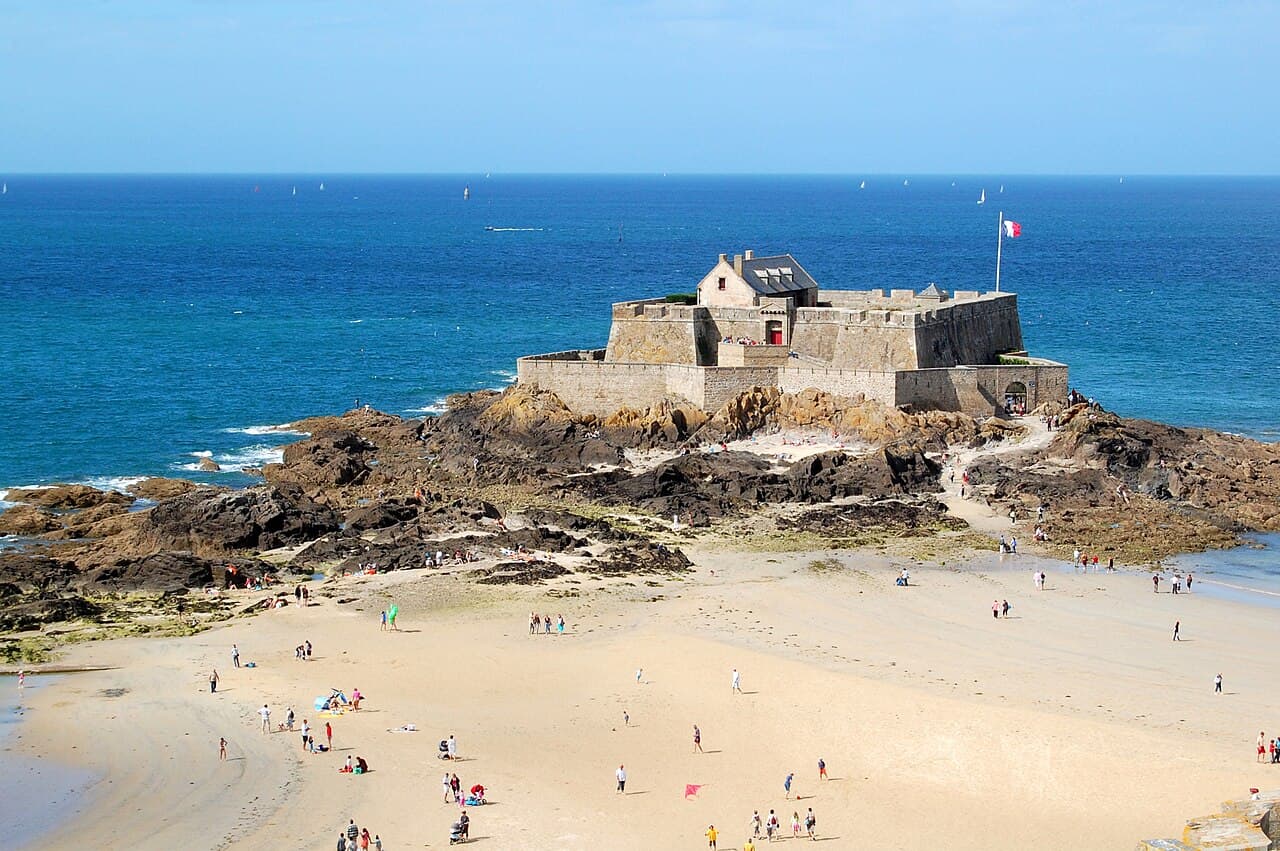
Fort National is a remarkable 17th-century fortress located on a small tidal island called l'Îlette just off the coast of the historic walled city of Saint-Malo in the Ille-et-Vilaine department of France. This Renaissance-period coastal fortress was constructed to protect the strategic port city from naval attacks, particularly from Anglo-Dutch fleets during the late 1600s. Its position on a tidal island with a dramatic tidal range of 13 meters made it a formidable defensive structure, accessible only during low tide by crossing the beach.
The site and early uses
The island of l'Îlette originally served as a fire beacon site, acting as a primitive lighthouse to guide ships safely to Saint-Malo. During the Middle Ages, the island took on a darker role as a place of public executions for the seigniory of Saint-Malo. Criminals were burnt at the stake here in earlier times, and later a gallows was erected, marking the island as a grim judicial site.
Vauban's fortification plan and construction
In the late 17th century, the renowned military engineer Sébastien Le Prestre de Vauban was commissioned by King Louis XIV to inspect and strengthen the defenses of Saint-Malo. Vauban's comprehensive plan included reinforcing the city's ramparts to mount artillery and creating a chain of outlying forts on the islands in the bay to protect against naval incursions.
Fort National, originally named Fort Royal, was built between 1689 and 1693 by engineer Siméon Garangeau following Vauban's designs. The fort was part of a defensive network stretching from Fort-la-Latte to Pointe de la Varde. It was constructed primarily of granite and featured a rectangular layout with two half bastions protecting the southern gate. A dry moat and a drawbridge provided access and additional defense. Inside the fort, a long building housed quarters for officers and troops along with equipment rooms.
Architectural features and armament
The fort was armed with 14 guns on marine carriages and three mortars by the time of its first significant test in 1693. It included an underground cistern capable of holding 50,000 liters of water, fed by gutters and accessible via a trapdoor and a well, ensuring a reliable water supply during sieges. Ammunition was stored safely in a vaulted bomb-proof magazine with angled apertures for light and ventilation.
Military engagements and modifications
Shortly after its completion, Fort National was tested during an Anglo-Dutch naval attack in 1693. The fort, along with other defenses, successfully repelled the assault, which included an attempt by the English to use a gunpowder-packed vessel as a floating mine against Saint-Malo's defenses. The vessel ran aground before reaching its target, and the explosion caused no significant damage.
The fort again played a defensive role during a second attack in 1695, proving the effectiveness of Vauban's fortification strategy.
In 1848, an outer enclosure wall pierced for small arms was added to protect the fort from infantry attacks, especially from troops landing on the surrounding rocks. A small bastion was also constructed in front of the gate, expanding the fort's defensive perimeter to approximately 4,000 square meters. The fort was renamed Fort National in 1870.
20th-century history and World War II
In 1927, the fort was sold to a private owner, marking a shift from military to civilian stewardship.
During World War II, Saint-Malo was occupied by German forces who fortified the French coast as part of Hitler's Atlantic Wall defenses. On August 6, 1944, as Allied bombing intensified, the Germans imprisoned 380 local men inside Fort National to prevent uprisings. The prisoners endured six days of harsh conditions and Allied shelling, resulting in 18 deaths. A brief truce allowed the release of the prisoners, and the fort itself sustained damage from the bombardment.
The American 83rd Infantry Division liberated Saint-Malo, including Fort National, on August 16, 1944. Post-war restoration efforts aimed to preserve Vauban's original design and maintain the fort as a historical monument.
Visiting Fort National today
Today, Fort National is a popular tourist attraction, open to visitors during the summer months. Access is only possible at low tide by walking across the beach, as high tide isolates the fort completely. Visitors can explore the well-preserved ramparts, bastions, and internal buildings, gaining insight into the military architecture of the Renaissance and the strategic importance of Saint-Malo's coastal defenses.
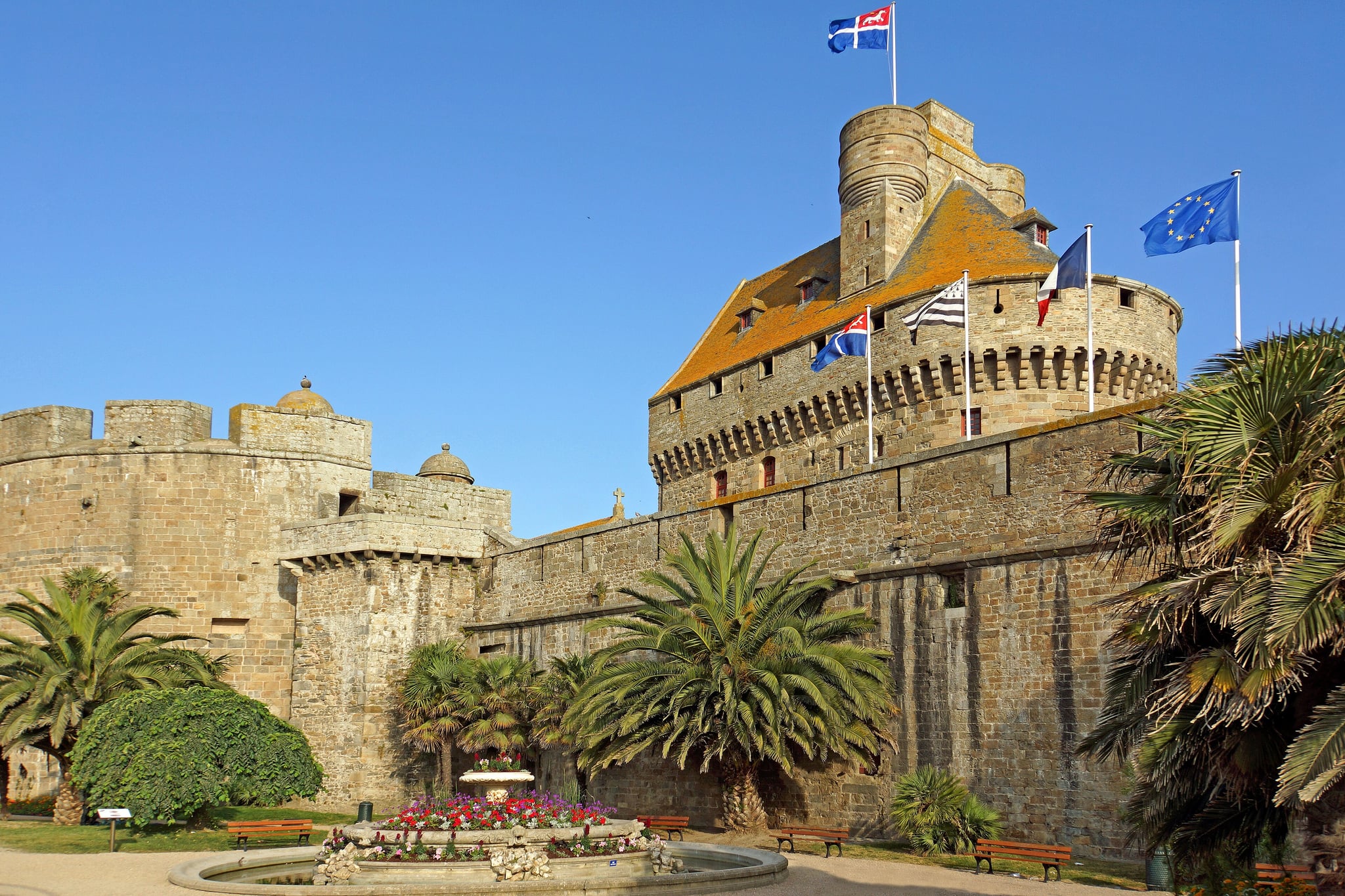
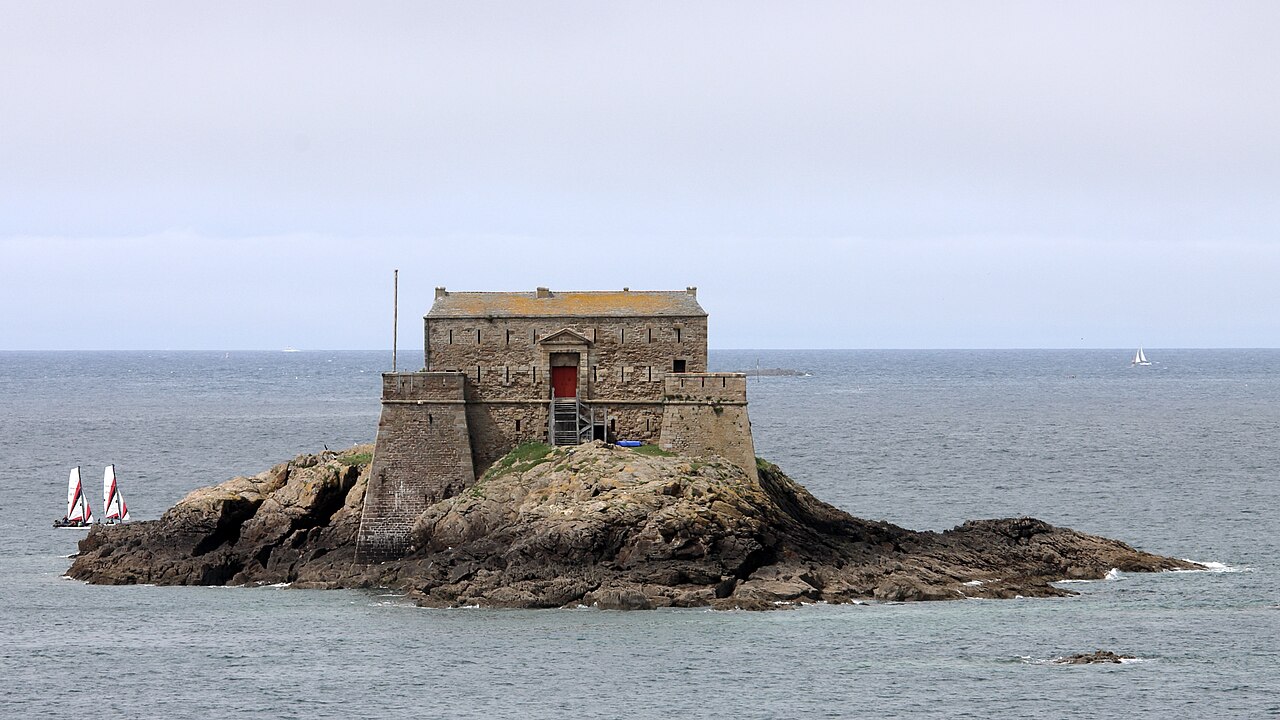
The fort is part of a larger historical landscape that includes the walled city of Saint-Malo with its castle and other forts such as Fort Petit-Bé. Nearby attractions include Fort Aleth and the Solidor Tower, both located opposite Saint-Malo, offering a comprehensive experience of the region's rich maritime and military heritage.
Frequently asked questions (FAQ)
- How do I get to Fort National?
- Fort National is located in Saint-Malo, France, and can be accessed by foot during low tide. Visitors can walk along the beach from the intra-muros area of Saint-Malo. It's advisable to check tide schedules to ensure safe passage.
- What is the historical significance of Fort National?
- Fort National was built in the late 17th century under the orders of King Louis XIV to protect the harbor of Saint-Malo from enemies. The fort played a crucial role in various military conflicts and has withstood sieges, showcasing its strategic importance over the centuries.
- When was Fort National constructed?
- Construction of Fort National began in 1689 and was completed in 1693. The fort was designed by the engineer Vauban, who is known for his innovative military architecture. It stands as a testament to the military engineering of its time.
- Can I visit Fort National?
- Yes, Fort National is open to visitors, and guided tours are available to enhance your experience. However, access is dependent on the tide, so it’s important to check tide times before planning your visit.
- Why is Fort National considered an architectural marvel?
- Fort National is recognized for its robust design and strategic location, featuring impressive stone walls and a unique pentagonal shape. Its construction reflects the military architectural techniques of the 17th century, making it a significant example of fortification design.
- Is it possible to explore the interior of Fort National?
- Yes, visitors can explore the interior of Fort National during guided tours. These tours provide insight into the fort's history, architecture, and its role in the defense of Saint-Malo.
- What are the opening hours for Fort National?
- Fort National typically opens to visitors from April to September, with varying hours depending on the day and season. It's advisable to check the official website for the most current opening times and any special events.
- What are the ticket prices for visiting Fort National?
- Ticket prices for Fort National are generally affordable, with discounts available for students and children. It’s best to check the official website for up-to-date pricing and any promotional offers.
- What is the best time to visit Fort National?
- The best time to visit Fort National is during the spring and summer months when the weather is pleasant and the tides are favorable. Visiting during low tide allows for easy access to the fort, providing a more enjoyable experience.
- Are there any nearby attractions to Fort National?
- Yes, nearby attractions include the historic walled city of Saint-Malo, the beautiful beaches, and the Grand Aquarium. After visiting Fort National, you can explore the charming streets filled with shops, cafes, and rich history.
Photo gallery

Information
Website
Visit websiteSources & official resources
Verify the information above using these authoritative references.
Loading map...
Visitor reviews
No reviews yet. Been here? Write the first review and help other travelers!
Write the first reviewVisited this castle? Share your experience
Your review helps other travelers and adds first-hand knowledge to our encyclopedia.