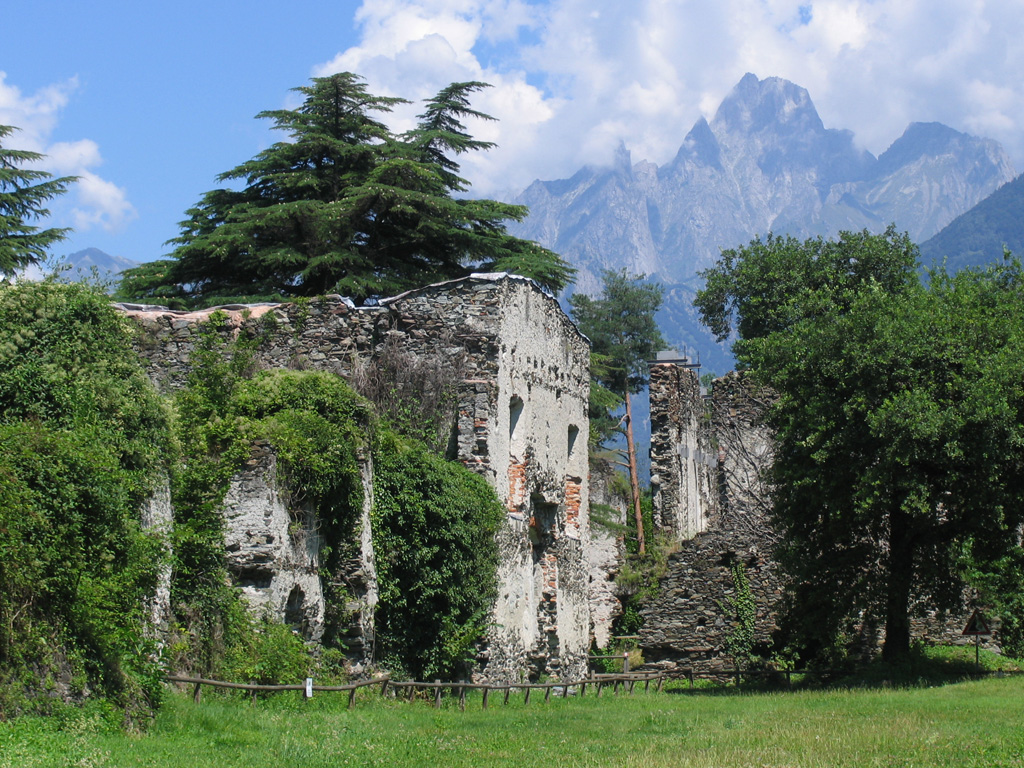
Fort Montecchio-Lusardi
Fort Montecchio-Lusardi is a uniquely preserved military fortification located in Colico, Italy, constructed between 1911 and 1914 during the modern period. It stands out as the only Italian fort from World War I to remain intact with its original artillery and structural elements, offering a rare glimpse into early 20th-century military architecture and defense strategy.
Strategic purpose and historical context
The fort was built as part of a defensive system designed to control key alpine passes and roads — specifically the Spluga, Maloja, and Stelvio routes. These passes were critical because they connected northern Italy to Switzerland and other regions, and the fort's role was to deter or respond to any incursion by the Central Powers that might violate Swiss neutrality and invade northern Italy. This defensive line extended up to Monte Legnone, forming a complex barrier system intended to protect the region from potential invasions during the turbulent years leading up to and including World War I.
Inactive but strategically significant
Despite its strategic importance, the fort never engaged in active combat during World War I. Its presence, however, was a significant deterrent. The fort's design and armament reflected the military engineering principles of the time, emphasizing strong defensive capabilities and control over key transportation routes.
Architectural features and armament
Fort Montecchio-Lusardi is divided into two main sections: the lower area and the upper area. The lower section houses living quarters and powder magazines, essential for the storage of ammunition and the daily needs of the garrison. The upper section contains the fort's primary defensive weaponry — four French 149 mm guns, each mounted inside a cast-iron rotating dome. These guns have an impressive range of up to 14 kilometers, enabling the fort to cover a wide area of the surrounding terrain and roads.
The two areas are connected by a curved gallery, allowing secure and protected movement between the living and operational parts of the fort. This architectural design highlights the emphasis on both functionality and defense, ensuring that personnel could move safely even under potential attack.
Preservation and original features
One of the most remarkable aspects of Fort Montecchio-Lusardi is its state of preservation. Unlike many other military installations from the same era, the fort retains its original weapons and structural components, making it an invaluable site for historians and military enthusiasts. The intact cast-iron gun turrets and the original layout offer a detailed understanding of early 20th-century fortification technology.
World War II and later history
During World War II, Fort Montecchio-Lusardi again saw little direct combat action. The only recorded gunfire occurred when partisans occupied the fort and fired upon a German column moving along the opposite bank of the nearby lake. This limited engagement underscores the fort's continued strategic value, even as warfare evolved.
After the war, the fort was repurposed as a weapons depot before eventually being transferred to state ownership. Its preservation has allowed it to become a cultural and historical monument, attracting visitors interested in military history and architecture.
Visiting Fort Montecchio-Lusardi today
Today, Fort Montecchio-Lusardi serves as a museum and historical site. Visitors can explore the fort's extensive galleries, living quarters, and gun emplacements. The original 149 mm artillery pieces are a highlight, providing a tangible connection to the fort's military past. The site offers insight into the defensive strategies of early 20th-century Italy and the broader context of World War I fortifications.
Architectural and cultural significance
The fort exemplifies modern military architecture from the early 1900s, showcasing the transition from traditional fortress designs to more mechanized and artillery-focused defenses. Its preservation allows for detailed study of construction techniques, materials, and defensive planning of the era.
As a cultural heritage site, Fort Montecchio-Lusardi contributes to understanding Italy's military history and the geopolitical tensions of the early 20th century. It stands as a rare surviving example of a World War I fortification that has remained largely unaltered.
Frequently asked questions (FAQ)
- How do I get to Fort Montecchio-Lusardi?
- Fort Montecchio-Lusardi is located in Colico, Italy, and can be accessed by car or public transportation. If you’re driving, follow the signs to Colico and park in the designated areas nearby. The castle is also reachable by local buses that connect from major towns in the area.
- What is the historical significance of Fort Montecchio-Lusardi?
- Built in the late 19th century, Fort Montecchio-Lusardi played a crucial role in Italy's military history, particularly during World War I and II. It was part of a series of fortifications designed to defend the border against potential invasions. Today, it stands as a testament to the region's strategic military past and attracts history enthusiasts.
- When was Fort Montecchio-Lusardi constructed?
- Construction of Fort Montecchio-Lusardi began in 1895 and was completed in 1904. The fort was built during a period of military modernization in Italy and reflects the architectural styles and defensive strategies of that era. Its completion marked an important advancement in the region's military capabilities.
- Can I visit Fort Montecchio-Lusardi with children?
- Yes, Fort Montecchio-Lusardi is family-friendly and welcomes visitors of all ages. The site offers educational exhibits and guided tours that can engage children and provide them with a fun learning experience about history and architecture. Make sure to plan your visit to include interactive elements suitable for younger audiences.
- Why is Fort Montecchio-Lusardi popular among tourists?
- Fort Montecchio-Lusardi is popular for its stunning views of Lake Como and the surrounding mountains, making it a picturesque destination. The historical significance and well-preserved architecture draw history buffs and photographers alike. Its location also makes it a great stop for those exploring the natural beauty of the area.
- Is it possible to explore the interior of the fort?
- Yes, visitors can explore the interior of Fort Montecchio-Lusardi during guided tours. These tours often include access to various rooms, exhibits, and the fort's impressive machinery, providing an in-depth understanding of its historical function. It's recommended to check the schedule in advance as access may vary depending on the day.
- What are the opening hours for Fort Montecchio-Lusardi?
- Fort Montecchio-Lusardi typically opens from 10 AM to 5 PM, but hours may vary by season. It is advisable to check the official website or contact the fort directly for the most current information regarding opening times. Special events or holidays may also affect the schedule.
- What are the ticket prices for visiting Fort Montecchio-Lusardi?
- Ticket prices for Fort Montecchio-Lusardi are generally affordable, with discounts available for children, students, and seniors. As of the latest updates, adult tickets are approximately €5, while reduced rates are offered for families and groups. Check the official site for any special promotions or temporary changes in pricing.
- What nearby attractions can I visit after Fort Montecchio-Lusardi?
- After visiting Fort Montecchio-Lusardi, you can explore the beautiful beaches of Lake Como, which are just a short drive away. The nearby town of Colico also offers charming cafes and shops, as well as hiking trails that provide stunning views of the lake and mountains. Additionally, the historic Villa Monastero is a worthwhile visit for those interested in gardens and architecture.
Information
Loading map...
Visitor reviews
No reviews yet. Been here? Write the first review and help other travelers!
Write the first reviewVisited this castle? Share your experience
Your review helps other travelers and adds first-hand knowledge to our encyclopedia.