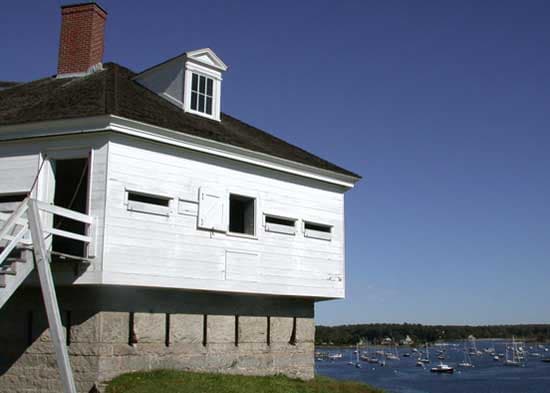
Fort McClary
Fort McClary is a significant 19th-century bastioned fortress situated at Kittery Point, Maine, guarding the southern entrance to the Piscataqua River and the harbor of Portsmouth, New Hampshire. This fortification played a crucial role in the coastal defense system of the United States during the 19th century, particularly in protecting the Portsmouth Naval Shipyard located nearby in Kittery. Its strategic location allowed it to oversee and control naval access to one of the important shipbuilding and naval repair facilities of the era.
Historical background and military significance
Constructed primarily in the 19th century, Fort McClary was part of a broader network of coastal defenses designed to safeguard key naval and commercial ports along the northeastern seaboard of the United States. The fort was named after Lieutenant Hugh McClary, an officer killed in the War of 1812, reflecting its military heritage and connection to American naval history. Throughout its active years, the fort was equipped with heavy artillery and staffed by military personnel tasked with defending the harbor against potential enemy incursions, especially during periods of heightened tensions such as the Civil War and later conflicts.
Architectural features and fortifications
The design of Fort McClary exemplifies the bastioned fortress style prevalent in coastal defenses of the period. Its layout includes angled bastions that allowed defenders to cover adjacent walls with cannon fire, reducing blind spots and enhancing defensive capabilities. The fort's walls were constructed from durable materials such as granite and brick to withstand bombardment. One of the most notable surviving structures on the site is the blockhouse dating from 1844, which served as a fortified guardhouse and shelter for troops. The blockhouse's robust construction and strategic placement within the fort's perimeter highlight its importance in the overall defensive scheme.
Additional structures and features
Besides the blockhouse, Fort McClary includes remnants of gun emplacements, powder magazines, and barracks that illustrate the fort's operational complexity. The site also features earthworks and defensive ditches that contributed to its resilience against attack. These elements collectively demonstrate the evolution of military architecture and technology during the 19th century, reflecting adaptations to new artillery and tactical doctrines.
Preservation and current status
Today, Fort McClary is preserved as a state historic site managed by the State of Maine. It offers visitors a tangible connection to the United States' coastal defense history and military heritage. The site is accessible to the public, providing educational opportunities through interpretive signage and guided tours that explain the fort's historical context and architectural features. Preservation efforts have focused on maintaining the structural integrity of the blockhouse and other surviving elements, ensuring that Fort McClary remains an important cultural and historical resource.
Visitor experience and educational value
Visitors to Fort McClary can explore the grounds, view the remaining fortifications, and learn about the strategic importance of coastal defenses in American history. The site serves as a reminder of the military challenges faced in protecting vital maritime infrastructure and offers insights into 19th-century military engineering. Its scenic location overlooking the Piscataqua River also provides a picturesque setting that complements its historical significance.
Frequently asked questions (FAQ)
- What is the historical significance of Fort McClary?
- Fort McClary served as a key coastal defense fortification in the 19th century, protecting the Portsmouth Naval Shipyard and the harbor of Portsmouth, New Hampshire. It reflects the military strategies and technologies used in American coastal defense during that period.
- Can I visit Fort McClary today?
- Yes, Fort McClary is open to the public as a state historic site operated by the State of Maine. Visitors can explore the fort's grounds, see the blockhouse, and learn about its history through interpretive displays.
- When was the blockhouse at Fort McClary built?
- The blockhouse at Fort McClary was constructed in 1844 and is one of the most prominent surviving structures on the site, showcasing typical mid-19th century military architecture.
- What architectural style characterizes Fort McClary?
- Fort McClary is designed as a bastioned fortress, a style featuring angled bastions for improved defensive coverage, typical of coastal fortifications in the 19th century.
- Where is Fort McClary located?
- Fort McClary is located at Kittery Point, Maine, at the mouth of the Piscataqua River, guarding the approach to Portsmouth Harbor and the Portsmouth Naval Shipyard.
Photo gallery

Information
Current owner
State of Maine
Loading map...
Visitor reviews
No reviews yet. Been here? Write the first review and help other travelers!
Write the first reviewVisited this castle? Share your experience
Your review helps other travelers and adds first-hand knowledge to our encyclopedia.


