Fort James
Fort James, also known as James Fort, is a significant bastioned fortress located in Accra, Ghana, along the historic coast formerly known as the Gold Coast. Constructed in 1673 by the Royal African Company of England (RAC), this fort was an integral part of the European trading network in West Africa during the Renaissance period. Its primary purpose was as a fortified trading post for the exchange of gold and enslaved people, reflecting the complex and often tragic history of European colonial expansion and the transatlantic slave trade.
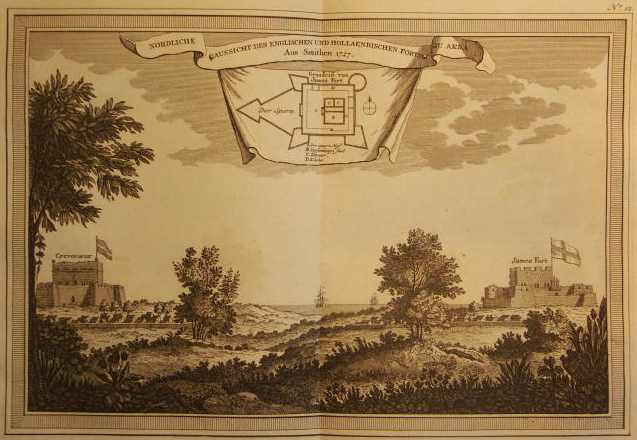
The fort's strategic position on the coast placed it alongside other prominent European forts such as the Dutch Fort Crêvecœur (1649) and the Danish Fort Christiansborg (1652). Fort James was named in honor of James, Duke of York—who later became King James II of England—who was the Governor of the RAC at the time. The adjacent district of Jamestown in Accra also derives its name from him, highlighting the fort's influence on local geography and colonial administration.
Architectural design and features
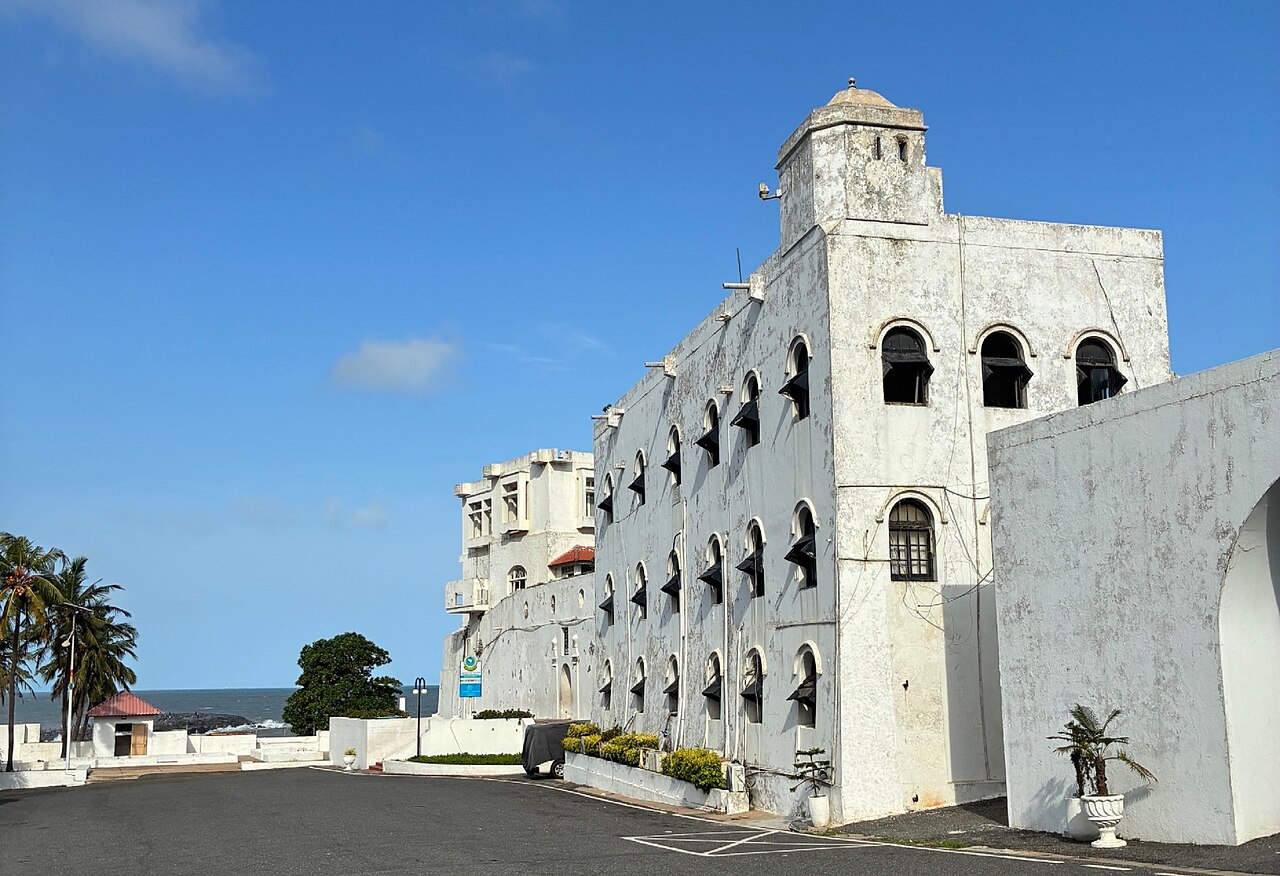
Fort James exemplifies the bastioned fortress style, a military architectural form that became widespread during the Renaissance. This design included angled bastions projecting from the main walls, allowing defenders to cover adjacent walls with crossfire, a significant advancement over medieval fortifications. The fort's walls are thick and robust, constructed primarily from stone and mortar, designed to withstand cannon fire and attacks by sea or land.
The fortress features a roughly rectangular layout with four prominent bastions at its corners. These bastions provided platforms for cannons and watch posts, enabling comprehensive surveillance and defense of the surrounding coastline. The fort's entrance was fortified with a heavy gate and guardhouses, controlling access to the interior courtyard and storage areas.
Inside, Fort James contained living quarters for soldiers and officials, warehouses for goods including gold and slaves, and administrative offices. The design also included dungeons and prison cells, reflecting its later use as a detention facility. Its proximity to the Jamestown Lighthouse underscores its continued strategic importance as a coastal defense point.
Historical significance and colonial context
Fort James played a crucial role in the European colonization and trade activities on the West African coast. The fort was a key node in the transatlantic slave trade, where enslaved Africans were held before being transported across the Atlantic. The fort’s construction by the RAC marked the English effort to compete with Dutch, Danish, and Portuguese powers for control over trade in the region.
During its operational period, Fort James witnessed numerous historical events, including conflicts between European powers vying for dominance in the area. The fort also served as a prison for various political and common prisoners, most notably Kwame Nkrumah, Ghana’s first president, who was incarcerated there from 1950 to 1951 during the struggle for independence.
Fort james as a prison
From the colonial era until as recently as 2008, Fort James served as a prison facility. Its robust construction and isolated location made it suitable for detaining prisoners. The incarceration of prominent figures like Nkrumah alongside common criminals reflects the fort’s dual role in both colonial administration and suppression of political dissent.
World heritage and preservation
In recognition of its historical and cultural importance, Fort James was inscribed on the UNESCO World Heritage List in 1979 as part of the group of castles and forts along Ghana’s coast. This designation highlights its significance in illustrating the European colonial presence and the impact of the transatlantic slave trade on the region.
Today, Fort James stands as a well-preserved monument, offering insight into the military architecture of the Renaissance period and the complex history of European-African interactions. The site attracts historians, tourists, and scholars interested in colonial history, architecture, and heritage conservation.
Visiting fort james
Visitors to Fort James can explore its bastioned walls, bastions, and internal courtyards. The nearby Jamestown Lighthouse provides additional context to the coastal defense system. Guided tours often cover the fort’s architectural features, its role in trade and slavery, and its later use as a prison.
Frequently asked questions (FAQ)
- What is the historical significance of Fort James in Accra?
- Fort James was a key trading post built by the Royal African Company in 1673, central to the gold and slave trade on the Gold Coast and later served as a prison, including holding Ghana's first president, Kwame Nkrumah.
- Can visitors tour Fort James today?
- Yes, Fort James is a well-preserved historical site open to visitors who can explore its bastioned walls, bastions, and courtyards, often with guided tours explaining its history and architecture.
- When was Fort James constructed and by whom?
- Fort James was constructed in 1673 by the Royal African Company of England to serve as a fortified trading post on the Gold Coast.
- Why is Fort James part of the UNESCO World Heritage List?
- Fort James is part of the UNESCO World Heritage List because of its importance in illustrating European colonial trade and the transatlantic slave trade along Ghana's coast.
- What architectural style characterizes Fort James?
- Fort James is built in the bastioned fortress style typical of the Renaissance period, featuring angled bastions for improved defense against attacks.
Photo gallery

Photo by Unknown authorUnknown author•Public domain
Information
Loading map...
Visitor reviews
No reviews yet. Been here? Write the first review and help other travelers!
Write the first reviewVisited this castle? Share your experience
Your review helps other travelers and adds first-hand knowledge to our encyclopedia.