Fort Douaumont
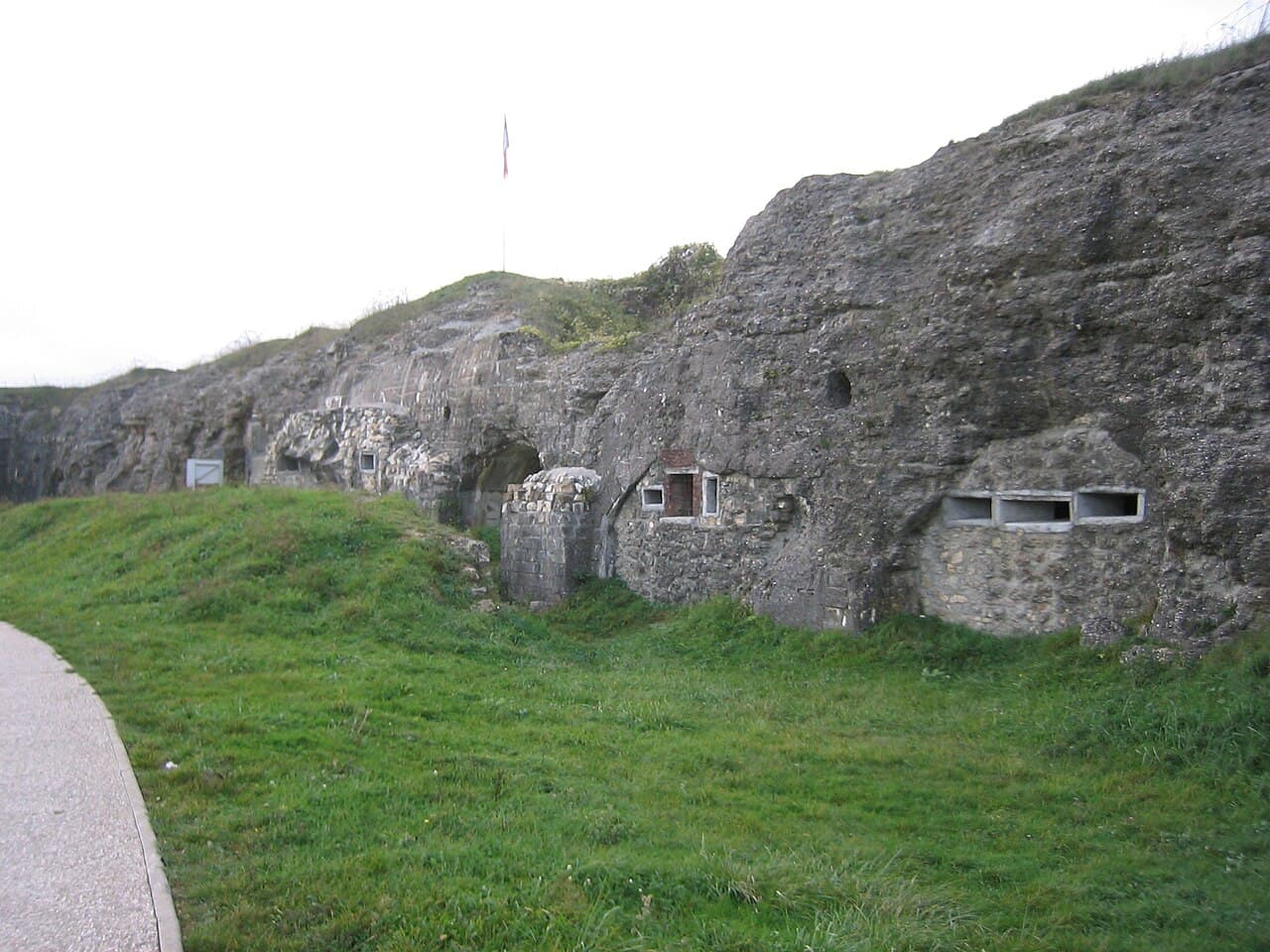
Fort Douaumont stands as the largest and most elevated fortification among the ring of 19 major defensive forts encircling the city of Verdun, France, constructed in the 1890s as part of a comprehensive military strategy to protect this key strategic location. Covering an expansive surface area of approximately 30,000 square metres and stretching about 400 metres in length, the fort exemplifies the pinnacle of 19th-century military engineering with its robust construction and advanced defensive features.
Architectural design and fortifications
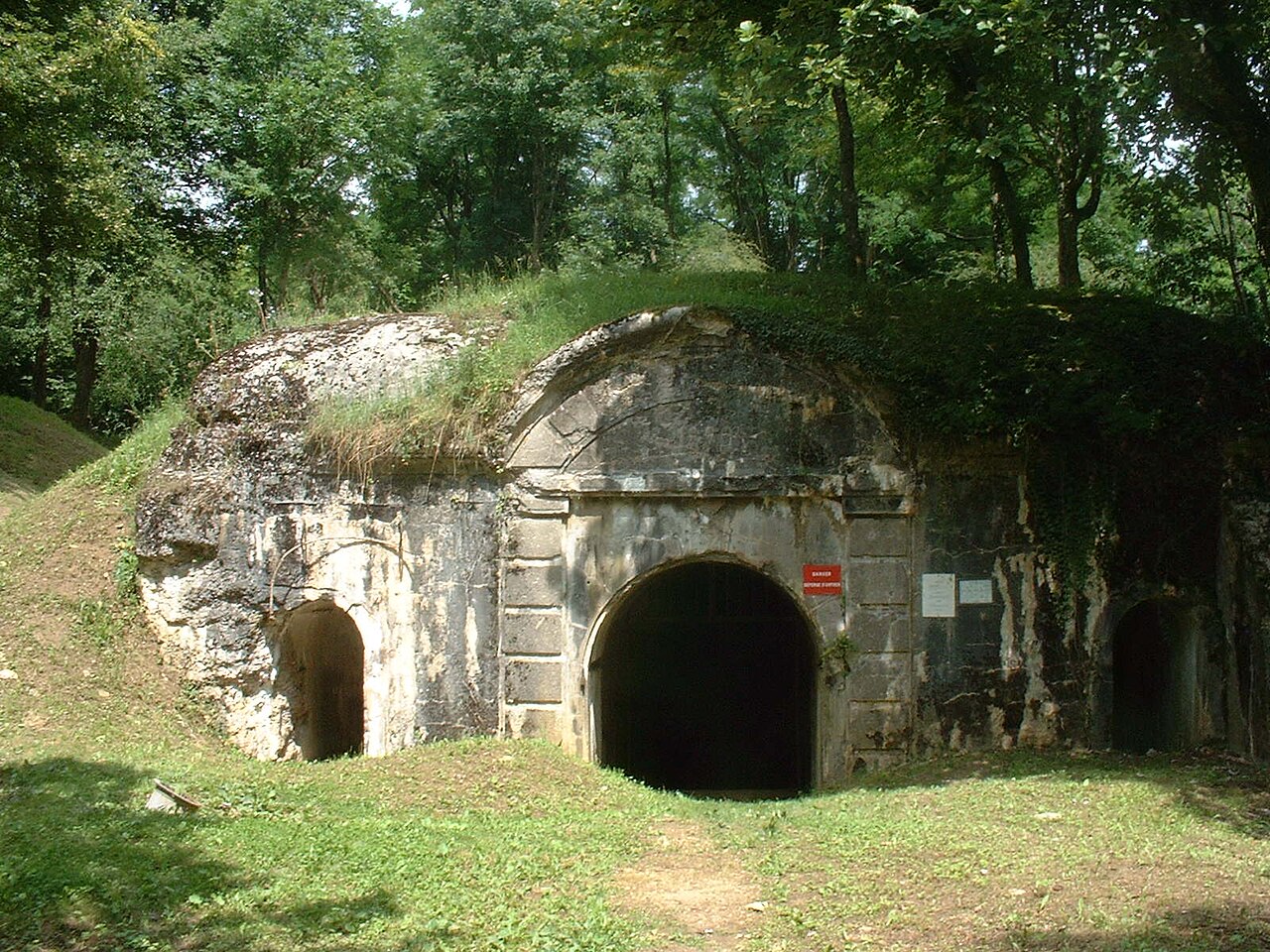
The fort's design incorporates two subterranean levels, each shielded by a formidable 12-metre-thick steel-reinforced concrete roof resting on a sand cushion, a pioneering technique at the time intended to absorb and deflect the impact of heavy artillery bombardments. The main entrance was strategically located at the rear of the fort, providing controlled access and enhancing defensive capabilities. Internally, two principal tunnels ran east-west, positioned one above the other, serving as the primary arteries for movement within the fort. Branching off these main tunnels were numerous barracks rooms and corridors that connected to various outlying parts of the complex.
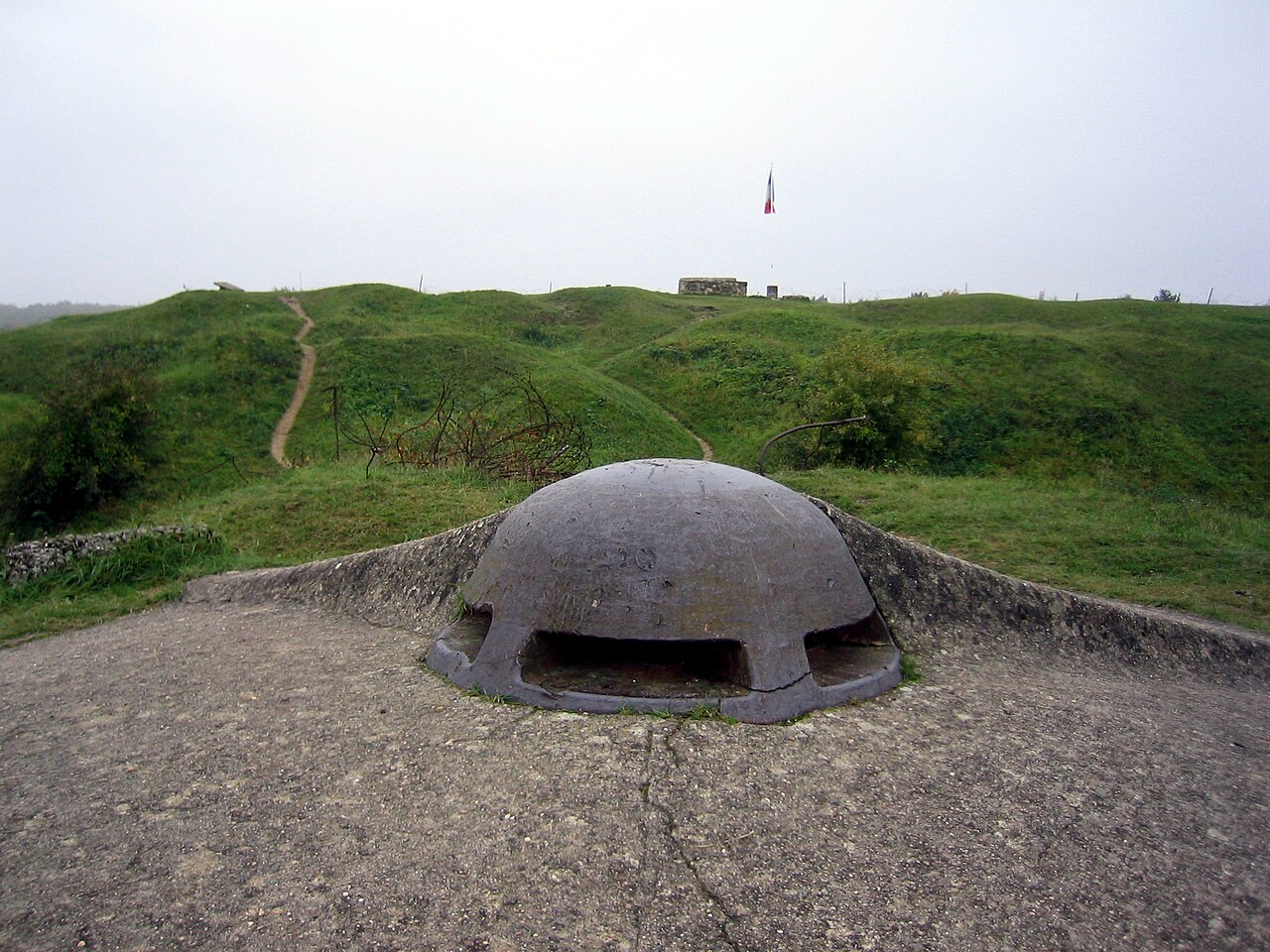
Fort Douaumont was heavily armed with a variety of artillery and defensive positions. Notably, it featured a 155 mm rotating and retractable gun turret alongside a 75 mm rotating and retractable gun turret. Additionally, four other 75 mm guns were installed in flanking positions known as the 'Bourges Casemates', designed to sweep the intervals between forts. The fort also included several machine-gun turrets, enhancing its close-range defensive firepower.
Historical context and wartime significance
Despite its formidable design, by 1915, the French General Staff recognized that even the most robust forts around Verdun, including Fort Douaumont, were vulnerable to the new generation of German artillery. The introduction of the 420 mm Gamma guns—super-heavy howitzers capable of devastating bombardments—had already neutralized several large Belgian forts during the early months of World War I. As a result, Fort Douaumont and its sister forts were deemed ineffective against such firepower and were consequently partly disarmed and left largely undefended from 1915 onward.
This strategic miscalculation had dramatic consequences. On 25 February 1916, just three days after the Battle of Verdun commenced, a small German raiding party of only 19 officers and 79 men infiltrated Fort Douaumont without resistance. They gained entry through an open window by the moat, exploiting the fort's weakened defenses. The fort's swift fall shocked the French Army and had a profound psychological impact, setting the tone for the brutal and prolonged nine-month battle that followed, marked by staggering human casualties.
Recapture and legacy
Fort Douaumont remained under German control for several months until it was finally recaptured by three infantry divisions of the French Second Army during the First Offensive Battle of Verdun on 24 October 1916. This recapture was a pivotal moment in the battle, symbolizing a significant French resurgence and effectively bringing closure to the fighting around the fort for that year.
Today, Fort Douaumont is preserved as a historical site open to the public. Visitors can explore its extensive underground galleries, artillery positions, and barracks, gaining insight into the fort's architectural ingenuity and the brutal conditions endured during one of World War I's most infamous battles.
Fort douaumont's role in military architecture evolution
Fort Douaumont represents a key example of the bastioned fortress type that characterized late 19th-century military fortifications, combining traditional defensive concepts with modern materials such as reinforced concrete. Its design reflects the transitional period in military architecture, where static fortifications faced new challenges from increasingly powerful artillery technology. The fort's eventual vulnerability highlighted the limitations of fixed defenses in modern warfare and influenced subsequent military engineering approaches.
Structural features and innovations
The fort's two-level tunnel system facilitated efficient troop movement and logistical support, while its retractable gun turrets were advanced for their time, allowing artillery to be protected when not in use and quickly deployed during combat. The thick concrete roof and the use of a sand cushion as an impact absorber were innovative solutions aimed at countering heavy shelling, underscoring the fort's role as a testing ground for new defensive technologies.
Impact of artillery advancements
The devastating effectiveness of the German 420 mm Gamma guns during World War I exposed the vulnerabilities of even the most modern forts like Douaumont. These super-heavy howitzers could fire massive shells capable of penetrating thick concrete and steel defenses, rendering traditional fortifications obsolete and prompting a reevaluation of military defense strategies.
Visiting fort douaumont today
As a preserved historical monument, Fort Douaumont offers visitors a tangible connection to the intense military history of Verdun. The site includes well-maintained underground galleries, artillery emplacements, and interpretive displays that detail the fort's construction, armament, and role in the Battle of Verdun. Guided tours and informational panels provide context about the fort's strategic importance and the experiences of soldiers stationed there.
Visitors should prepare for extensive walking and some uneven terrain within the tunnels. The fort is accessible seasonally, with visiting hours typically aligned to daylight periods. Entrance fees may apply, supporting ongoing preservation efforts.
Frequently asked questions (FAQ)
- How do I get to Fort Douaumont?
- Fort Douaumont is located near Verdun in the Grand Est region of France. It is accessible by car and public transport from Verdun, with local signage directing visitors to the site.
- What is the historical significance of Fort Douaumont?
- Fort Douaumont was the largest fort in the Verdun defensive ring and played a critical role in World War I, particularly during the Battle of Verdun in 1916.
- Can I explore the underground tunnels of Fort Douaumont?
- Yes, visitors can explore the extensive underground galleries and tunnels, which provide insight into the fort's design and wartime conditions.
- When is the best time to visit Fort Douaumont?
- The fort is best visited during the spring to early autumn months when the site is fully accessible and weather conditions are favorable.
- Are there guided tours available at Fort Douaumont?
- Guided tours are often available and recommended to fully understand the historical context and architectural features of the fort.
Photo gallery

Information
Opening hours
Seasonal, typically daylight hours
Ticket prices
Entrance fee applies
Current owner
French government
Loading map...
Visitor reviews
No reviews yet. Been here? Write the first review and help other travelers!
Write the first reviewVisited this castle? Share your experience
Your review helps other travelers and adds first-hand knowledge to our encyclopedia.