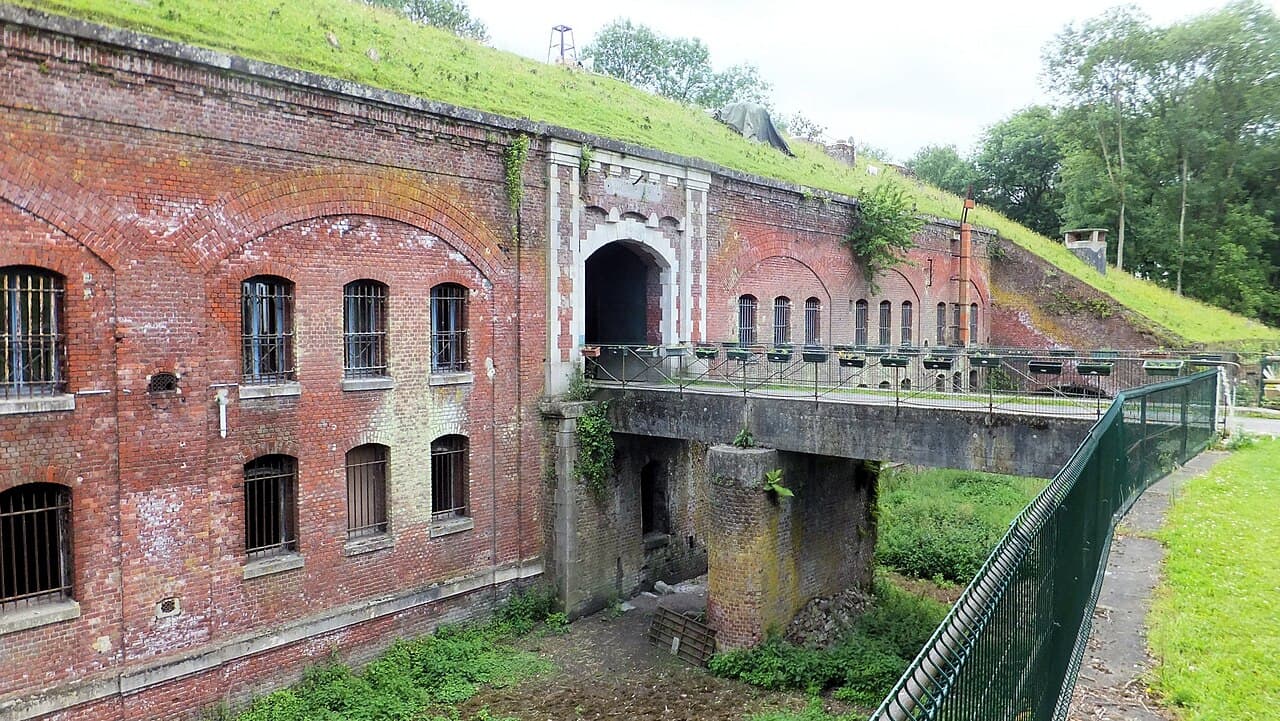
Fort de Seclin
Fort de Seclin, also known as Fort Duhoux, is a significant example of 19th-century French military architecture located near the commune of Seclin, approximately 9.5 kilometres south of Lille in northern France. Constructed between 1873 and 1875, this fortress was part of the extensive Séré de Rivières system, a network of fortifications built in response to the strategic lessons learned from the Franco-Prussian War of 1870-1871. Its design reflects the military engineering principles of the modern period, specifically tailored to resist the artillery technology of its time.
Historical context and strategic importance
The Séré de Rivières system was developed to protect France's borders and key cities after the devastating defeat in the Franco-Prussian War, which exposed the vulnerabilities of older fortifications. Fort de Seclin was strategically positioned to defend the southern approaches to Lille, a major industrial and military hub. This placement allowed it to serve as a critical component in the layered defensive strategy designed to delay or repel invading forces.
Despite its robust initial design, Fort de Seclin was never upgraded to counter the rapid advancements in artillery technology that emerged in the late 19th century, such as high-explosive shells and more powerful rifled guns. This lack of modernization limited its military effectiveness in subsequent conflicts but preserved its original architectural integrity.
Architectural features and design
Fort de Seclin exemplifies the characteristics of a bastioned fortress, a style that evolved to improve defensive capabilities against artillery bombardment. The fortress features a polygonal layout with angled bastions that provide overlapping fields of fire, minimizing blind spots and enhancing its defensive perimeter.
The construction utilized thick masonry walls combined with earthworks to absorb and deflect artillery impacts. Defensive elements include a deep moat surrounding the fort, reinforced gates, and multiple firing positions for artillery and infantry. The internal layout comprises barracks, ammunition magazines, command posts, and storage facilities arranged to support sustained defense during a siege.
Unlike earlier medieval castles, Fort de Seclin's design focuses on low-profile structures integrated into the landscape to reduce visibility and vulnerability. The use of concrete and iron in some structural components marks the transition from traditional stone fortifications to modern military engineering techniques.
Preservation and public access
Today, Fort de Seclin is well preserved thanks to the efforts of a local preservation association dedicated to maintaining and interpreting the site for visitors. The fort remains largely intact, offering a rare glimpse into the military architecture of the late 19th century and the strategic mindset of that era.
The preservation group organizes guided tours and educational programs that explain the fort's historical significance, architectural features, and role within the broader Séré de Rivières system. Visitors can explore the bastions, underground passages, and defensive structures, gaining insight into the daily life of soldiers stationed there.
Its proximity to Lille makes Fort de Seclin accessible for day trips, attracting history enthusiasts and scholars interested in military fortifications and French history.
Architectural legacy and significance
Fort de Seclin stands as a testament to the evolution of fortress design during a period of rapid technological change in warfare. It bridges the gap between traditional masonry castles and the modern fortifications that would dominate the 20th century. The fortress's design principles influenced subsequent military architecture, emphasizing the importance of integrating earthworks and low-profile structures to counteract artillery advancements.
As part of the Séré de Rivières system, Fort de Seclin contributes to understanding France's military strategy and architectural responses following a major national crisis. Its preservation allows for ongoing study and appreciation of this critical period in European military history.
Frequently asked questions (FAQ)
- How do I get to Fort de Seclin?
- Fort de Seclin is conveniently located near the center of Seclin, France. You can reach it by car, public transport, or even on foot if you are staying nearby. The nearest train station is just a short walk away, making it accessible for visitors from larger cities like Lille.
- What is the historical significance of Fort de Seclin?
- Fort de Seclin was built in the late 19th century as part of the French defensive strategy against potential invasions. It played a vital role during various conflicts, showcasing France's military architecture of the time. Today, the fort stands as a testament to the region's rich history and is a key point of interest for history enthusiasts.
- When was Fort de Seclin constructed?
- Construction of Fort de Seclin began in 1878 and was completed in 1881. It was designed during a period of military modernization in France, reflecting the strategic needs of that era. The fort has since undergone various changes but retains much of its original structure.
- Can I take guided tours of Fort de Seclin?
- Yes, guided tours of Fort de Seclin are available for visitors who want to learn more about its history and architecture. These tours are led by knowledgeable guides who provide insights into the fort's significance and its role in military history. It is advisable to check the schedule and book in advance, especially during peak tourist seasons.
- Why is the architecture of Fort de Seclin noteworthy?
- The architecture of Fort de Seclin is noteworthy due to its design, which combines functionality with military aesthetics. The fort features robust stone walls, intricate defensive structures, and unique architectural elements typical of 19th-century military forts. Its design reflects the advances in fortification techniques during that period.
- Is it possible to visit Fort de Seclin with children?
- Yes, Fort de Seclin is a family-friendly destination and offers a unique experience for visitors of all ages. Children will enjoy exploring the fort's grounds and learning about its history through interactive exhibits. However, it is recommended to supervise younger children due to the fort's high walls and uneven terrain.
- What are the opening hours for Fort de Seclin?
- Fort de Seclin is typically open to visitors from Tuesday to Sunday, with varying hours depending on the season. During peak tourist months, the fort may extend its hours to accommodate more visitors. It is advisable to check the official website or contact the fort directly for the most current information.
- What are the ticket prices for visiting Fort de Seclin?
- Ticket prices for Fort de Seclin are generally affordable, with discounts available for students and seniors. Children under a certain age may enter for free or at a reduced rate. For the most accurate and up-to-date pricing, visitors should consult the official website before planning their trip.
- What nearby attractions should I visit while in Seclin?
- While visiting Fort de Seclin, you can also explore other nearby attractions such as the charming town center of Seclin, featuring local shops and cafes. The area is rich in parks and natural spaces ideal for a leisurely stroll. Additionally, the city of Lille, with its vibrant culture and historical sites, is just a short drive away.
Photo gallery

Information
Current owner
Local preservation association
Loading map...
Visitor reviews
No reviews yet. Been here? Write the first review and help other travelers!
Write the first reviewVisited this castle? Share your experience
Your review helps other travelers and adds first-hand knowledge to our encyclopedia.


