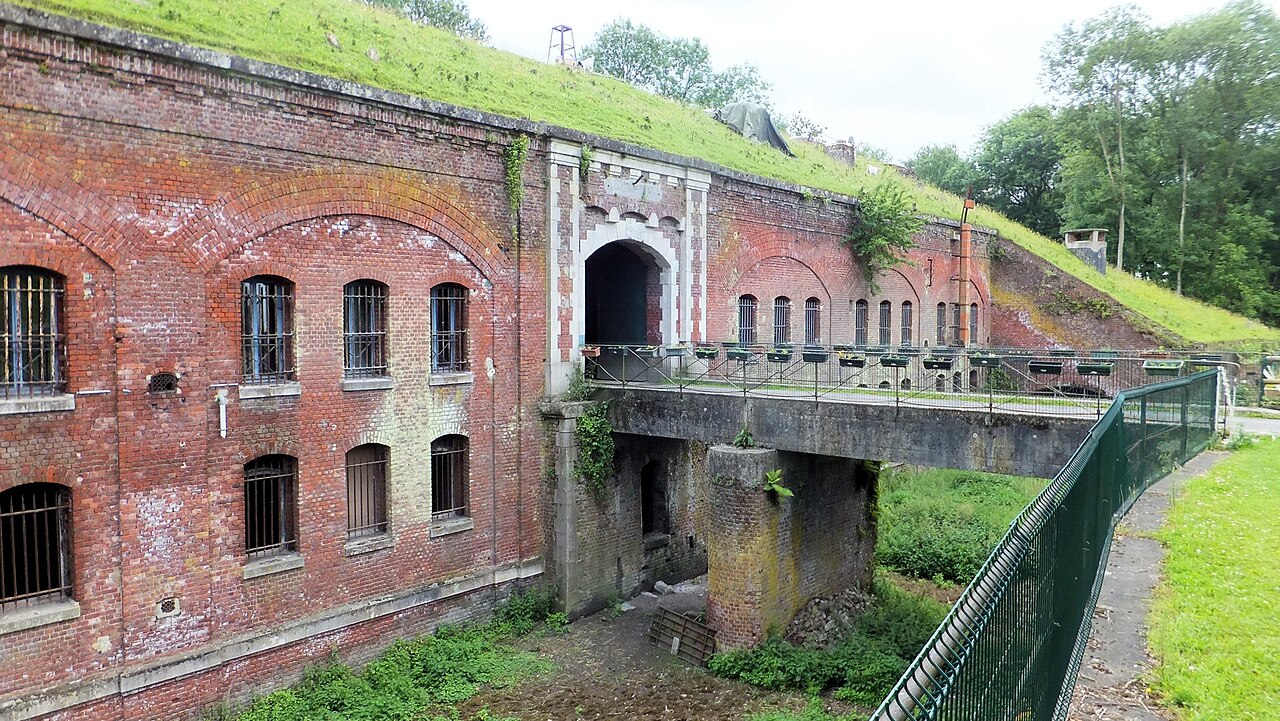
Citadel of Lille
The Citadel of Lille (French: Citadelle de Lille; Dutch: Citadel van Rijsel) is a prominent 17th-century bastioned fortress located in Lille, France. Constructed between 1667 and 1670, it was designed by the famed military engineer Sébastien Le Prestre de Vauban, who is celebrated for his revolutionary fortification designs during the Renaissance period. The citadel is renowned for its pentagonal shape and strategic integration into the city's defensive walls, exemplifying the principles of star fort design that dominated military architecture in the 17th century.
Architectural design and features
The Citadel of Lille stands as a quintessential example of Vauban's expertise in bastioned fortress construction. Its pentagonal layout is surrounded by a series of earthworks, moats, and angled bastions designed to maximize defensive capabilities against artillery attacks. The use of low, thick walls and angled bastions allowed defenders to cover all approaches with overlapping fields of fire, minimizing blind spots. The fortress includes ravelins, covered ways, and glacis that enhanced its defensive depth and resilience.
The citadel's internal structures include barracks, officers' quarters, powder magazines, and storerooms, all arranged to support a garrison capable of rapid response. The design reflects Vauban's philosophy of combining functionality with aesthetic harmony, resulting in a fortress that is both formidable and architecturally refined.
Historical context and significance
Built shortly after the Treaty of Aix-la-Chapelle (1668), the Citadel of Lille was part of France's efforts to consolidate and defend its newly acquired territories in the north. Its construction was commissioned by King Louis XIV and executed under the supervision of Vauban, who was tasked with strengthening France's borders through a network of modern fortifications.
Dubbed the "Queen of the citadels" (Reine des citadelles) by Vauban himself, the Citadel of Lille played a crucial role in several military conflicts, including the War of the Spanish Succession and later European wars. Its robust design allowed it to withstand sieges and served as a strategic military base for centuries.
Preservation and modern use
The Citadel of Lille is notable for its excellent state of preservation, with many of its original structures and defensive features intact. The fortress has been classified as a historic monument in stages during the early 20th century (1914, 1921, and 1934), reflecting its cultural and architectural importance.
Today, the citadel hosts the Corps de réaction rapide France, a rapid reaction force of the French military, maintaining its longstanding military function. The site is accessible to the public for guided tours and educational visits, offering insight into 17th-century military architecture and the legacy of Vauban's fortification principles.
Architectural legacy and cultural impact
The Citadel of Lille remains a key example of Renaissance military architecture and Vauban's innovative approach to fortress design. Its influence can be seen in numerous other European fortifications that adopted similar bastioned layouts. The citadel's harmonious blend of military functionality and architectural elegance continues to attract historians, architects, and visitors interested in the evolution of defensive structures.
As a cultural landmark, the Citadel of Lille contributes to the historical identity of Lille and the broader Hauts-de-France region. It stands as a testament to the strategic military thinking of the 17th century and the enduring legacy of one of France's most celebrated engineers.
Frequently asked questions (FAQ)
- What is the historical significance of the Citadel of Lille?
- The Citadel of Lille, built between 1667 and 1670 by the renowned military engineer Vauban, is a prime example of 17th-century military architecture. It played a crucial role in the defense of Lille and was recognized as a UNESCO World Heritage site for its historical and architectural value.
- When is the best time to visit the Citadel of Lille?
- The best time to visit the Citadel of Lille is during the spring and early autumn months when the weather is mild and pleasant. This allows visitors to enjoy the beautiful surrounding park and gardens while exploring the fortress without the summer crowds.
- Can I access the Citadel of Lille with a wheelchair?
- Yes, the Citadel of Lille is accessible for visitors with mobility challenges. The pathways and visitor areas have been designed to accommodate wheelchairs, ensuring everyone can enjoy the historical site.
- What are the opening hours of the Citadel of Lille?
- The Citadel of Lille is open to visitors year-round, with hours varying by season. Typically, it opens at 9 AM and closes at 6 PM, but it's advisable to check the official website for any seasonal changes or special closures.
- Is it possible to take guided tours of the Citadel of Lille?
- Yes, guided tours are available for visitors who want to learn more about the history and architecture of the Citadel. These tours are led by knowledgeable guides and provide an in-depth view of the fortress's significance and features.
- What are the ticket prices for visiting the Citadel of Lille?
- Tickets for the Citadel of Lille are reasonably priced, with discounts available for students and seniors. Children under a certain age may enter for free, so it's best to check the official site for the most current pricing and available discounts.
- Are there nearby attractions to visit when at the Citadel of Lille?
- Yes, the Citadel of Lille is conveniently located near several attractions, including the Palais des Beaux-Arts and the Old Stock Exchange. Visitors can easily explore the vibrant cultural offerings of Lille, making it a great starting point for a day of sightseeing.
- How do I get to the Citadel of Lille by public transport?
- You can reach the Citadel of Lille easily via public transport, including buses and trams. Several lines have stops near the Citadel, making it convenient for visitors to access this historical landmark from various parts of the city.
Information
Loading map...
Visitor reviews
No reviews yet. Been here? Write the first review and help other travelers!
Write the first reviewVisited this castle? Share your experience
Your review helps other travelers and adds first-hand knowledge to our encyclopedia.