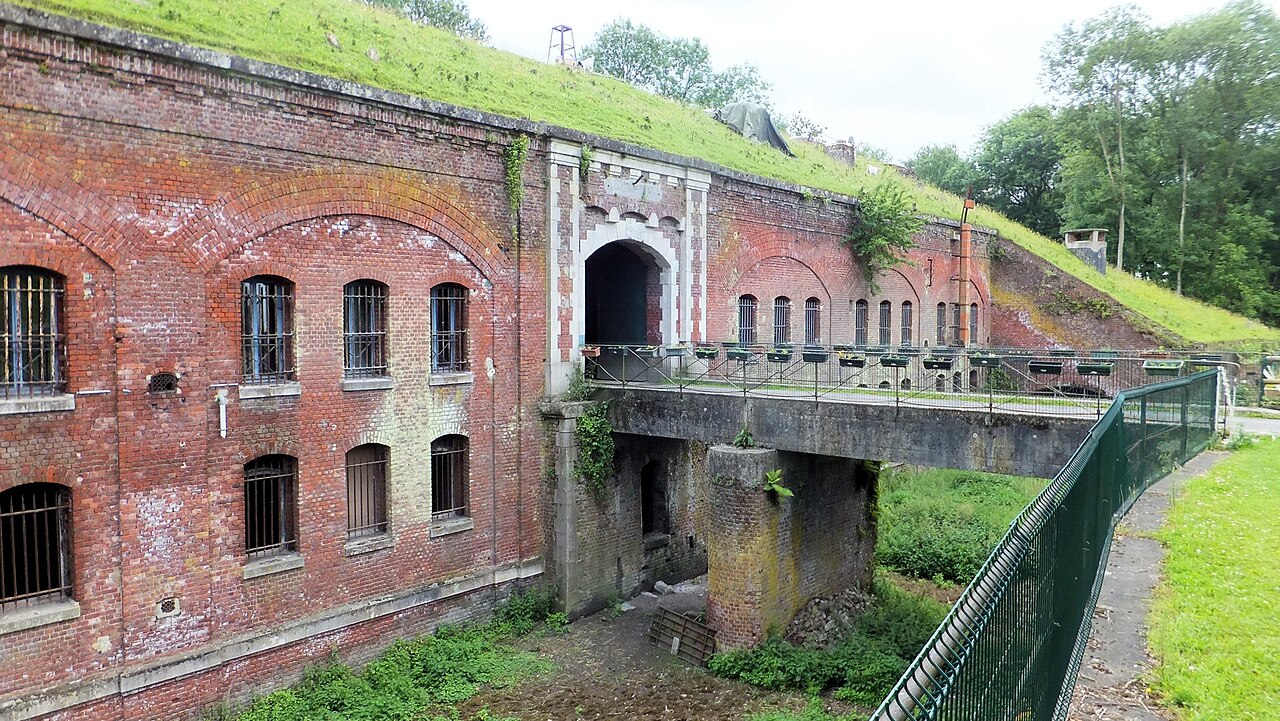
Flers Castle
Flers Castle, known locally as Château de Flers, is a notable example of 17th-century Flemish architecture situated in Villeneuve-d'Ascq in the Nord department of France. Completed in 1661, the castle stands on the site of an earlier manor, reflecting the architectural and social evolution of the region through centuries.
Early history and construction
The construction of Flers Castle began in the early 17th century, likely replacing a previous manor house that occupied the site. The castle was completed under the ownership of the De Kessel family, who acquired the property through marriage and were the Lords of Flers from 1667 to 1747. The castle's architecture is emblematic of the Flemish style prevalent in the region during this period, characterized by its brick and stone construction, steeply pitched roofs, and ornate gables.
18th-century modifications and ownership changes
In 1747, the castle passed to Philippe André de Baudequin, Seigneur of Sainghin, through family inheritance. By 1770, it was owned by Marie Claire Josèphe de Baudequin, who married Count Ladislas de Diesbach, a Swiss officer in the King's Swiss Guards. Around 1787, the Diesbach family undertook significant renovations that altered the castle's appearance and interior. They removed the original mullioned windows and replaced them with larger, simpler window openings. The French-style ceilings were replaced by coffered ceilings, and new fireplaces were installed to modernize the interiors. The original drawbridge was replaced by a stone bridge, which remains a distinctive feature today. Additionally, an arcaded gallery was added, enhancing the castle's aesthetic and functional qualities.
Architectural features
The castle's design integrates defensive elements typical of the era, including thick walls and a moat, though by the 17th century, such features were more symbolic than functional. The arcaded gallery added in the late 18th century provides a covered walkway that enhances the castle's courtyard, reflecting the shift from purely defensive architecture to more comfortable and elegant residential designs.
Impact of the french revolution
During the French Revolution, the Diesbach family fled to Switzerland, leaving the castle in the care of a steward. Despite being devastated by revolutionaries, the castle was not confiscated due to the foreign nationality of its owners. This period marked a decline in the castle's fortunes, as it suffered neglect and damage amidst the political turmoil sweeping France.
19th and 20th century transformations
In the 19th century, Flers Castle was repurposed as a farm, a common fate for many aristocratic residences that lost their original function. The Diesbach family sold the property around 1937. Throughout the 20th century, the castle fell into disrepair until it was acquired by the local municipality. Restoration efforts were undertaken to preserve its historical and architectural significance.
Current use and museum
Today, Flers Castle houses the local tourist office and a small museum dedicated to the area's history and archaeology. The museum occupies several basement rooms and hosts temporary exhibitions focusing on archaeology, local history, and regional ethnography. Though the castle is open to visitors, access may be limited at times due to ongoing preservation activities or special events.
Architectural and cultural significance
Flers Castle is an important example of Flemish Renaissance architecture adapted in northern France. Its evolution from a fortified manor to a residential château with elegant features such as the arcaded gallery and coffered ceilings illustrates broader architectural trends in the region during the 17th and 18th centuries. The castle's survival through the upheavals of the French Revolution and its later transformation into a public heritage site underline its cultural value.
Notable characteristics
- The replacement of the original drawbridge with a stone bridge in the late 18th century
- The removal of mullioned windows in favor of larger window openings
- The addition of coffered ceilings and new fireplaces during renovations
- The presence of an arcaded gallery enhancing the courtyard
- The castle's use as a farmhouse in the 19th century, reflecting changing social and economic conditions
Visiting information
Flers Castle is accessible to the public and serves as a cultural venue in Villeneuve-d'Ascq. Visitors can explore the museum's collections and enjoy the historical ambiance of the château. Opening times may vary, and it is advisable to check with the local tourist office before planning a visit.
Frequently asked questions (FAQ)
- What is the historical significance of Flers Castle?
- Flers Castle, located in Villeneuve-d'Ascq, is a remarkable example of 18th-century architecture with roots dating back to the medieval period. It has played a vital role in the region's history, serving as a noble residence and later as a public space. The castle reflects the evolution of architectural styles and the rich cultural heritage of northern France.
- When was Flers Castle built?
- Flers Castle was originally constructed in the 15th century, with significant renovations occurring in the 18th century. The castle has undergone various transformations throughout its history, adapting to the needs of its occupants and the changing times. Today, visitors can appreciate both its historical layers and architectural beauty.
- How do I visit Flers Castle?
- Visitors can access Flers Castle by taking public transport to Villeneuve-d'Ascq or by driving, with parking available nearby. The castle is open to the public during specific hours, so checking the official website for current visiting times and any special events is recommended. Guided tours are often available, providing deeper insights into the castle's history.
- What are the opening hours of Flers Castle?
- Flers Castle typically opens its doors to the public from Tuesday to Sunday, with visiting hours varying by season. It's advisable to check the castle's official website for the most accurate and up-to-date information regarding opening times. During holidays and special events, hours may differ, so planning ahead is essential.
- Can I take photos inside Flers Castle?
- Yes, photography is generally allowed inside Flers Castle, but certain restrictions may apply in specific areas or during guided tours. Visitors are encouraged to capture the stunning architecture and beautiful grounds while being respectful of other guests. Always check for signage regarding photography policies when you arrive.
- Is Flers Castle accessible for individuals with disabilities?
- Flers Castle aims to be accessible for all visitors, including those with mobility challenges. There are provisions for wheelchair access in certain areas of the castle and grounds, although some historical features may pose challenges. It’s recommended to contact the site in advance to inquire about specific accessibility options.
- What is the best time to visit Flers Castle?
- The best time to visit Flers Castle is during the spring and early autumn months when the weather is mild, and the gardens are in full bloom. These seasons typically offer a more enjoyable experience for exploring the grounds and participating in outdoor events. Additionally, visiting during weekdays can help avoid larger crowds.
- Are there any nearby attractions to visit after Flers Castle?
- Yes, there are several attractions near Flers Castle, including the Parc du Héron and the Museum of Modern Art in Lille. These sites offer a variety of cultural and recreational activities, making for a full day of exploration. Visiting the nearby town of Lille, known for its vibrant atmosphere and architecture, is also highly recommended.
- What are the ticket prices for visiting Flers Castle?
- Ticket prices for Flers Castle vary depending on the type of tour and any special exhibitions. Generally, there are discounts available for students and seniors, while children may have free admission. It's best to check the official website for the latest pricing information and any special offers.
Information
Address
Chemin du Chat Botté, Villeneuve-d'Ascq, France
Loading map...
Visitor reviews
No reviews yet. Been here? Write the first review and help other travelers!
Write the first reviewVisited this castle? Share your experience
Your review helps other travelers and adds first-hand knowledge to our encyclopedia.