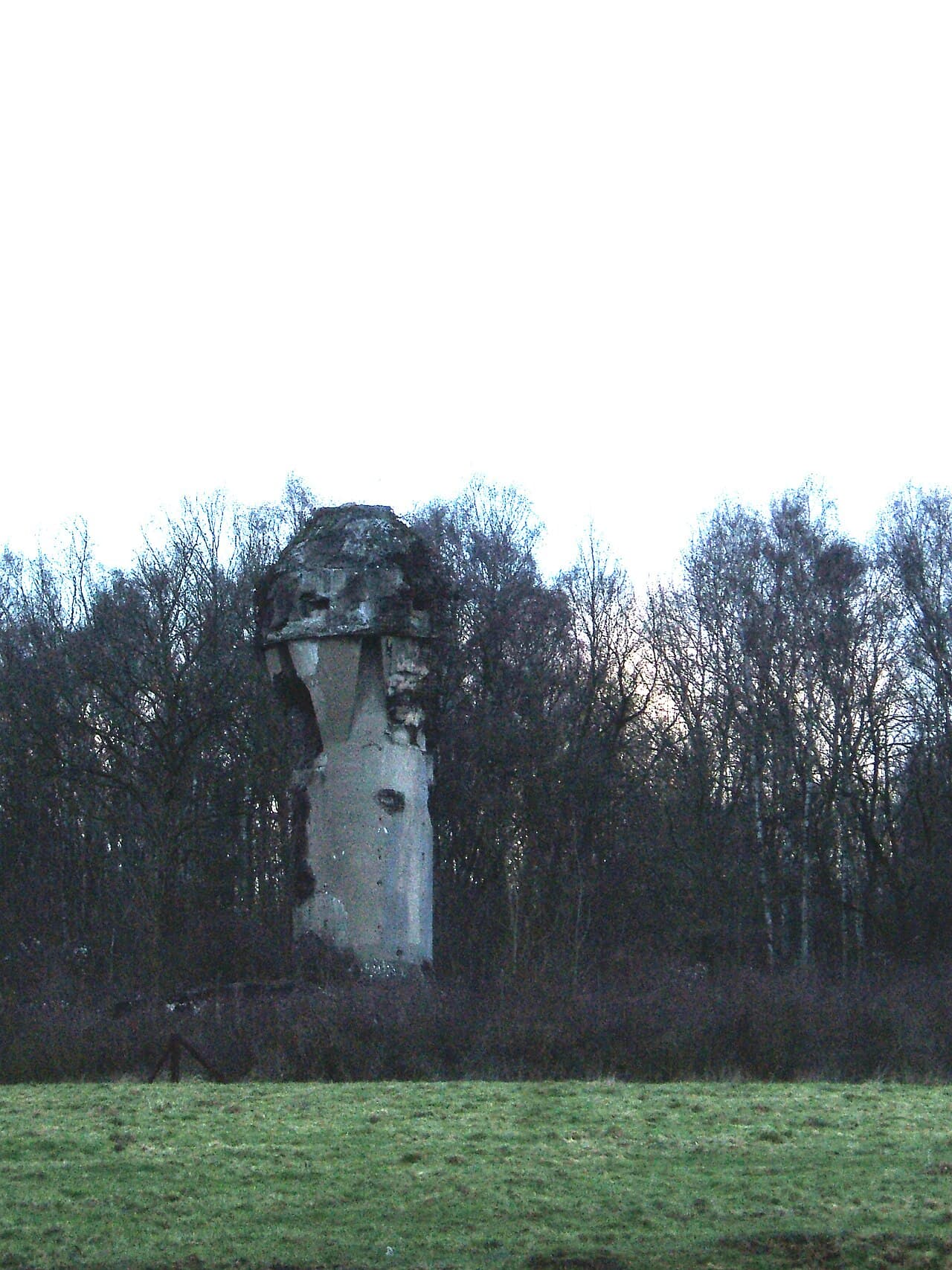
Fort de Marchovelette
The Fort de Marchovelette stands as a significant example of late 19th-century military architecture in Belgium. Constructed between 1888 and 1892, it is one of the nine forts that formed the defensive ring around the strategic city of Namur. This fortification was designed by General Henri Alexis Brialmont, a prominent Belgian military engineer known for his innovative use of new materials and defensive concepts.
Innovative construction and design
Unlike many contemporary European forts, which were primarily built using traditional masonry, the Fort de Marchovelette was constructed exclusively of unreinforced concrete. This choice was pioneering at the time, as concrete was a relatively new material in military fortifications. The design reflects Brialmont's emphasis on creating a bastioned fortress capable of withstanding heavy artillery fire. The fort's layout includes thick concrete walls and armored gun turrets, arranged to provide overlapping fields of fire and mutual defense between the forts of the Namur ring.
Role in world war i
During the Battle of Namur in 1914, the fort was subjected to intense bombardment by German heavy artillery. The German forces used new siege artillery, including the famous Big Bertha howitzers, which were capable of firing shells powerful enough to breach the concrete defenses. Despite its innovative construction, the fort suffered significant damage and was eventually forced to surrender. This battle demonstrated both the strengths and limitations of Brialmont's fortification designs against modern artillery technology.
Interwar upgrades and world war ii action
In the 1930s, recognizing the evolving nature of military threats, the Fort de Marchovelette underwent substantial upgrades to become part of the fortified position of Namur. These enhancements aimed to improve its defensive capabilities against potential German aggression. The upgrades included reinforcement of existing structures and modernization of armaments and facilities.
During the Battle of Belgium in 1940, the fort again saw combat. Despite the improvements, it was captured by advancing German forces. The fort's role in both world wars highlights its strategic importance in Belgium's defense network.
Current use and preservation
Today, Fort de Marchovelette is no longer a frontline military installation. Instead, it serves as a military and police training facility, preserving its historical structures while adapting to contemporary security needs. The fort remains a well-preserved example of 19th-century bastioned fortress architecture, offering insight into the evolution of military engineering and the challenges of fortification in the face of advancing artillery technology.
Architectural features and layout
The fort's design incorporates a bastioned layout with angular defensive walls intended to deflect artillery shells. Its armored gun turrets housed various calibers of artillery pieces, capable of both direct and indirect fire. The fort included underground barracks, ammunition magazines, and communication tunnels to protect personnel and supplies during sieges. The use of unreinforced concrete was innovative but later proved vulnerable to the heaviest artillery, leading to adaptations in fort design in subsequent decades.
Historical significance in belgian defense
The Fort de Marchovelette is a key component of the fortifications of Namur, which were designed to protect the Meuse River valley and the crossroads of important transportation routes. These forts collectively represented Belgium's effort to maintain neutrality and defend its territory against invasion. The fort's history reflects broader trends in military strategy and technology from the late 19th century through World War II.
Frequently asked questions (FAQ)
- How do I visit Fort de Marchovelette?
- Fort de Marchovelette is currently used as a military and police training facility, so public access is restricted. Visitors interested in the fort's history should check for special open days or guided tours organized by local heritage groups.
- What materials were used in the construction of Fort de Marchovelette?
- The fort was built exclusively using unreinforced concrete, a pioneering choice at the time that distinguished it from other forts built with traditional masonry.
- When was Fort de Marchovelette built and by whom?
- Construction took place between 1888 and 1892 under the direction of General Henri Alexis Brialmont, a notable Belgian military engineer.
- What role did the fort play during the world wars?
- Fort de Marchovelette participated in the Battle of Namur in 1914, enduring heavy German artillery bombardment, and was upgraded in the 1930s before being captured in the 1940 Battle of Belgium.
- Is Fort de Marchovelette open to the public?
- As it serves as a training facility, the fort is generally not open to public visits, but occasional events may allow limited access.

Information
Current owner
Belgian military
Loading map...
Visitor reviews
No reviews yet. Been here? Write the first review and help other travelers!
Write the first reviewVisited this castle? Share your experience
Your review helps other travelers and adds first-hand knowledge to our encyclopedia.



