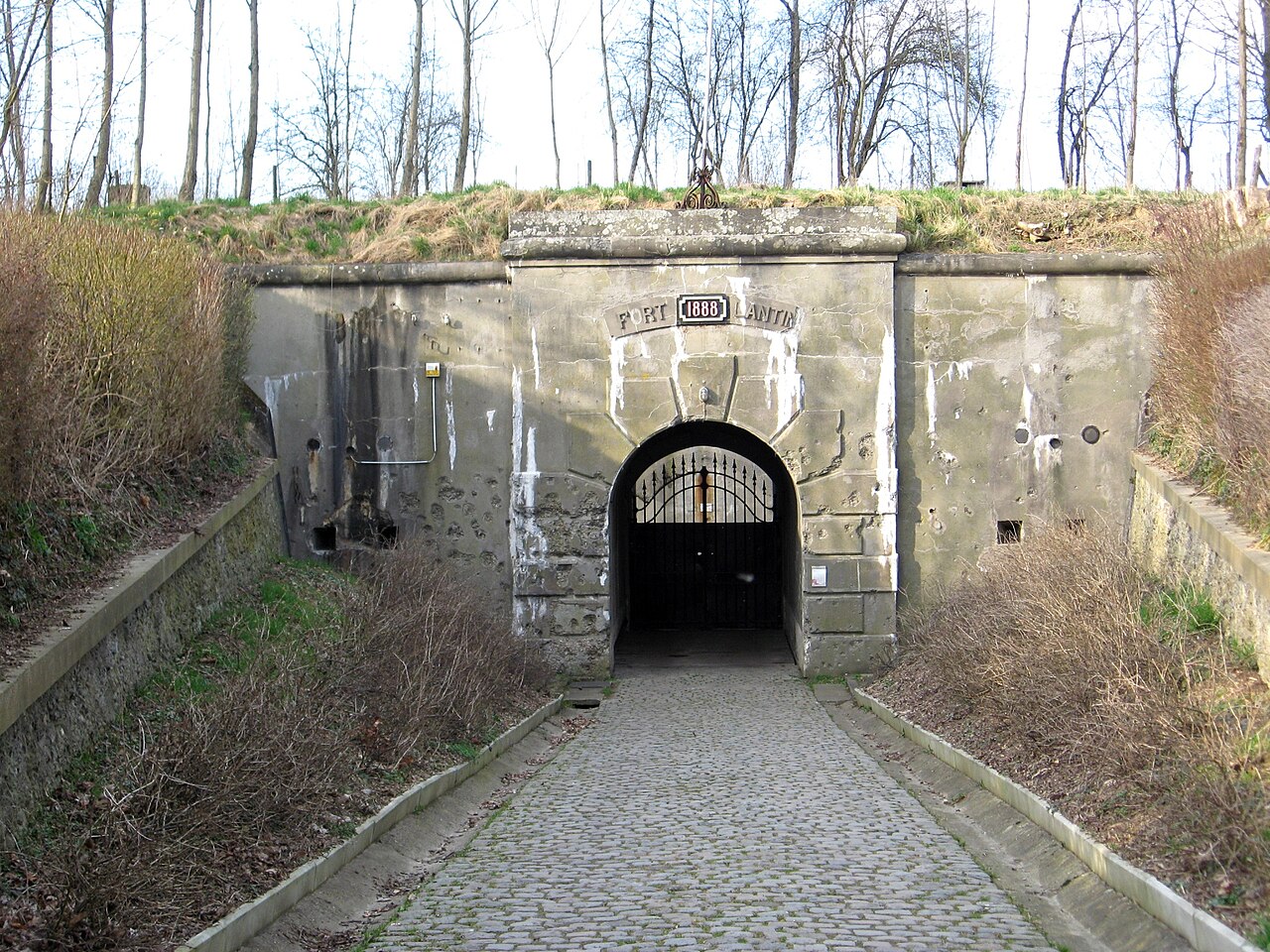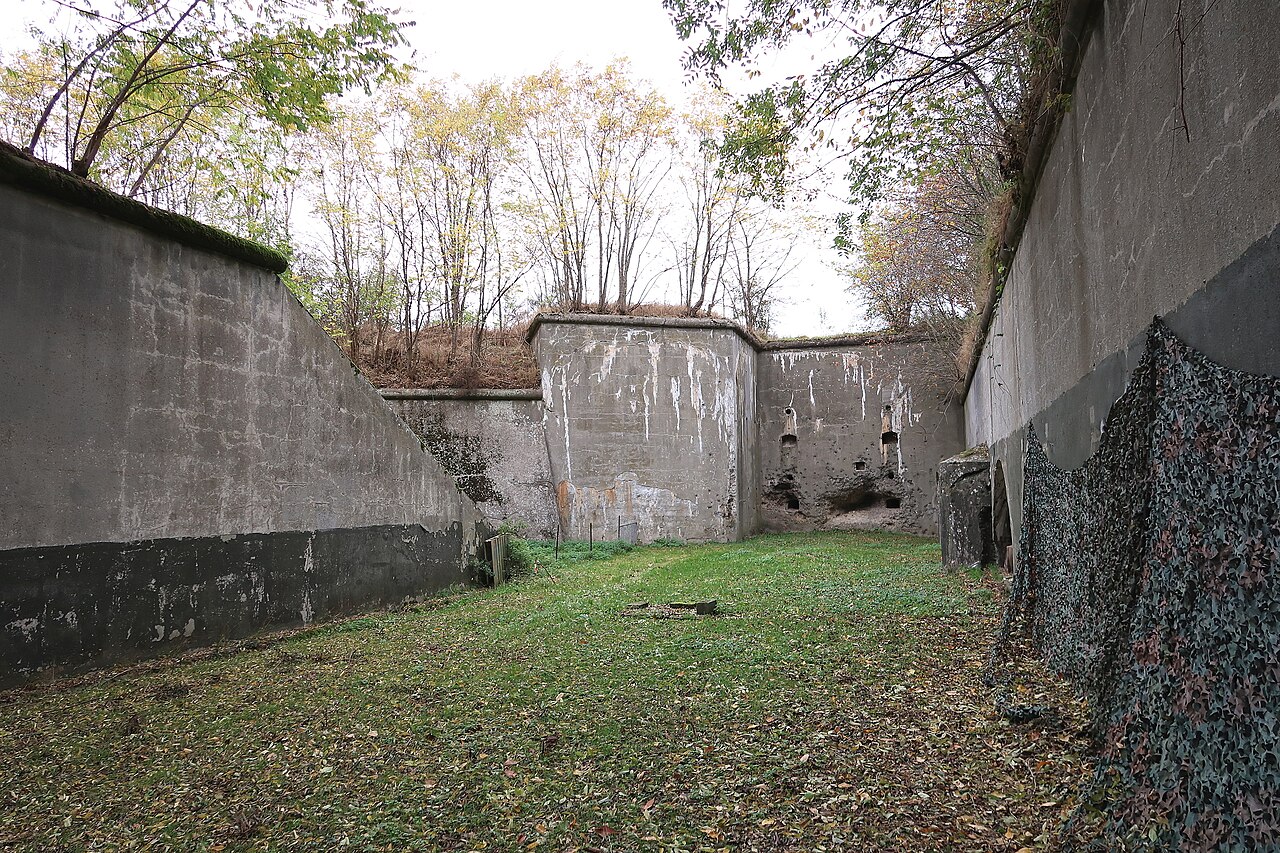
Fort de Loncin
The Fort de Loncin is a significant example of late 19th-century military architecture located near Liège, Belgium. It was one of twelve forts forming the Fortified Position of Liège, a defensive ring designed to protect the city and serve as part of Belgium's National Redoubt. Constructed between 1881 and 1884, the fort was designed by General Henri Alexis Brialmont, a prominent military engineer known for his innovative fortification concepts.
Unlike the contemporary French forts designed by Raymond Adolphe Séré de Rivières, Fort de Loncin was built entirely of unreinforced concrete, a pioneering use of this material in fort construction. This choice reflected the military engineering trends of the period, aiming to provide greater resistance to artillery fire compared to traditional masonry. The fort's design featured bastioned elements typical of the era, including thick concrete walls, deep moats, and armoured gun turrets that housed heavy artillery pieces for defensive fire.
Architectural design and construction features
The bastioned fortress layout of Fort de Loncin incorporated a compact polygonal plan with angled walls to deflect artillery shells and minimize damage. The fort's concrete structure was innovative but untested at the time, leading to vulnerabilities in its defensive capabilities. The fort included underground galleries connecting the various defensive positions and living quarters, designed to protect soldiers from bombardment.
Living conditions within the fort were challenging. Ventilation was limited, and the design did not adequately protect against the effects of prolonged artillery bombardment, such as toxic gases and structural damage. These factors contributed to difficulties in maintaining effective defense during combat.
Role in World War I and destruction
During the Battle of Liège in August 1914, Fort de Loncin was subjected to intense artillery bombardment by German forces employing the newly introduced Big Bertha howitzers. The fort's magazine, where ammunition was stored, was struck by a massive shell, causing a catastrophic explosion that destroyed much of the fort and killed the majority of its garrison.
This event marked one of the earliest uses of heavy siege artillery in modern warfare and demonstrated both the potential and the limitations of concrete fortifications against such firepower. The devastation at Fort de Loncin had a profound impact on military fortification design and strategy in the years that followed.
Legacy and preservation
Following its destruction, Fort de Loncin was never rebuilt or reused for military purposes. The site today serves as a military cemetery, commemorating the soldiers who lost their lives during the fort's final battle. The ruins stand as a historic monument reflecting the evolution of military engineering and the harsh realities of early 20th-century warfare.
Visitors to the site can observe the remains of the concrete walls, the outlines of defensive structures, and memorials dedicated to the fallen. Fort de Loncin remains a poignant reminder of Belgium's military history and the technological challenges faced during the transition from 19th-century to modern warfare.
Strategic importance within the fortified position of Liège
Fort de Loncin was strategically positioned to guard key approaches to Liège, controlling vital transportation routes and serving as a deterrent against invasion. Its integration into the broader network of forts around Liège exemplified the military doctrine of layered defense, designed to slow enemy advances and protect Belgium's interior.
Comparison with contemporaneous fortifications
While French forts of the same period used masonry and incorporated different defensive philosophies, Fort de Loncin's use of concrete was a bold experiment. The lessons learned from its performance under fire influenced subsequent fortification designs across Europe.
Architectural innovations and limitations
The fort's armoured turrets and underground galleries were advanced for their time, yet the lack of reinforced concrete and insufficient ventilation revealed critical weaknesses. These factors contributed to the fort's rapid fall under heavy bombardment.
Visiting Fort de Loncin today
The site is accessible to the public as a historic monument and military cemetery. Visitors can explore the ruins and learn about the fort's role in World War I through onsite information panels and guided tours. The site offers insight into the evolution of military architecture and the human cost of early 20th-century conflicts.
Frequently asked questions (FAQ)
- How do I visit Fort de Loncin?
- Fort de Loncin is open to the public as a historic site and military cemetery. Visitors can explore the ruins and memorials, with guided tours available during certain times of the year.
- What is the historical significance of Fort de Loncin?
- Fort de Loncin played a key role in the Battle of Liège during World War I and was destroyed by German heavy artillery, marking the first use of Big Bertha howitzers in combat.
- When was Fort de Loncin built and by whom?
- The fort was constructed between 1881 and 1884 under the direction of General Henri Alexis Brialmont, a notable Belgian military engineer.
- Can I see the original fort structures at Fort de Loncin?
- Yes, visitors can see the ruins of the concrete walls, underground galleries, and the remains of armoured gun turrets, which illustrate the fort's innovative design.
- Is Fort de Loncin wheelchair accessible?
- Due to the site's ruined condition and uneven terrain, accessibility for wheelchair users is limited. Visitors are advised to check with the site management for specific accommodations.

Information
Current owner
State museum
Loading map...
Visitor reviews
No reviews yet. Been here? Write the first review and help other travelers!
Write the first reviewVisited this castle? Share your experience
Your review helps other travelers and adds first-hand knowledge to our encyclopedia.