Fort de Hollogne
The Fort de Hollogne is a significant example of late 19th-century military architecture located near Liège, Belgium. Constructed between 1881 and 1884, it is one of twelve forts forming the Fortified Position of Liège, which was a crucial part of Belgium's National Redoubt. Designed by the renowned military engineer General Henri Alexis Brialmont, the fort represents a pivotal shift in fortress construction methods of its era.
Architectural design and construction
The Fort de Hollogne is classified as a bastioned fortress, a type characterized by angular bastions projecting outward from the main walls to provide defensive fire coverage along the curtain walls. Unlike contemporary French forts designed by Raymond Adolphe Séré de Rivières, which primarily used masonry, Hollogne was built exclusively using unreinforced concrete. This was a pioneering use of concrete in military fortifications, marking a departure from traditional stone and brick construction.
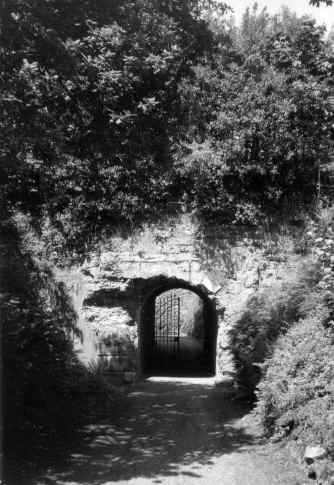
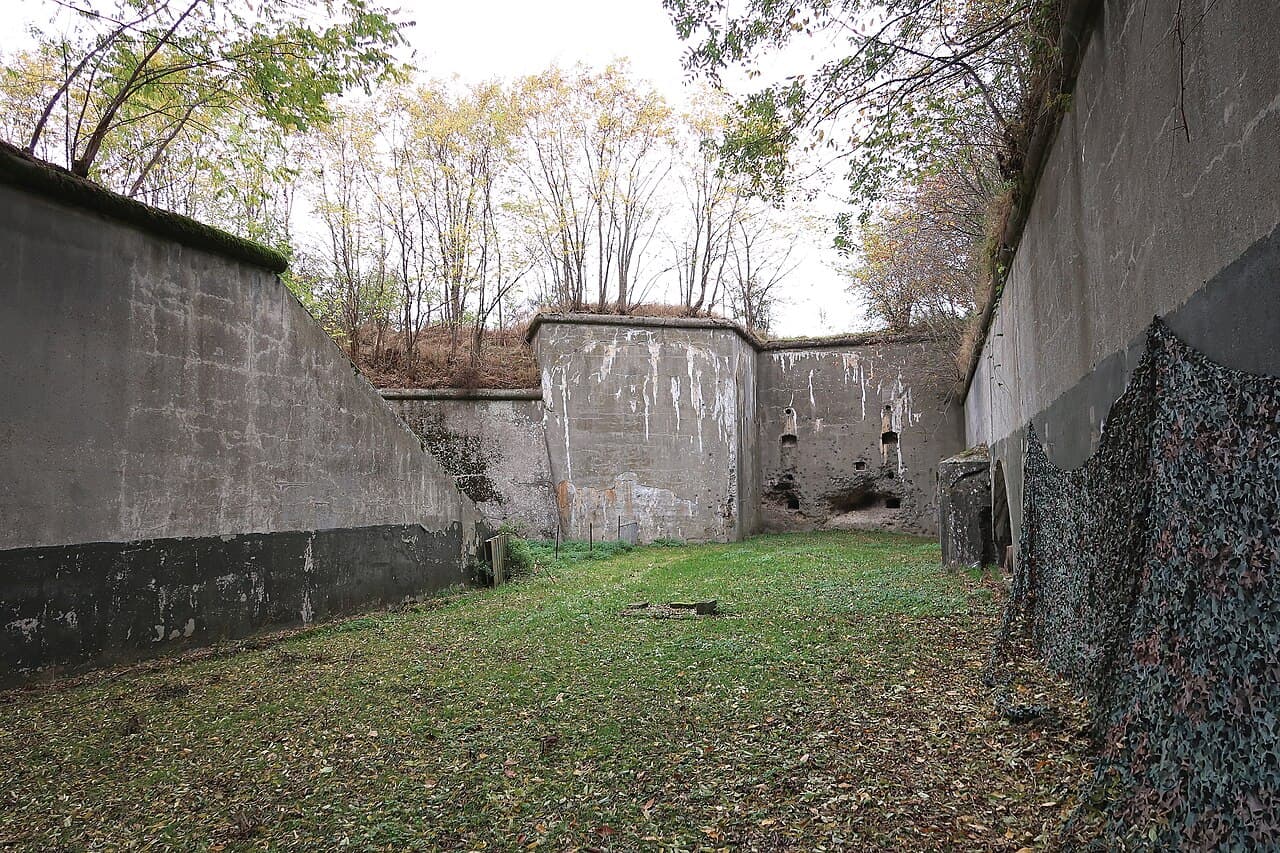
The fort's design includes a central massif housing the main artillery batteries, protected by thick concrete walls and surrounded by a deep ditch. The defensive perimeter is reinforced with bastions and caponiers—covered firing positions projecting into the ditch, enabling defenders to sweep the moat with gunfire. The use of concrete allowed for stronger resistance against artillery bombardment, although the material was still relatively new and untested at this scale.
Historical context and military significance
The Fort de Hollogne was part of Belgium's strategic response to the evolving nature of warfare and the increasing threat from neighboring powers in the late 19th century. The Fortified Position of Liège was intended to protect the city and serve as a deterrent against invasion. The forts were designed to withstand heavy artillery fire and to delay enemy advances.
During the Battle of Liège in August 1914, the fort was subjected to intense bombardment by German forces employing heavy siege artillery. Despite the fort's robust concrete construction, the German artillery inflicted significant damage, demonstrating both the strengths and limitations of Brialmont's design. Unlike other forts in the Liège network, Fort de Hollogne was never modernized or upgraded after World War I, preserving its original structural and architectural character.
Preservation and current status
Today, Fort de Hollogne is preserved as a museum and is open to the public. It remains one of the best-preserved examples of a Brialmont fort, offering visitors insight into late 19th-century military engineering and the historical context of Belgium's defensive strategies. The fort's well-preserved concrete structures, including its bastions, artillery positions, and defensive ditches, provide a tangible connection to the era's military technology and architectural innovation.
Visitors to the museum can explore the fort's underground galleries, artillery casemates, and defensive works, gaining an understanding of the living and fighting conditions of the soldiers stationed there. The site also hosts educational events and exhibitions related to military history and fortification architecture.
Architectural features and innovations
The use of unreinforced concrete in Fort de Hollogne was innovative for its time, allowing for monolithic structures that could better absorb and resist artillery impacts compared to traditional masonry. The fort's layout features a central artillery massif surrounded by a defensive ditch, with bastions providing overlapping fields of fire.
The fort's design reflects Brialmont's principles of defense in depth, with multiple layers of protection including caponiers for ditch defense and underground passages connecting various parts of the fort. The arrangement of gun turrets and embrasures was intended to maximize firepower while minimizing exposure to enemy fire.
Comparison with contemporary forts
While French forts of the same period, such as those designed by Séré de Rivières, relied heavily on masonry and were often retrofitted with concrete later, Fort de Hollogne was built entirely of concrete from the outset. This made it a forerunner in modern fortification techniques, although the lack of reinforcement in the concrete posed vulnerabilities under sustained heavy bombardment.
Legacy and influence
The architectural and engineering concepts demonstrated at Fort de Hollogne influenced subsequent fortress designs and highlighted the evolving role of concrete in military construction. The fort's preservation as a museum allows for continued study and appreciation of these innovations within the broader history of European fortifications.
Frequently asked questions (FAQ)
- How do I get to Fort de Hollogne?
- Fort de Hollogne is located in Liège, Belgium, and can be reached by car or public transport. If you are traveling by train, the nearest station is Liège-Guillemins, from where you can take a bus or taxi to the castle.
- What is the historical significance of Fort de Hollogne?
- Fort de Hollogne was built in the 19th century as part of the defensive works around Liège. It played a crucial role during various military conflicts, particularly in World War I, showcasing the strategic importance of the region.
- When was Fort de Hollogne constructed?
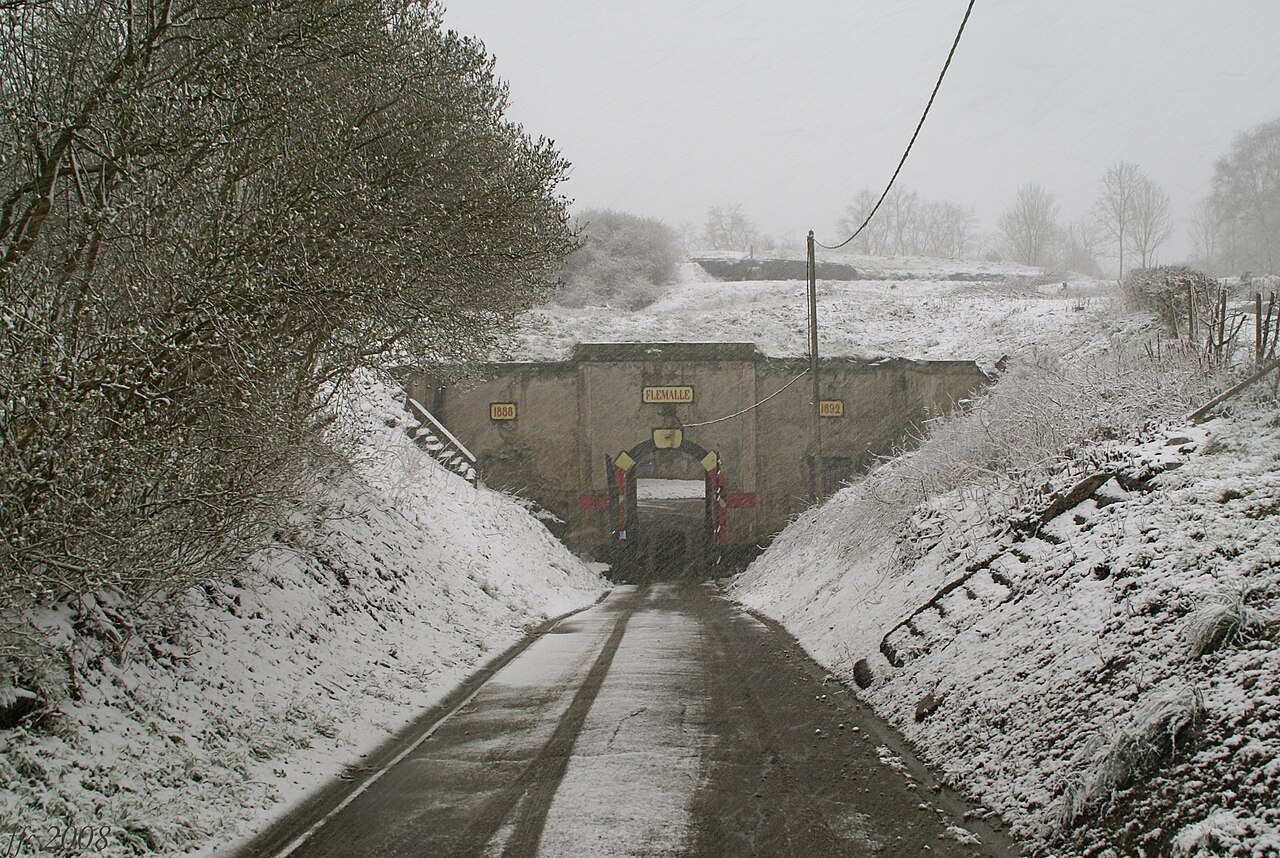
- Construction of Fort de Hollogne began in 1888 and was completed in 1892. It was designed to strengthen the defenses of Liège against potential invasions, reflecting the military architecture of its time.
- Can I take guided tours of Fort de Hollogne?
- Yes, guided tours of Fort de Hollogne are available to visitors, providing a deeper understanding of its history and architecture. It is recommended to check the official website for tour schedules and to book in advance, especially during peak tourist seasons.
- Why is Fort de Hollogne an important architectural site?
- Fort de Hollogne is notable for its unique military architecture, which incorporates elements of 19th-century fortification design. The structure features thick walls, moats, and a strategic layout that were advanced for its time, making it a significant example of military engineering.
- Is it possible to visit Fort de Hollogne year-round?
- Fort de Hollogne has specific opening hours, typically from April to October, with limited access during the winter months. It is advisable to check the castle's official website for the most current visiting hours and seasonal schedules.
- What are the ticket prices for visiting Fort de Hollogne?
- Ticket prices for Fort de Hollogne vary depending on the type of tour and age group. Generally, adult tickets are reasonably priced, and discounts may be available for children, students, and seniors, making it accessible for families and groups.
- What is the best time to visit Fort de Hollogne?
- The best time to visit Fort de Hollogne is during the spring and summer months when the weather is pleasant, and all outdoor areas are accessible. Additionally, visiting during special events or guided tour days can enhance your experience.
- Are there any nearby attractions to Fort de Hollogne?
- Yes, nearby attractions include the city of Liège itself, known for its vibrant culture and historic sites. Other points of interest include the Liège Aquarium and the historic center of Liège, which is home to stunning architecture and charming cafes.
Photo gallery

Information
Loading map...
Visitor reviews
No reviews yet. Been here? Write the first review and help other travelers!
Write the first reviewVisited this castle? Share your experience
Your review helps other travelers and adds first-hand knowledge to our encyclopedia.