Fort de Lantin
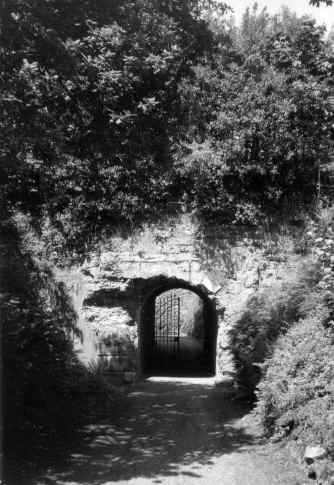
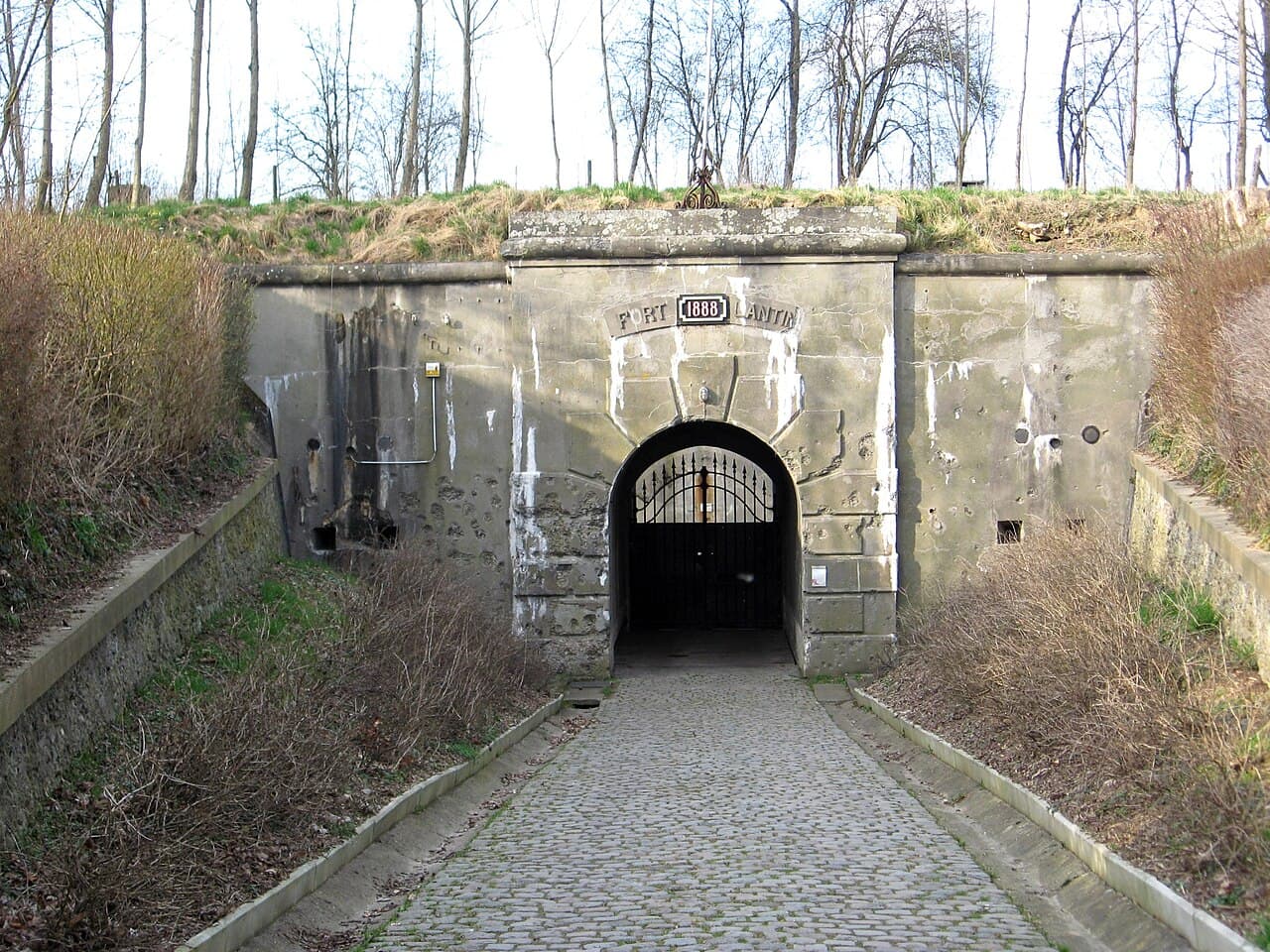
Fort de Lantin is a significant example of late 19th-century military architecture located near Liège, Belgium. It is one of twelve forts constructed as part of the Fortified Position of Liège, which served as a key component of Belgium's National Redoubt. This network of forts was designed to protect the strategic city of Liège from invasion, reflecting the military engineering innovations of the era.
Construction and design by general brialmont
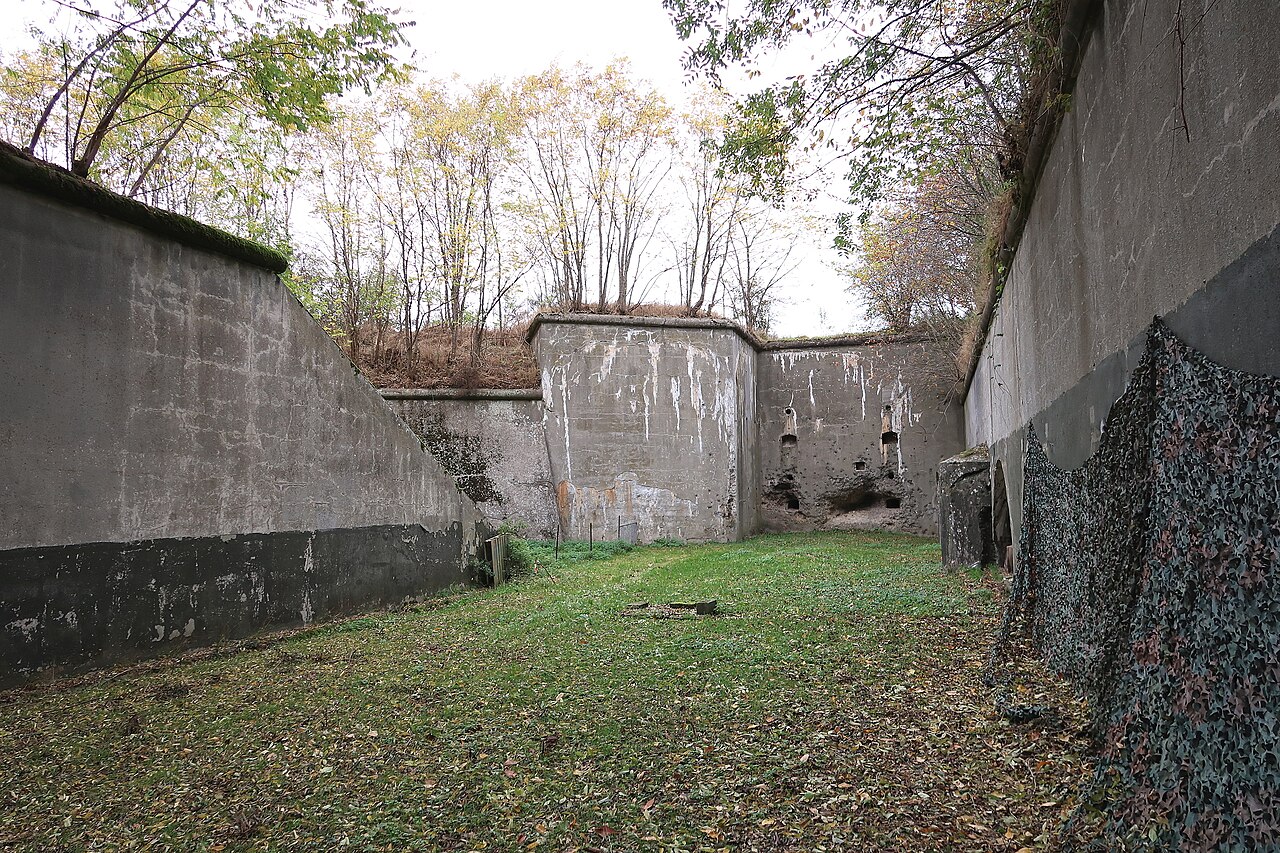
Built between 1881 and 1884, Fort de Lantin was designed by the prominent Belgian military engineer General Henri Alexis Brialmont. Unlike contemporary French forts constructed by Raymond Adolphe Séré de Rivières, which primarily used masonry, Fort de Lantin was pioneering in its use of unreinforced concrete. This choice marked an important shift in fortress construction techniques during the modern period. The fort's design features a bastioned fortress layout, characterized by angular bastions projecting outward to allow defensive fire along the walls, a common feature in 19th-century fortifications.
Architectural features and defensive structures
The fort's construction included thick concrete walls and a compact layout optimized for defense against artillery bombardment. Its bastions provided overlapping fields of fire, and the fort was equipped with artillery turrets and gun emplacements arranged to cover all approaches. The use of unreinforced concrete was innovative but also presented vulnerabilities, as the material's resistance to heavy shelling was limited compared to later reinforced concrete.
Role in the battle of liége and military history
During the Battle of Liège in August 1914, Fort de Lantin came under heavy bombardment by German forces. The fort endured intense artillery fire, demonstrating both the strengths and weaknesses of Brialmont's design and the use of unreinforced concrete. Unlike some other forts in the Liège ring, Fort de Lantin was never significantly upgraded or modernized after its initial construction, which has allowed it to retain much of its original character as a Brialmont fortification.
Preservation and public access
Today, Fort de Lantin is preserved as a museum and is open to the public. Visitors can explore the fort's defensive structures, including its bastions, gun emplacements, and underground facilities. The site offers valuable insight into late 19th-century military engineering and Belgium's defensive strategy during a period of rapid technological change in warfare.
Significance in military architecture
Fort de Lantin stands as a well-preserved example of Brialmont's fortification principles and the early use of concrete in military construction. Its design reflects the transition from traditional masonry fortresses to modern concrete defenses, marking a pivotal moment in the evolution of fort architecture.
Location and strategic importance
Situated near the city of Liège in the Wallonia region of Belgium, the fort's location was strategically chosen to guard key approaches to the city. The Fortified Position of Liège, including Fort de Lantin, played a crucial role in Belgium's national defense plans during the late 19th and early 20th centuries.
Frequently asked questions (FAQ)
- How do I visit Fort de Lantin?
- Fort de Lantin is open to visitors as a museum. Check the official website or local tourist information for current opening hours and guided tour availability.
- What makes Fort de Lantin architecturally unique?
- The fort is notable for its use of unreinforced concrete, a pioneering material at the time, and its bastioned fortress design by General Henri Alexis Brialmont.
- When was Fort de Lantin built?
- Construction took place between 1881 and 1884 as part of the Fortified Position of Liège.
- Can I explore the underground areas of the fort?
- Yes, visitors can explore some of the underground galleries and defensive structures, which provide insight into the fort's military functions.
- Why was Fort de Lantin important in World War I?
- It was heavily bombarded during the Battle of Liège in 1914, testing the fort's design and construction against modern artillery.
Photo gallery

Information
Current owner
State museum
Loading map...
Visitor reviews
No reviews yet. Been here? Write the first review and help other travelers!
Write the first reviewVisited this castle? Share your experience
Your review helps other travelers and adds first-hand knowledge to our encyclopedia.