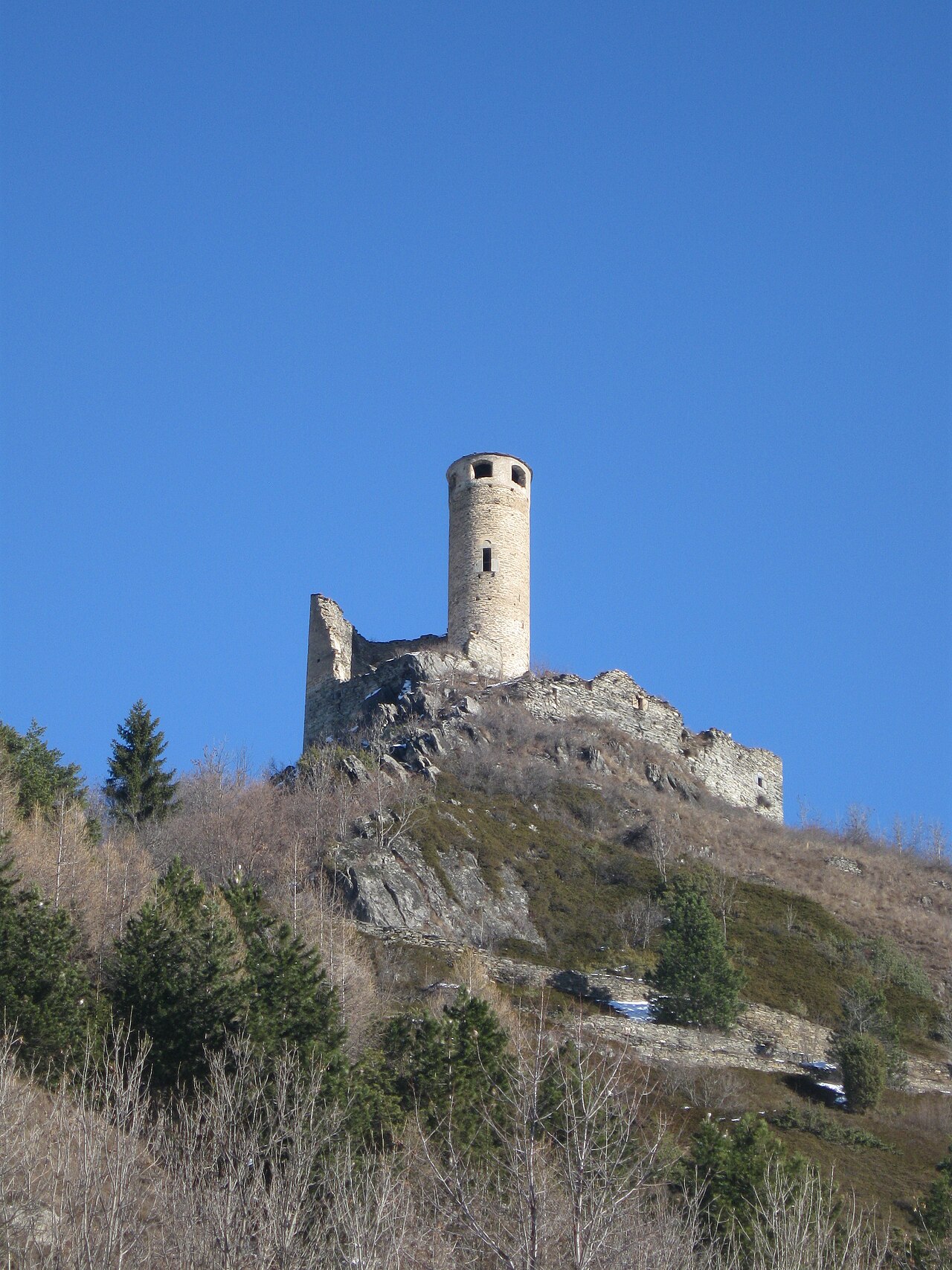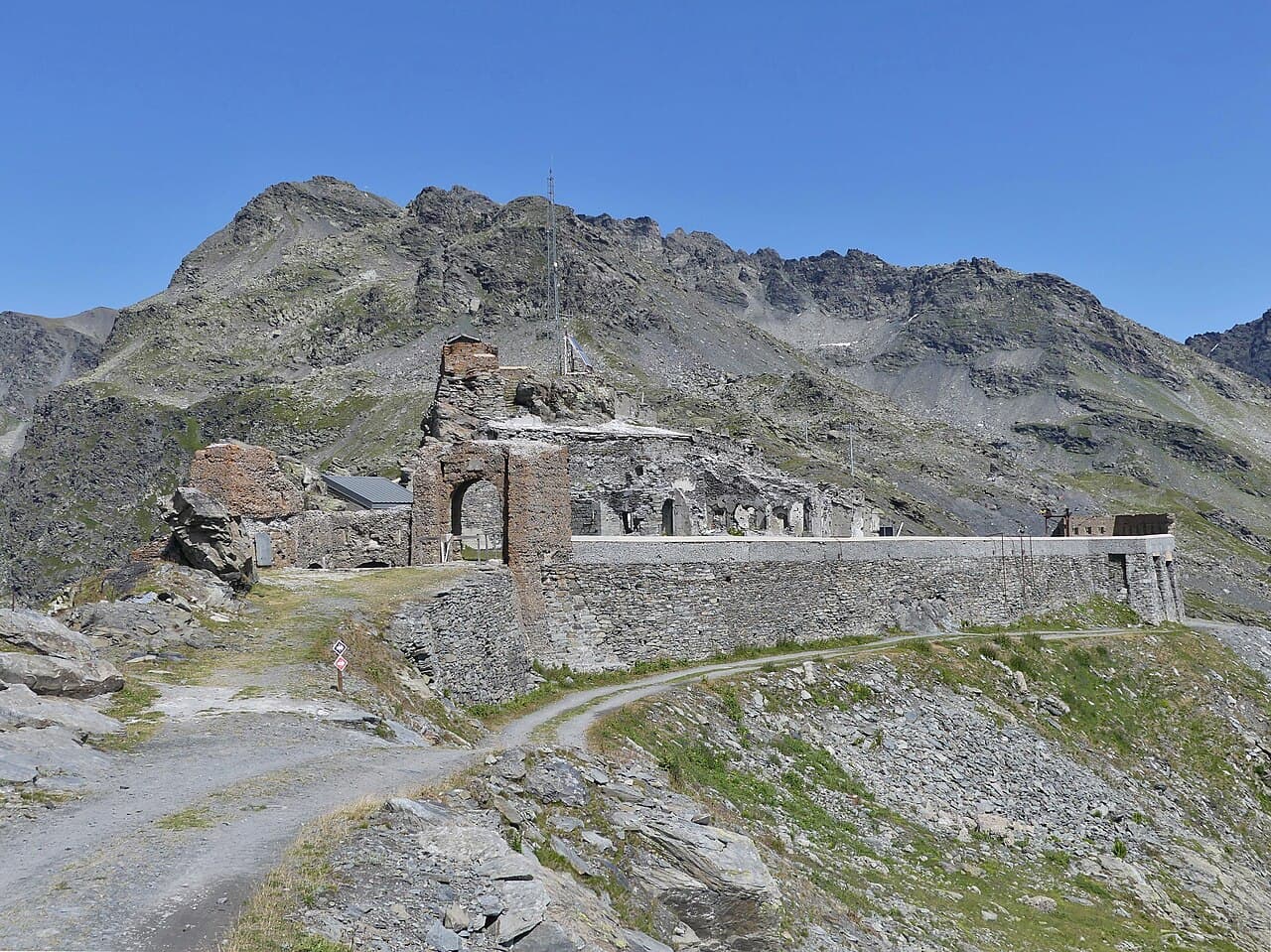
Fort de la Redoute Ruinée
Fort de la Redoute Ruinée, translating to "fort of the ruined redoubt," is a significant example of alpine military architecture located near La Rosière in the French Alps. Overlooking the strategic Col de la Traversette, this fortification embodies centuries of military evolution, from its origins in the early 17th century through its role in 20th-century conflicts. The fort's layered history reflects shifting sovereignties and advances in fortification technology, making it a notable site in French and Savoyard military heritage.
The site originally hosted the Fort de la Traversette, constructed in 1630 under the authority of the Duchy of Savoy. This early fortification was designed to control the alpine pass and protect territorial interests. During the turbulent period of the French Revolutionary Wars, the fort was garrisoned by Savoyard troops in 1792 but fell to the French army in 1794. Following its capture, it was renamed Fort Libre ("fort free"), symbolizing its new French control. The fort's sovereignty was formally settled with the Treaty of Turin in 1860, which transferred the territory from Savoy to France.
19th-century reconstruction and architectural features
Between 1892 and 1894, the French military undertook extensive reconstruction of the old fort's ruins, creating what is now known as Fort de la Redoute Ruinée. This redevelopment was part of wider efforts to modernize alpine defenses in response to evolving artillery and military tactics in the late 19th century. The fort's design incorporated robust stone masonry and strategic positioning to maximize its defensive capabilities against potential invaders crossing the alpine passes.
In 1897, the fort was officially inaugurated by President Félix Faure, symbolizing its importance in national defense. The fort's architecture features typical elements of 19th-century military engineering, including thick defensive walls, artillery placements, and observation posts. Its elevated position allowed for commanding views of the surrounding terrain, crucial for early warning and defense against incursions.
Role in the Maginot Line and World War II
During the 1930s, Fort de la Redoute Ruinée was integrated into the Alpine Line, the extension of the famous Maginot Line fortifications designed to defend France's southeastern border. It became part of the sub-sector of Tarentaise in the fortified sector of Savoy, reflecting its strategic importance in the mountainous border region.
In June 1940, during the Italian invasion of France, the fort was garrisoned by seventy men under the command of Sous-lieutenant Henry Desserteaux. Equipped with machine guns and artillery, the fort withstood a siege by Italian forces for four days. Despite being outnumbered, the garrison maintained its defense until the signing of the Franco-Italian armistice. On 3 July 1940, the troops surrendered but were granted the honors of war, a mark of respect for their determined resistance.
Later, during the winter of 1944–45, the fort was occupied by Italian and German troops amid the second Battle of the Alps. A garrison of forty-six soldiers defended the position against French attacks until it was finally recaptured by French forces on 29 April 1945. This period underscores the fort's continued military relevance well into World War II.
Post-war use and current condition
After its return to French control, the fort was renamed Baraquement Capitaine Desserteaux in honor of its WWII commander. Since then, the fort has remained a ruin, a testament to its turbulent past and the harsh alpine environment. Its remains offer valuable insights into military architecture spanning from the early modern period through the 20th century.
Today, Fort de la Redoute Ruinée stands as an archaeological site reflecting the layered history of alpine fortifications. Visitors and historians alike can explore its ruins to understand the strategic significance of mountain defenses and the evolution of military engineering over several centuries. The fort's location near La Rosière continues to attract interest for its historical and cultural value within the region.
Architectural and strategic significance
Integration of old and new fortifications
The Fort de la Redoute Ruinée uniquely integrates remnants of the original 17th-century Fort de la Traversette with late 19th-century military construction. This juxtaposition illustrates the transition from early bastioned fortifications to modern artillery forts designed to resist more powerful and accurate weaponry. The fort's layout includes preserved stone walls from the original structure alongside reinforced concrete and masonry additions typical of the late 1800s.
Defensive features and alpine adaptation
Strategically positioned at a high altitude, the fort was adapted to the challenging alpine terrain. Its design includes thick defensive walls to withstand artillery bombardment, machine gun emplacements to cover approaches, and observation posts for surveillance of the surrounding valleys and passes. The site's natural elevation provided a commanding view, critical for early detection of enemy movements.
Historical military context
The fort's history is intertwined with the geopolitical shifts in the region, particularly the changing control between the Duchy of Savoy and France. Its role in the French Revolutionary Wars, the Alpine Line fortifications, and World War II reflects broader trends in European military strategy and border defense. The fort exemplifies how mountain fortifications adapted over time to new threats and technologies.
Photo gallery

Information
Loading map...
Visitor reviews
No reviews yet. Been here? Write the first review and help other travelers!
Write the first reviewVisited this castle? Share your experience
Your review helps other travelers and adds first-hand knowledge to our encyclopedia.